
Junction Box Customization & Industrial Metal Box Fabrication: Key OEM DFM Rules
Customizing industrial sheet metal junction boxes for OEM equipment requires matching sheet gauge (1.2–1.5 mm SGCC, 304/316L SS, or 5052 Al), continuous TIG seam welding, removable gland plates, and internal DIN-rail sub-plates to your target NEMA 4/4X or IP65/IP66 rating before releasing drawings.
- Custom Cutouts & Gland Plates: Laser-cut M12/M20/NPT conduit entries and removable bottom gland plates hold ±0.10 mm positional accuracy with zero field drilling.
- Sealing & Return-Flange Geometry: Continuous TIG corner welding plus a folded return-flange knife edge maintains 30%–40% compression on poured PU or EPDM gaskets.
- Internal Sub-Plate & Earthing: 2.0 mm galvanized backplates and masked M6/M8 copper-plated grounding studs ensure low-impedance PE bonding across hinged doors.
- Low-MOQ Bridge to Volume: Zero hard-tooling NRE via CNC laser cutting and press brake forming supports 5 to 2,500+ pcs with 5–10 day prototype turnaround.
What critical manufacturing realities dictate the ingress protection, structural durability, and fit of custom industrial metal boxes?
Manufacturing high-performance industrial metal boxes (junction boxes, terminal enclosures, and pushbutton stations) requires deep CNC press brake bend sequencing with window punches, continuous 100% full-penetration corner TIG/laser seam welding to guarantee hermetic sealing, knife-edge perimeter door flanges interfacing with continuous Formed-In-Place-Foam Gaskets (FIPFG) or CNC gasket grooves achieving NEMA 4/4X and IP65/IP66 ingress protection, integrated DIN-rail and sub-panel mounting provisions, welded exterior mounting lugs, and verified low-resistance electrical grounding continuity (< 0.1 Ω).
1. The Manufacturing Realities of Custom Industrial Metal Boxes
From hazardous-area electrical junction boxes and oil-tight pushbutton stations to compact sensor interface housings and outdoor telecom terminations, industrial metal boxes operate in unforgiving factory and outdoor environments. They must withstand direct washdowns, corrosive chemical vapors, explosive dust atmospheres, and severe mechanical impacts.
While standard catalog enclosures exist, OEM machinery builders frequently encounter physical packaging constraints that off-the-shelf boxes cannot accommodate: non-standard aspect ratios, customized conduit entry patterns, dense HMI cutouts, integrated DIN rail mounting standoffs, and customized door opening swings. Custom fabrication bridges this gap, delivering tailored sheet metal boxes built from cold-rolled steel, 5052-H32 aluminum, or 304/316 stainless steel.
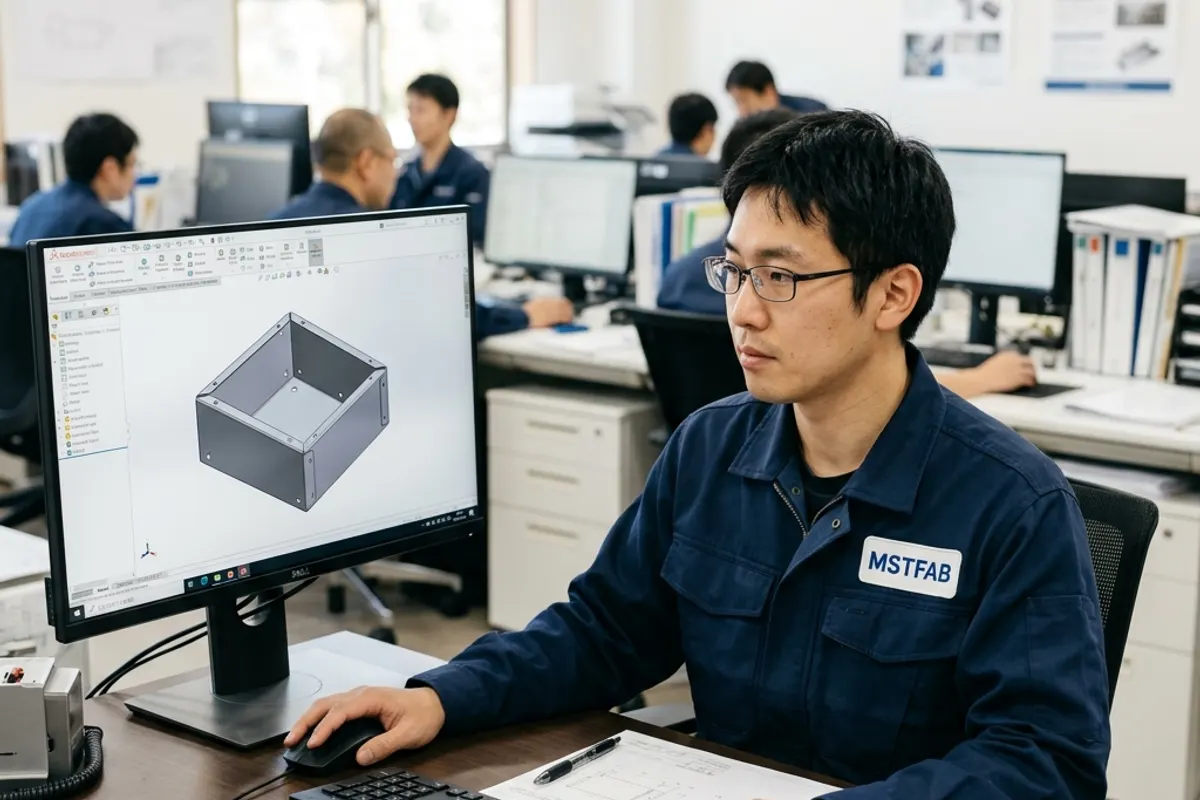
2. Laser Cutting Flat Blanks & Conduit Knockout Precision
Precision manufacturing begins with flat pattern layout. Fiber laser cutting produces sharp corner notches, precise conduit entries, and pilot holes for mounting hardware. Tight laser kerf tolerances (±0.05 mm) ensure that corner joints abut with zero gap (≤ 0.1 mm), which is mandatory for autogenous corner welding without burning through thin sheet metal.
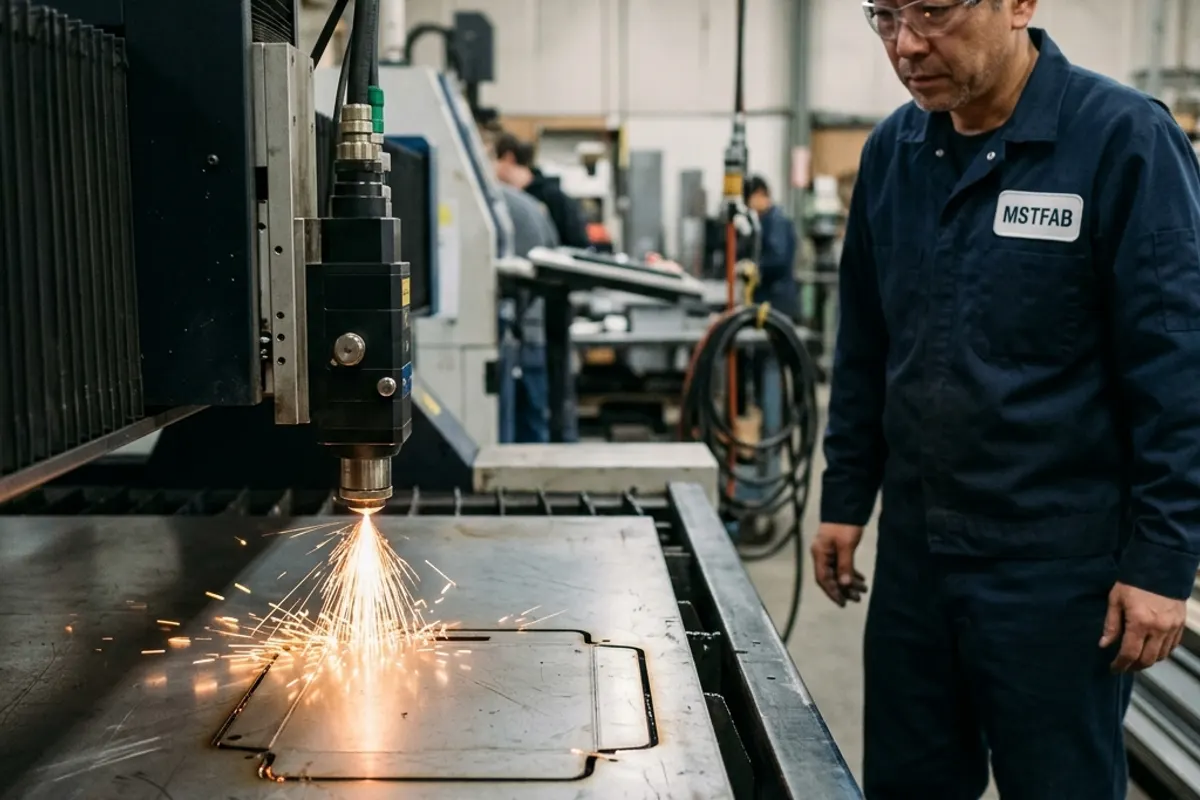
3. Forming Deep Metal Boxes: Tooling Clearances & Bend Sequencing
Forming a 4-sided deep metal box on a CNC press brake presents severe mechanical interference challenges. As the fourth side is bent upward, the previously formed opposing sidewalls can collide with the press brake ram or punch holder.
MSTFAB deploys specialized tooling and bend sequence planning to overcome these constraints:
- Deep Gooseneck Punches & Window Tooling: Tall, relieved gooseneck punches provide clearance for return flanges and deep sidewalls up to 200 mm to 300 mm depth without collision.
- Segmented Horn Tooling: Horn punches extend past the ends of the tool clamp, allowing operators to bend tight return lips and deep box ends without side interference.
- Optimal Bend Sequencing: The operator forms the two shorter end tabs first, followed by the two longer sidewalls, wrapping the box into a rigid 3D rectangular structure with tight, uniform corner seams.
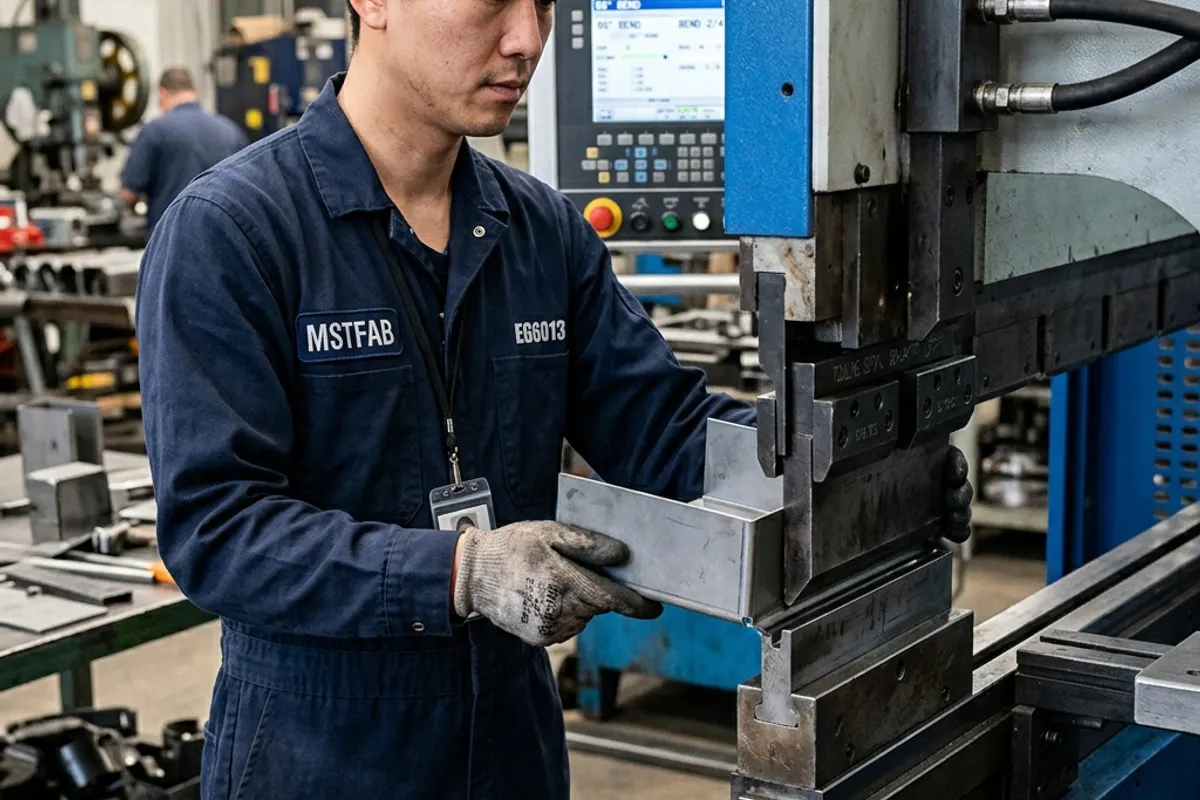
4. Hardware Insertion & Continuous Corner Seam Welding
Internal sub-panels and DIN rails must mount cleanly to the box floor. Threaded standoffs and grounding studs are pressed in before or after forming using hydraulic insertion equipment.
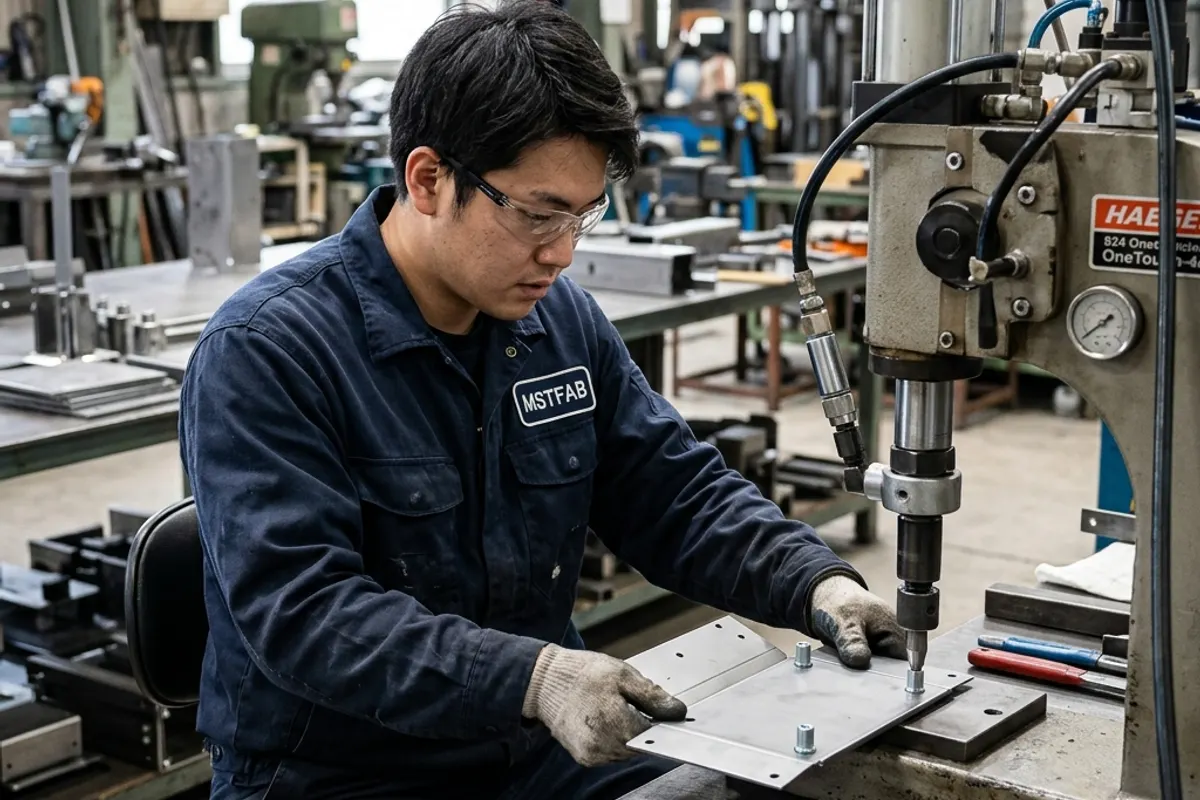
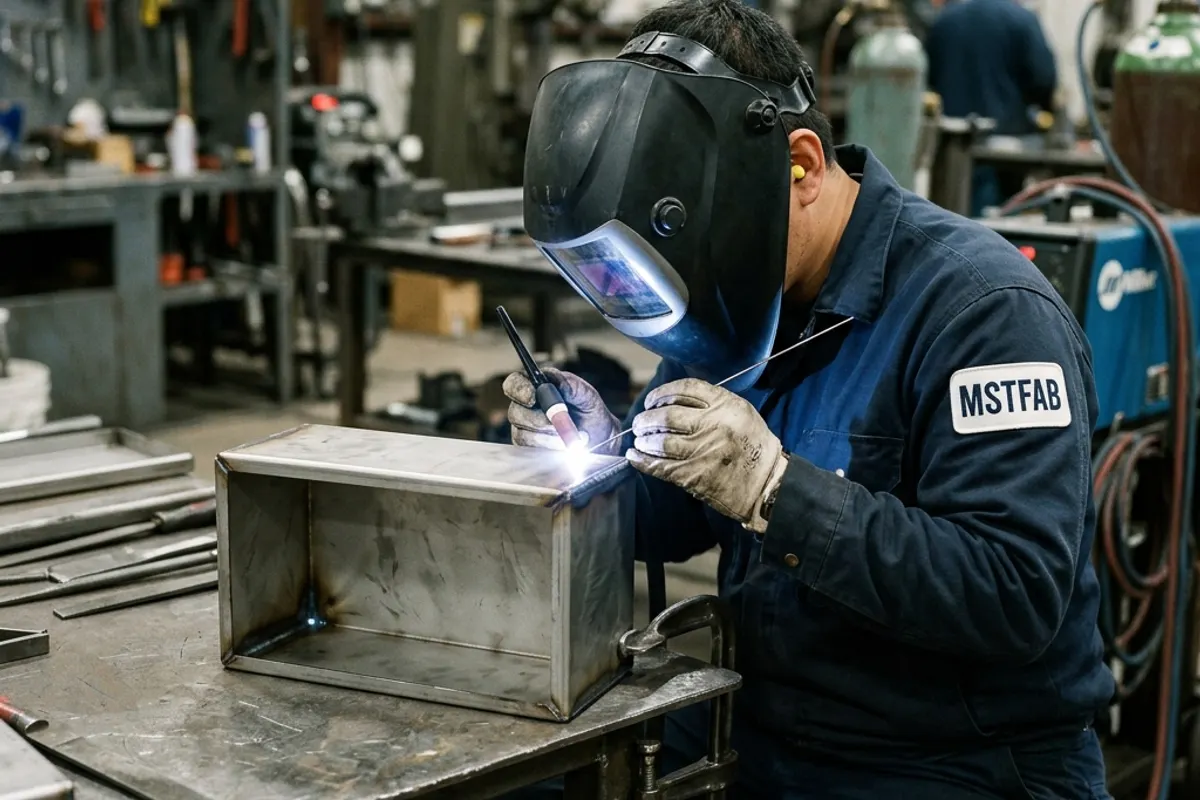
To achieve NEMA 4/4X or IP66 environmental sealing, the four vertical corner seams must be continuously welded. Spot welding or stitch welding is strictly insufficient. MSTFAB utilizes pulsed TIG (GTAW) and high-speed robotic fiber laser welding to lay continuous, hermetic, 100% full-penetration corner beads free of pinhole porosity.
5. Weld Blending & Lid Trial-Fitting
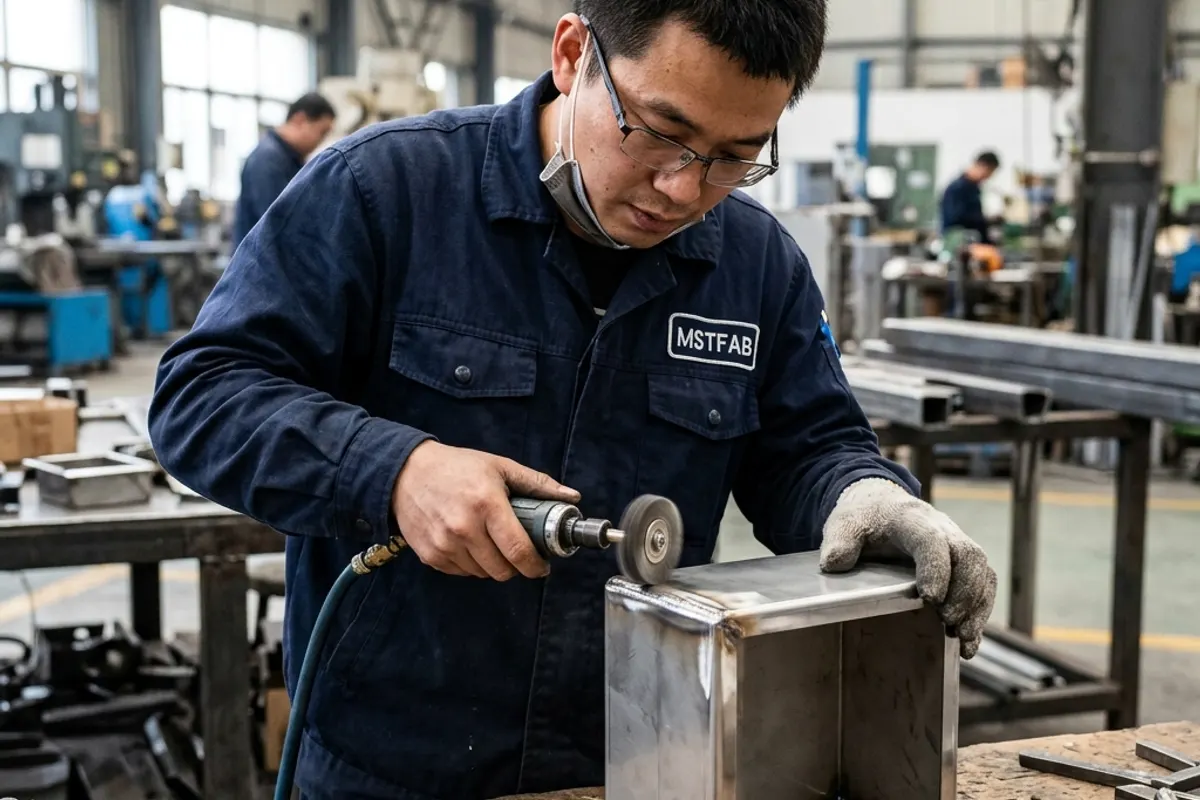
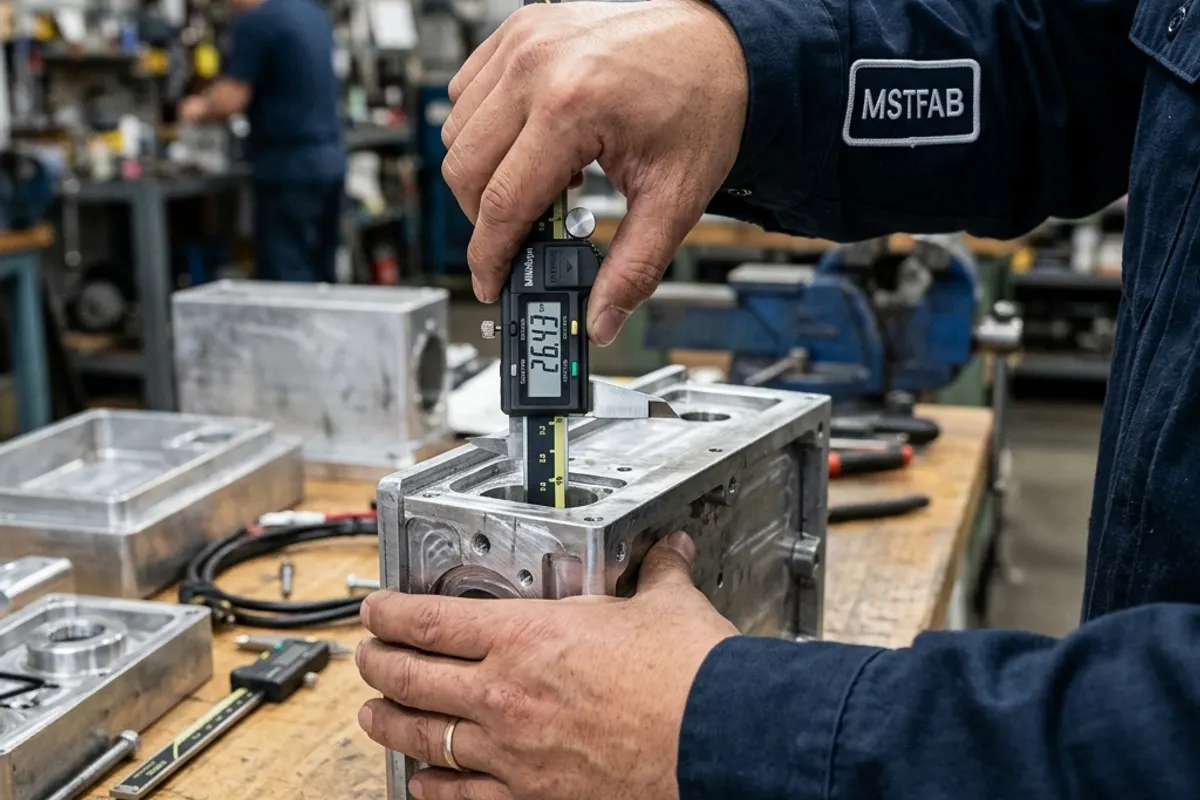
Following welding, exterior corner beads are mechanically dressed flush using fine-grit flap discs and pneumatic belt sanders. Blending restores clean, sharp corner radii without thinning the parent metal, ensuring that perimeter gaskets seat evenly across the box rim.
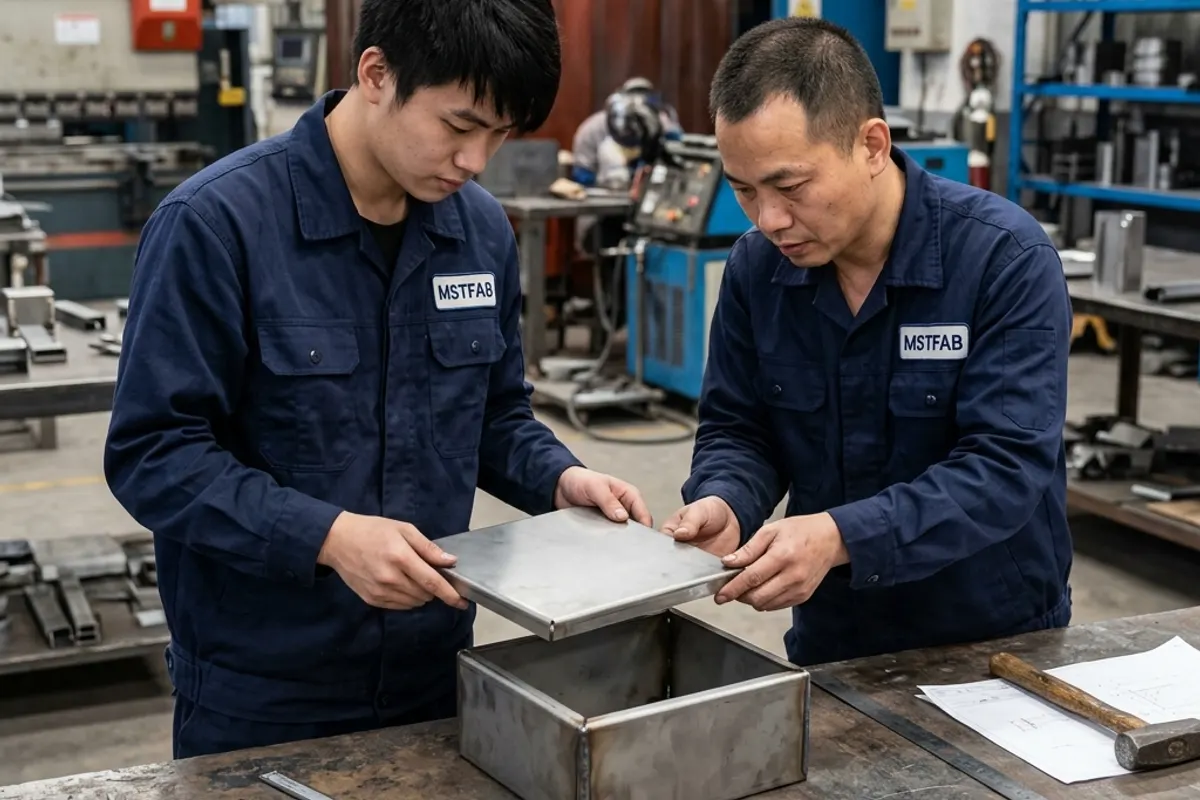
Every box is matched with its formed lid or hinged door during bare-metal trial fitting, verifying screw hole alignment, hinge swing clearance, and uniform gasket compression.
6. Sealing Architectures: NEMA 4/4X & IP66 Ingress Protection
Achieving certified ingress protection requires combining rigid sheet metal geometry with resilient elastomer sealing:
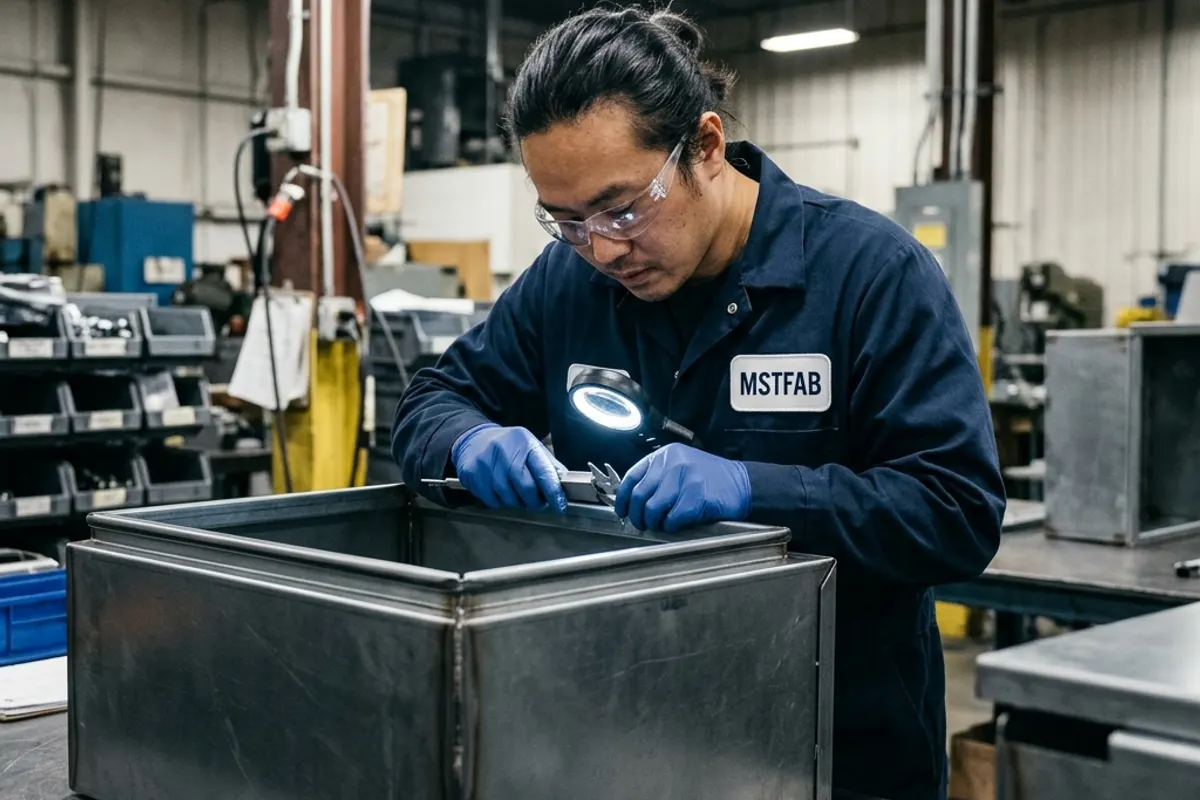
- Formed Knife-Edge Rim: The upper perimeter rim of the box body is bent inward and upward to create a continuous knife-edge flange that bites cleanly into the door gasket, concentrating clamping force to create a reliable hydrostatic seal.
- Formed Gasket Channels: Doors feature a formed 3-sided or 4-sided retaining channel that captures the gasket, preventing it from creeping or blowing out under high internal pressure or washdown jets.
- Continuous FIPFG Polyurethane Gasketing: Automated CNC dispensing robots apply seamless, jointless Formed-In-Place-Foam Gaskets (FIPFG) directly into the cover channel. Unlike manual strip gaskets with cut corner joints (which represent notorious leak paths), seamless CNC polyurethane gaskets exhibit zero joint lines and excellent compression set recovery (> 95% recovery after 1000 hours of compression).
7. Ingress Protection & Quality Specification Matrix
MSTFAB manufactures custom industrial metal boxes compliant with international NEMA and IEC standards:
| Protection Rating | Standard Specification | Sealing & Fabrication Architecture | Primary Application |
|---|---|---|---|
| NEMA 1 / IP20 | General Purpose Indoor | Spot-welded or tabbed corners; no gasket; screw cover | Indoor terminal pull boxes, wireways |
| NEMA 12 / IP54 | Dust-Tight & Drip-Tight | Continuous welded seams; closed-cell neoprene gasket; captive screws | Factory floor control boxes, machine pushbutton pods |
| NEMA 4 / IP66 | Watertight & Hose-Down | 100% full TIG seam welds; continuous FIPFG gasket; knife-edge rim | Outdoor utility junction boxes, washdown equipment |
| NEMA 4X / IP66 | Watertight & Corrosion-Resistant | AISI 304/316L stainless steel; passivated; seamless silicone gasket | Food processing, pharmaceutical, marine, chemical skids |
| Electrical Grounding | UL 508A Section 14 | Dedicated copper-plated grounding studs; masked contact pad (< 0.1 Ω) | All electrical power and control distribution boxes |
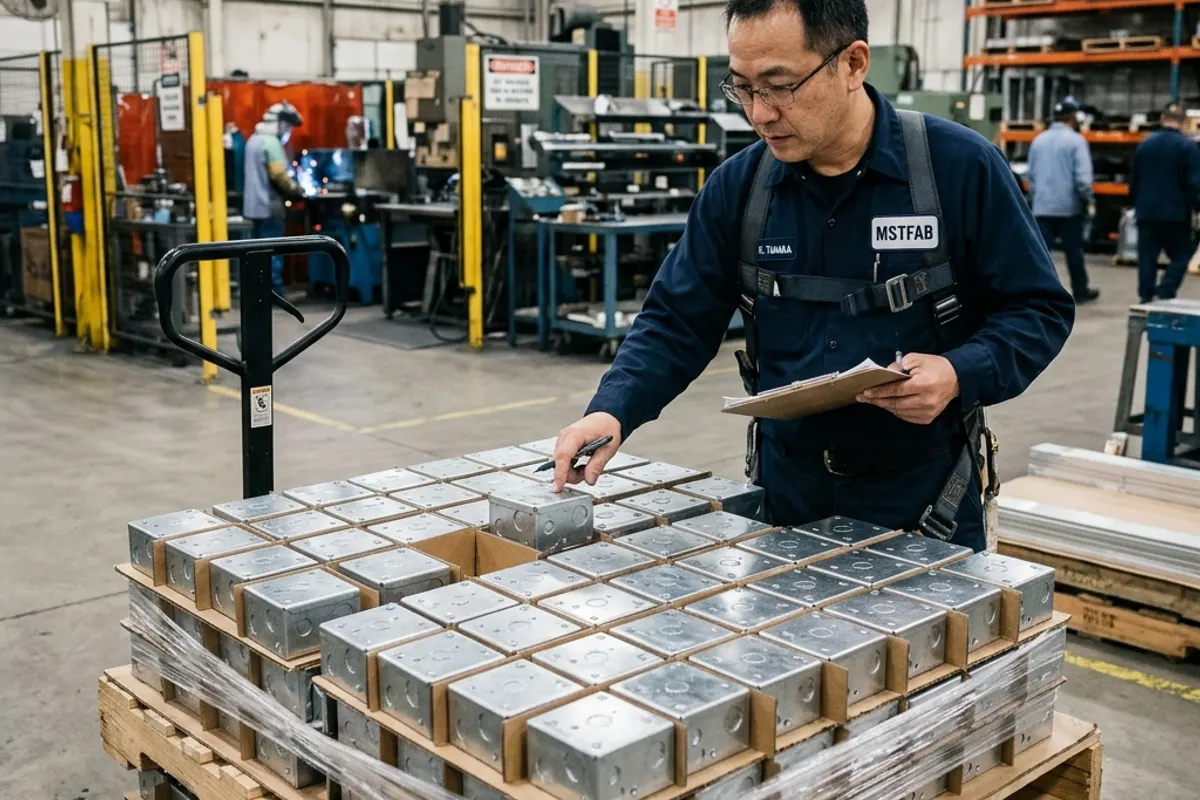
Need Custom NEMA 4/4X Industrial Metal Boxes?
MSTFAB fabricates custom junction boxes, pushbutton stations, and outdoor utility enclosures to exact dimensions. We deliver 100% seam-welded construction, CNC gasketing, custom hole cutouts, and UL-compliant grounding.
 WeChat Contact
 WhatsApp Me Directly