
OEM EMPTY AUTOMATION ENCLOSURE BUYER GUIDE
Answer: An industrial automation enclosure should reach the integrator as a controlled empty mechanical platform: square body, repeatable doors, blank mounting plates, accurate customer-defined cutouts and inspection evidence tied to the released drawing.
This industrial automation enclosure mechanical interface checklist covers the sheet metal shell and agreed mechanical hardware. The customer or system integrator installs and validates the electrical system.

1. Lock scope, ownership and revision before quotation
Use one released assembly model, controlled 2D drawings and a bill of metal parts. Call the deliverable an empty automation enclosure shell for customer integration. “Ready for automation” describes mechanical interfaces, not a cabinet that wakes up and runs a factory.
| MSTFAB can supply | Outside MSTFAB scope | Customer owns |
|---|---|---|
| Body, doors, blank mounting plates, gland plates, brackets and plinths | PLCs, HMIs, I/O modules, power supplies, relays, contactors and breakers | Component choice, layout, clearances and architecture |
| Customer-defined openings, PEM hardware, hinges, latches, handles and gasket channels | Wiring, programming, functional testing and commissioning | Heat, airflow, grounding, EMI/EMC, ingress and safety validation |
Put the revision on every file and purchase order. A Rev C model with a Rev B door drawing is not a controlled package.

2. Release mechanical interfaces from functional datums
Dimension door openings, HMI bezels, buttons, connectors, fans and gland plates from stable faces or mounting datums. Avoid chained dimensions that stack error across a large door.
A screenshot with a red circle is not a cutout drawing. Supply controlled dimensions or an approved sample. MSTFAB makes the opening but does not select the device.
3. Choose material, thickness and structure for the real load
Cold-rolled steel suits coated indoor cabinets; galvanized steel adds protection. Stainless steel 304 or 316 serves demanding environments. Aluminum 5052 forms well; 6061 needs closer bend review.
State grade, thickness, cabinet size, lifting points, mounting method and door load. Returns, welded frames, ribs or brackets may be needed to control stiffness and door gap.
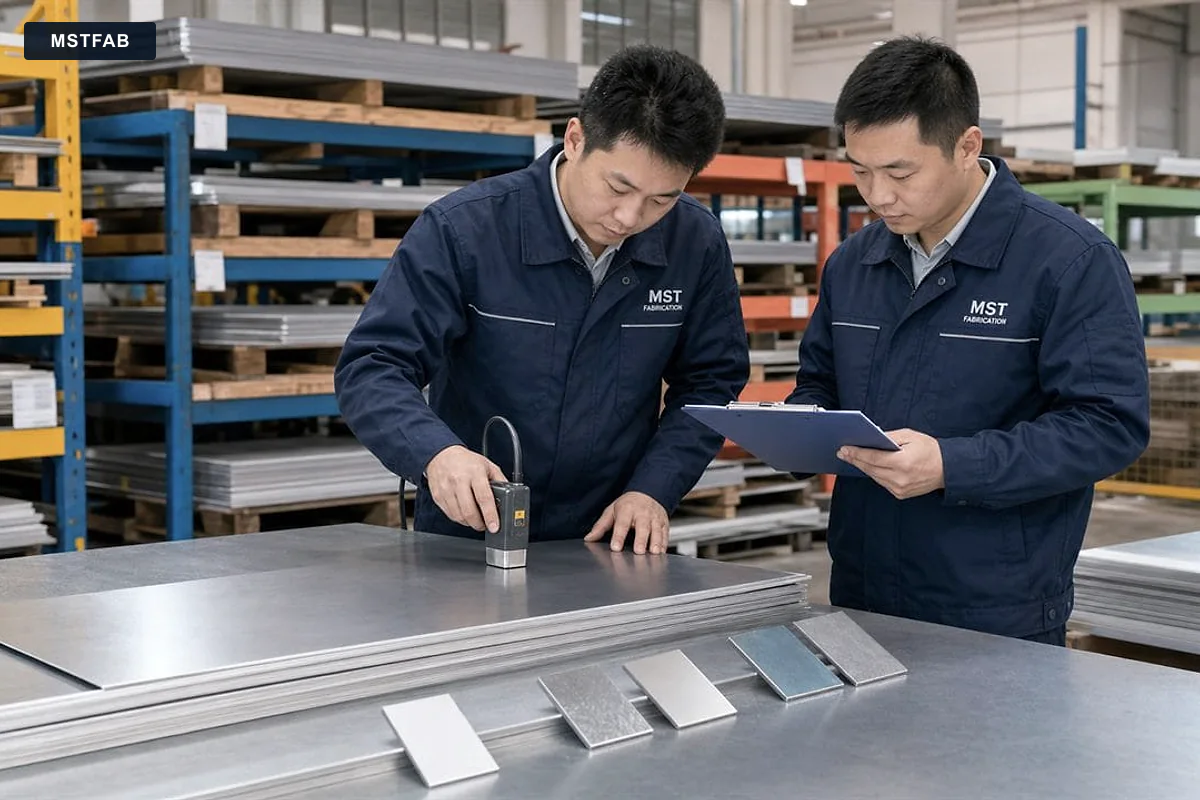
“Heavy duty” is not acceptance criteria. Give the load, mounting method or approved sample.
4. Review the complete sheet metal fabrication route
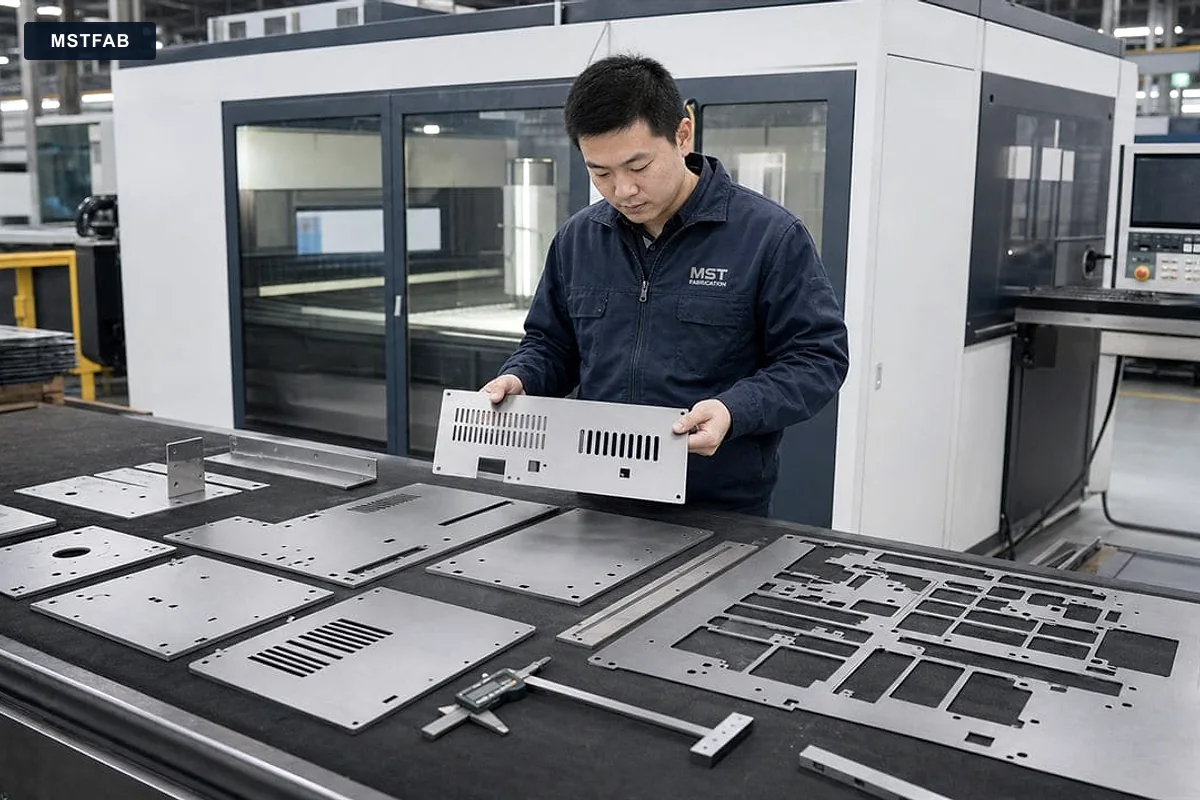
Fiber laser cutting creates panels, slots and customer-defined openings. Small holes in thick material may need drilling, reaming or tapping. Narrow webs around large cutouts need DFM review.
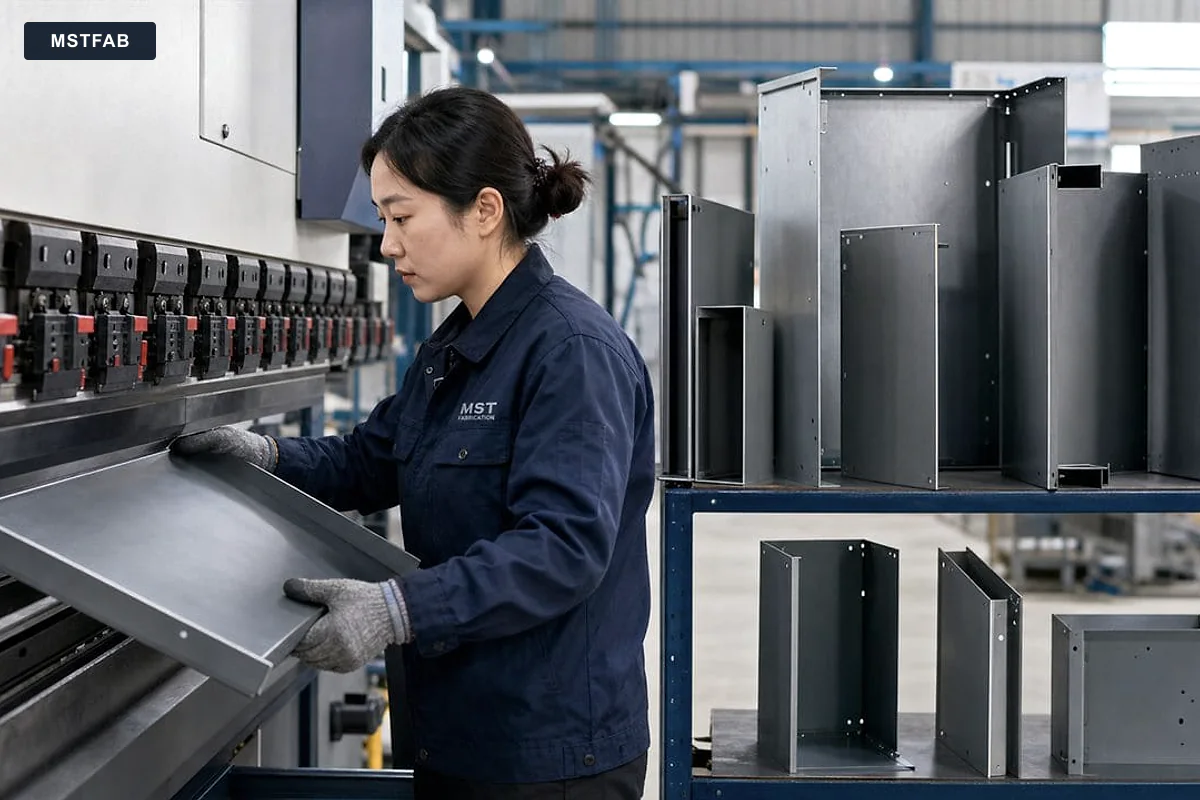
CNC bending creates returns and offsets. Flange length, bend radius, tooling access and springback affect the result. Hole-to-bend distance also matters.
Welded frames need fixtures and a controlled sequence because heat can pull door openings and mounting datums. TIG, MIG or spot welding follows material and drawing needs.
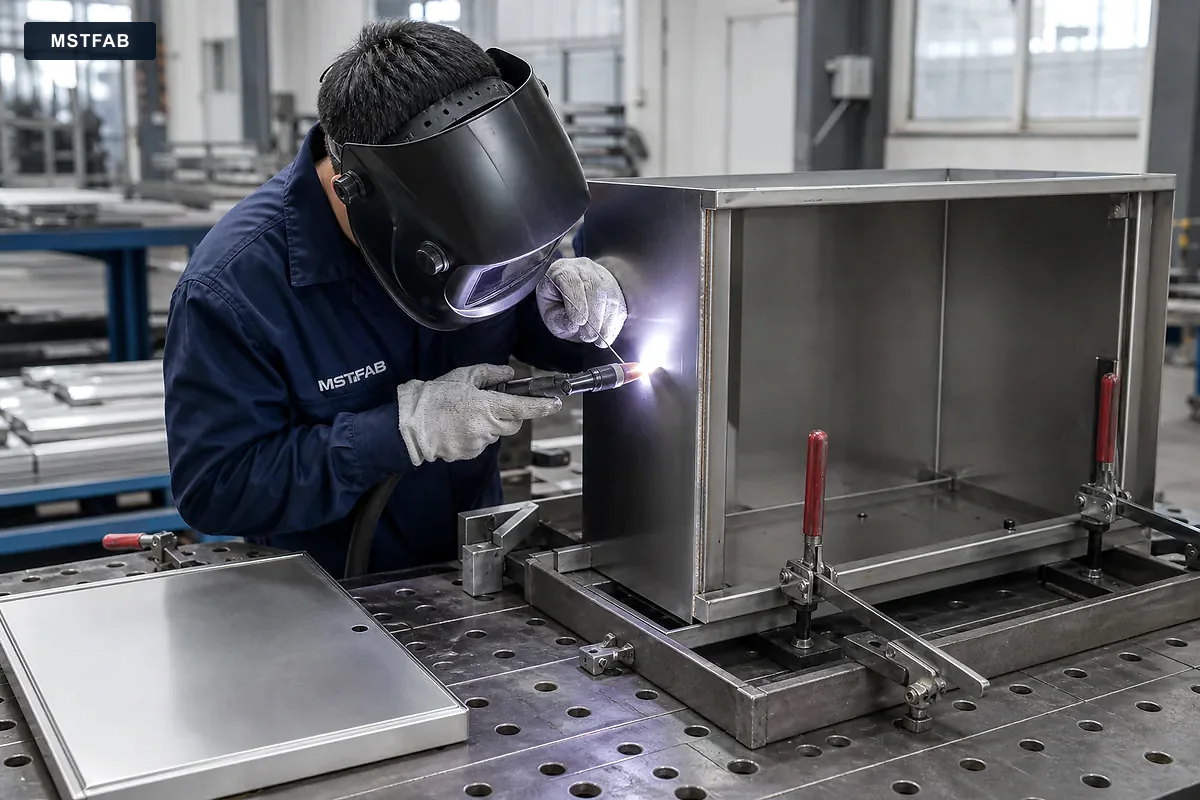
Plan PEM nuts, studs, hinges and latches with the bend sequence. Define type, thread and installation direction before access disappears.
5. Define finish, doors and gasket interfaces as measurable work
For powder coating, specify pretreatment, color, texture, gloss, visible faces, masking and cosmetic limits. “Nice gray” is a mood, not a corrosion specification. Allow coating buildup around hinges, panels, latches and ground zones.
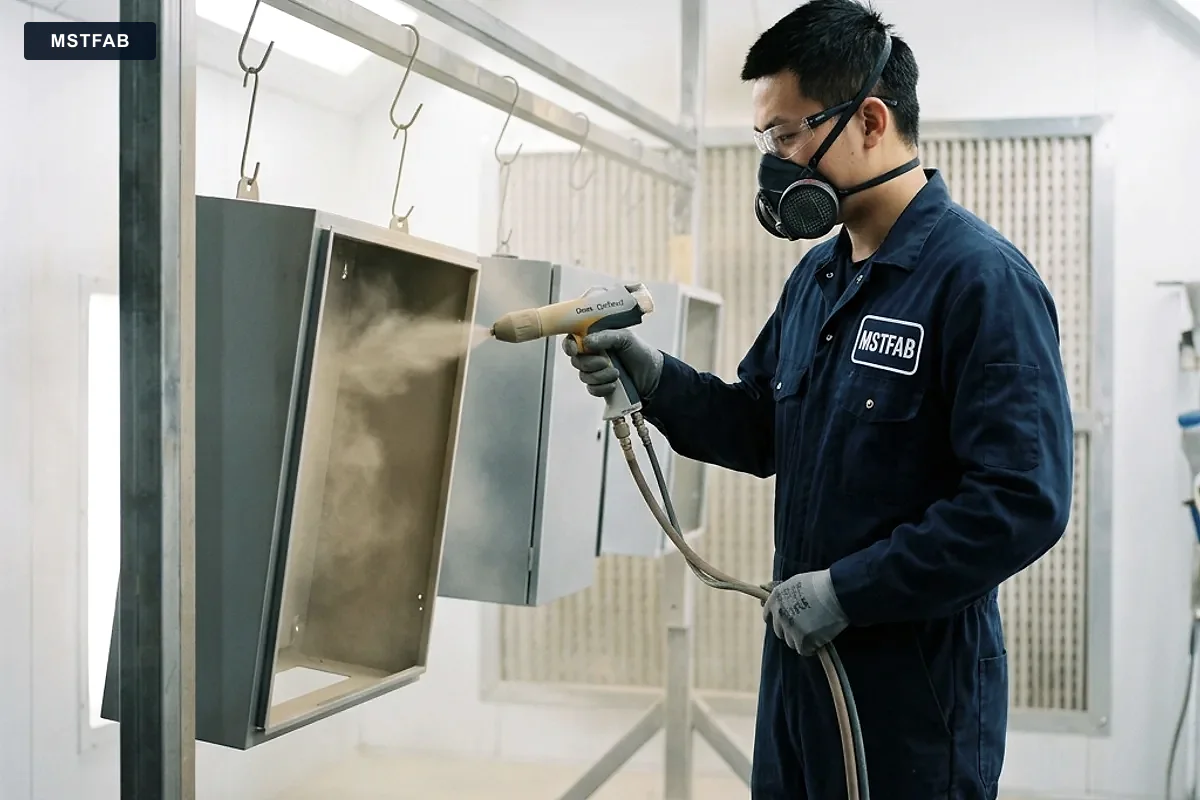
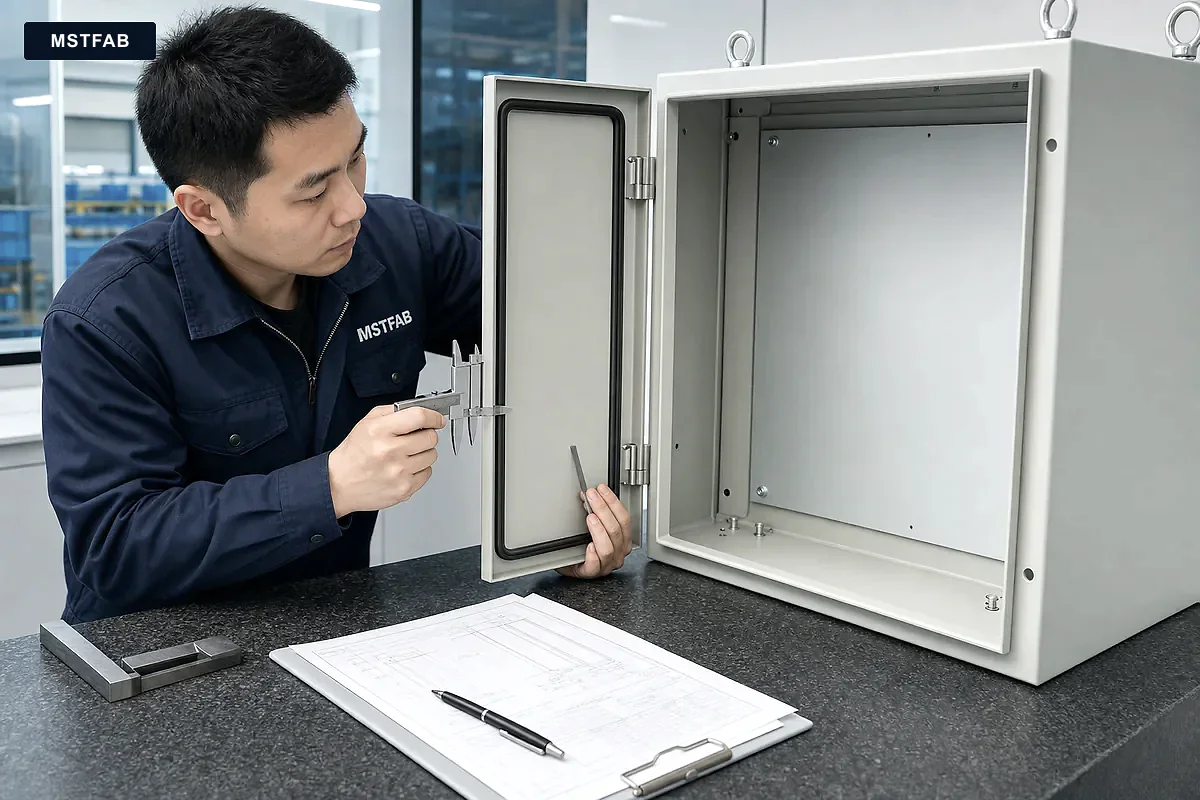
MSTFAB can check gasket channels, door gap and latch engagement as mechanical features. An empty shell alone does not earn an IP or NEMA rating; the finished-product owner validates the complete system.
- Door gap and flushness
- Hinge and latch alignment
- Gasket profile and channel
- Masked threads and ground zones
- Color, gloss and texture
- Cosmetic surface limits
6. Buy inspection evidence and packing, not just metal
First-article inspection should cover overall geometry, mounting-plate datum, door opening, cutouts, gland plates, hardware and coating-sensitive clearances. Define critical features and measurement methods before quotation.

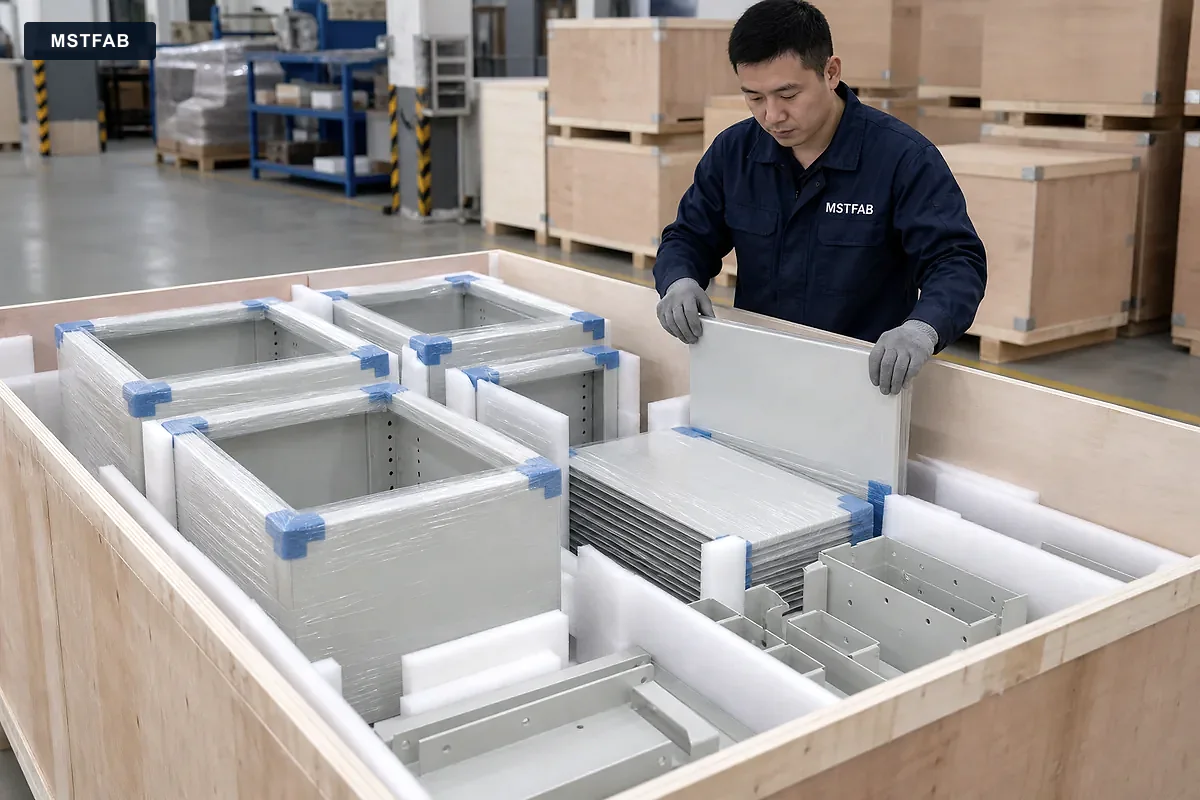
For repeat orders, retain the approved revision, inspection points and packing method. Label loose parts, separate coated surfaces and block heavy shells. One loose bracket can autograph every painted panel in the crate.
| Quote checkpoint | Supplier should state | Buyer value |
|---|---|---|
| Scope | Included shells, panels and hardware | Makes quotations comparable |
| Process | Material, forming, welding and finish | Reveals missing operations |
| Evidence | First-article checks and records | Makes quality reviewable |
What to send for a useful enclosure RFQ
- STEP assembly and part models
- Controlled drawings and revisions
- Material and thickness
- Datums and critical tolerances
- Device interface drawings
- Door and service clearances
- Weld and hardware schedule
- Finish and masking
- Quantities
- Inspection and destination
A complete industrial automation enclosure mechanical interface checklist supports an accurate shell quotation without transferring electrical responsibility.
Frequently asked questions
Does MSTFAB build a complete control cabinet?
No. MSTFAB supplies the empty shell and agreed mechanical hardware. The customer installs and validates the electrical system.
Can MSTFAB make device cutouts?
Yes, from controlled interface drawings or an approved sample. Device selection remains with the customer.
Can MSTFAB guarantee an IP or NEMA rating?
No rating follows from an empty shell alone. The finished-product owner validates the completed assembly.
Which materials are common?
Cold-rolled or galvanized steel, stainless steel 304 or 316, and aluminum 5052 or 6061 are common choices.
What is needed for quotation?
Send the 3D model, drawings, revisions, material, interfaces, hardware, finish, quantity and inspection needs.
Send the empty-shell drawing package
Share the model, drawings, material, interfaces, finish, quantity and inspection needs.
 WeChat Contact
 WhatsApp Me Directly