
How do hardware companies transfer sheet metal production to a new manufacturer without line downtime?
Hardware companies execute a seamless sheet metal production transfer using a 7-step transition playbook: (1) build a 60-to-90-day buffer safety stock with the incumbent supplier, (2) extract complete technical packages including native 3D CAD, 2D prints, and flat pattern bend deductions, (3) conduct comprehensive DFM review with the receiving fabricator, (4) audit and transfer buyer-owned hard tooling and fixtures, (5) validate a 30-piece pilot run with full Level 3 First Article Inspection (FAIR/PPAP), (6) run parallel shadow production, and (7) execute formal cutover once process capability (Cpk ≥ 1.33) is verified.
Transferring active sheet metal production from an underperforming, capacity-constrained, or geographically vulnerable fabricator to a new manufacturing partner is one of the highest-stakes operations in hardware supply chain management. When an ongoing production line consumes hundreds of server racks, medical enclosures, or industrial brackets weekly, an unmanaged transfer risks assembly starvation, missing tribal knowledge, or incompatible press brake tooling offsets. Following a structured stage-gate plan mitigates supply disruption entirely.
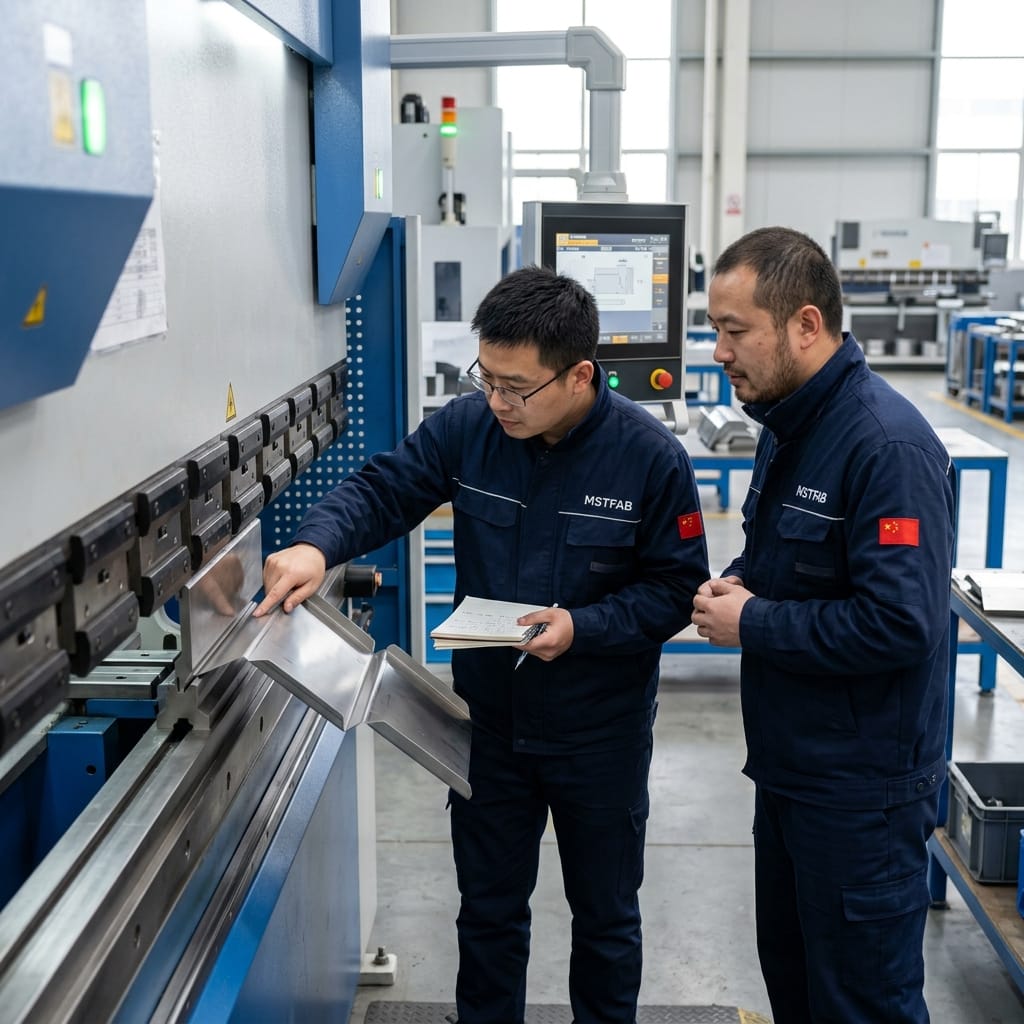
The 7-Step Sheet Metal Transfer Playbook
Step 1: Build the “Bridge” Safety Stock Buffer
Before informing the incumbent supplier of an impending contract phase-out, quietly place purchase orders to build a 60-to-90-day safety stock buffer of finished goods. Incumbent performance almost invariably degrades once an exit is announced – lead times stretch, defect rates rise, and key personnel shift elsewhere. A physical inventory cushion protects your assembly schedule throughout the qualification window.
Step 2: Technical Data Package (TDP) Extraction
A simple 2D PDF drawing is insufficient for precision sheet metal transfer. You must extract and own the complete Technical Data Package (TDP):
- Native 3D CAD solid models (STEP AP242 and SLDPRT/IPT) with full model-based definition (MBD).
- Controlled 2D engineering drawings with critical-to-quality (CTQ) geometric dimensioning and tolerancing (GD&T).
- Material Mill Test Reports (MTRs), approved coating formulations (RAL/Pantone codes), and insertion hardware part numbers (e.g., PEM nut series).
- Tribal manufacturing notes: specific bend sequences, forming tonnage, and corner notch relief geometries.
Step 3: Receiving Fabricator DFM & Tooling Calibration
Every sheet metal shop operates distinct CNC laser cut compensations, press brake tooling libraries, and bend deduction tables (K-factors). MSTFAB’s engineering team conducts an in-depth Design for Manufacturability (DFM) analysis to recalculate flat blank patterns, ensuring formed dimensions conform strictly to the master drawing regardless of machine differences.
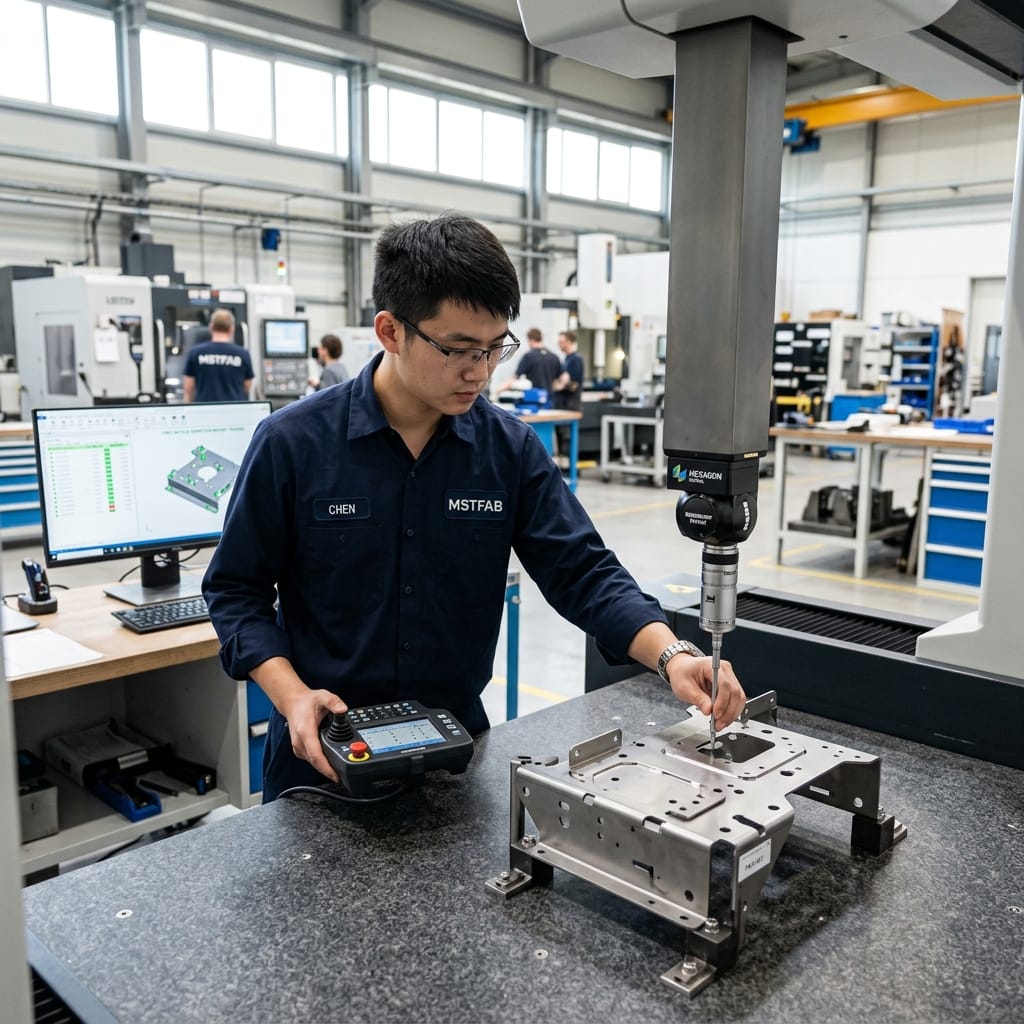
Sheet Metal Production Transfer Stage-Gate Matrix
The table below provides a milestone-driven governance matrix for executing a seamless supplier transfer:
| Transfer Phase | Core Objective | Key Milestone Deliverable | Passing Acceptance Gate | Risk Containment Protocol |
|---|---|---|---|---|
| 1. Safety Buffer | Protect assembly line continuity | 60–90 days finished goods in warehouse | 100% physical inventory confirmed | Hold final supplier payment until buffer verified |
| 2. TDP Extraction | Capture complete technical specification | STEP CAD, 2D prints, MTRs, bend notes | Full design package sign-off | Audit against latest physical production sample |
| 3. Receiving DFM | Align flat pattern to new tooling | CAM nesting, K-factor bend calculation | Tooling & program validation | Standardize to off-the-shelf punch radii |
| 4. Tooling Transfer | Recover buyer-owned progressive dies/fixtures | Tooling log, maintenance history, physical dies | Tool refurbishment & CMM inspection | Pre-approve secondary soft-tooling laser backup |
| 5. Pilot FAI (FAIR) | Validate dimensional accuracy on new line | 30-piece trial run with 100% CMM report | Cpk ≥ 1.33 across all CTQ features | 100% assembly fixture fit check |
| 6. Parallel Shadow Run | Dual-run verification under live conditions | Split 70/30 production batch delivery | Zero assembly fallout on new parts | Incumbent continues 70% volume temporarily |
| 7. Full Cutover | Complete supplier transition | 100% volume purchase order release | Safe-Launch audit sign-off (3 lots) | Close out incumbent contracts cleanly |
Tooling Transfer & Parallel Qualification
For stamped parts or complex robotic weldments utilizing buyer-owned hard tooling, physical transfer requires careful choreography:
- Tooling Audit & Condition Report: Before loading stamping dies or welding jigs onto transport trucks, demand a certified die inspection report and run 50 final verification parts to establish the baseline wear state.
- Refurbishment & Sharpening: Have the receiving fabricator sharpen punch dies and replace worn guide bushings before mounting the tool into their presses.
- Safe-Launch Period: Enforce 100% incoming dock inspection on the first three volume shipments from the new manufacturer before transitioning back to standard AQL sampling.
Transfer Your Sheet Metal Production Seamlessly to MSTFAB
MSTFAB specializes in frictionless production transitions for global OEMs. Our dedicated NPI engineering team recalculates bend deductions, optimizes CAM nesting, refurbishes transferred hard tooling, and delivers comprehensive CMM First Article packages within rapid timelines. Contact our engineering team today to review your production transfer roadmap.
 WeChat Contact
 WhatsApp Me Directly