
How can buyers negotiate shorter lead times in custom sheet metal fabrication?
Buyers negotiate shorter sheet metal lead times by executing four strategic levers: (1) issuing 12-month Blanket Purchase Orders with rolling quarterly releases to authorize raw coil pre-purchasing, (2) standardizing raw material gauges (e.g., sticking to readily available 1.5 mm and 2.0 mm 5052 aluminum coils), (3) implementing staggered partial shipments (delivering 20% bridging stock via air/express while 80% moves via ocean), and (4) streamlining DFM reviews to eliminate custom tooling lead times.
In hardware product development and electronics manufacturing, lead time is often more valuable than piece price. Missing an OEM production window by two weeks can result in thousands of dollars in retailer non-delivery penalties or losing a market window to a competitor. However, demanding that a fabricator simply “work faster” without addressing underlying production bottlenecks leads to broken promises and compromised quality. Strategic buyers negotiate lead times by optimizing the fabricator’s operational rhythm.
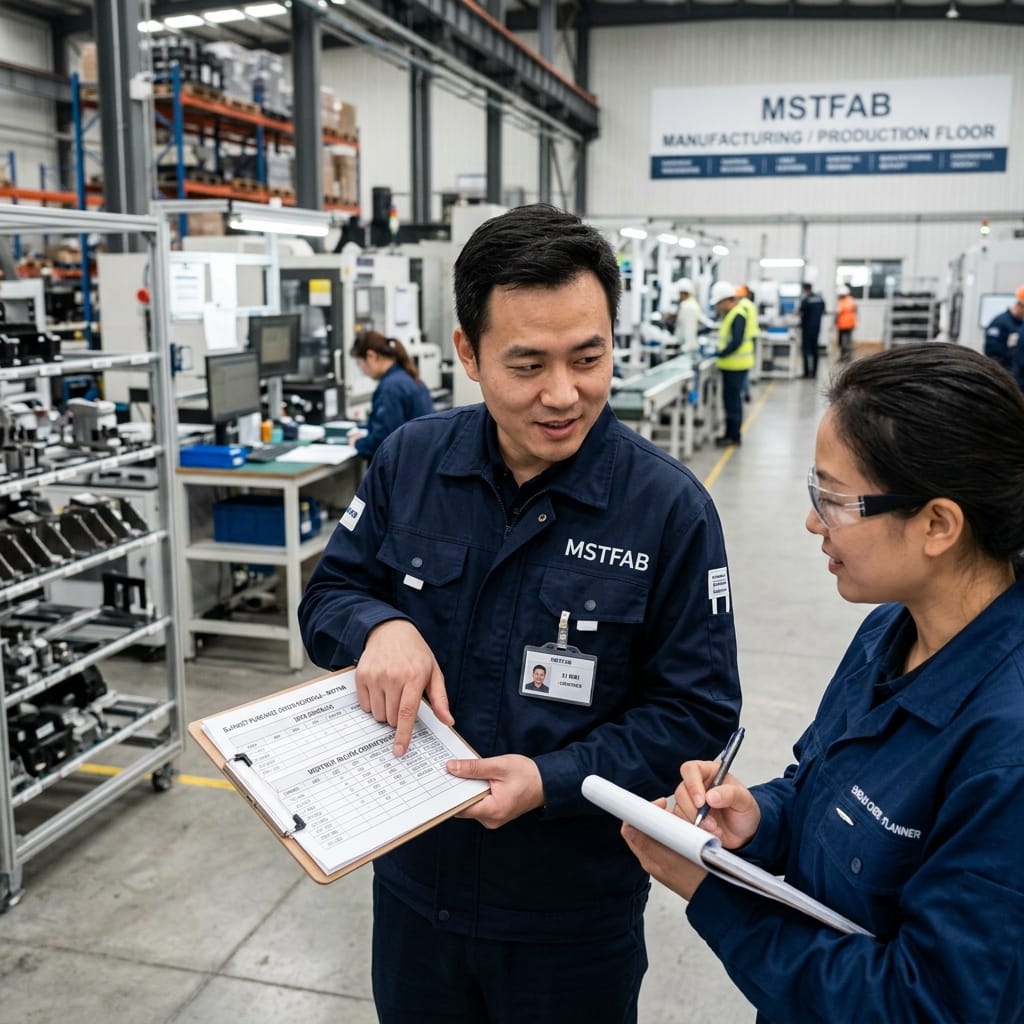
The 4 Pillars of Lead-Time Compression
1. Blanket Orders & Raw Material Pre-Commitment
The single largest component of sheet metal lead time is frequently raw material mill procurement (3 to 6 weeks for specialty alloys or custom coil widths). By issuing a 12-month Blanket Purchase Order, the buyer authorizes the fabricator to hold raw sheets in safety stock, cutting production lead time from 6 weeks down to 5 to 7 days upon release.
2. Standardizing Material Grades & Gauges
Specifying odd sheet thicknesses (e.g., 1.8 mm aluminum when 2.0 mm is standard stock) forces the supplier to place specialized mill minimum orders. Standardizing your BOM around industry-standard thicknesses (1.0 mm, 1.2 mm, 1.5 mm, 2.0 mm, 3.0 mm) allows the fabricator to nest your parts immediately onto daily master sheet runs.

3. Staggered Batches & Bridging Shipments
Never wait for a full 5,000-piece production run to finish powder coating before releasing shipping logistics. Negotiate a staged delivery schedule: ship 500 units via air within 10 days to satisfy immediate line ramp-up, while the remaining 4,500 units travel via cost-effective ocean freight.
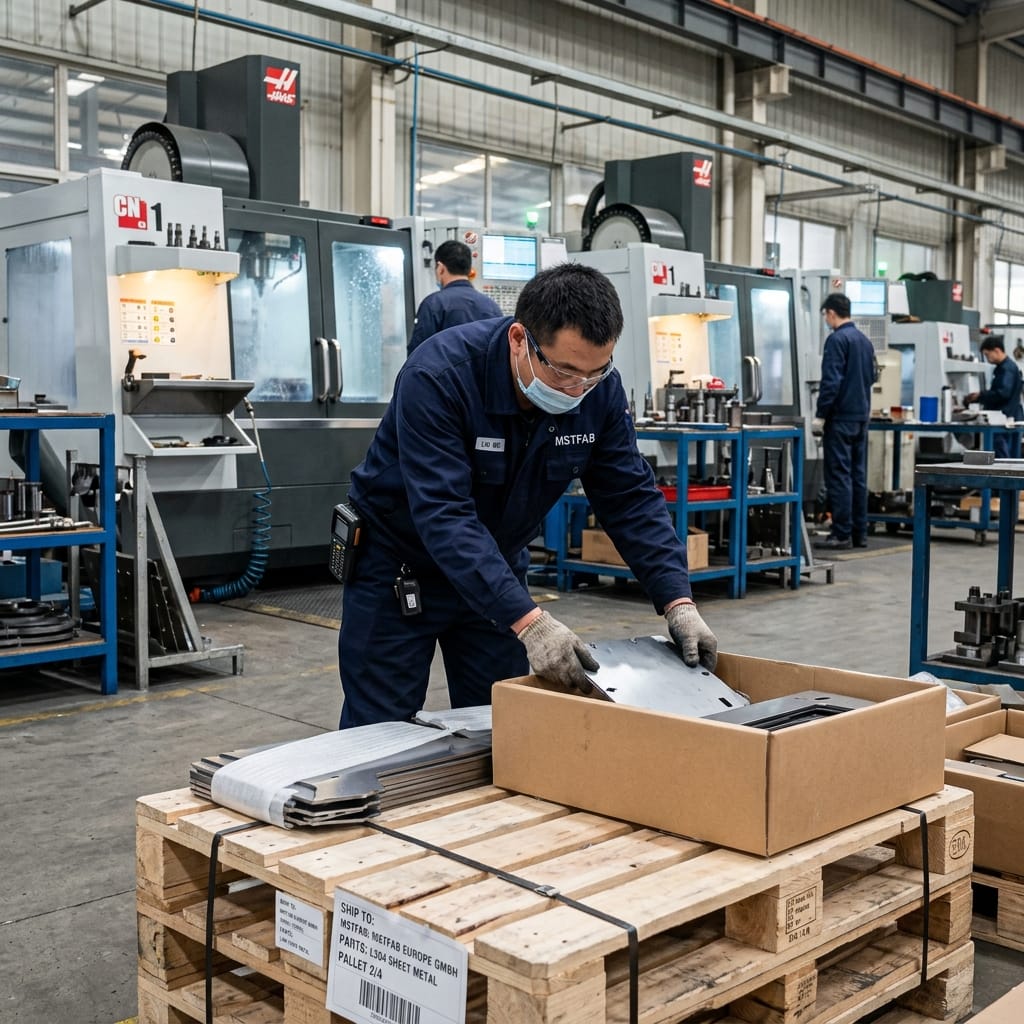
Sheet Metal Process Bottlenecks & Compression Strategies
The table below breaks down the typical manufacturing cycle time across sheet metal operations and the corresponding lead-time negotiation strategy:
| Fabrication Phase | Standard Turnaround | Primary Bottleneck Cause | Negotiation & DFM Compression Lever | Compressed Target |
|---|---|---|---|---|
| Raw Material Sourcing | 15 to 25 Days | Mill batch allocation & custom coil slit widths | Establish Vendor-Managed Inventory (VMI) raw buffer | 1 to 2 Days |
| CNC Laser & Punching | 3 to 5 Days | CAM nesting queues & programming revisions | Provide native 3D CAD (STEP) with embedded DFM rules | 1 Day |
| Press Brake Forming | 4 to 6 Days | Complex multi-bend setups & custom punch radii | Standardize all bend radii to standard tooling (e.g., R = 1.0 mm) | 2 Days |
| Surface Coating (Powder/Anodize) | 5 to 8 Days | Batch color line changeovers & external sub-tier transfer | Specify standard stock RAL colors (e.g., RAL 9005 black, RAL 7035 gray) | 2 to 3 Days |
| Quality Inspection & FAIR | 2 to 3 Days | Manual caliper logging across 50 blueprint features | Limit FAI to pre-agreed Critical-to-Quality (CTQ) dimensions | 1 Day |
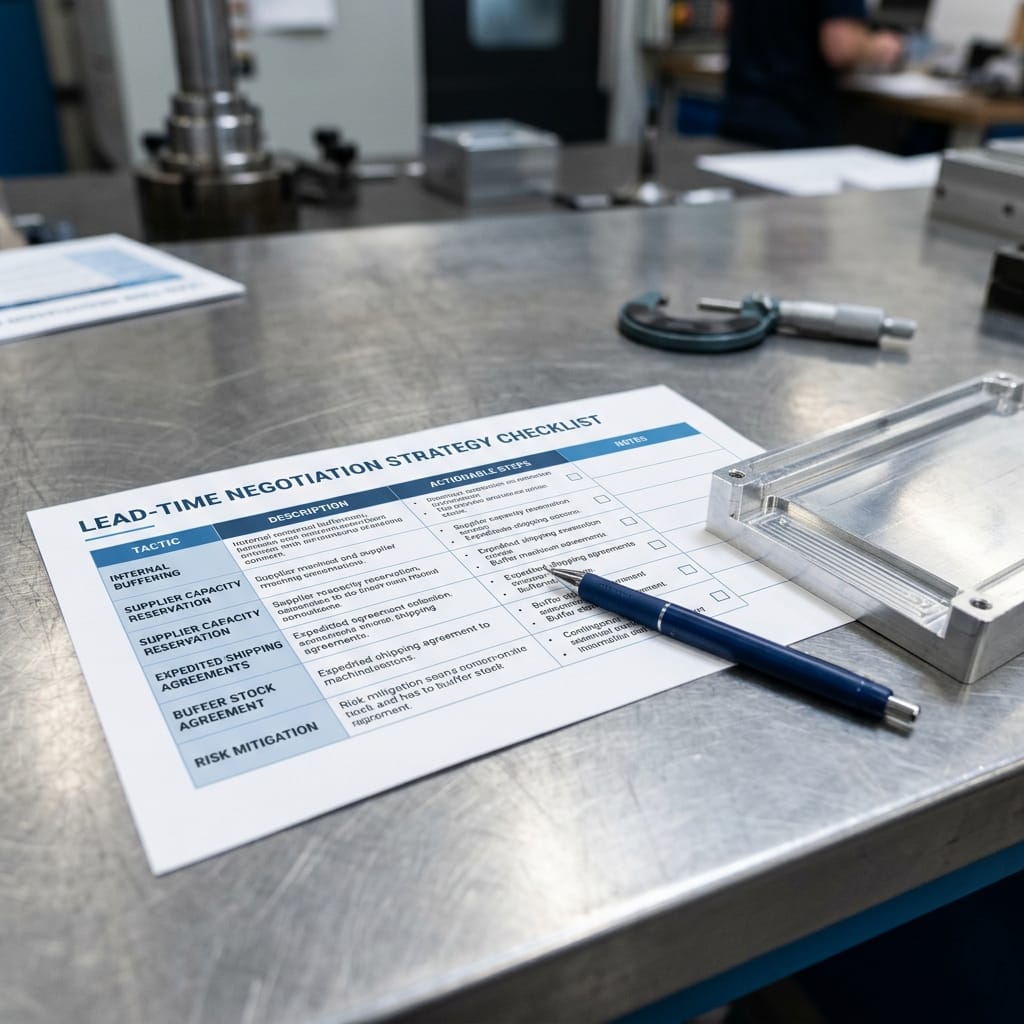

Accelerate Your Production Timeline With MSTFAB
MSTFAB operates high-speed automated fiber laser cutters, multi-axis robotic press brakes, and in-house conveyorized powder coating lines. We maintain extensive raw coil stocks across standard aluminum, stainless steel, and galvanized grades to compress standard manufacturing cycles down to days. Contact our production planners today for an expedited quote.
 WeChat Contact
 WhatsApp Me Directly