
How can OEM hardware manufacturers identify and secure a reliable sheet metal fabrication partner?
OEM manufacturers secure reliable sheet metal partners by executing an 8-step qualification framework: (1) Evaluate initial RFQ responsiveness and technical thoroughness within 48 hours, (2) Demand formal DFM design feedback prior to purchase order commitment, (3) Audit verifiable process capabilities rather than marketing photos, (4) Stage progressive prototype and pilot production runs to test dimensional repeatability (Cpk ≥ 1.33), (5) Enforce non-negotiable quality evidence including Mill Test Reports (MTR) and AS9102 First Article Inspection Reports, (6) Screen for red flags such as excessive subcontracting and lack of machine redundancy, (7) Measure real-time engineering communication and proactive issue escalation, and (8) Verify integrated sub-assembly, protective foam packaging, and export logistics readiness.
Original Equipment Manufacturers (OEMs) operate in high-stakes environments where supply chain failures directly threaten revenue, customer satisfaction, and brand equity. In precision sheet metal fabrication, finding a partner is not just about locating a machine shop with a laser cutter; it requires partnering with an organization that shares your quality standards, respects engineering deadlines, and can seamlessly scale from pilot validation to thousands of production assemblies.
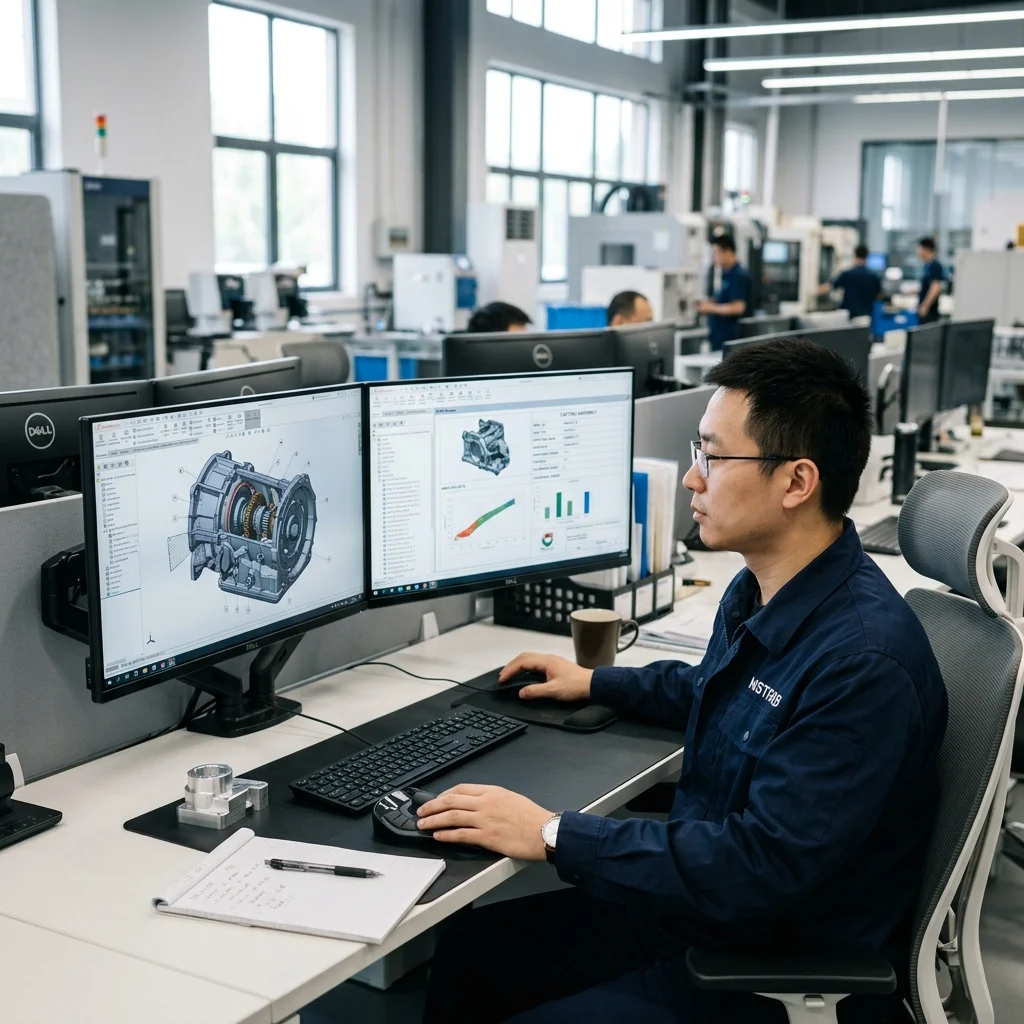
The 8-Step OEM Partner Qualification Protocol
Step 1: Scrutinize Initial RFQ Response & Commercial Clarity
How a fabricator handles your initial Request for Quotation (RFQ) reveals their organizational discipline. An exceptional supplier provides itemized quotes detailing material alloys, CNC cycle times, finishing specs, NRE tooling charges, and quantity tier pricing within 48 to 72 hours. Vague, single-line quotations indicating only a lump-sum price signal poor cost accounting and high risk of future price gouging.
Step 2: Require Pre-Production DFM Feedback
Before issuing a PO, test the supplier’s engineering depth by requesting a Design for Manufacturability review. Reliable partners identify potential manufacturing pitfalls: tight bend reliefs that cause tearing, hole locations placed too close to bend tangent lines, or weld joints lacking proper access clearance. Their engineers propose constructive revisions that lower unit cost and improve yields without compromising product function.
Step 3: Audit Machine Infrastructure & In-House Integration
Ensure the fabricator possesses modern, high-precision equipment. CNC fiber laser cutters, automated multi-axis press brakes with laser angle measurement, robotic welding cells, and automated powder coating systems guarantee process consistency. Verify that critical processes are performed in-house; third-party subcontracting creates blind spots in quality control and schedule adherence.
Step 4: Use Prototype & Pilot Runs to Validate Repeatability
Never transition directly from quotation to full mass production. Execute a formal three-tier release: (1) Prototype run (5–10 units) to validate physical assembly and fitment, (2) Pilot batch (50–100 units) to measure tooling wear, cycle times, and statistical process capability (Cpk), and (3) Production sign-off only after all Critical-to-Quality (CTQ) dimensions achieve stable statistical control.
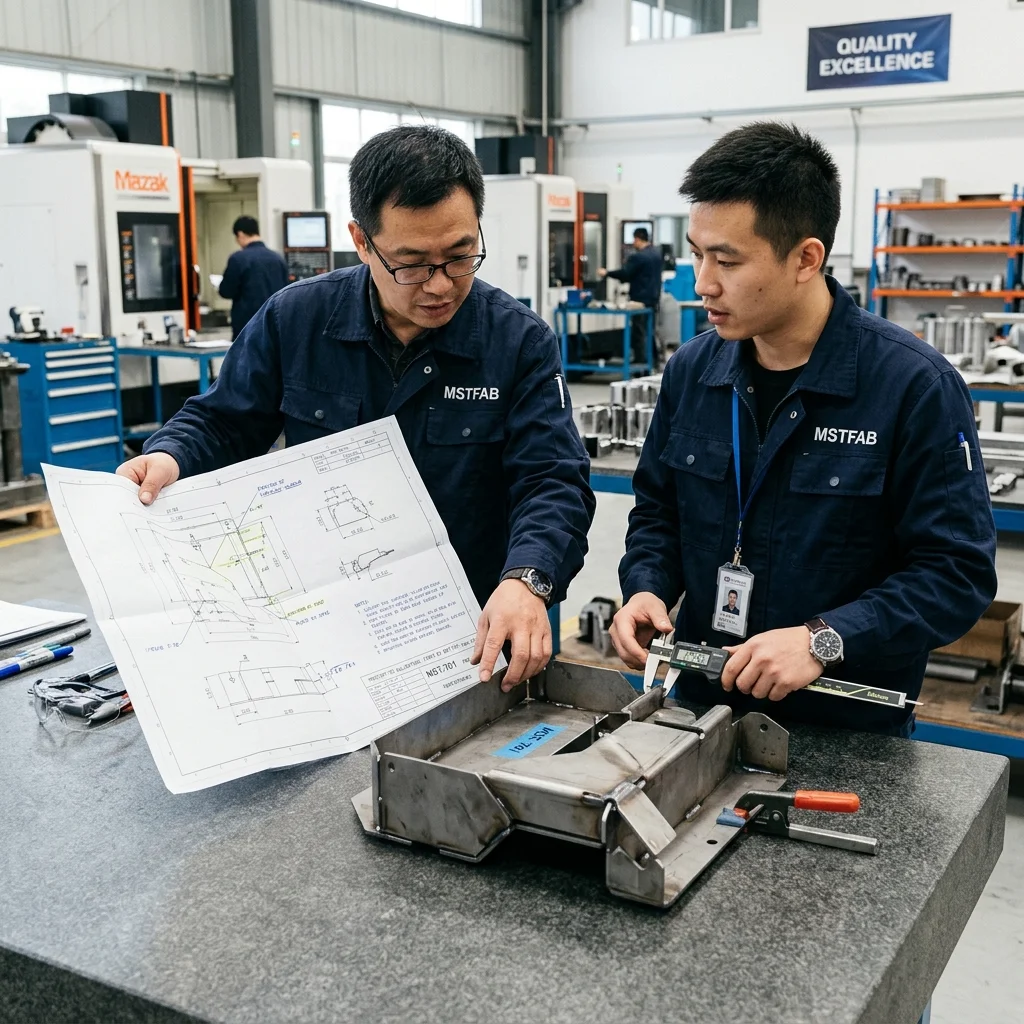
Step 5: Demand Objective Quality Evidence Before Release
Trust must be verified with data. Prior to authorizing balance payments or container dispatch, require comprehensive quality documentation: full AS9102 First Article Inspection Reports (FAIR), raw material Mill Test Reports (MTR), dry-film paint thickness logs, cross-hatch adhesion results, and PEM hardware torque/push-out test data.
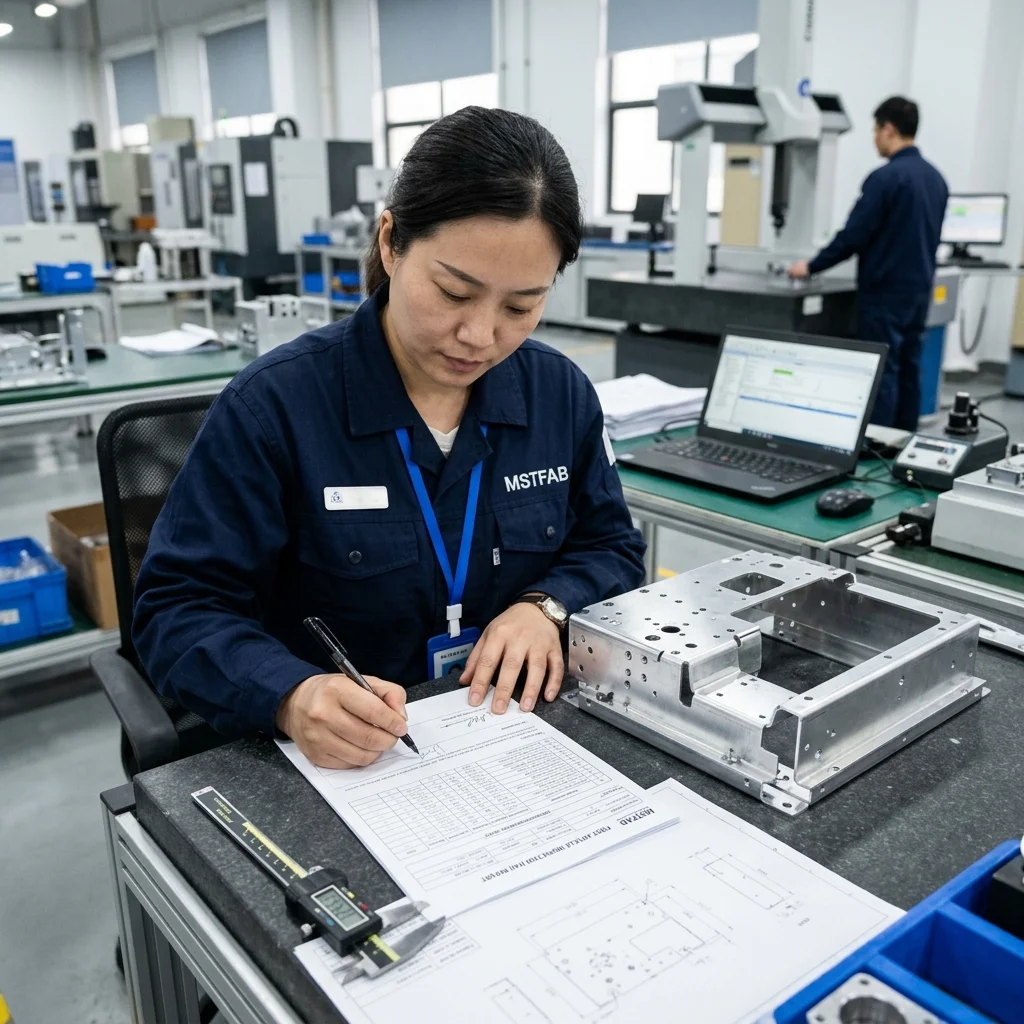
Step 6: Monitor Proactive Communication & Problem Resolution
Manufacturing challenges inevitably arise—a sheet metal batch might show unexpected springback or a raw material mill delivery may be delayed. The true test of a partner is transparency. Exceptional suppliers notify you immediately with data, root cause analyses (8D reports), and corrective action plans rather than concealing issues until shipment day.
Step 7: Confirm Turnkey Assembly & Custom Packaging
Many OEMs want to eliminate internal assembly overhead by receiving ready-to-wire sub-assemblies. A high-value sheet metal partner installs gaskets, hinges, latches, grounding studs, wiring harnesses, and acrylic display windows in-house. Furthermore, they engineer custom packaging with CNC-cut foam inserts to ensure delicate painted assemblies survive rough transit handling.
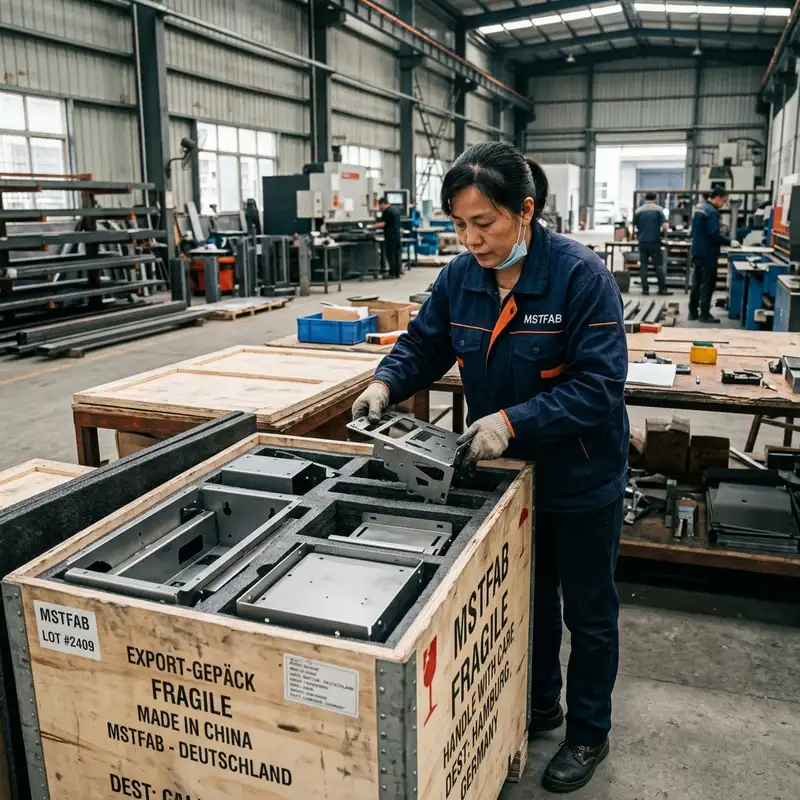
OEM Sheet Metal Supplier Qualification Scorecard
Utilize the structured matrix below to benchmark prospective manufacturing partners during qualification audits:
| Qualification Dimension | Target Benchmark | Minimum Acceptable Standard | Disqualifying Defect |
|---|---|---|---|
| RFQ Turnaround & Detail | Within 48 hours; fully itemized cost model | Within 5 business days | Single lump-sum quote; unresponsive communication |
| DFM Engineering Review | Full 3D CAD analysis, bend simulations & cost-saving proposals | Basic print review confirming tooling feasibility | No DFM review; discovers tooling issues during mass production |
| Quality Verification & FAI | AS9102 FAIR with CMM data, MTR certs & coating logs | Standard dimensional inspection sheet | No formal inspection reports; verbal quality claims only |
| Process Capability (Cpk) | Cpk ≥ 1.33 on all Critical-to-Quality dimensions | 100% manual dimensional sorting | Frequent dimensional drift and assembly fitment failures |
| Assembly & Packaging SLA | Turnkey mechanical integration + custom CNC foam crates | Individual bubble-wrap in double-wall cartons | Loose packing resulting in transit scratches or bent flanges |
Scale Your OEM Production with MSTFAB
MSTFAB is built to serve OEM hardware innovators. From rapid NPI prototypes to high-volume blanket PO releases, our engineering-driven manufacturing model ensures tight tolerances, robust quality documentation, and seamless turnkey assembly. Connect with our OEM program managers to review your drawings and request a comprehensive quotation.
 WeChat Contact
 WhatsApp Me Directly