
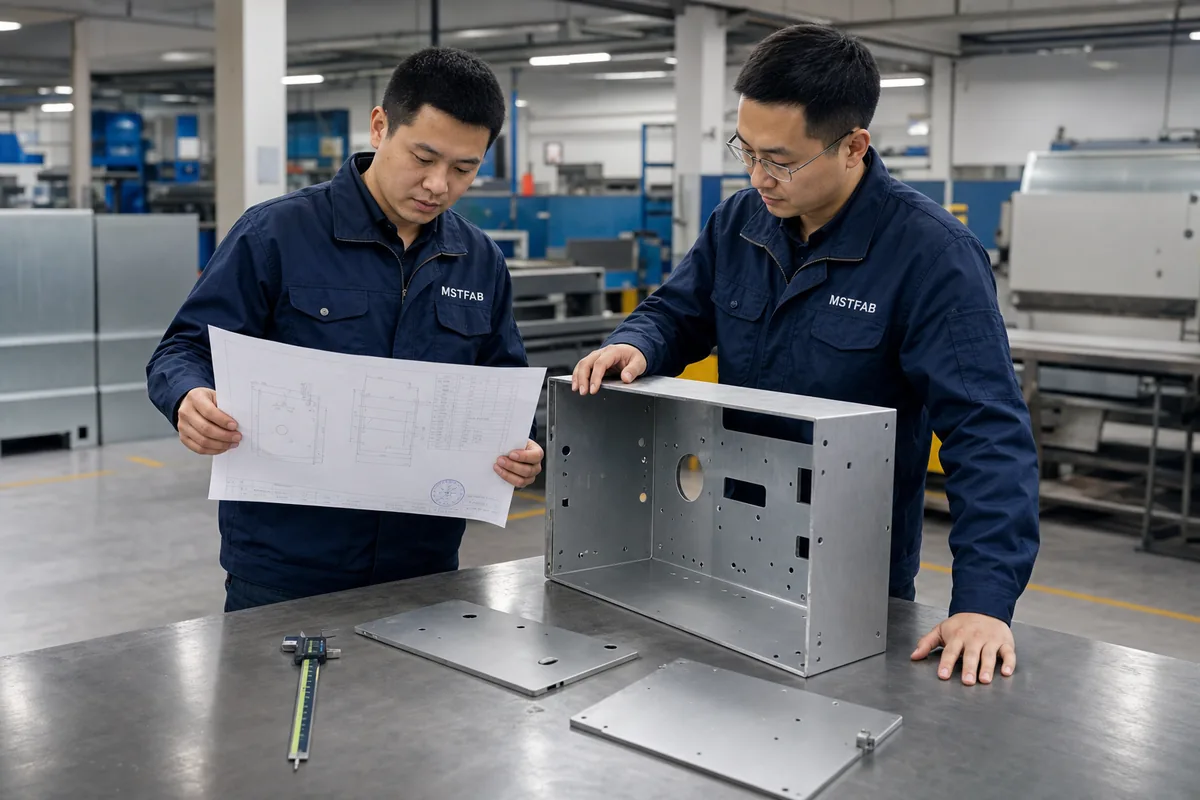
Short answer: choose a sheet metal fabrication supplier by the evidence it can produce, not by the confidence of its sales deck. Ask how drawings are controlled, how bend and weld risks are reviewed, what a first-article report contains, how batch changes are tracked and how coated parts are protected for export.
A low unit price can become expensive with impressive speed when hole positions drift, doors stop fitting or a beautiful powder coat fills every thread. The useful question is not simply, “Can you make this?” It is, “What will you check before, during and after you make it?”
Evidence a fabrication supplier should provide
- Controlled drawing revision and DFM notes
- Material grade and thickness confirmation
- Process plan for cutting, bending, welding and finishing
- First-article or dimensional evidence by agreement
- Mechanical fit, coating and packing checkpoints
- Batch traceability and change-control records
Responsibilities that remain with the buyer
- Product function and system architecture
- Electrical, thermal and safety engineering
- Component selection, installation and energized testing
- Final product certification and regulatory approval
- Controlled drawings, critical characteristics and acceptance criteria
- Field installation and maintenance requirements
Start with scope: can the factory make your kind of metal work?
A supplier that mainly sells standard cabinets may not be the right source for drawing-based OEM parts. A job shop that cuts flat blanks may not control welded enclosure squareness or cosmetic coating. Compare your part family with visible production evidence: material range, thickness, part size, bend complexity, welding access, hardware, finish and batch quantity.
For MSTFAB, the core scope is custom sheet metal fabrication for empty metal housings, panels, brackets, frames and mechanical subassemblies. That boundary matters because it keeps the manufacturing discussion honest.
Ask to see how DFM issues are recorded before release
A serious supplier should review bend radius, minimum flange, hole-to-bend distance, weld access, tolerance stack-up, hardware clearance, masking and inspection datums. It should also explain which dimensions depend on process capability and which need special tooling or secondary inspection.
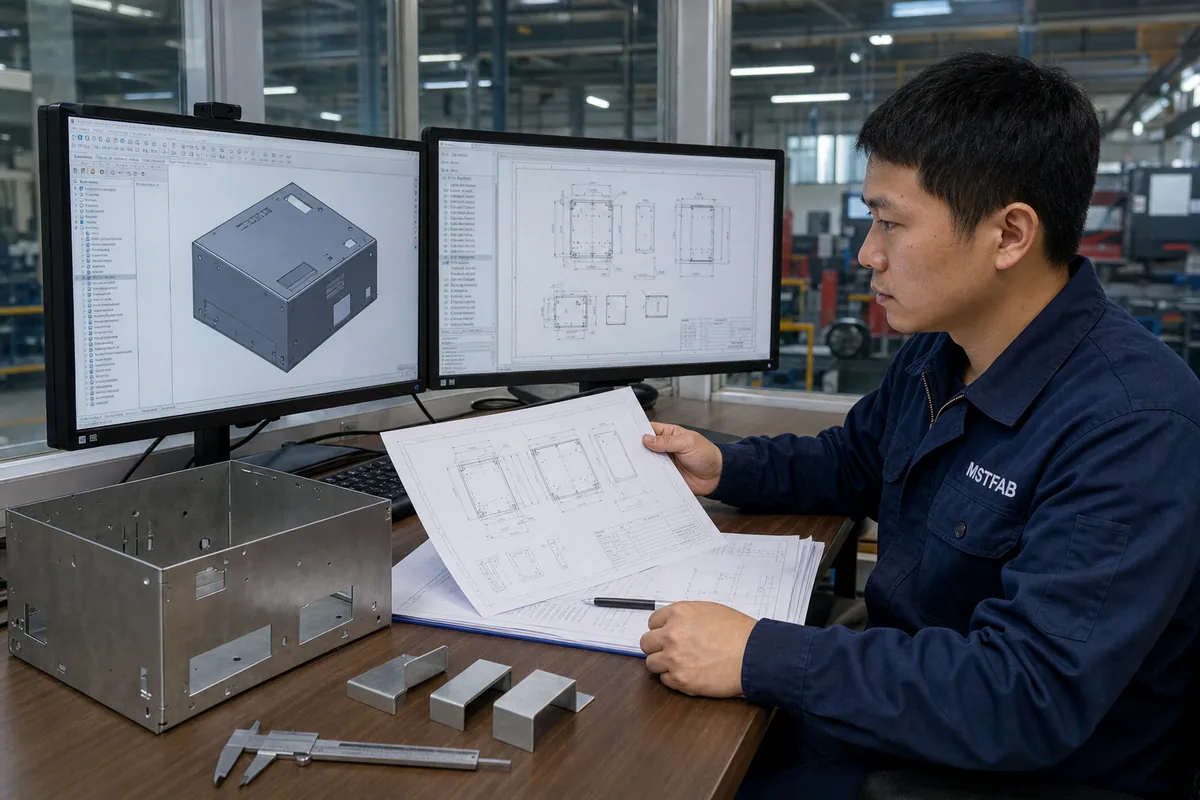
Good DFM is not a ritual in which someone writes “looks OK” on an email. Useful feedback points to the drawing, names the risk and proposes a measurable change. If your drawing revision changes, the quote and work instruction should change with it.
Verify laser-cut edge quality, cutout control and revision discipline
For laser-cut parts, ask how programs are linked to drawing revisions, how burrs and spatter are controlled and how small features are inspected. Critical openings should be tied to datums that still make sense after bending. A perfect flat blank can still become a disappointing formed part if downstream effects are ignored.
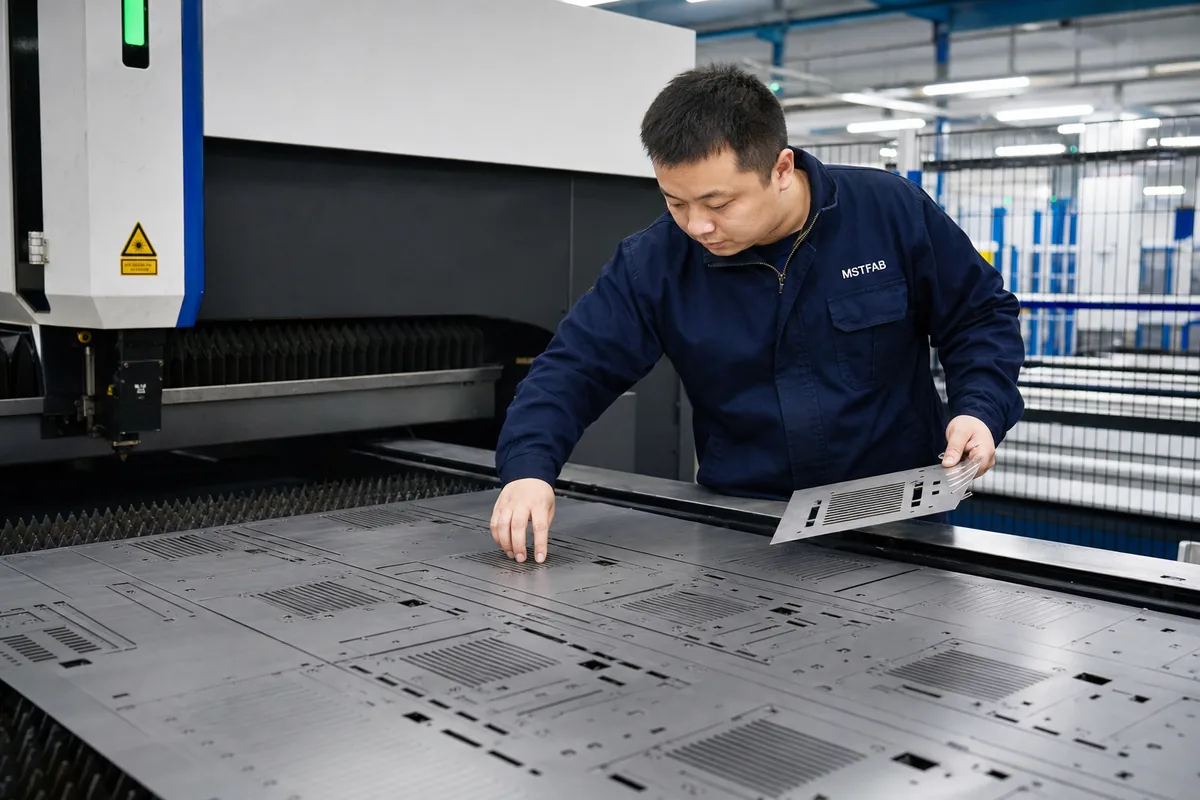
Review MSTFAB’s laser cutting services when your supplier comparison depends on blank size, material range and cut-feature control.
Check bending capability with real tooling and real tolerance logic
Machine tonnage alone does not prove formed-part capability. Ask about tooling selection, bend sequence, grain direction, springback compensation, setup verification and how operators control long panels. The supplier should explain whether the drawing tolerance is realistic after multiple bends rather than accepting it and hoping physics is feeling generous.
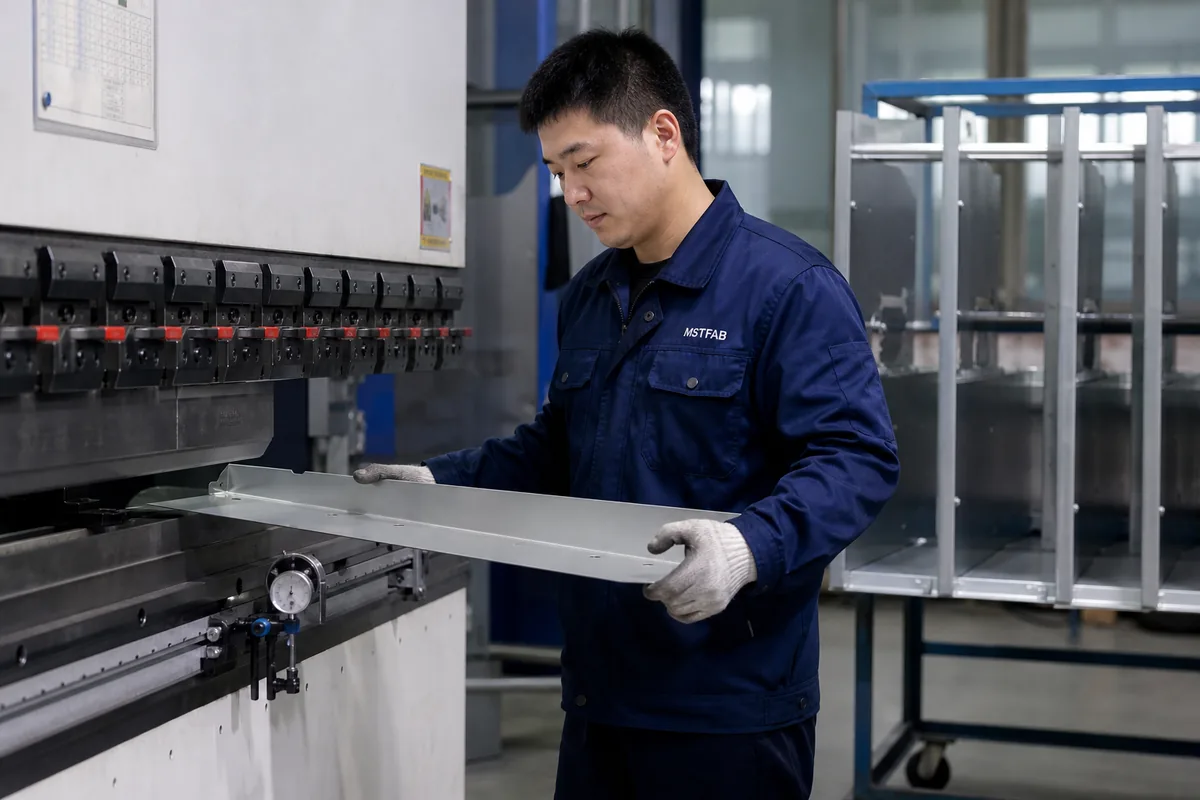
The sheet metal bending page describes MSTFAB’s forming route and the drawing details that help quotations move faster.
Evaluate fixtures, weld sequence and distortion control
Weld strength is only part of the job. Enclosure buyers also care about frame squareness, door openings, mounting faces and cosmetic cleanup. Ask whether the supplier uses fixtures, defined tack and weld sequences, weld symbols, approved samples and post-weld inspection points.
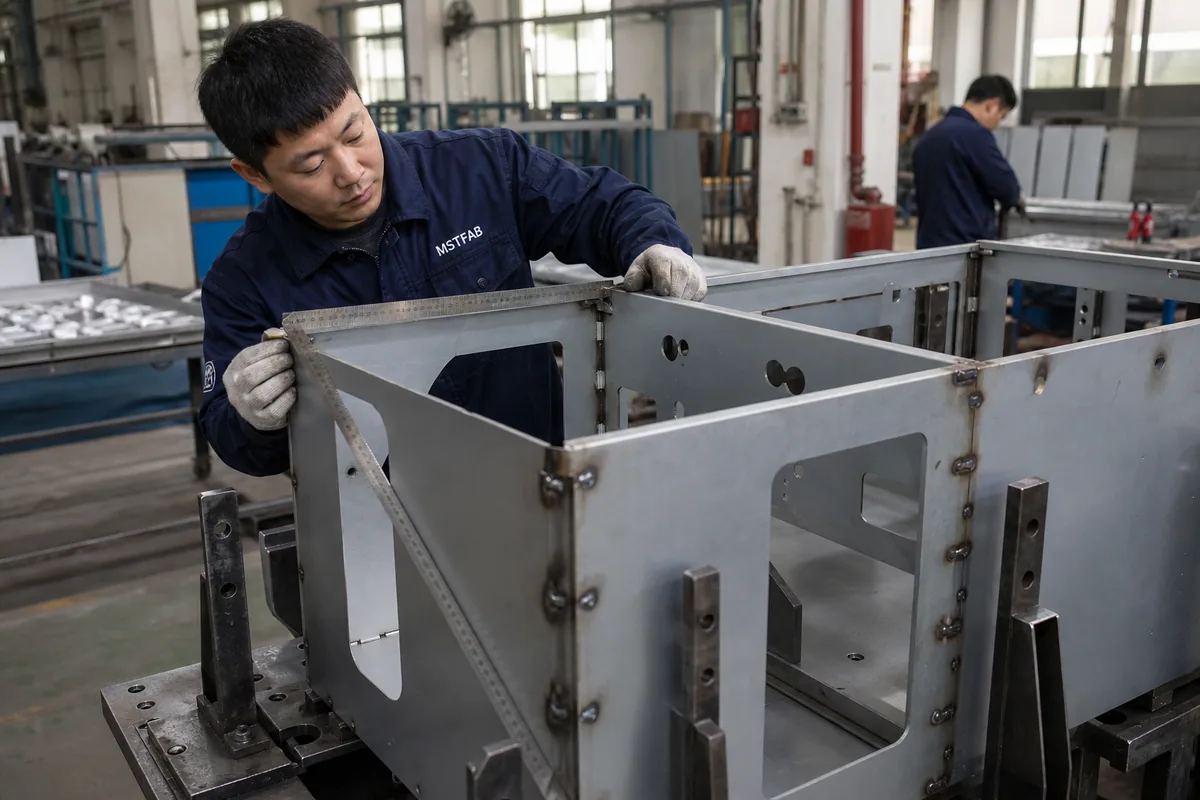
A digital caliper is useful. It is not, by itself, a welding quality system. Use the welding services page to compare process scope, materials and inspection planning.
Make coating, masking and cosmetic limits part of the drawing conversation
Powder coating can improve corrosion resistance and appearance, but coating buildup also changes fits. Threads, grounding areas, gasket faces, hinges and tight mating features may need masking. Buyers should define color, gloss, texture, coating thickness, visible surfaces and acceptable cosmetic limits before batch release.
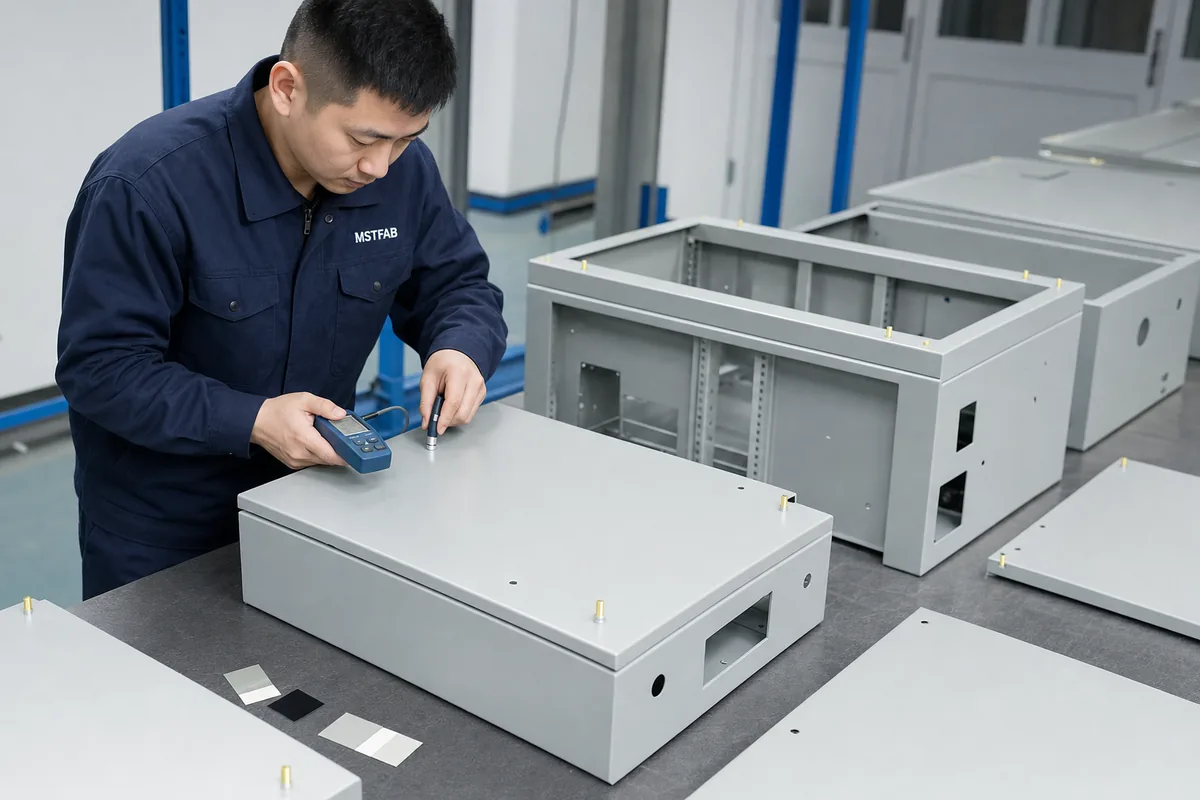
Compare finish routes on the surface treatment services page. Ask for sample approval when color or texture consistency matters across repeat orders.
Require inspection evidence that follows the drawing
A first article should verify the characteristics that can make the part fail in assembly: datums, hole patterns, overall size, formed geometry, door openings, mounting interfaces and specified finish checks. Decide before ordering whether you need a full dimensional report, a limited critical-dimension report, material records or photographs.
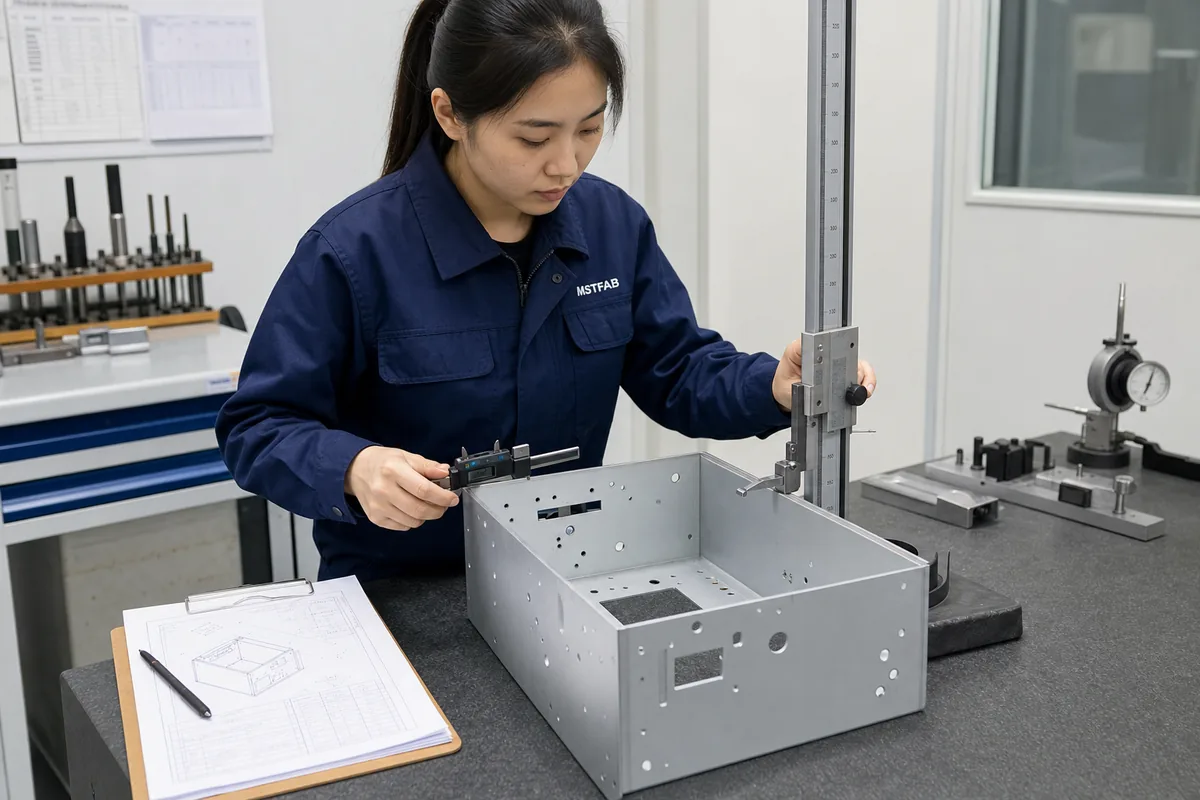
The most useful report is not the longest one. It is the one that clearly connects the measured value, drawing requirement, inspection method and result. See the dimensional inspection report guide for a practical evidence checklist.
Use trial fit to catch expensive assembly surprises early
For enclosure shells, mechanical trial fit can check doors, hinges, locks, gasket channels, mounting plates, studs and removable panels. This is not electrical assembly or energized testing. It is a controlled check that the fabricated shell accepts its drawing-defined mechanical interfaces.
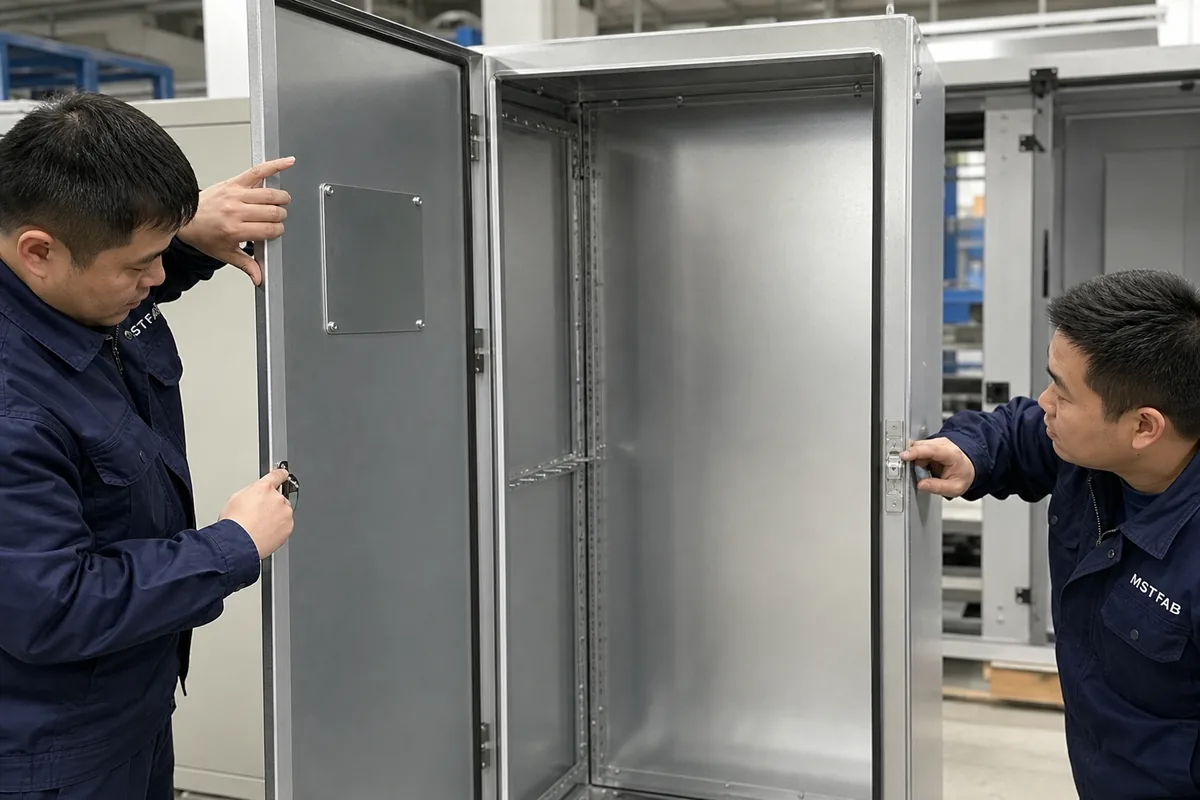
Agree how approved changes will be recorded after trial fit. A supplier should not quietly repair one sample and leave the production drawing unchanged. The first-article inspection guide explains the handoff from prototype evidence to repeat production.
Audit repeatability, not only nominal machine capacity
Capacity claims should be connected to your actual part family and production schedule. Ask how work orders identify material lots, drawing revisions, programs, tooling, approved samples and inspection status. For recurring orders, also ask how the supplier handles version changes and prevents mixed revisions.

A busy factory can still be organized. A quiet factory can still lose your latest PDF. Visible batch identification and record control are stronger evidence than machine-count arithmetic alone.
Inspect the packing plan before the parts meet a freight terminal
Thin panels, coated doors and welded frames need different protection. Ask how parts are separated, blocked, corner-protected, moisture-protected and labeled. The packing method should match part weight, surface sensitivity, shipping mode and how the buyer will unpack the shipment.
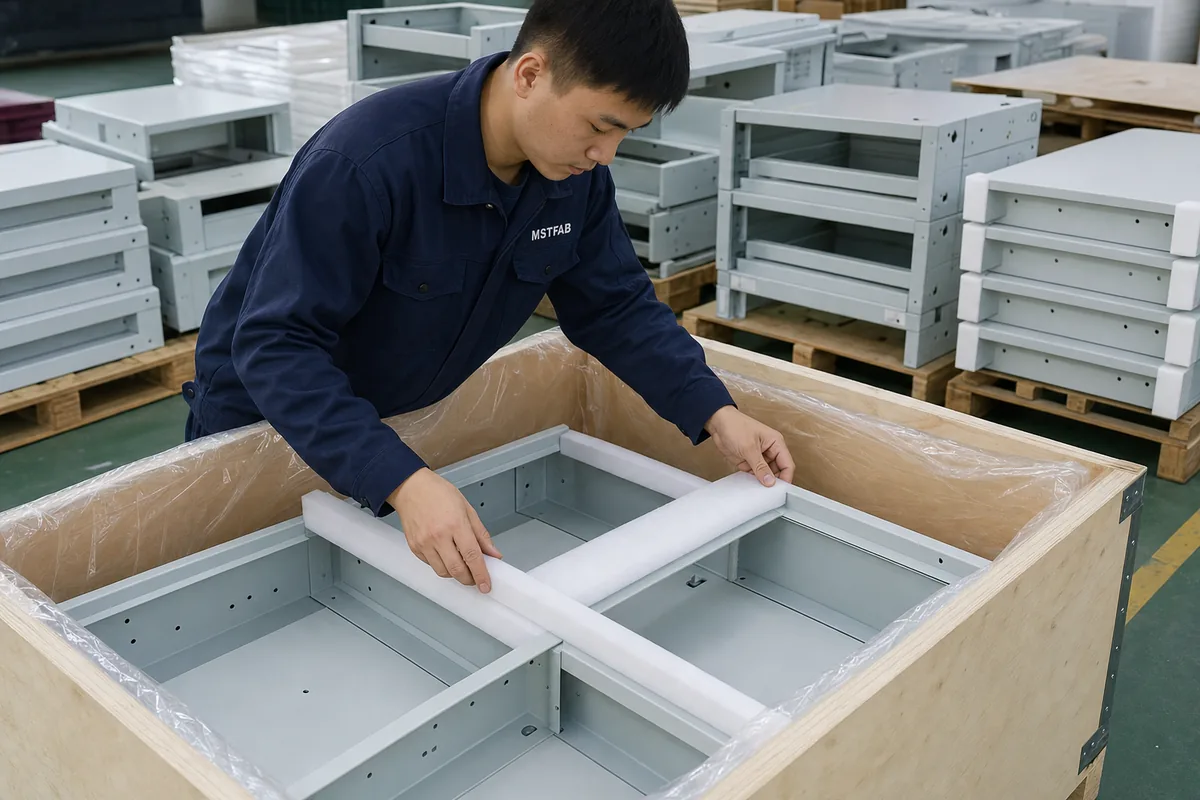
MSTFAB’s assembly and export packaging capability focuses on fabricated mechanical parts and empty enclosure shells, not finished electrical systems.
What to ask for during a sheet metal supplier audit
| Audit area | Useful evidence | What it proves | Common red flag |
|---|---|---|---|
| Drawing control | Revision-linked quote, work order and DFM notes | The factory is working from the approved definition | Files are renamed informally or mixed between emails |
| Materials | Grade confirmation and records when specified | The proposed substrate matches the RFQ | Only generic labels such as steel or stainless |
| Cutting and bending | Process samples, tooling notes and first-off checks | Features can survive the complete forming route | Capability described only by machine brand |
| Welding | Fixture plan, weld sequence and inspection points | Squareness and distortion are controlled | No defined datum or fit check |
| Surface finish | Approved sample, masking map and thickness criteria | Appearance and mechanical interfaces are protected | Color named without gloss, texture or visible-surface rules |
| Inspection | First-article or critical-dimension report | Acceptance is tied to measurable requirements | Pass stated without recorded values |
| Traceability | Batch, revision and inspection status identification | Repeat orders can be reconstructed and audited | Parts from different revisions stored together |
| Packing | Photo or drawing of the protection method | Parts can survive the chosen export route | Packing decided only after production is complete |
A weighted supplier scorecard for OEM buyers
| Category | Suggested weight | Score from evidence, not promises |
|---|---|---|
| Engineering and drawing control | 20% | DFM quality, revision control, response to critical features |
| Process fit | 20% | Relevant materials, dimensions, forming, joining and finish routes |
| Quality evidence | 20% | First article, inspection method, calibrated equipment and records |
| Repeatability and capacity | 15% | Batch control, scheduling, tooling consistency and change management |
| Communication | 10% | Clear questions, written assumptions and response ownership |
| Export protection | 10% | Packing plan, labeling and handling protection |
| Commercial fit | 5% | Transparent scope, lead time, payment and quotation exclusions |
Weights can change by project. A cosmetic medical housing and a hidden machine bracket should not be graded as though they have identical risks.
Send enough information to receive a quote you can actually compare
| RFQ input | Why the supplier needs it | Recommended format |
|---|---|---|
| Controlled 2D drawing | Defines dimensions, tolerances, notes and inspection requirements | PDF or DWG with revision |
| 3D model | Clarifies geometry and supports programming | STEP, STP or IGES |
| Material and thickness | Controls forming, welding, sourcing and cost | Grade and standard, not only material family |
| Finish specification | Defines pretreatment, color, gloss, texture, masking and thickness | Drawing notes plus sample when needed |
| Quantity and forecast | Sets tooling, nesting, process and packing assumptions | Prototype, batch and annual estimate |
| Critical interfaces | Focuses DFM and first-article inspection on assembly risk | Marked drawing or inspection list |
| Packing and shipping | Prevents late changes to protection and crate design | Destination, mode and handling limits |
What buyers should verify before approving a supplier
Questions OEM buyers ask before choosing a sheet metal supplier
What is the most important supplier qualification document?
There is no single magic document. Start with a controlled drawing and a written quotation that records material, finish, quantity, inspection, packing and exclusions. Then ask for evidence that matches the highest project risks.
Should I choose the lowest sheet metal quotation?
Only after confirming that quotations use the same scope. A low price that excludes deburring, masking, inspection or protective packing is not directly comparable with a complete fabrication quote.
What should a DFM review include?
It should identify bend radii, flange limits, holes near bends, weld access, tolerance stack-up, hardware clearance, cosmetic surfaces, masking and inspection datums. Recommendations should refer to drawing features and measurable risks.
Do I need a first-article inspection report?
Use one when assembly interfaces, tolerances, finish or repeat production risk justify it. Define whether you need all dimensions or only agreed critical characteristics before the supplier quotes the work.
Can MSTFAB supply completed electrical cabinets?
No. MSTFAB supplies drawing-based empty sheet metal enclosure shells, panels, brackets, frames and mechanical hardware. Electrical components, wiring, energized testing and final system certification remain with the buyer or integrator.
What files help MSTFAB quote quickly?
Send a controlled 2D drawing, STEP model where available, material grade, thickness, finish, quantity, critical interfaces and packing requirements. Mark uncertainties instead of hiding them; early questions are cheaper than late rework.
Send the drawing. Ask for evidence before approving the source.
MSTFAB will review the fabrication route, DFM risks, inspection needs and export protection for your empty enclosure shell or drawing-based sheet metal parts.
 WeChat Contact
 WhatsApp Me Directly