
How should engineering change notices (ECNs) be managed with a sheet metal manufacturer?
Managing an ECN with a sheet metal fabricator requires a disciplined 5-step engineering workflow: (1) issuing a formal ECN package with redlined 2D drawings and native 3D CAD, (2) conducting an operational impact assessment covering hard tooling, CNC CAM nesting, WIP, and raw coil inventory, (3) establishing an effectivity date and inventory disposition plan (scrap, rework, or phase-out), (4) validating the modified part via a First Article Inspection Report (FAIR), and (5) updating ERP purchase order line revisions before releasing production lots.
In custom precision sheet metal fabrication, design updates are inevitable. Whether accommodating an updated internal power supply, relocating mounting standoffs, or reinforcing a chassis bracket against shock and vibration, engineering changes must be executed cleanly. However, an unmanaged Engineering Change Notice (ECN) or Engineering Change Order (ECO) frequently triggers severe friction: surprise tooling modification invoices, delivery schedule slip, or accidental mixing of old and new revisions on the production floor.

The 4 Pillars of a Sheet Metal ECN Impact Assessment
When an ECN lands on a fabricator’s desk, engineering review goes far beyond simply updating a CAD file. A comprehensive impact assessment must quantify effects across four distinct manufacturing domains:
1. Tooling & Fixture Modifications
Does the design change require modifying existing hard tooling? For soft-tooled CNC laser and press brake parts, changes usually require only updated CAM programs and bend compensation offsets. However, for progressive stamping dies, turret punch clusters, or robotic welding fixtures, changing hole locations or bend reliefs can necessitate EDM wire cutting, new punch inserts, or complete fixture re-machining costing thousands of dollars.
2. Work-in-Progress (WIP) & Finished Goods Disposition
Every open production lot must be accounted for across the factory routing:
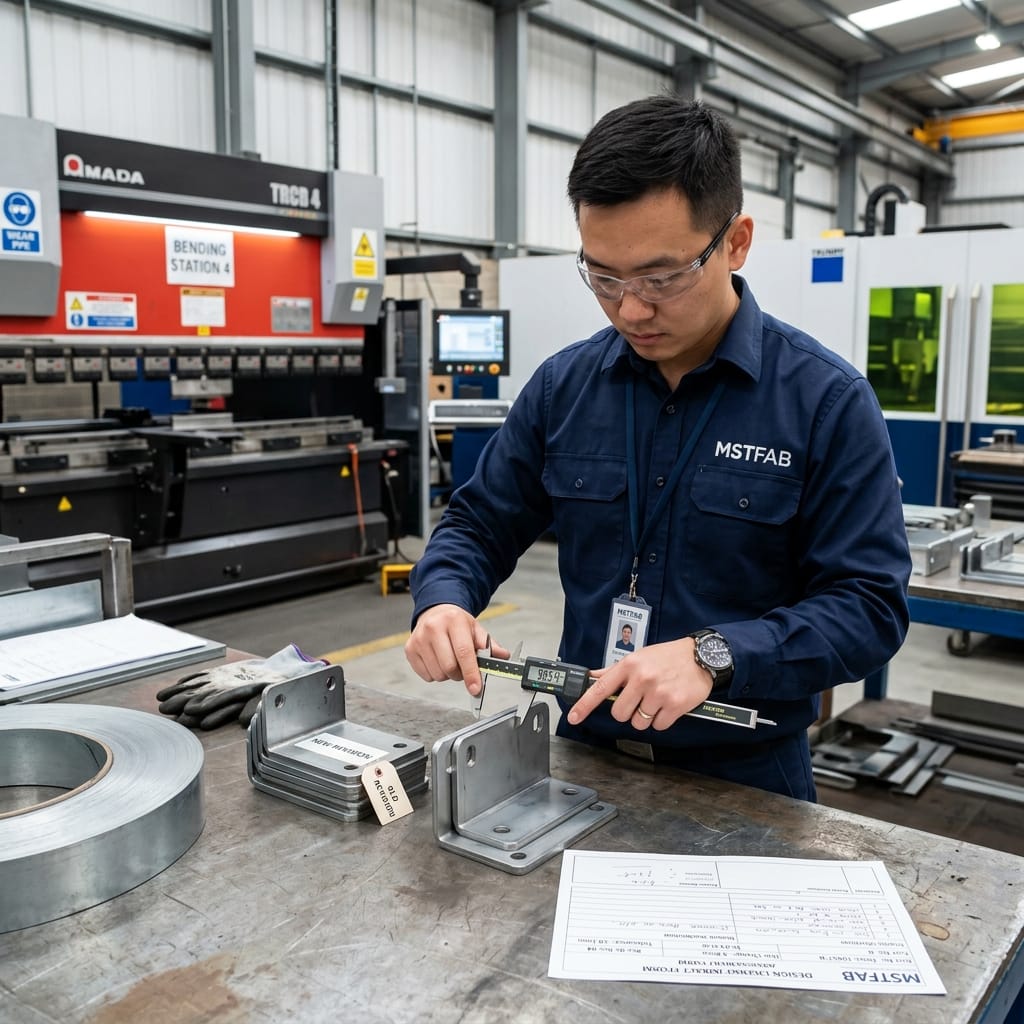
- Flat Blanks: Can laser-cut blanks awaiting bending be recut or punched, or must they be scrapped?
- Formed Subassemblies: Can mounting holes be secondary CNC milled, or are physical clearances obstructed?
- Finished Coated Stock: Can powder-coated parts in warehouse transit be reworked, or do they represent sunk scrap?
3. Unit Cost & Cycle Time Delta
Adding PEM hardware, switching to stainless steel rivets, or introducing intricate internal bends increases machine handling and cycle time. The ECN documentation must capture any unit price adjustment before production resumes.
4. Schedule & Lead-Time Impact
Modifying forming tools or awaiting new punch clusters introduces manufacturing lead time. The buyer and supplier must agree on an updated shipment schedule and establish a buffer stock strategy if production lines cannot stop.

ECN Workflow & Disposition Responsibility Matrix
The table below outlines the standard stage-gate review and accountability matrix for executing an ECN in sheet metal manufacturing:
| ECN Stage | Primary Action Item | Responsible Party | Required Deliverable | Approval Gate |
|---|---|---|---|---|
| 1. ECN Initiation | Issue formal ECN form with redline drawing and native 3D CAD (STEP) | OEM Design Engineer | Signed ECN document detailing revision rationale | PLM Release Gate |
| 2. Impact Assessment | Evaluate tooling, CAM programs, WIP inventory, and cost/schedule delta | Supplier DFM Engineer | Technical & Commercial Impact Assessment (TCIA) quote | Cost & Lead Time Sign-Off |
| 3. Inventory Disposition | Classify active inventory: Scrap, Rework, or Phase-Out (Use-As-Is) | Joint OEM / Supplier Team | Physical quarantine log and scrap certification document | Financial Responsibility Sign-Off |
| 4. Tooling / CAM Update | Update laser nests, press brake programs, and modify forming tools | Supplier CAM / Tooling Lead | Certified tool modification report and revised G-code lock | MES Traveler Verification |
| 5. Qualification & Cutover | Fabricate pilot parts, run full FAIR/CMM, update PO line revision | Supplier QA & OEM SQE | Approved Delta First Article Inspection Report (FAIR) | Production Release Sign-Off |
Inventory Segregation & FAIR Requalification
Physical execution on the shop floor determines whether an ECN succeeds or fails:
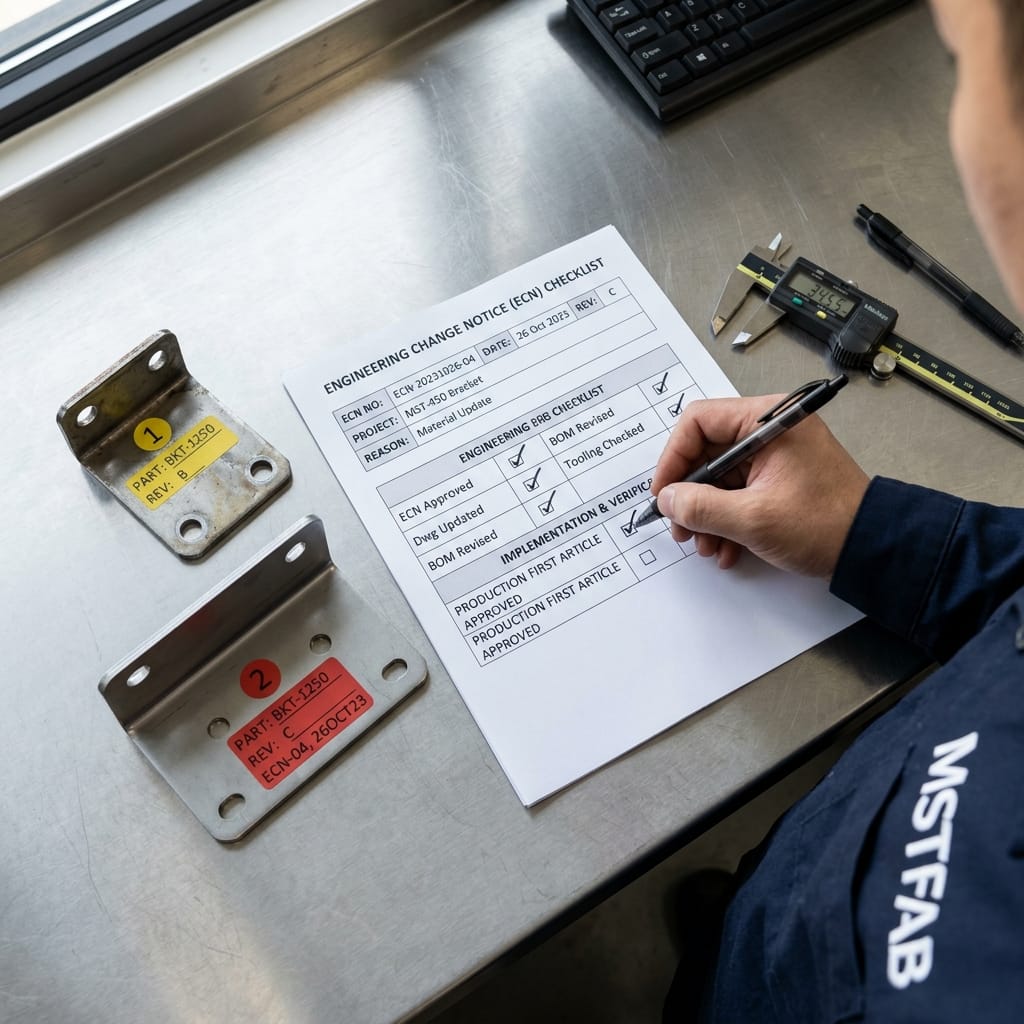
- Physical Part Segregation: All obsolete revision parts must be removed from production lines immediately, marked with red quarantine hold tags, and physically segregated in locked cages to avoid line feeding errors.
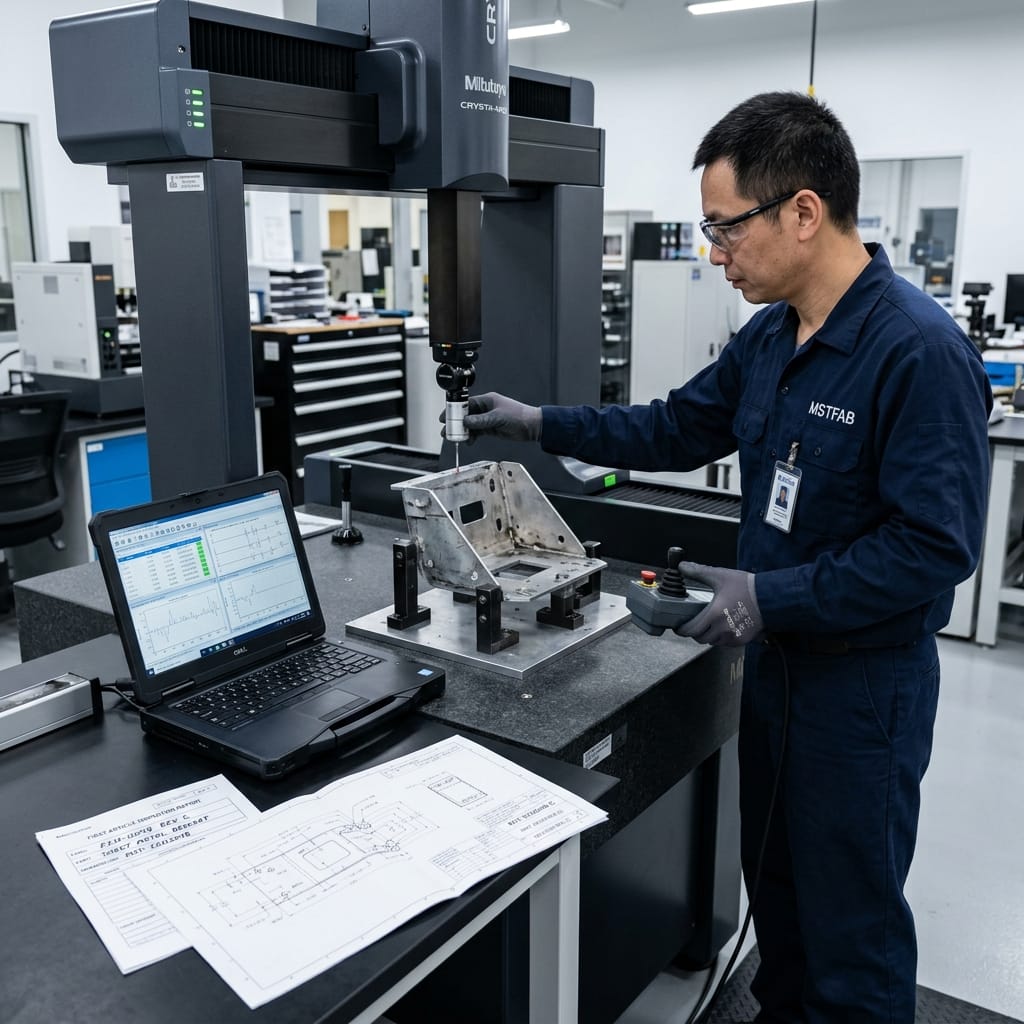
- Delta FAIR Verification: A full or delta First Article Inspection Report (FAIR) is required before volume cutover. CMM coordinates must verify all modified dimensions, bend angles, and hole centerlines against the new revision drawing.
- System Synchronization: Finally, the buyer’s procurement team updates the open purchase order line item to the new revision, ensuring automated receiving dock verification passes without disruption.

Streamline Your Sheet Metal Engineering Changes With MSTFAB
At MSTFAB, our digital manufacturing pipeline connects PLM design revisions directly to our CNC lasers, punch presses, and robotic press brakes. We provide rapid impact assessments, precise tooling modifications, and rapid Delta FAIR approvals to keep your hardware launch on schedule. Contact our engineering team today.
 WeChat Contact
 WhatsApp Me Directly