
OEM enclosure sourcing guide
An electrical control cabinet starts with a mechanical shell, but the shell is not a wired control panel. Keeping those scopes separate makes quotations clearer and prevents an unpleasant surprise at the assembly bench.
MSTFAB, operated by Guangzhou Maisituo Sheet Metal Manufacturing Co., Ltd., fabricates drawing-defined empty cabinet bodies, doors, panels, mounting plates and related mechanical parts. The route may include cutting, bending, joining, hardware installation, project-specified finishing, mechanical inspection and export packing. The buyer or its panel integrator selects and installs electrical components, performs energized tests and is responsible for completed-equipment approvals.
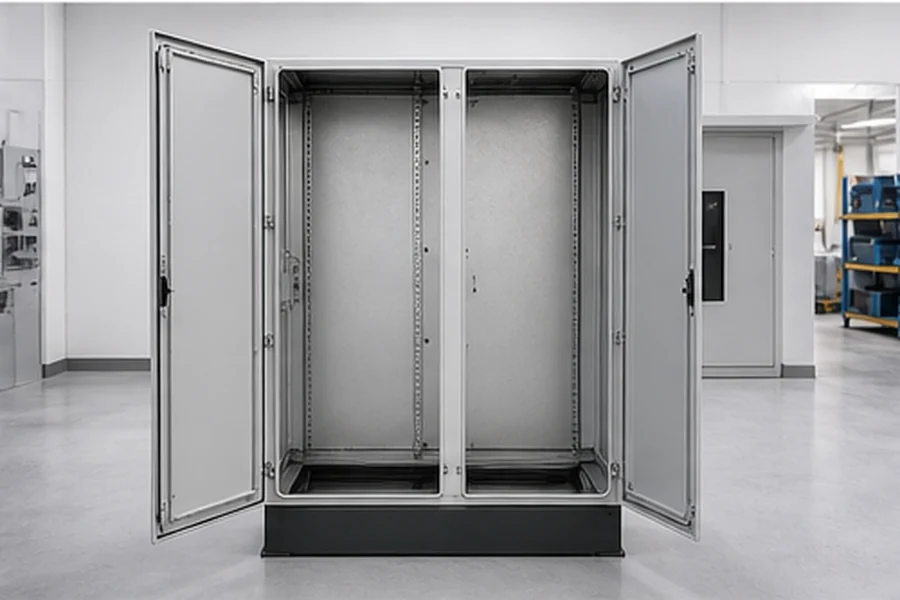
First, agree on what is being purchased
A price for an empty metal cabinet cannot be compared fairly with a price for a wired, tested panel. Ask every supplier to mark the boundary in the quotation. This is particularly important when the drawing shows DIN rails, cooling openings or a backplate: those features can be fabricated into the shell without including the devices that will eventually occupy them.
| Scope | Typical owner | Decision to record |
|---|---|---|
| Cabinet body, doors, panels and brackets | MSTFAB, when included in the approved drawing package | Material, thickness, geometry, hardware and finish |
| Powder coating or another specified finish | Quoted manufacturing route; long-term partners may perform finishing | Finish specification, masking, color and acceptance condition |
| Breakers, PLCs, wiring and software | Buyer or electrical integrator | Component layout, electrical design and installation |
| Electrical testing and finished-equipment certification | Buyer or responsible equipment manufacturer | Applicable standard, test plan and approval authority |
See the control cabinet enclosure fabrication page for the commercial shell scope. This article focuses on the handoffs that can make or break the mechanical build.
The drawing-to-shipment workflow
- Review the RFQ. Confirm the drawing revision, STEP or STP model, 2D dimensions, material, thickness, quantity, finish and delivery destination. Flag missing mating-part information before quoting.
- Check manufacturability. Review bend access, corner construction, cutout-to-bend clearance, hinge and latch locations, welding sequence and coating allowance. A door can look square in CAD and still fight the hinge on the bench.
- Cut and form the parts. Produce blanks and formed panels to the approved geometry. Cutting and bending methods depend on the design and order volume; there is no universal tolerance or cycle time for every cabinet.
- Join and fit the shell. Weld or fasten the body as specified, install drawing-defined mechanical hardware and check the assembled door, backplate and removable-panel interfaces.
- Finish to the agreed scope. Specify coating, corrosion protection, cosmetic faces and masked contact areas on the drawing or purchase order. MSTFAB can coordinate finishing with long-term partners when that route is included in the quotation.
- Inspect and pack. Agree which dimensions, fit conditions, finish checks and first-article records are required. Protect doors, gasket lands and cosmetic surfaces for the stated shipping route.
Five interfaces buyers should settle before cutting
- Door and gasket land: Define the closing gap, latch positions, gasket path and the condition in which fit will be checked. An IP target is a design and validation requirement, not a rating conferred by an empty shell.
- Backplate and rail positions: Send the mating equipment envelope and service-clearance needs. A hole pattern alone may not reveal a tool-access problem.
- Cable entry: Identify removable gland plates, connector cutouts, edge protection and sealing surfaces before coating.
- Grounding and bonding features: Locate studs and uncoated contact areas on the approved drawing. The equipment manufacturer remains responsible for the electrical design and verification.
- Cooling and maintenance: Dimension fan, louver or heat-exchanger openings and door swing around the actual components selected by the buyer.
What a useful cabinet-shell RFQ contains
Send STEP/STP for assembly geometry and DXF, DWG or PDF drawings for controlled dimensions. Add the revision, material grade and sheet thickness, proposed finish, prototype and production quantities, destination, and any buyer-supplied mating parts. Mark critical fit and cosmetic surfaces. If a first-article inspection report is needed, define the features and approval point before the order is released.
That package lets the supplier ask useful questions instead of guessing a blanket lead time, tolerance or minimum order quantity. It also gives the OEM a clean record of what was actually approved.
Buyer questions
Does an empty control cabinet shell carry an electrical certification?
No. Mechanical fabrication records describe the metal shell. Electrical assembly, energized testing and finished-equipment approval are separate responsibilities of the buyer or its integrator.
Can powder coating be included?
Yes, when specified and priced in the approved scope. The finishing route may use long-term partners; ask for the finish specification and agreed inspection evidence rather than assuming every step happens under one roof.
Is there a standard lead time or tolerance for every cabinet?
No. Both depend on size, material, geometry, hardware, finish, quantity and inspection scope. A drawing review is the honest starting point.
What should be checked on the first article?
Start with the features that would stop assembly: door fit, mounting interfaces, cable entry, specified hardware, critical dimensions and finish condition. The exact report follows the approved inspection plan.
Send the shell drawings for review
Share the controlled drawing package, quantity and finish requirements. MSTFAB can review the mechanical scope and identify the questions that need answers before quotation.
 WeChat Contact
 WhatsApp Me Directly