
The Short Answer
Safe international shipping of custom sheet metal products requires a multi-layer packaging architecture—combining non-abrasive EPE foam contact wrapping, VCI/desiccant moisture control, internal structural bracing, and ISPM-15 plywood crating engineered for forklift and container loads. OEM buyers prevent transit dents, coating rub marks, and ocean-freight condensation rust by specifying packaging standards, pallet dimensions, and pre-shipment photo verification directly in the purchase order.
Explore this guide
01 / Root Causes of International Transit Damage
Understand the four mechanical and environmental hazards that damage sheet metal shipments.
A custom sheet metal enclosure or precision laser-cut bracket can pass every dimensional and cosmetic inspection on the factory floor yet arrive unusable at your warehouse after 30 days on a container vessel. Unlike solid machined castings, hollow sheet metal shells and thin flanged panels have high surface-to-weight ratios that are vulnerable to point loads and harmonic vibration.
Whether sourcing custom sheet metal enclosure fabrication or batch brackets, export packaging must counter four specific failure modes.
Vibration fretting and coating rub
Continuous engine and road vibration causes parts stacked without soft interleaving to micro-chafe millions of times, rubbing right through powder coating, anodizing, or brushed stainless grain.
Forklift impact and crush loads
Weak corrugated cartons collapse when double-stacked in LCL (Less than Container Load) consolidation hubs or struck by forklift tines during port transshipment.
Container rain and salt-air humidity
Ocean containers cycle from 50 °C daytime sun to cold night temperatures, condensing moisture droplets (“container rain”) that corrode bare steel threads, laser edges, and damp cardboard.
LCL vs. FCL packaging severity: LCL consolidated shipments undergo 4 to 6 additional forklift transfers at port warehouses compared to Full Container Load (FCL) shipments. Always specify full enclosed plywood crates—never open stretch-wrapped pallets—for LCL ocean freight.
02 / Pre-Packing Inspection and Surface Conditioning
Verify dimensional compliance, cure cooling, and surface dryness before sealing any package.
Packaging should never conceal unfinished work or trap moisture against metal surfaces. Sealing warm powder-coated parts or coolant-dampened assemblies inside plastic film accelerates coating imprinting and flash rust during ocean transit.
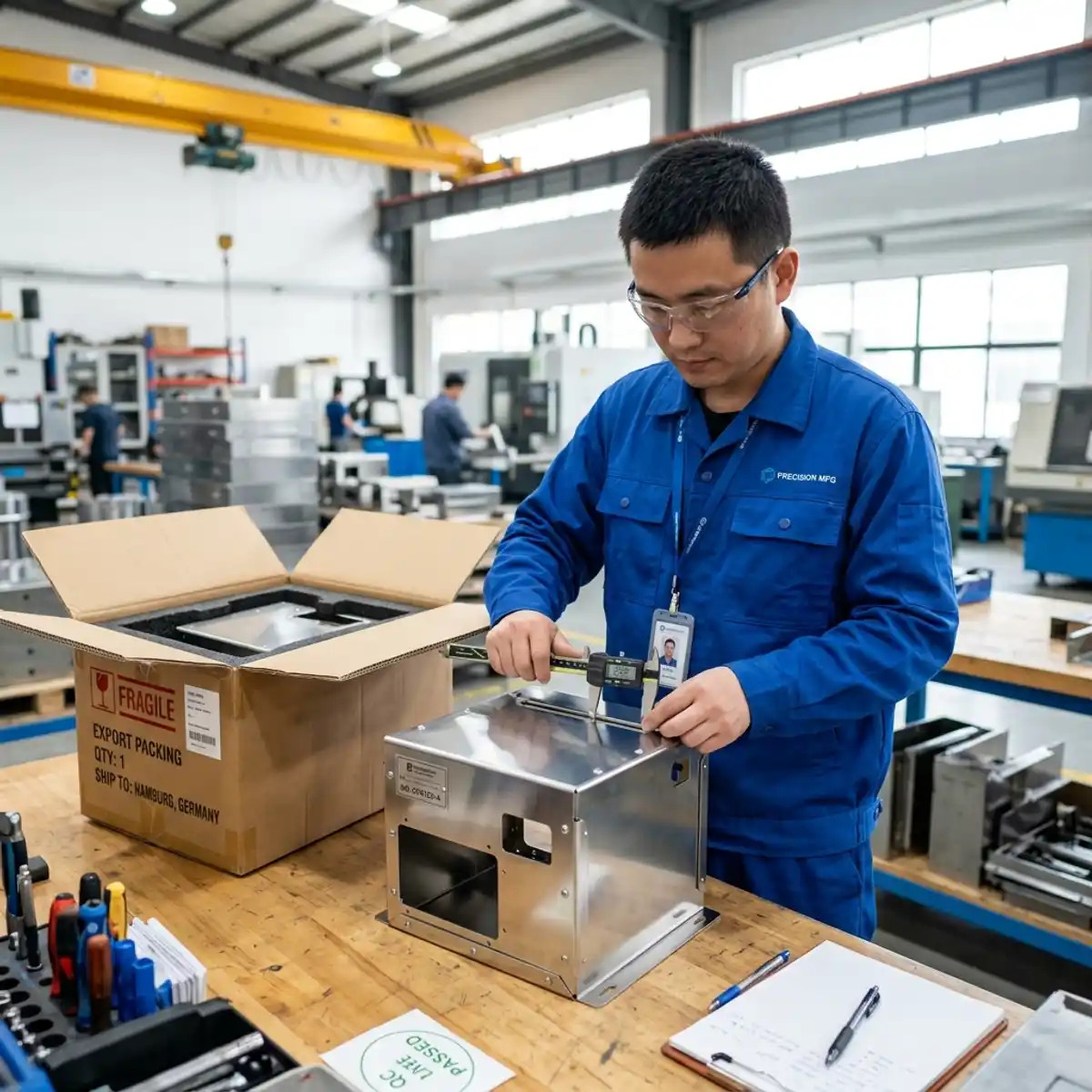
- Complete final QC sign-off before wrapping: Every batch must clear final dimensional, hardware torque, and cosmetic A-surface inspection before moving to the packing zone—with inspection tags matched to the packing list.
- Ambient cooling and dry surface prep: Powder-coated parts cool to ambient room temperature so soft warm polymer does not take bubble-wrap texture imprints; bare steel or machined interfaces are wiped clean and misted with dry VCI rust preventive where permitted.
- Removable protective PVC film on cosmetic panels: Brushed stainless steel and anodized aluminum exterior faces retain low-tack protective PVC film so customer assembly technicians can handle parts without fingerprints or tool scratches.
Our quality control workflow mandates documented pre-packing release and photographed packing stages for every international order.
03 / Four-Layer Protective Packaging Architecture
Combine soft contact wrapping, cellular dividers, moisture barriers, and ISPM-15 crates.
Relying on a single cardboard box or stretch wrap is never sufficient for international metal shipments. MSTFAB engineers a four-tier defense system tailored to part geometry, surface delicacy, and unit weight.
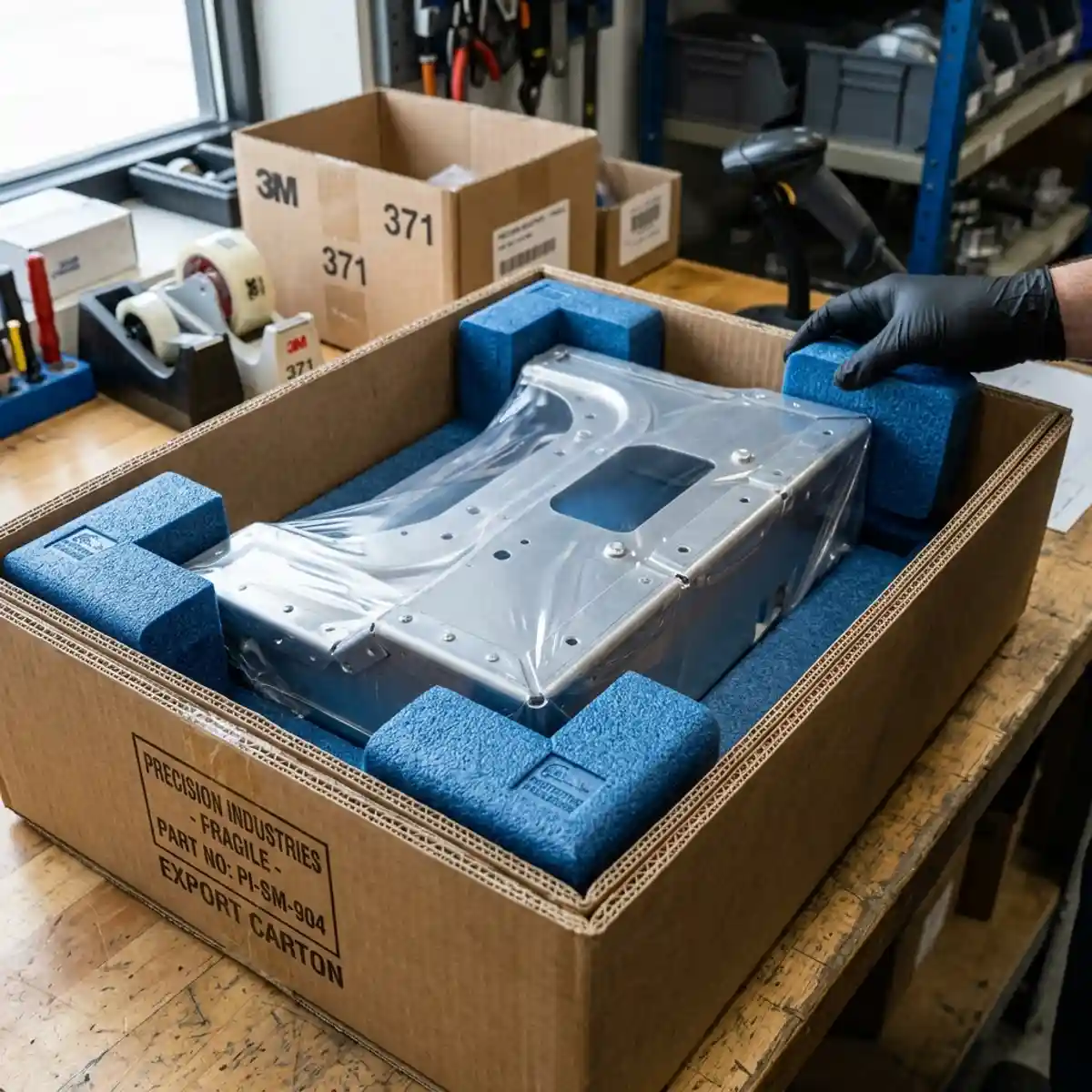
- Layer 1 (Surface Contact): Non-abrasive EPE pearl-cotton foam sleeves, anti-static poly bags, and high-density foam corner blocks prevent metal-to-metal contact and protect sharp painted corners.
- Layer 2 (Moisture & Corrosion Barrier): High-capacity silica-gel or clay desiccant packs and VCI (Vapor Corrosion Inhibitor) emitters inside sealed liner bags neutralize humid sea air.
- Layer 3 (Partitioning & Cushioning): Honeycomb board dividers, custom-cut EPE foam dunnage cells, and heavy double-wall corrugated inner cartons isolate individual parts from crushing lower layers.
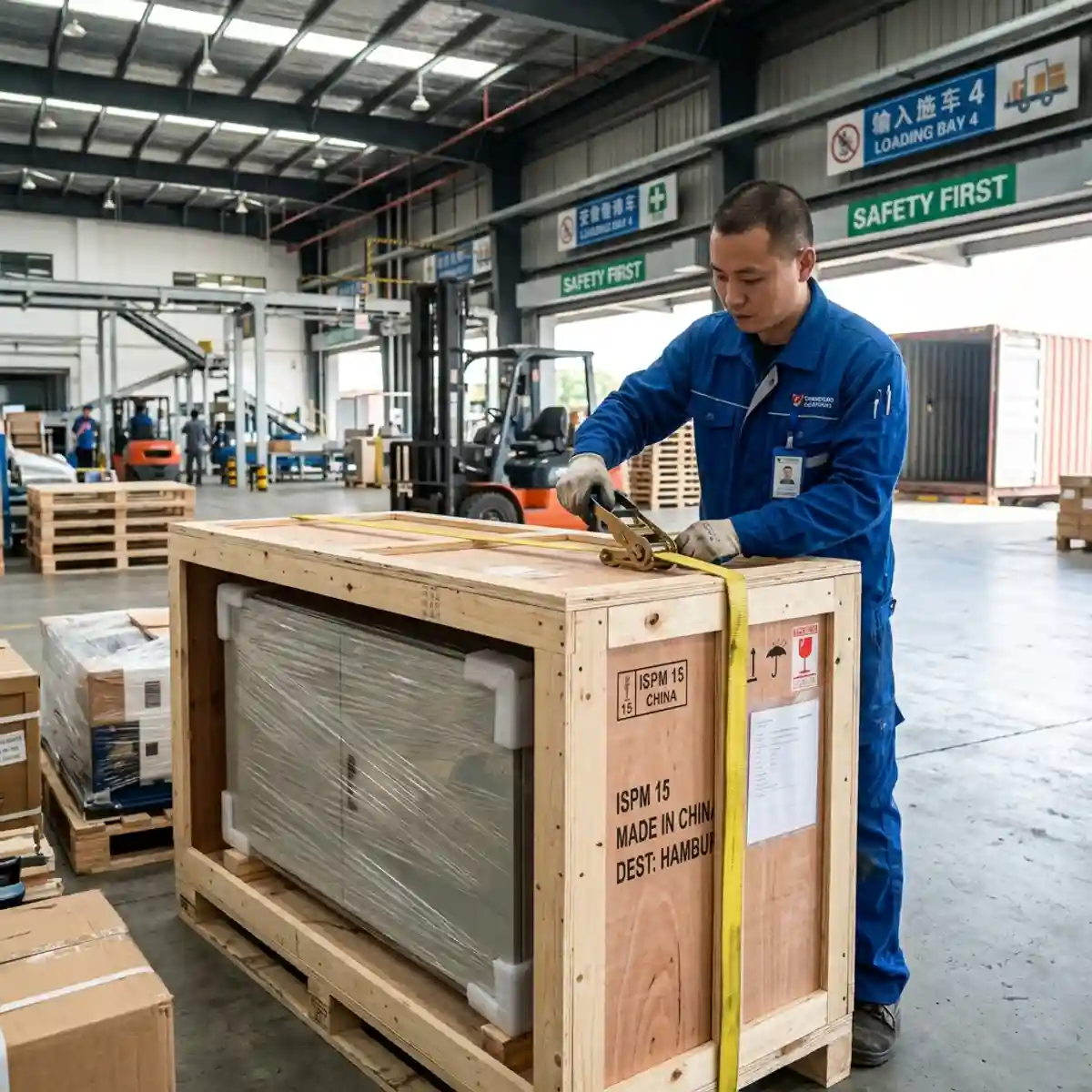
- Layer 4 (Structural Outer Shell): Fumigation-free ISPM-15 engineered plywood crates with 4-way forklift skids, internal timber battens, and external steel/PET strapping resist stacking and impact.
This layered approach ensures both delicate anodized front bezels and heavy structural weldments arrive ready for immediate line integration.
Explore our custom assembly and export packaging standards →
04 / Large Cabinet Bracing and Container Loading
Immobilize freestanding cabinets and balance container weight distribution.
Large floor-standing electrical enclosures, server racks, and welded machine frames present unique center-of-gravity and racking risks. Without internal and base fixation, a tall cabinet can tip or twist its door frame during ocean swell.
- Base bolting to reinforced skid beams: Heavy freestanding cabinets are bolted directly through their plinth mounting holes into heavy-duty wooden base skids so the enclosure cannot slide inside the crate.
- Door locking and foam gap shimming: Hinged doors and removable access panels are latched closed with high-density EPE foam shims inserted along hinge and latch clearances to unload hinge pins during transit shock.
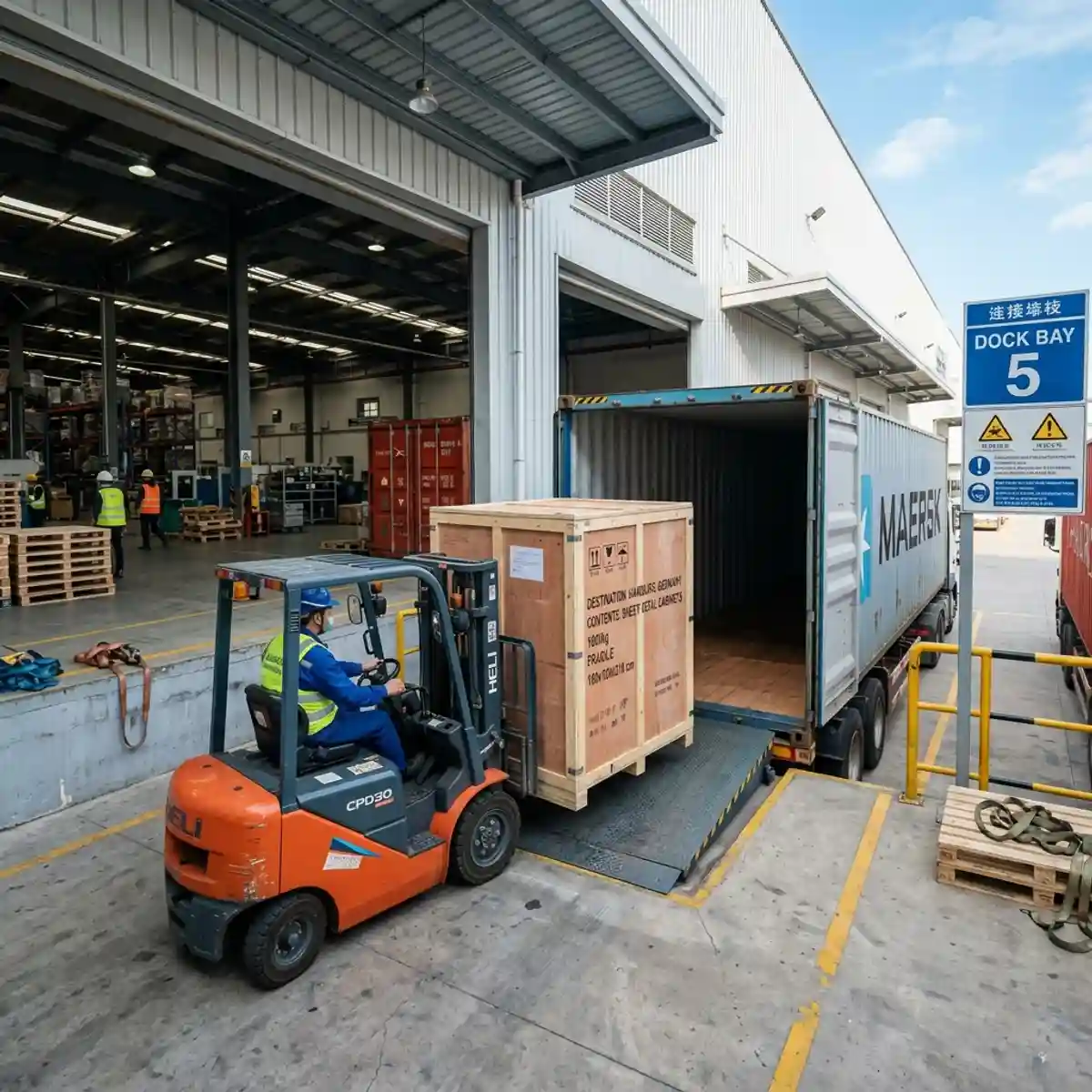
- Container weight distribution and dunnage: Heavy crates are loaded on the bottom tier across the container axle line, with lightweight cartons above, ratchet straps tensioned across tiers, and timber blocking nailed at the container doors.
Pair proper export crating with durable industrial surface treatments so your parts withstand both long-distance ocean logistics and decades of field operation.
05 / Buyer Packaging Control Matrix
Specify five packaging and logistics controls in your OEM purchase order.
Use this procurement matrix to lock packaging specifications, labeling, and pre-shipment verification before your order leaves the factory.
06 / Inspection Handoff
Review pre-shipment packing photos and traceability documents before freight release.
OEM buyers should never have to guess how their parts were packed until the container doors open at the destination port. Transparency before vessel departure eliminates customs surprises and warehouse receiving bottlenecks.
Before booking the pickup truck or loading the ocean container, MSTFAB compiles a complete pre-shipment verification package: final FAI/QC inspection reports, open-crate layer photos, sealed crate dimensions/weights, and matching commercial invoice and packing lists.
Under our ISO 9001 quality management system, every inner carton and outer crate is cross-checked against your PO line items so your warehouse receiving team can scan and put away stock without sorting mixed loose parts.
See how our pre-shipment QC and documentation protect OEM buyers →
07 / Packing and Release
Match crate dimensions and Incoterms to your warehouse receiving equipment.
A crate that is too tall for your receiving dock door or too heavy for your warehouse pallet jack creates immediate unloading hazards. Similarly, unclear Incoterms can leave buyers facing unexpected destination port LCL deconsolidation fees.
Whether you ship via air express for urgent prototypes, LCL plywood crates for medium batches, or dedicated 20GP/40HQ FCL containers under EXW, FOB, CIF, DAP, or DDP terms, our export logistics team custom-tailors crate footprints (such as standard 1200×800 mm Euro or 48×40 inch North American pallets) and max gross weights to your facility rules.
Manufacturing scope: MSTFAB manufactures and export-packs custom build-to-print sheet metal parts, welded frames, and empty enclosure shells to customer drawings under ISO 9001 quality controls. Final electrical installation, powered system testing, and end-product certification belong to the OEM.
08 / Ready-to-Review RFQ
Include eight packaging and shipping details in your international sheet metal RFQ.
- Part files and surface finish classIdentify cosmetic A-surfaces (anodized, brushed, or gloss powder coat) requiring individual foam wrapping.
- Target freight modeState whether the order will ship via air courier, air cargo, LCL ocean crate, or full container load (FCL).
- Preferred Incoterms & portSpecify EXW, FOB, CIF, DAP, or DDP along with destination port or final delivery zip code.
- Pallet footprint & height limitsDefine required pallet base size (e.g., 1200×1000 mm, 1200×800 mm, or 48×40 in) and max rack height.
- Maximum gross weight per crateCall out forklift or manual pallet-jack weight limits at your receiving dock (e.g., max 500 kg or 1,000 kg per crate).
- Inner kitting & bag quantitiesNote if brackets and hardware should be packed in specific kit ratios or fixed inner-box counts for assembly lines.
- Barcode & shipping mark templateProvide your ERP label layout, PO number, part revision, country of origin, and carton numbering format.
- Rust protection restrictionsIndicate whether oil-free dry VCI paper/bags are required for parts undergoing downstream bonding or welding.
Aligning crate dimensions, layer protection, and shipping marks during the RFQ ensures your custom sheet metal parts arrive damage-free and ready for production.
International sheet metal shipping and packaging questions from OEM buyers
How do you protect powder-coated and anodized sheet metal parts from rubbing during ocean freight?
Every cosmetic powder-coated or anodized part is individually wrapped in non-abrasive EPE pearl-cotton foam sleeves or separated by custom cellular dividers and foam corner protectors. Parts are tightly immobilized inside double-wall cartons and plywood crates so vibration cannot cause fretting.
How do you prevent rust and condensation damage during 30-to-45-day sea voyages?
We make sure all parts are completely dry and cool before packing, enclose them inside heavy poly barrier liner bags with calculated silica/clay desiccant packs and VCI (Vapor Corrosion Inhibitor) emitters, and use engineered plywood crates that do not release moisture like green raw timber.
Do your wooden export crates require customs fumigation certificates?
We primarily build export crates using engineered laminated plywood (exempt from raw-wood bark pests under ISPM-15) and heat-treated ISPM-15 stamped solid base skids, ensuring smooth, delay-free customs clearance in North America, Europe, Australia, and Asia.
How are large freestanding electrical cabinets and welded frames secured inside crates?
Large cabinets and frames are bolted through their base mounting holes directly onto reinforced timber skids, cushioned with high-density EPE corner blocks, fitted with foam door-gap shims to protect hinges, wrapped in moisture barriers with desiccants, and enclosed in framed plywood crates.
Can you customize pallet sizes and labels to match our automated warehouse racking?
Yes. Just specify your maximum pallet length, width, overall height, and gross weight limit—plus your barcode/ERP label template—on the purchase order, and we will build the crates and print waterproof inner and outer labels to your exact warehouse standard.
What proof of packaging quality do we receive before the shipment leaves your factory?
Along with the dimensional FAI/QC report and material certificates, we send a complete pre-shipment photo log showing bare parts at final inspection, internal foam/divider layering, desiccant placement, sealed crates on the scale, exterior shipping labels, and container loading.
Technical references
Reference these international packaging and phytosanitary standards when specifying export crating and transit verification for industrial metal components.
Source export-ready custom sheet metal parts with engineered crating.
Send your 3D STEP models, 2D PDF drawings, and destination delivery requirements. MSTFAB will quote both precision fabrication and damage-free international delivery.
Request an Export Fabrication Quote →
Have a question first? caroline@mstfab.com
 WeChat Contact
 WhatsApp Me Directly