
Custom Sheet Metal Enclosures Manufacturing TCO Guide for OEM Buyers
A cheap enclosure quote can look friendly on day one and become very expensive when holes miss, doors do not sit flat, coating scratches in transit, or the buyer has to redesign brackets after a pilot run. This guide explains how overseas OEM buyers can evaluate the real total cost of custom sheet metal enclosure shell manufacturing before placing an order.
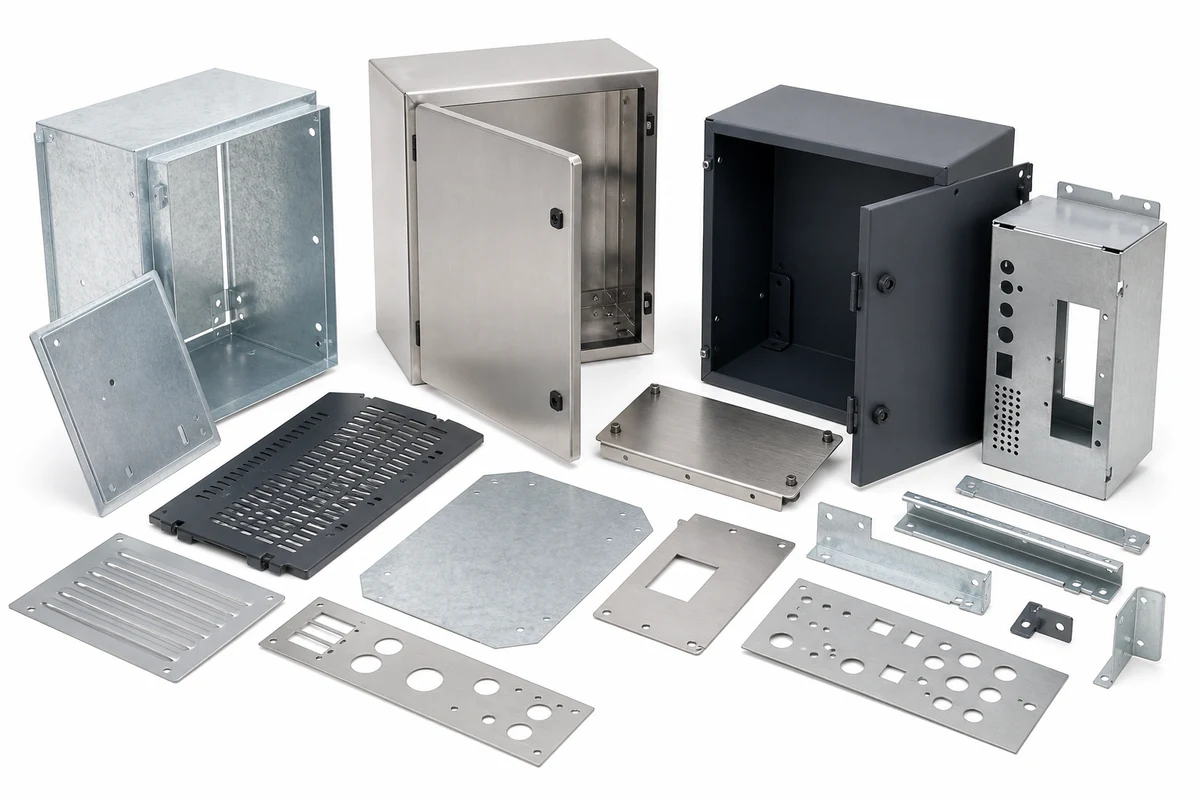
Short answer: custom sheet metal enclosures manufacturing is the drawing-based production of semi-finished metal enclosure shells, doors, panels, brackets, louver plates and mounting parts. The real buying cost is not just the unit price. It includes DFM review, laser cutting accuracy, CNC bending stability, welding distortion control, surface treatment, inspection, export packing and the amount of buyer-side rework avoided.
Scope note for buyers: MSTFAB focuses on custom sheet metal enclosure shells and hardware-ready metal parts. We manufacture the metal housing, panels, rails, brackets and fabrication details from your drawings; buyer-side device installation and final system integration stay with your team or integrator.
Why the Lowest Enclosure Quote Is Often Not the Lowest Cost
Procurement teams are under pressure to reduce cost. That is normal. The trap is comparing only the first line of a quotation. Enclosure projects are not flat plates in a shopping cart. A custom metal enclosure has bend direction, corner fit, hinge position, gasket compression, grounding points, coating thickness, packaging rules and assembly references. One small drawing assumption can turn into a week of emails and a very tired engineer.
For custom sheet metal enclosure TCO, the better question is simple: will this supplier reduce hidden work after the purchase order, or will they move the problem to your assembly floor?
| TCO cost driver | What goes wrong when ignored | What MSTFAB checks before quoting |
|---|---|---|
| Drawing clarity | Wrong revision, unclear hole references and repeated RFQ clarification | STEP/STP model, PDF drawing, revision, tolerance notes and critical surfaces |
| Bend sequence | Flanges collide, returns cannot form, or the door frame twists | Bend radius, flange length, tooling access and practical CNC bending order |
| Hole alignment | Mounting points miss rails, brackets or buyer-side assemblies | Datum points, slot direction, hole-to-bend distance and inspection references |
| Welding distortion | Door openings pull out of square and panels need manual correction | Weld location, fixture method, stitch length, grinding allowance and flatness risk |
| Surface treatment | Powder coating builds up in masked zones or scratches during transport | Masking areas, color/texture, corrosion environment and packing protection |
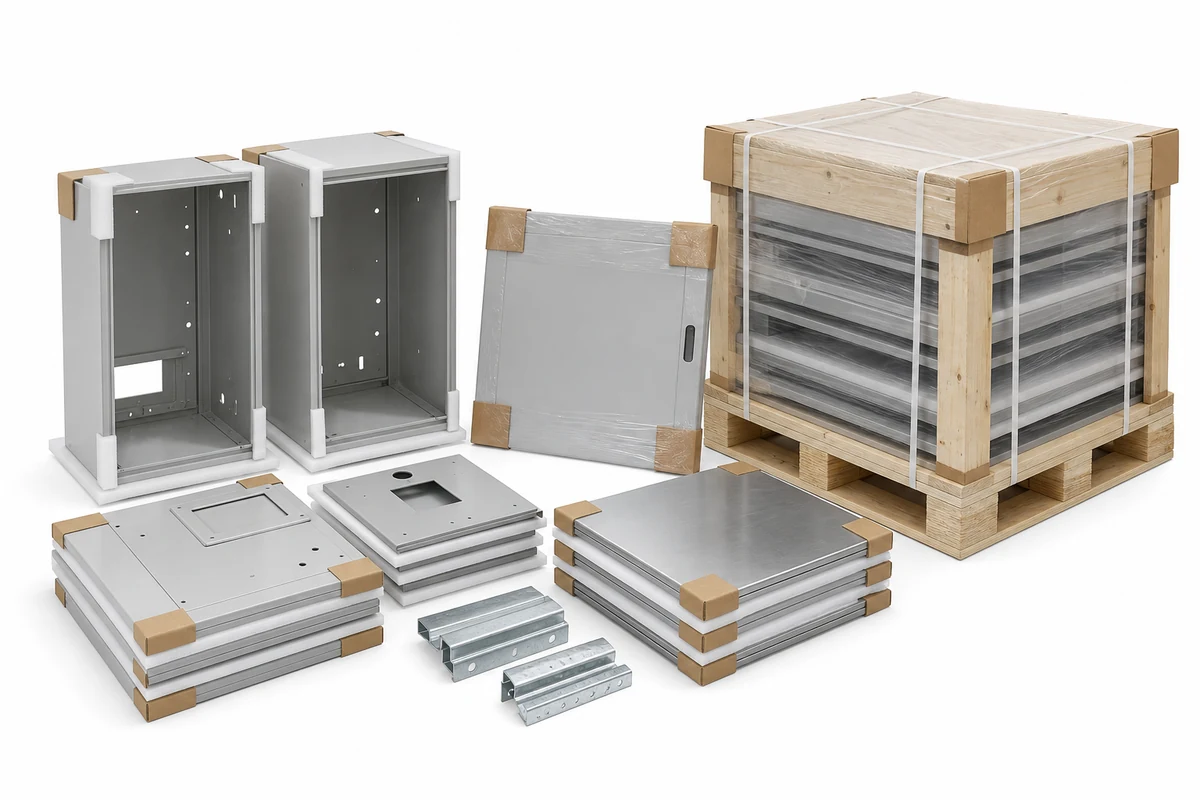
| Export packing | Good parts arrive with bent corners, rub marks or damaged coated faces | Foam, separators, carton/pallet plan and photo evidence before shipment |
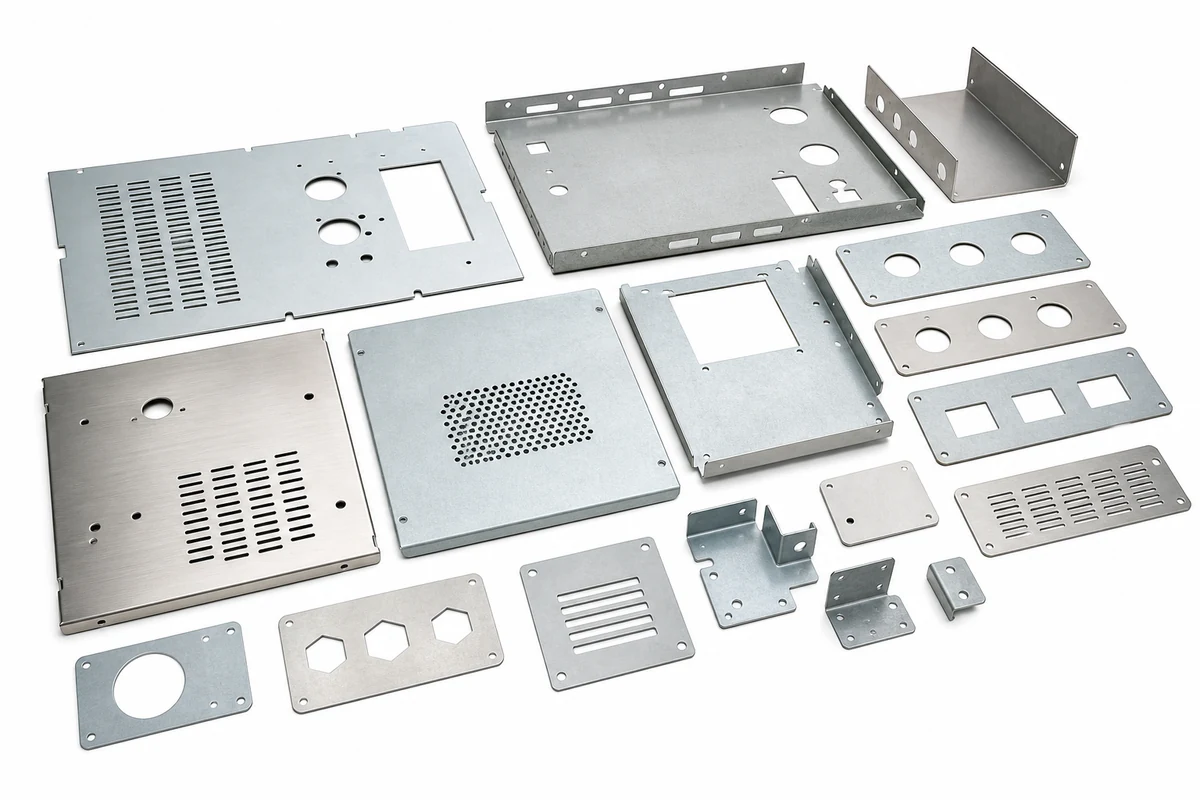
Manufacturing Workflow That Protects Total Cost
The right workflow is boring in the best possible way. Each process should reduce uncertainty before the next process starts. If a supplier cuts first and asks DFM questions later, congratulations, you may have invented expensive scrap.
RFQ and DFM Review
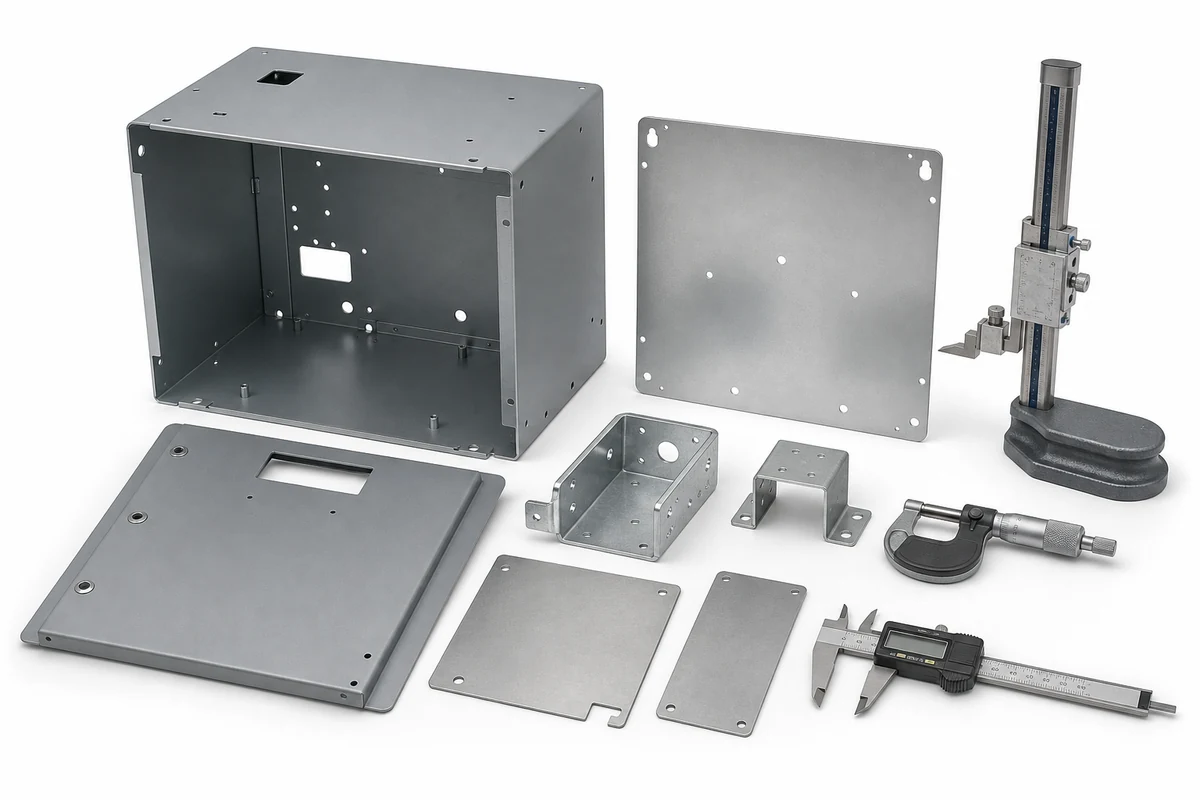
We review drawings, material, tolerances, bend risks, hole-to-bend distances, finish requirements and packing notes before confirming the manufacturing route.
Laser Cutting
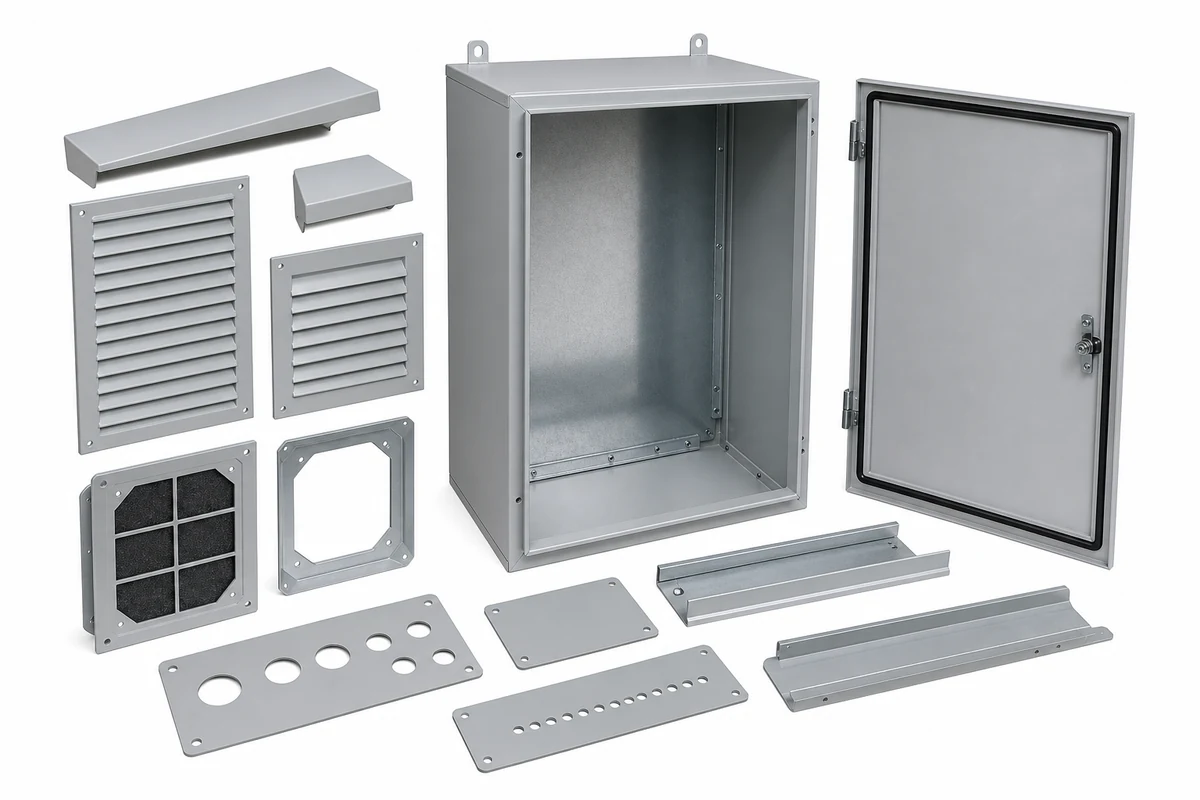
Flat blanks, ventilation cutouts, gland plates, mounting plates and brackets are cut from the approved drawing data to support repeatable forming.
CNC Bending
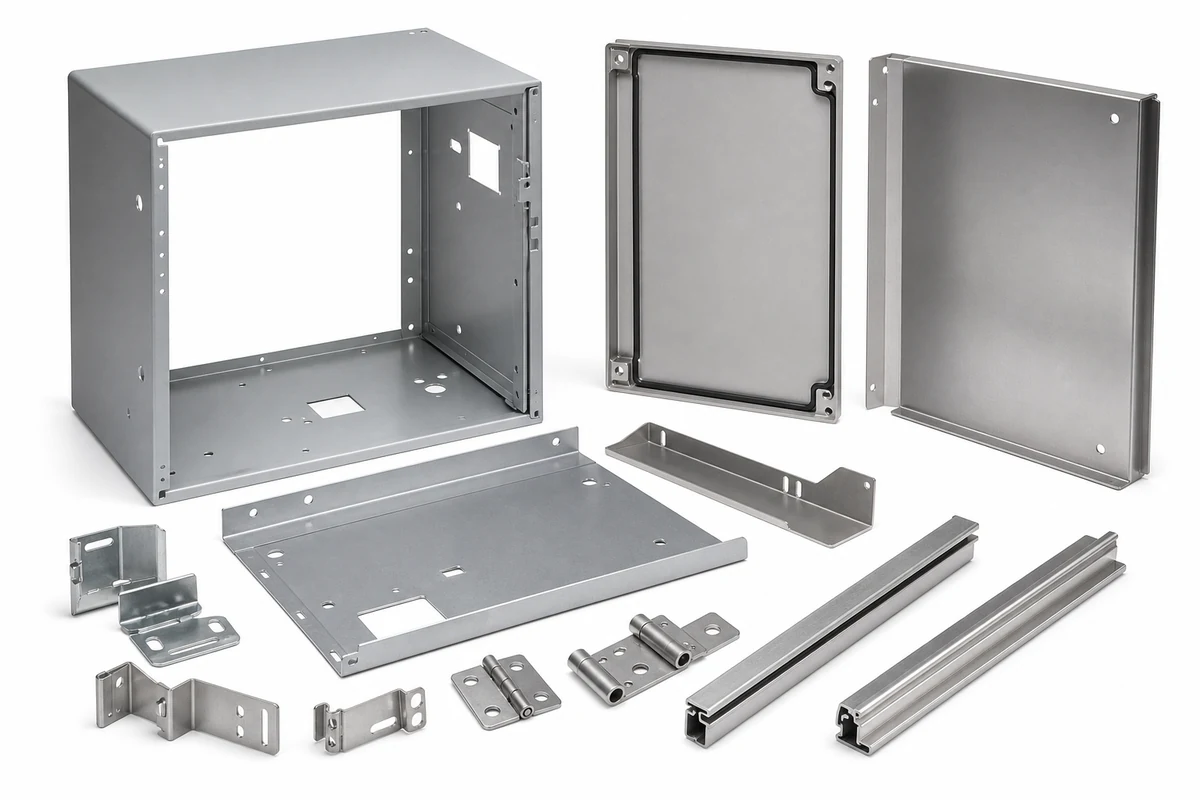
Enclosure bodies, doors, returns, rain lips and brackets are formed with attention to bend sequence, inside radius and reference dimensions.
Welding and Fit Control
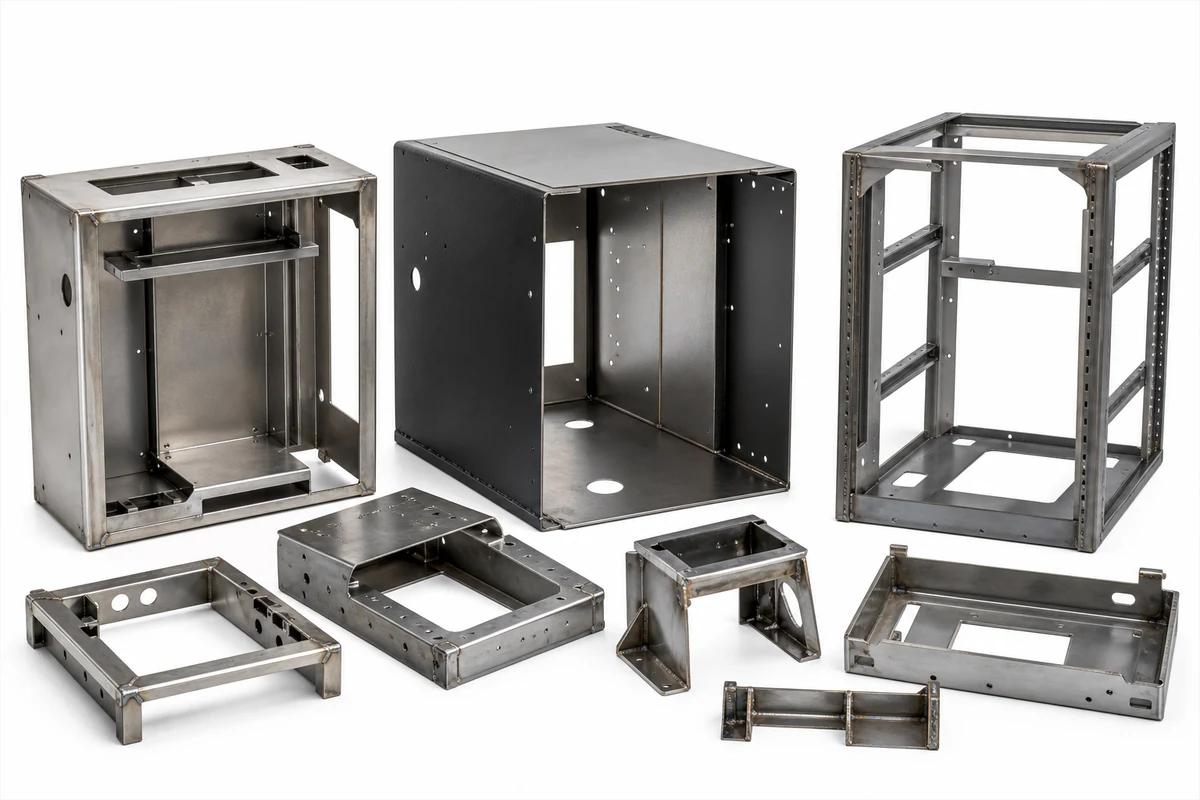
Frames and corner structures are welded with fixture control so the shell keeps its shape before finishing and inspection.
Surface Treatment
Powder coating, galvanized steel, stainless steel finish or aluminum treatment is selected around corrosion, appearance and masking requirements.
QC and Export Packing
Critical dimensions, visual surfaces and packing protection are checked before shipment so the buyer receives usable semi-finished enclosure parts.
Material and Finish Decisions That Change TCO
A material choice is not only a price choice. It affects strength, bendability, corrosion resistance, surface appearance, coating adhesion and shipping risk. The wrong material can make the part cheaper to buy and more painful to own. That is not procurement efficiency; that is a magic trick where savings disappear.
| Option | Best fit | Buyer check before RFQ |
|---|---|---|
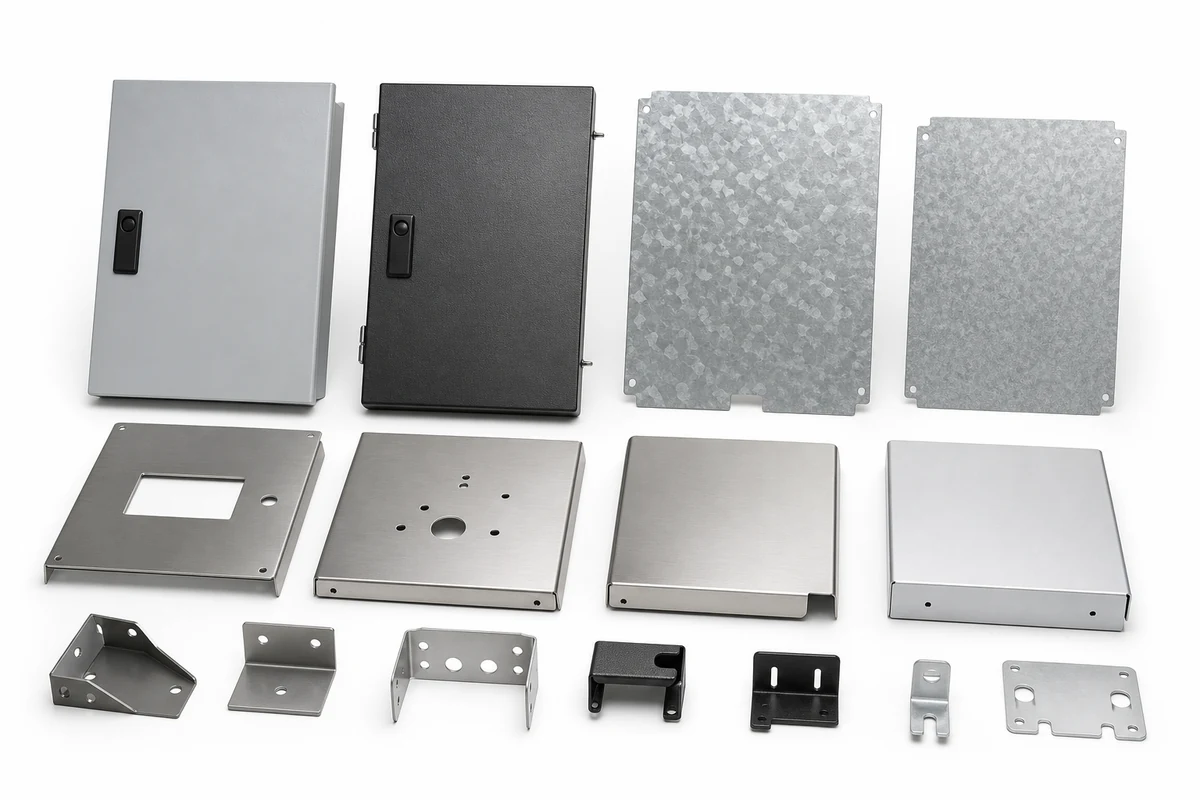
| SPCC or cold-rolled steel | Indoor cabinets, brackets, panels and painted enclosure shells where cost and formability matter | Thickness, powder coating color, flatness and corrosion environment |
| Galvanized steel | Outdoor or utility enclosure parts where corrosion resistance is needed before coating | Cut edge treatment, welding plan, coating adhesion and salt exposure |
| Stainless steel | Premium, medical, food-related or corrosion-sensitive enclosure shells and panels | Grade, brushed direction, passivation, masking and cosmetic surface class |
| Aluminum sheet metal | Lightweight covers, telecom panels and housings where weight reduction matters | Alloy, bend radius, anodizing or coating plan and scratch protection |
| Powder coating | Industrial cabinets, outdoor covers and branded enclosure panels | Color code, texture, gloss, masking areas, coating thickness and packing method |
RFQ Checklist for a Reliable Enclosure Quote
If you want an accurate quote, send enough information for the supplier to quote the real project, not the imaginary easy version. A complete RFQ reduces emails, protects delivery time and makes the supplier’s DFM review more useful.
Files to Send
- STEP or STP 3D model
- 2D PDF or DWG drawing with revision number
- Material grade and thickness
- Critical tolerance and datum notes
- Surface finish, color and masking requirements
Project Details to Add
- Prototype, first article and batch quantity
- Annual demand or forecast if available
- Buyer-side assembly interfaces
- Packing, labeling and export delivery expectations
- Target lead time and approval process
For RFQ preparation, use What Files Are Needed for a Sheet Metal Fabrication Quote? and the Online Laser Cutting Quotation Service. For process-specific checks, review Laser Cutting Services, Sheet Metal Bending Services, Welding Services and Surface Treatment.
Supplier Scorecard for OEM Enclosure Buyers
A useful supplier scorecard should look at evidence, not slogans. Everyone can say “high quality.” The question is whether they can show the drawing review, process control and shipment protection that keep your project from becoming a spreadsheet full of apologies.
| Trust signal | What it proves | Evidence to request |
|---|---|---|
| DFM feedback before production | The supplier is looking for risk before metal is cut | Marked drawing notes, material comments and bend/weld suggestions |
| In-house fabrication workflow | Laser cutting, bending, welding, finishing and QC can be coordinated around one drawing set | Workshop photos, process images and sample part references |
| First article inspection | Critical dimensions are checked before batch production | Inspection photos, measurement points and approval record |
| Finish and packing control | Cosmetic surfaces and long panels are protected through international transport | Packing photos, foam/separator plan and shipping protection notes |
| Export communication | The buyer can understand what is happening without chasing updates every morning | Clear RFQ response, revision control, production photos and shipment status |
Where MSTFAB Fits in Your Enclosure Supply Chain
MSTFAB is useful when your project needs custom metal enclosure shells, doors, mounting plates, brackets, louver panels, rack-related panels or hardware-ready sheet metal structures manufactured from drawings. Typical work includes laser cutting, CNC bending, welding, grinding, surface treatment, inspection and export packing for OEM buyers.
If your team is comparing suppliers for custom sheet metal enclosure fabrication, metal enclosure box fabrication or network cabinet fabrication, the TCO method above helps separate a real manufacturing partner from a quote that only looks good until the parts arrive.
FAQ
What is custom sheet metal enclosures manufacturing?
It is the drawing-based fabrication of metal enclosure shells and related parts such as doors, panels, brackets, mounting plates, louvers, frames and rails using processes such as laser cutting, CNC bending, welding, surface treatment, inspection and packing.
Why should OEM buyers compare TCO instead of only unit price?
Because the unit price does not show the cost of rework, delayed assembly, surface damage, poor fit, unclear drawings, scrap, urgent freight or supplier communication problems. TCO shows the cost of getting usable parts into your project.
Does MSTFAB supply fully assembled electrical devices?
No. MSTFAB manufactures semi-finished sheet metal enclosure shells and custom metal parts from buyer drawings. Device installation and final system integration remain outside our fabrication scope.
What files help MSTFAB quote faster?
Send STEP or STP files, 2D PDF or DWG drawings, material grade, thickness, tolerance notes, finish requirements, quantity, revision number and packing expectations.
How can buyers reduce enclosure cost without creating risk?
Standardize material thickness where possible, avoid unnecessary tight tolerances, confirm bend radius early, use slots only where helpful, define finish and masking clearly, approve a first article before batch production and specify protective packing.
Need a TCO-aware enclosure quote?
Send your drawings, material, thickness, finish, quantity and packing requirements. MSTFAB will review the semi-finished sheet metal enclosure fabrication scope before quotation.
 WeChat Contact
 WhatsApp Me Directly