
Buyer guide: Powder coated sheet metal chassis parts need both a defined finish and usable assembly interfaces. This checklist focuses on masking, hardware, conductive contact areas and fit after coating, rather than replacing a general fabrication-capability page.
Quick answer: Mark protected threads, mating surfaces and specified grounding areas on the released drawing before coating. Agree on hardware installation order, finish requirements and the dimensions to inspect after finishing. Coating appearance alone does not prove assembly fit or electrical continuity.
A custom chassis supports and locates components inside equipment. Its panels, flanges and mounting points may be acceptable before finishing but still require checks for coating buildup, fastener access and mating-part clearance afterward. Record which features are inspected in the coated condition.
For OEM buyers, the real question is not only “can you cut and bend this?” The better question is: can the supplier control the load-bearing structure, hole positions, welding distortion, powder coating, hardware insertion, inspection and packing so the chassis arrives ready for assembly?
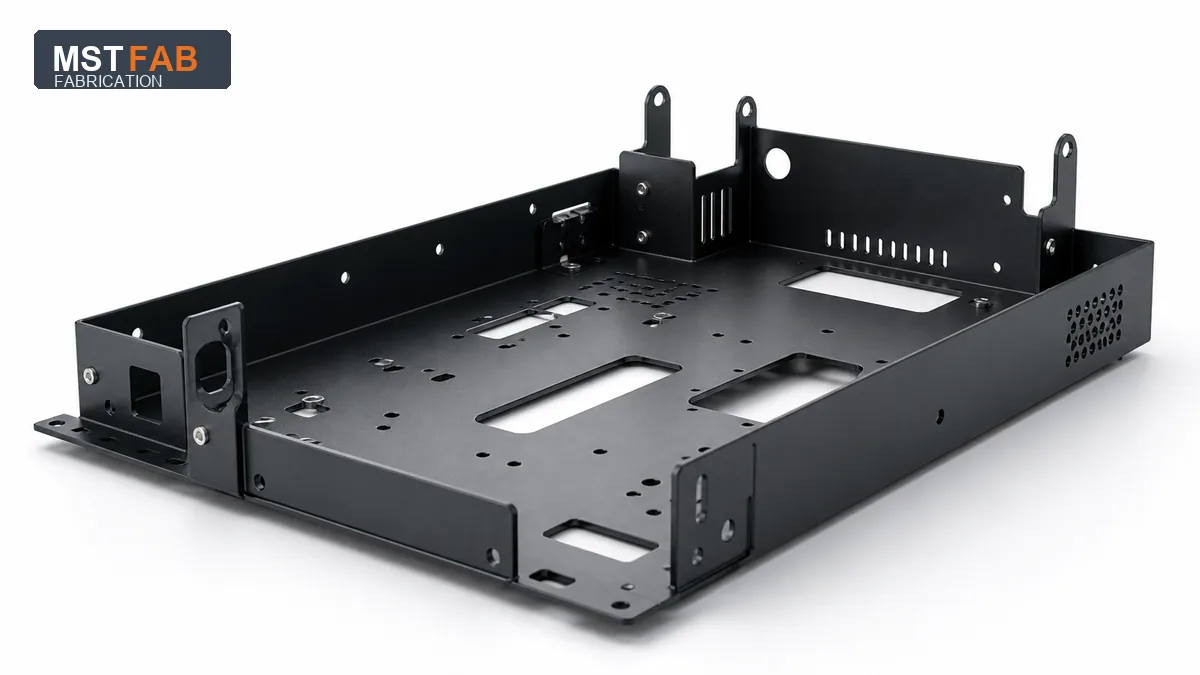
Scope: drawing-based chassis, base frames and coated sheet metal components. The quotation confirms the included fabrication, partner finishing, hardware and inspection operations; equipment integration and electrical validation are separate requirements.
How powder coating changes sheet metal chassis assembly
A sheet metal chassis is a fabricated metal structure used to support, align or protect components inside equipment. It may hold PCBs, power supplies, motors, batteries, fans, sensors, rails, cable glands, grounding points or mechanical modules.
Unlike a simple cover, a chassis usually has to behave like a quiet engineer: stay square, carry load, keep holes aligned and not complain. Common applications include electronic equipment chassis, industrial control chassis, EV charger internal chassis, telecom equipment chassis, medical equipment support frames, battery support structures and robotic equipment frames.
For general project support, see our custom sheet metal fabrication service. For housing-focused projects, see our custom sheet metal enclosure fabrication page.
Where chassis projects usually go wrong
| Buyer risk | What causes it | How MSTFAB controls it |
|---|---|---|
| Parts do not fit during assembly | Hole position drift, unstable bend angles, missing clearance | Drawing review, bend feasibility check, critical dimension inspection |
| Chassis is not square or flat | Welding heat, weak fixtures, poor sequence control | Fixture planning, controlled welding order, post-weld checks |
| Powder coating blocks assembly | Threads, grounding zones or tight-fit surfaces not masked | Masking notes, coating thickness review, sample approval when needed |
| Hardware installation fails | Wrong PEM nut, rivet nut, stud position or thread depth | Hardware list review, installation check and assembly verification |
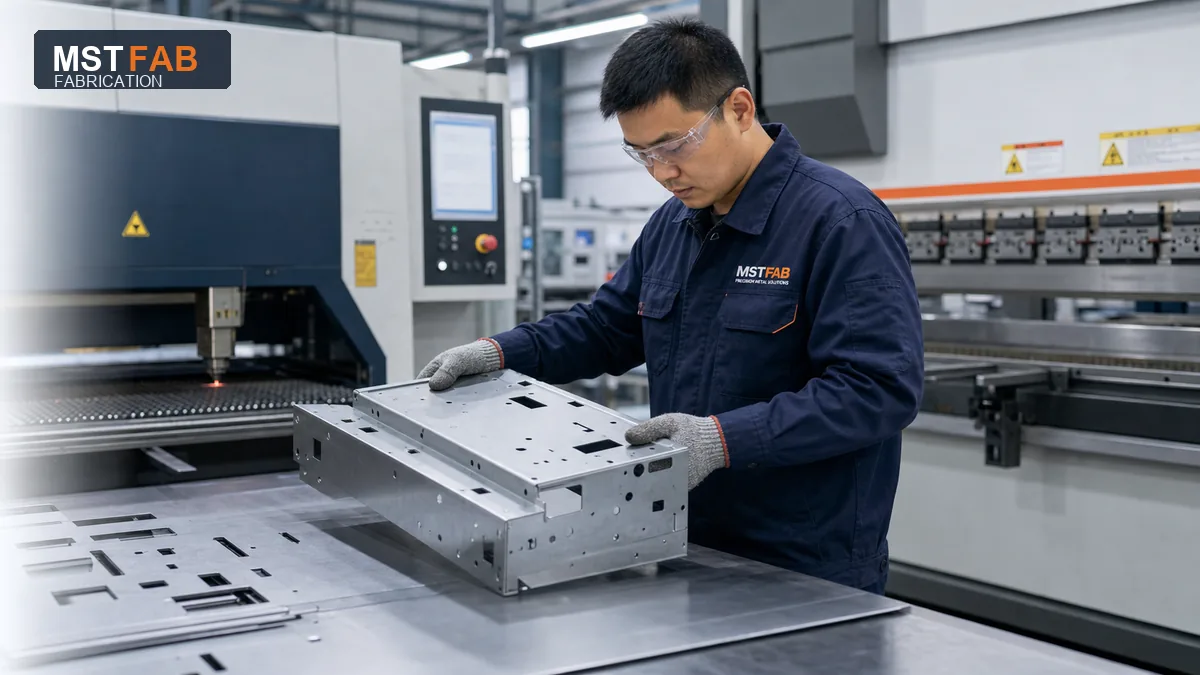
Manufacturing route for sheet metal chassis fabrication
MSTFAB supports chassis projects from flat sheet to export-ready assemblies. A typical manufacturing route includes laser cutting service, CNC bending service, welding, grinding, powder coating, hardware insertion, inspection and export packing.
| Process | Chassis purpose | Buyer note |
|---|---|---|
| Laser cutting | Panels, cutouts, ventilation slots, cable openings | Call out tight hole positions and cosmetic faces on drawings. |
| CNC bending | Flanges, side walls, rails and stiffening structures | Consistent bend radius helps reduce setup time and variation. |
| Welding | Frames, brackets, reinforced chassis and load-bearing joints | Use weld notes and critical dimensions when squareness matters. |
| Powder coating | Durable finish for visible and semi-visible equipment parts | Define RAL color, texture, gloss, masking and thread protection. |
| Assembly | PEM hardware, rivet nuts, hinges, handles, brackets and sub-assemblies | Send hardware specs and assembly drawings before quotation. |
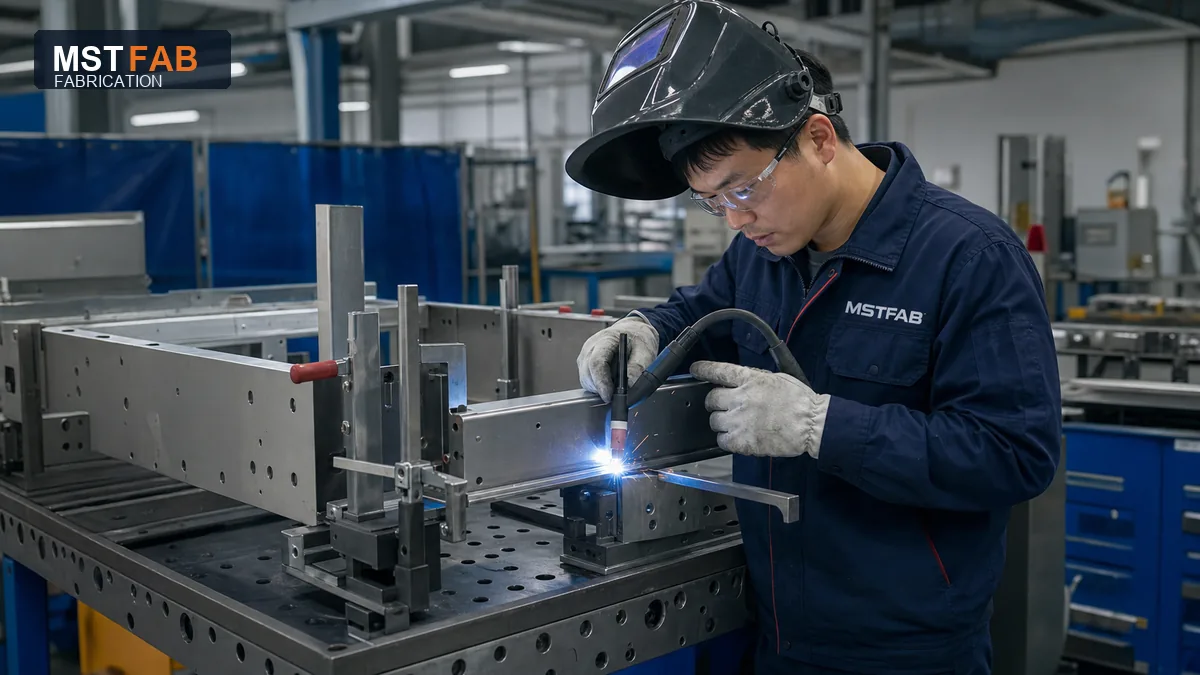
Welding and structure: the square-frame problem
Many custom chassis parts require welded corners, reinforcement ribs, brackets or base frames. Welding adds strength, but it also adds heat. Heat likes to move metal around when nobody invited it.
For welded chassis assemblies, MSTFAB reviews weld locations, fixture needs, part thickness and key dimensions before production. When the structure has load-bearing or equipment-mounting requirements, we can check flatness, squareness and critical hole locations before shipment. For more welding support, see our sheet metal welding service.
Powder coating: good finish, no blocked threads
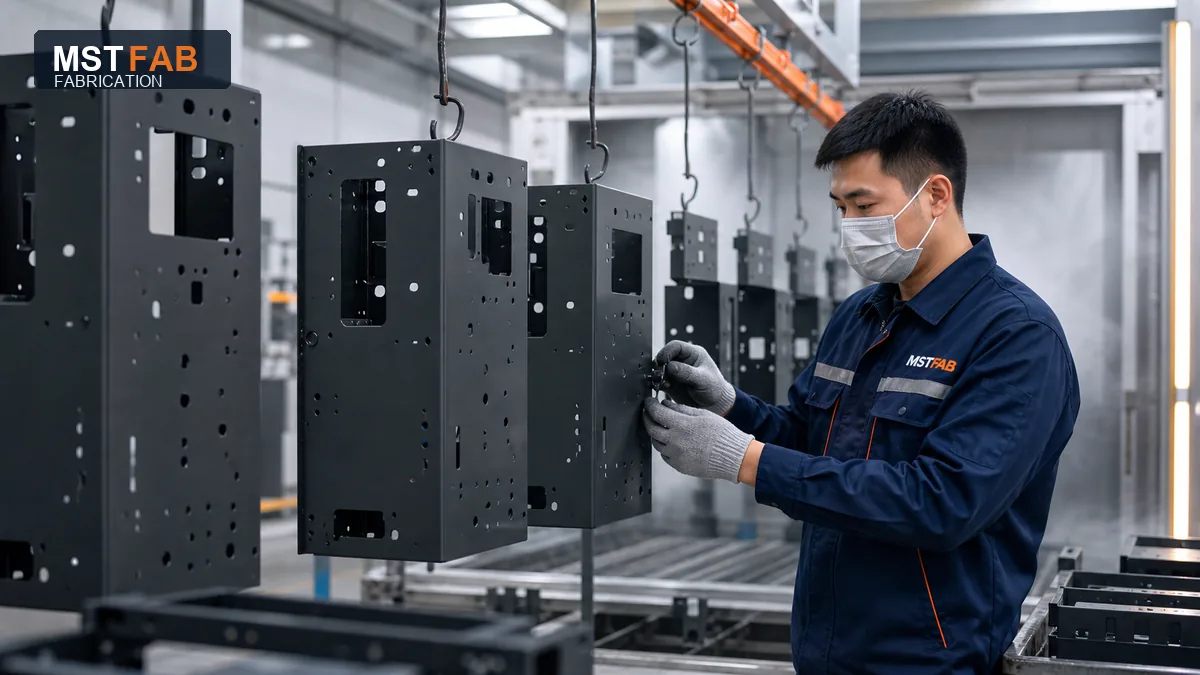
Powder coating is useful for chassis parts because it improves appearance and surface protection. But for assembly parts, coating is not just color. It affects thread fit, grounding contact, insert areas, hole size and sliding surfaces.
Before coating, define RAL color, gloss, texture, coating specification, masking boundaries and visible faces. State whether hole sizes, slots, sliding interfaces and threaded fits are accepted before or after finishing. Request a first-article mating check where needed; conductive contact areas require their own acceptance criteria. MSTFAB supports powder coated sheet metal parts with project-specific finishing and packaging notes.
Hardware insertion and assembly support
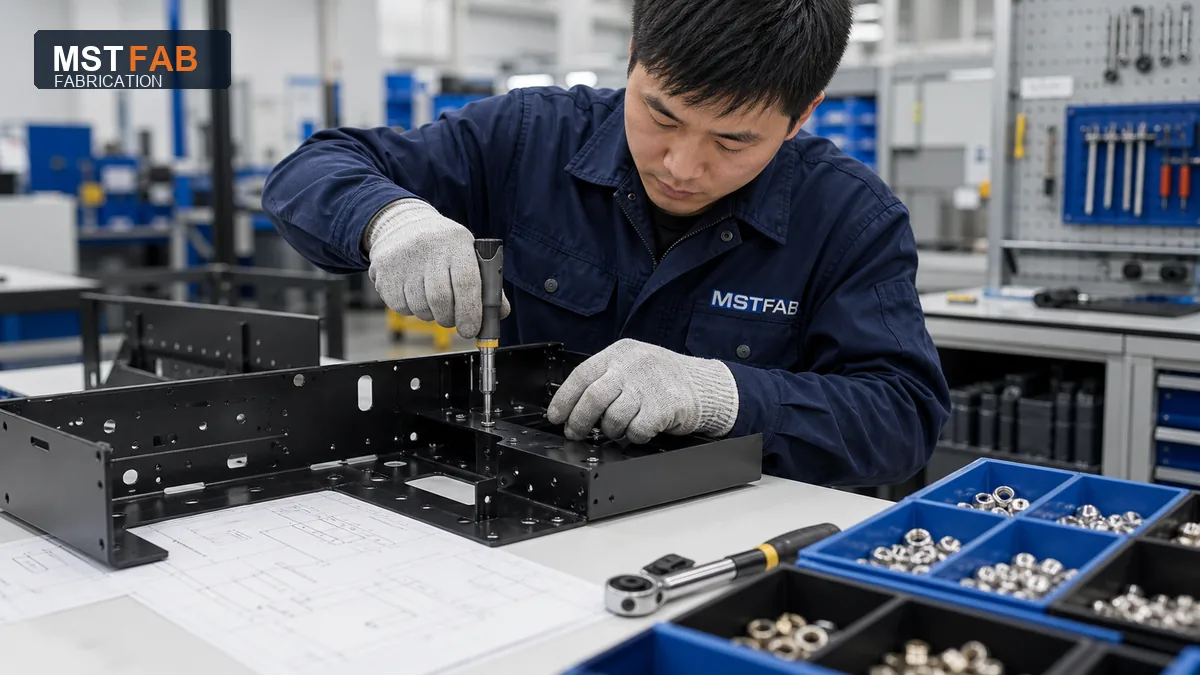
Custom chassis parts often need PEM nuts, rivet nuts, studs, threaded holes, hinges, handles, grounding hardware or mounting brackets. A chassis with the wrong insert is not “almost right.” It is a small metal excuse for a large production delay.
MSTFAB can support drilling, tapping, riveting, hardware insertion and partial assembly according to drawings. If your chassis needs sub-assembly before shipment, send hardware specifications, torque requirements, assembly drawings and reference photos.
Materials for custom sheet metal chassis
| Material | Best use | Common finish |
|---|---|---|
| Carbon steel | Equipment chassis, machine frames, support structures | Powder coating, zinc plating, phosphating |
| Stainless steel | Clean, corrosion-resistant or premium chassis parts | Brushing, passivation, polishing |
| Aluminum | Lightweight electronic chassis, frames and panels | Anodizing, powder coating, brushing |
| Galvanized steel | Internal mounting structures and basic corrosion-resistant parts | Powder coating or unpainted internal use |
For corrosion-resistant projects, see stainless steel sheet metal fabrication. For lightweight chassis planning, MSTFAB can also support aluminum sheet metal fabrication through our custom sheet metal fabrication service.
Inspection evidence that builds trust
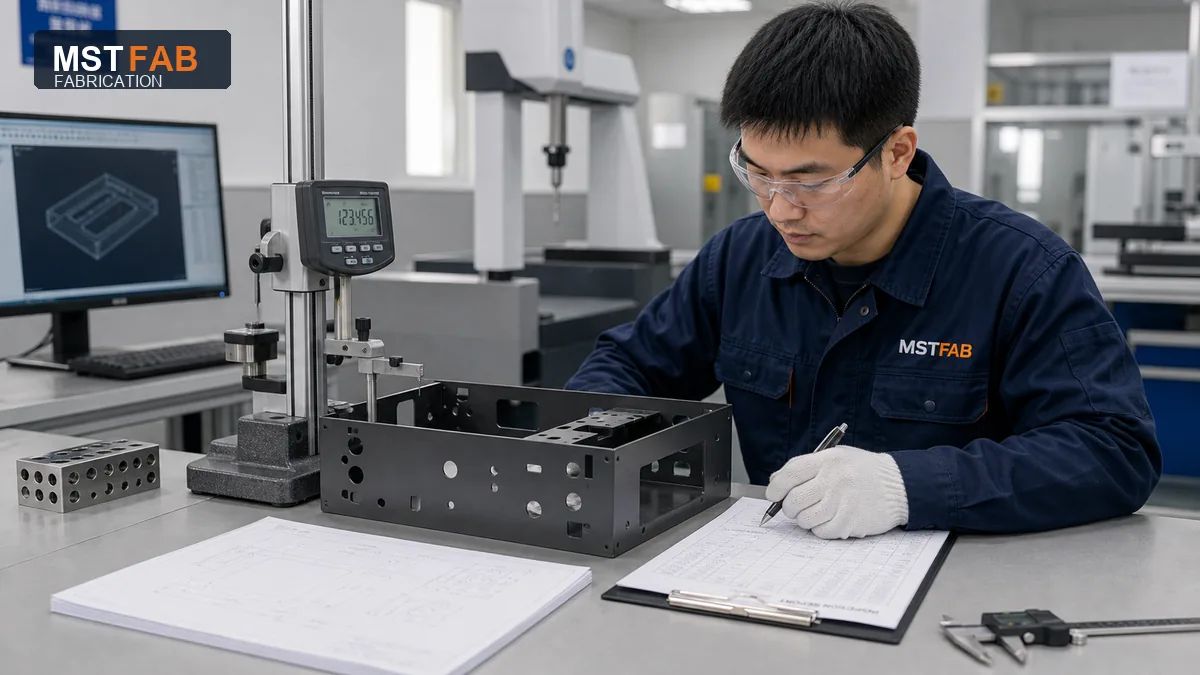
For chassis parts, inspection should focus on the features that affect assembly. A beautiful powder coated chassis with misplaced holes is still a very attractive problem.
| Inspection point | Why it matters | Evidence buyers can request |
|---|---|---|
| Hole position and cutout size | Controls PCB, rail, bracket and module installation | First article check or marked critical dimension report |
| Bend angle and flange height | Controls chassis fit and stack-up | Sample inspection record or production inspection checklist |
| Flatness and squareness | Controls load-bearing and equipment mounting | Fixture check, flatness check or assembly verification |
| Coating and masking | Protects finish while keeping threads and grounding areas functional | Finish sample, coating note and visual inspection photos |
For projects that need records, link the RFQ to a dimensional inspection report requirement before quotation.
What to send for a fast quote
- 2D drawings in PDF format and 3D STEP/STP files
- Material grade and thickness
- Quantity, batch plan and expected annual usage
- Critical tolerances and assembly interfaces
- Welding notes, load-bearing areas and flatness requirements
- Powder coating color, texture, gloss and masking requirements
- PEM nuts, rivet nuts, studs, threaded holes and hardware list
- Partial assembly instructions or reference photos
- Inspection requirements and export packaging requirements
For commercial fabrication capability, use the custom sheet metal chassis manufacturer page. For datums, tolerance stack-up, weld distortion and first-article checks, read the sheet metal chassis DFM guide.
Related resources for OEM chassis buyers
- Build-to-print sheet metal manufacturer for drawing-based production.
- Surface treatment and powder coating options for coated chassis parts.
- Export packaging for sheet metal parts when parts need to survive international freight.
- OEM industrial equipment components for broader equipment part programs.
- Custom sheet metal enclosure fabrication when the project is more housing than load-bearing chassis.
FAQ
Can MSTFAB make powder coated sheet metal chassis parts from drawings?
Yes. MSTFAB manufactures chassis parts based on customer drawings, including cutting, bending, welding, hardware insertion, powder coating, inspection and basic assembly support.
Can you inspect critical chassis dimensions before shipment?
Yes. Buyers can mark critical dimensions on drawings, such as hole positions, bend angles, flatness, squareness and insert locations. MSTFAB can focus inspection on the features that affect assembly most.
Can you support both stainless steel and aluminum chassis?
Yes. MSTFAB supports carbon steel, stainless steel, aluminum and galvanized steel chassis projects. Material choice depends on strength, weight, corrosion resistance, weldability and finish requirements.
Can you provide partial assembly?
Yes, depending on the project. We can support fastener installation, brackets, hinges, handles, internal supports and basic sub-assemblies before export packing.
Need a chassis that does not create assembly drama?
Send your drawings, material, coating, hardware and inspection requirements. MSTFAB will review the manufacturing route before quoting.
 WeChat Contact
 WhatsApp Me Directly