
OEM Sheet Metal Baseplate & Custom Base Plate Manufacturing: Key Engineering Controls
An OEM sheet metal baseplate is a structural datum interface that governs equipment alignment, load transfer, and bolt-hole repeatability across laser cutting, CNC bending, welding, and surface finishing. To prevent assembly misalignment, buyers should specify primary functional datums (A/B/C), post-weld CTQ hole tolerances, realistic mounting-zone flatness, and thread masking on 2D PDF drawings.
- Post-Weld Hole Accuracy: Verify critical equipment mounting-hole patterns after welding and stress distortion rather than relying solely on flat laser-cut accuracy.
- Functional Zone Flatness: Define flatness across active foot and rail mounting pads instead of over-specifying tight full-plate flatness across non-contact spans.
- Formed vs. Welded Stiffness: Where geometry permits, CNC press-brake return flanges add structural rigidity with fewer weld seams and lower heat distortion.
- Materials & Finishing Scope: Fabricated from SPCC, SS400/Q235 carbon steel, SGCC galvanized steel, SUS304/316 stainless steel, or 5052/6061 aluminum with coordinated powder coating or plating.
Last Reviewed: October 2026
For: OEM Procurement, Mechanical Engineers and Equipment Manufacturers
Scope: Drawing-based equipment base plates, support plates, machine bases and fabricated sheet metal foundations.
Quick Answer
A custom sheet metal base plate is not simply a rectangular piece of metal underneath a machine.
For OEM equipment, it often controls:
mounting position + equipment alignment + support interfaces + hole patterns + welded brackets + downstream assembly.
Before sourcing a base plate, buyers should define:
material + thickness + functional datums + mounting-hole positions + required flatness + welded support features + hardware + finish + inspection condition.
The purchasing question is not:
Can you laser cut this plate?
It is:
Will the finished plate correctly locate the equipment after cutting, bending, welding and finishing?
A plate can have perfect outside dimensions and still fail the assembly because four important holes disagree with the machine.
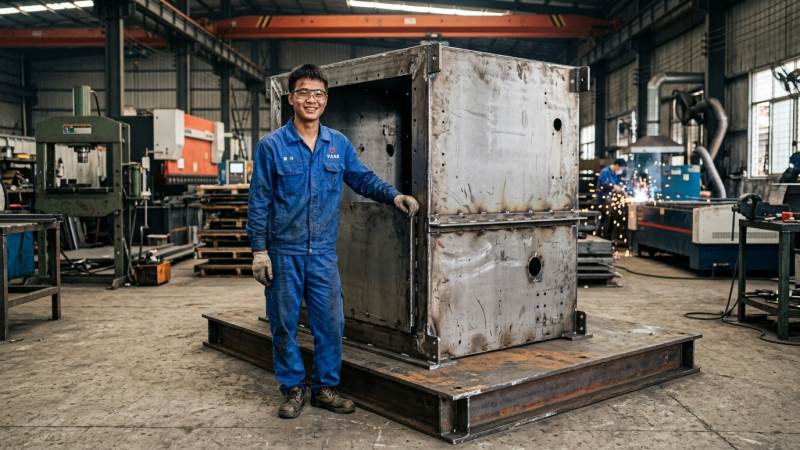
A Base Plate Is an Assembly Interface
For this page, a base plate means a buyer-designed metal foundation or support interface used underneath or within OEM equipment.
Typical applications include:
- industrial machinery;
- automation equipment;
- equipment frames;
- cabinet structures;
- control equipment;
- telecom equipment;
- medical equipment housings;
- battery and EV equipment;
- mechanical assemblies.
The important word is interface.
The base plate may locate: a welded frame, motor assembly, machine module, enclosure body, support bracket, or buyer-installed equipment.
That means its function is usually more important than its rectangular outline.
Start With Functional Datums
Do not dimension every mounting hole from whichever edge is easiest to select in CAD. Where assembly alignment matters, establish functional references.
For example:
- Datum A: primary base surface
- Datum B: rear locating edge
- Datum C: side locating feature
Then critical mounting features can be inspected relative to those references. This is especially useful where several components must share the same mechanical coordinate system.
For a base plate, the principle is simple: Measure the plate the way the equipment uses the plate.
Hole Position Usually Matters More Than Plate Size
Consider a base plate measuring 800 x 500 mm. The outside dimensions may pass inspection. But if the motor or frame mounting holes move several millimeters, the plate can still be unusable.
| Base Plate Feature | Buyer Concern |
|---|---|
| Equipment mounting holes | Final assembly |
| Frame bolt pattern | Structural interface |
| Locating slots | Positioning |
| Welded stud location | Downstream components |
| Anchor holes | Installation interface |
| Bracket positions | Equipment clearance |
The buyer should identify the hole patterns that actually control assembly. Not every hole needs the same inspection priority.
Flatness Should Be Functional, Not Decorative
A common RFQ says: “Must be perfectly flat.” That sounds clear, but it rarely is. The useful question is: How flat does the finished assembly actually need the base plate to be?
An unnecessarily severe full-surface flatness requirement can add straightening, inspection and cost without improving the machine.
Define How Flatness Will Be Checked
If flatness is critical, buyer and supplier should agree on the inspection condition. Possible approaches may include checking: free-state plate condition, an agreed inspection surface, defined datum support points, or specific mounting zones.
Welding Can Change a Base Plate After Cutting
Many base plates are more than flat blanks. The buyer may require welded brackets, channels, supports, studs, bosses, frames, or reinforcement members.
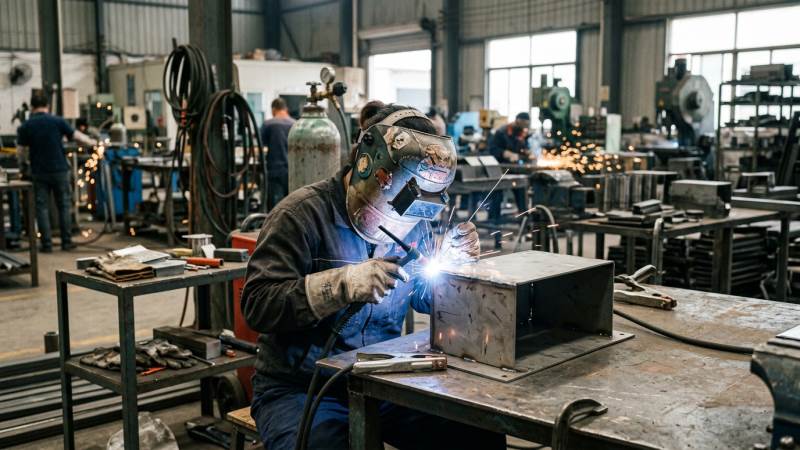
Once heat is introduced, dimensions that were correct after laser cutting may move. Therefore important CTQs should often be checked in the finished welded condition.
Welded Supports Should Follow the Buyer’s Load Design
A base plate may need structural supports, but the fabricator should not guess what loads the equipment carries. The OEM should define: expected loads, support locations, material, weld requirements, critical geometry, and acceptance criteria.
Not Every Base Plate Needs Welding
Depending on the design, several production routes may be possible:
- Flat Base Plate: Suitable where a simple cut plate provides the required support interface.
- Bent Base Plate: Perimeter bends or formed edges may improve stiffness or create mounting features.
- Base Plate With Welded Brackets: Useful where additional vertical or offset mounting interfaces are required.
- Welded Base Assembly: Multiple formed components create a larger support structure.
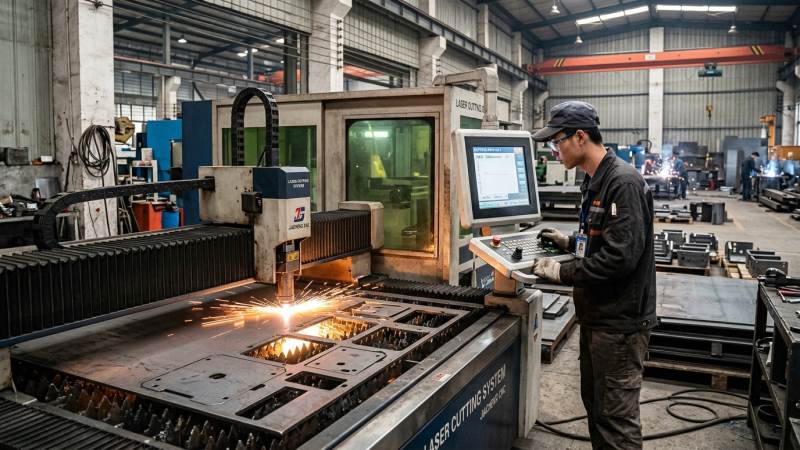
Bending Can Be Better Than Adding Another Weld
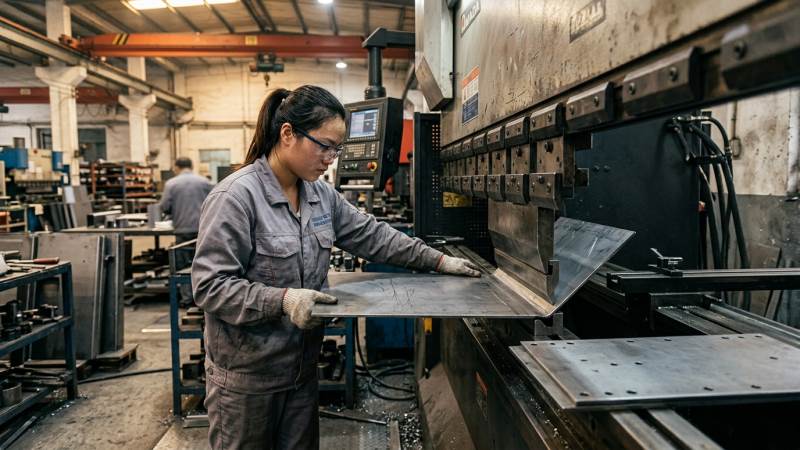
Some support features can potentially be created through forming rather than welding, depending on geometry and requirements. A formed flange may reduce separate components, fixture work, welding, and grinding. DFM is a proposal. Engineering approval still belongs to the buyer.
Consider Hole Position After Welding
If the OEM assembles the final welded part, inspect the final welded part. This is much more meaningful than showing that the laser cutter performed accurately several production steps earlier.
Hardware Can Be Part of the Base Plate
OEM base plates may require PEM nuts, weld nuts, studs, threaded inserts, standoffs, or rivet nuts. Define where applicable: part number + thread + quantity + location + installation face.
Finish Should Match the Service Requirement
The buyer should specify material and finish for the actual service environment. For coated parts, define masking around threads, locating areas and mounting surfaces where needed. Powder coating and other specified finishing may be coordinated with long-term partners; the approved quotation should identify the route and inspection criteria.
Inspect the Finished Functional Interface
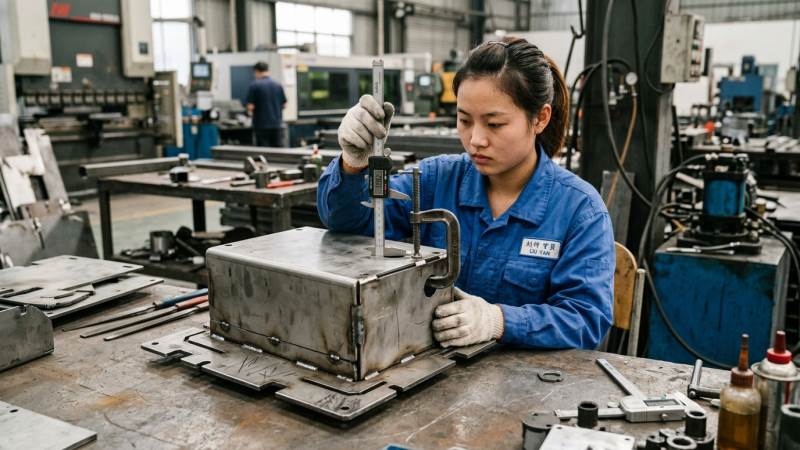
The strongest question is: Does the finished base plate correctly accept the assembly it was designed to support? A CMM report or caliper measurement is valuable. A machine that actually bolts down correctly is also useful evidence.
Base Plate vs Mounting Plate
These two terms can overlap, but for engineering clarity, they serve different primary purposes.
| Part | Main Function | Main Buyer Concern |
|---|---|---|
| Base plate | Supports equipment/frame from below | Flatness, load interface, hole position, supports |
| Mounting plate | Carries components on/inside equipment | Hole patterns, datums, component fit |
| General panel | Covers/supports equipment | Cutouts, bends, cosmetic appearance |
| Frame | Locates larger structure | Squareness, datums, welded geometry |
Base Plate Supplier Qualification Checklist
Before approving a supplier, ask:
- Can you work from STEP and controlled PDF?
- Which mounting holes are CTQs?
- What datums control inspection?
- What flatness requirement is actually functional and how will it be measured?
- Are welded supports included and checked after welding?
- Can the first article be checked against the real equipment interface?
That tells Procurement considerably more than asking about machine sizes. The laser makes the plate; the OEM buys the interface.
What to Send for a Base Plate Quote
Provide: STEP/STP model, Controlled PDF, Material, Thickness, Quantity, Expected repeat volume, Datum structure, Critical mounting holes, Functional flatness requirement, Welded support requirements, Hardware, Finish, and Inspection requirements.

What MSTFAB Manufactures
MSTFAB fabricates buyer-defined base plates, mounting plates, frames and welded assemblies as part of its custom sheet metal fabrication services. For enclosure-mounted plates, see the mounting plate DFM guide.
The OEM defines equipment loads, structural requirements, datums, critical-to-quality features and acceptance criteria. MSTFAB fabricates approved mechanical parts and empty assemblies. Electrical integration, structural load validation and finished-equipment certification remain with the OEM.
FAQ
What should I send a custom sheet metal base plate manufacturer?
Send a STEP/STP model and controlled PDF drawing, plus DXF/DWG flat patterns where relevant. Include material, thickness, quantity, datums, critical hole positions, functional flatness, welded supports, hardware and finish.
Does every base plate need very tight flatness?
No. Specify flatness according to the actual equipment interface. Unnecessarily tight full-plate flatness can add cost without improving assembly.
Should hole positions be checked after welding?
If welding can influence the final relationship between the holes and functional datums, the relevant CTQs should be verified in the finished welded condition.
Can a base plate include welded brackets or support channels?
Yes, when specified by the buyer. The supplier can fabricate drawing-defined supports, but structural requirements and equipment loads remain buyer-controlled.
Is a base plate the same as a mounting plate?
Not necessarily. A base plate generally supports equipment or a larger structure, while a mounting plate normally positions individual components.
 WeChat Contact
 WhatsApp Me Directly