
Custom Scuba Diving Backplate Manufacturer
A scuba diving backplate looks simple at first glance. It is a metal plate with slots, holes and rounded edges. But for diving equipment buyers, this is not a simple decorative metal part.
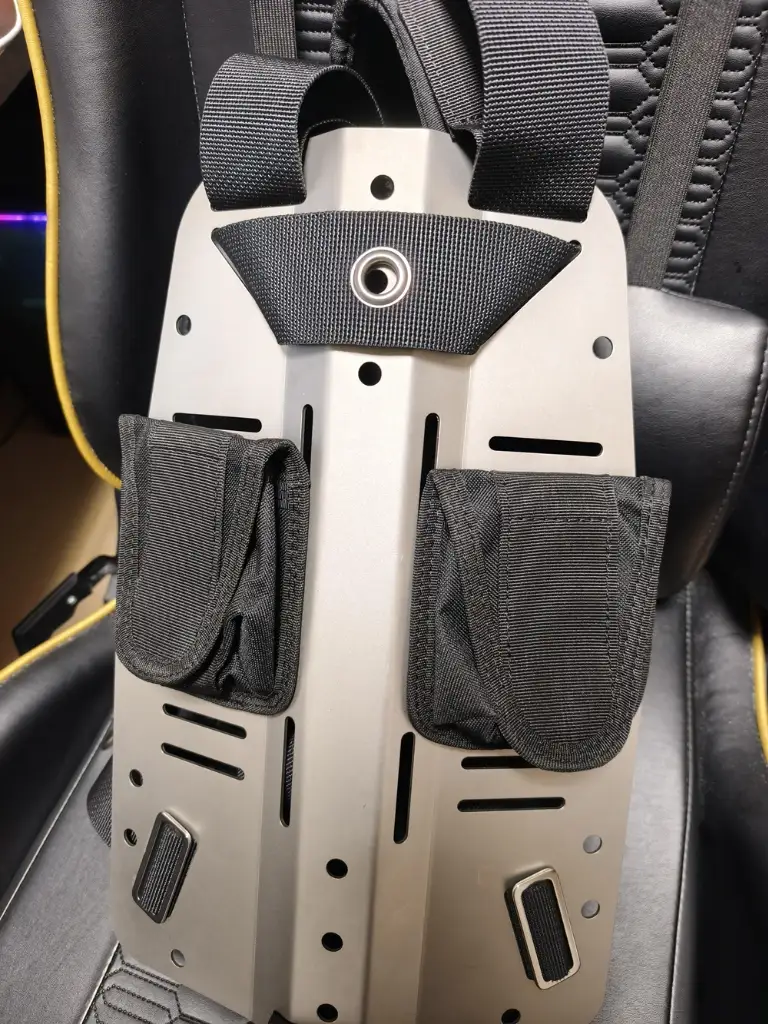
A backplate must support harness routing, cylinder mounting, wing attachment, shoulder strap positioning, waist strap fit, crotch strap connection and long-term use in wet, salty and demanding environments.
MSTFAB provides custom sheet metal fabrication for scuba diving backplates and diving equipment metal parts according to customer drawings, samples and approved specifications.
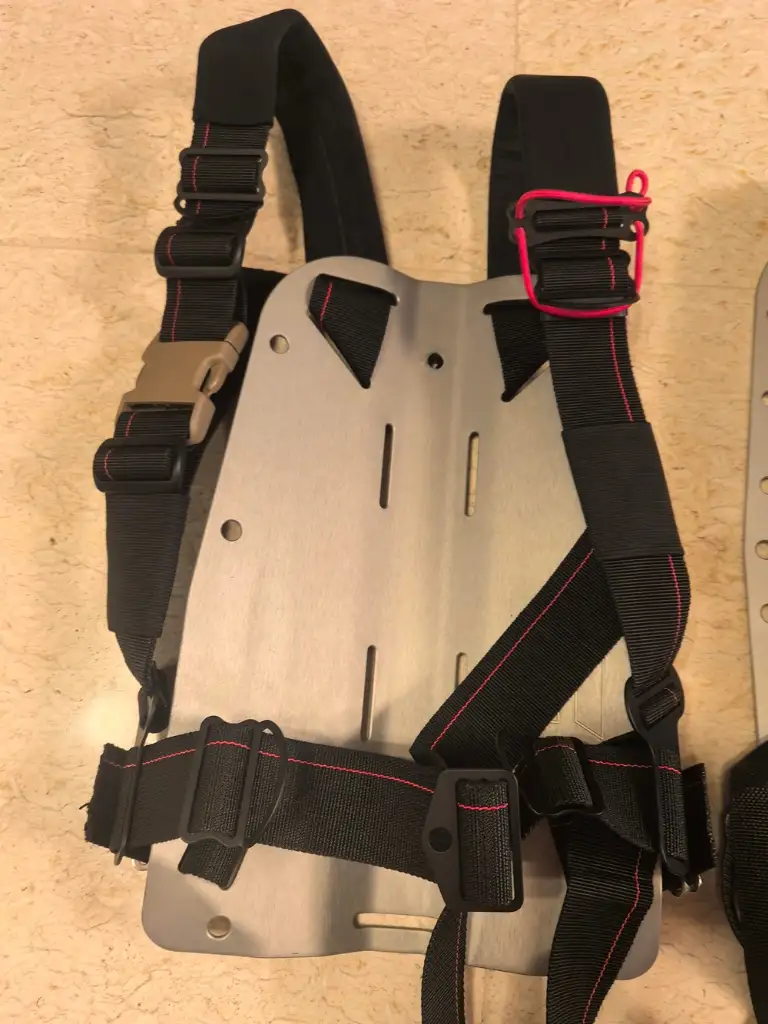
We can support stainless steel diving backplates, aluminum diving backplates, laser cut scuba backplates, custom backplates for diving harness systems, wing mounting plates, harness slot plates, tank band slot plates, diving equipment mounting brackets, stainless steel scuba equipment parts, aluminum diving gear components, OEM diving equipment metal parts, polished or brushed stainless steel diving parts and custom laser cut metal parts for water sports equipment.
For buyers, the real question is not only: “Can the factory cut this shape?”
The better question is: “Can the factory cut every slot cleanly, remove sharp edges, control hole positions, select the right material, protect the surface and repeat the same quality in batch production?”
Real manufacturing does. That is why scuba diving backplate fabrication must be reviewed as a functional metal component, not only as a flat laser cut plate.
Why Diving Equipment Buyers Need Custom Sheet Metal Fabrication
Diving equipment brands, OEM suppliers and product developers often need custom metal parts that cannot be purchased from standard catalogs.
A custom scuba backplate may need specific size, specific plate thickness, custom slot layout, custom hole pattern, customer logo cutout, harness compatibility, BCD wing compatibility, tank band compatibility, rounded corners, smooth edges, polished surface, lightweight aluminum option, corrosion-resistant stainless steel option, custom color or coating, batch consistency and export packaging protection.
A diving backplate is not just a metal shape. It is a connection platform. If the holes are wrong, the wing may not align. If the slots are sharp, the harness webbing may be damaged. If the edges are rough, users may get scratched. If the surface treatment is wrong, corrosion can appear. If the plate is bent or twisted, assembly becomes difficult.
A cheap metal part becomes expensive when it creates customer complaints. That is not cost saving. That is cost relocation.
Common Diving Equipment Metal Parts We Can Fabricate
MSTFAB can manufacture custom metal parts for diving equipment and related water sports hardware according to customer drawings. Common parts may include scuba diving backplates, wing mounting plates, harness plates, tank adapter plates, cylinder support plates, buckle plates, slot plates, mounting brackets, hose holder brackets, accessory mounting plates, custom stainless steel clips or brackets and aluminum equipment panels.
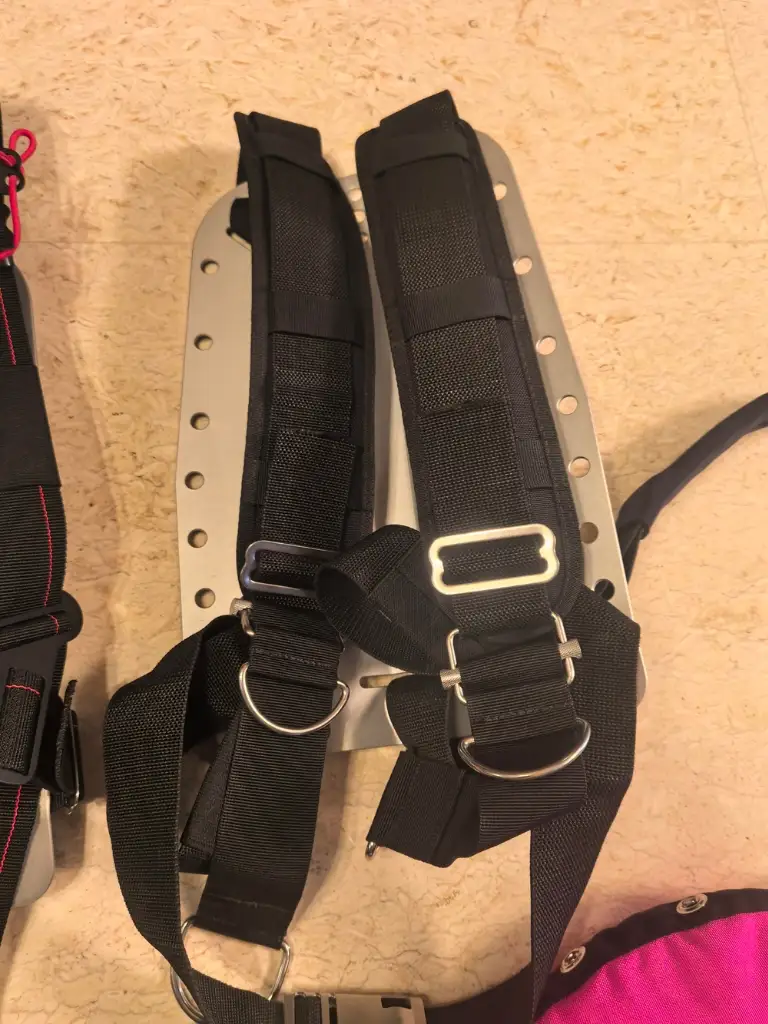
These parts may require laser cutting, slot cutting, hole cutting, radius corners, deburring, edge smoothing, brushing, polishing, surface treatment, anodizing for aluminum, powder coating, inspection and protective packaging.
Different diving equipment parts have different requirements. A backplate that touches webbing needs better edge control. A visible plate needs better surface control. A saltwater part needs better material and corrosion review. A load-bearing part needs customer engineering validation.
Stainless Steel Diving Backplate Fabrication
Stainless steel is commonly used for diving backplates because it offers strength, rigidity and corrosion resistance. Common stainless steel options may include 304 stainless steel, 316 stainless steel and 316L stainless steel if specified by the customer.
For diving equipment used in saltwater environments, material selection should be reviewed carefully. 304 stainless steel may be suitable for some general applications, but 316 or 316L may be preferred when better corrosion resistance is required. The final material should be confirmed by the customer’s engineering team according to the product application, target market and safety requirements.
Stainless steel diving backplates may require laser cutting, slot cutting, hole cutting, corner rounding, edge deburring, surface brushing, polishing, passivation if required, protective film and careful packaging.
Stainless steel is corrosion-resistant. It is not scratch-proof. A visible stainless steel backplate still needs careful handling, surface protection and packaging.
Aluminum Diving Backplate Fabrication
Aluminum diving backplates are often selected when buyers need lighter weight. They may be useful for travel diving systems, lightweight harness systems, compact equipment setups, OEM diving gear products and color-finished backplate designs.
Common aluminum materials may include Aluminum 5052, Aluminum 6061, Aluminum 6063 and other grades specified by customer drawings.
Aluminum is not lightweight steel. It bends differently, scratches more easily and needs its own surface treatment review. Aluminum diving parts may require laser cutting or CNC cutting, slot cutting, deburring, edge smoothing, surface cleaning, anodizing if required, powder coating if suitable and protective packaging.
Laser Cutting for Scuba Backplates
Laser cutting is suitable for custom scuba backplates because it can produce accurate slots, holes and outer profiles from flat sheet material. Laser cutting can create shoulder strap slots, waist strap slots, crotch strap slots, tank band slots, wing mounting holes, center holes, accessory mounting holes, logo cutouts, edge profiles and rounded corners.
For backplate manufacturing, laser cutting must consider material grade, sheet thickness, slot size, hole diameter, hole position, edge condition, heat effect, burr control, cutting accuracy and batch repeatability.
A slot is not just a slot. It controls how webbing passes through the backplate. If the slot is too sharp, webbing may be damaged. If the slot is too narrow, assembly becomes difficult. If the slot is too wide, the harness may shift. A proper diving backplate requires clean and controlled slot processing.
Slot and Hole Accuracy Matters
The hole and slot layout of a scuba backplate is critical. It may affect harness routing, wing mounting, cylinder position, backplate balance, accessory mounting, assembly speed, product compatibility and user comfort.
Common manufacturing risks include wrong hole spacing, slot position shift, burrs inside slots, sharp inner corners, deformed holes, misaligned mounting holes, inconsistent batch holes and poor compatibility with customer accessories.
For accurate production, buyers should provide STEP or STP file, PDF drawing, DXF or DWG cutting file, hole diameter, slot dimensions, critical center distances, material grade, thickness, surface finish requirement, quantity and approved sample or reference.
A DXF file helps with cutting. A PDF drawing defines what must be controlled. A STEP file helps confirm the final part geometry and assembly relationship.
Edge Smoothing and Deburring for Diving Backplates
Edge quality is one of the most important details in diving backplate manufacturing. A diving backplate has many contact areas including harness webbing slots, waist strap slots, shoulder strap slots, user-facing edges, hand-contact areas, cylinder strap areas, wing attachment areas and accessory mounting holes.
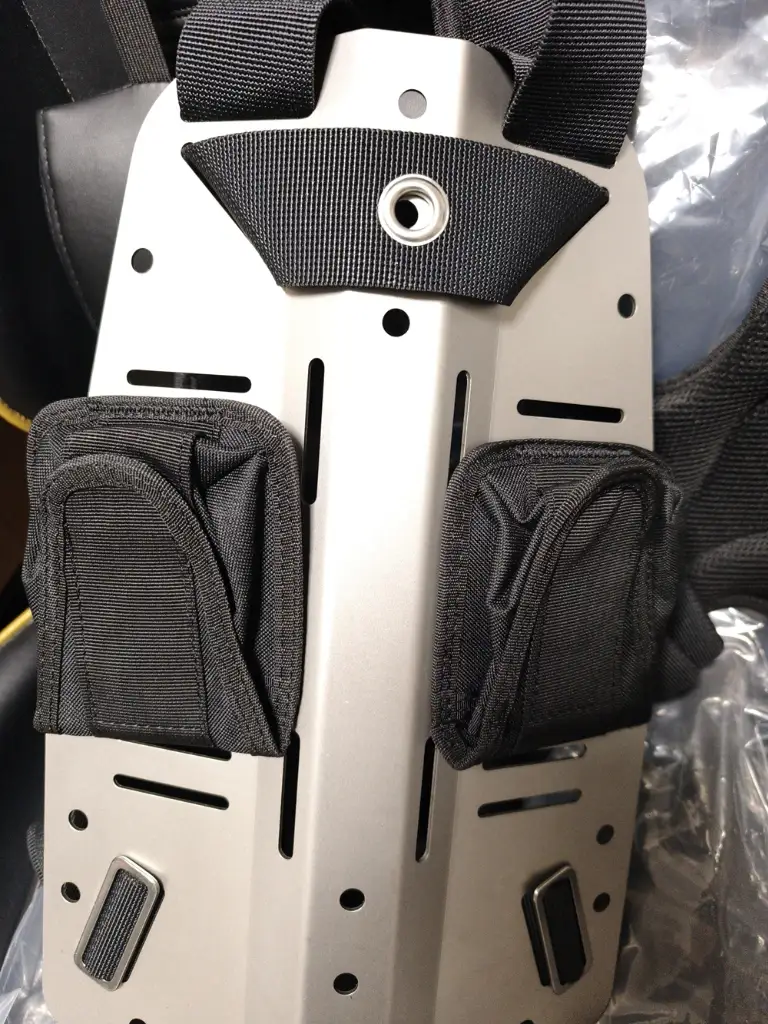
If the edges are sharp or rough, they can cause webbing damage, scratched coating, poor user handling, surface wear, customer complaints and assembly difficulty.
That is why deburring and edge smoothing should be included in the manufacturing plan. Possible edge finishing steps include burr removal, slot edge smoothing, corner rounding, hole deburring, surface brushing, local polishing, manual inspection and protective packaging.
CAD has no burrs. Real cut metal does. For diving equipment parts, burr control is not only cosmetic. It protects the harness, the user and the brand reputation.
Surface Finishing for Diving Equipment Metal Parts
Surface finishing must match material and application.
Brushed Stainless Steel
Brushed stainless steel gives a clean industrial appearance suitable for visible stainless steel backplates and diving equipment parts. Important details include brushing direction, scratch control, visible surface protection, edge blending, protective film and packaging protection.
Polished Stainless Steel
Polishing may be used when a smoother or more refined appearance is required. The polishing level should be defined by drawing, sample or approved surface requirement. “Polished” is not a complete technical standard. The buyer should define the expected surface result.
Anodized Aluminum
Anodizing may be considered for aluminum diving backplates when corrosion resistance, color or appearance is required. The anodizing requirement should define color, thickness expectation, surface standard and application environment.
Powder Coating
Powder coating may be used for some decorative or protective finishes, but it must be reviewed carefully. Powder coating is not just color. It changes the part surface and may chip or scratch if the application is demanding.
For coated diving backplates, buyers should confirm color, gloss, texture, adhesion requirement, saltwater environment, edge coverage, slot wear risk and packaging protection. A beautiful surface that fails in real use is not a good finish. It is a future warranty problem.
Material Selection for Diving Backplates
Material selection is one of the most important decisions in diving backplate manufacturing. Buyers should consider strength, weight, corrosion resistance, saltwater exposure, surface appearance, cost, thickness, user comfort, product positioning, target market and certification or internal testing requirements.
Stainless steel is heavier and stronger. It may be selected when the buyer wants durability, rigidity and additional ballast weight. For saltwater use, 316 or 316L may be reviewed depending on the project requirement.
Aluminum is lighter. It may be selected when the buyer wants a travel-friendly or lightweight diving system. Aluminum usually needs surface treatment review, such as anodizing or another suitable finish.
Backplate thickness affects weight, rigidity, flexibility, slot strength, cutting cost, edge finishing work, user feel and packaging weight. The best thickness depends on the customer’s product design and engineering validation. MSTFAB can manufacture according to the approved drawing based on material selection guidelines.
Custom Logo, Pattern and Branding
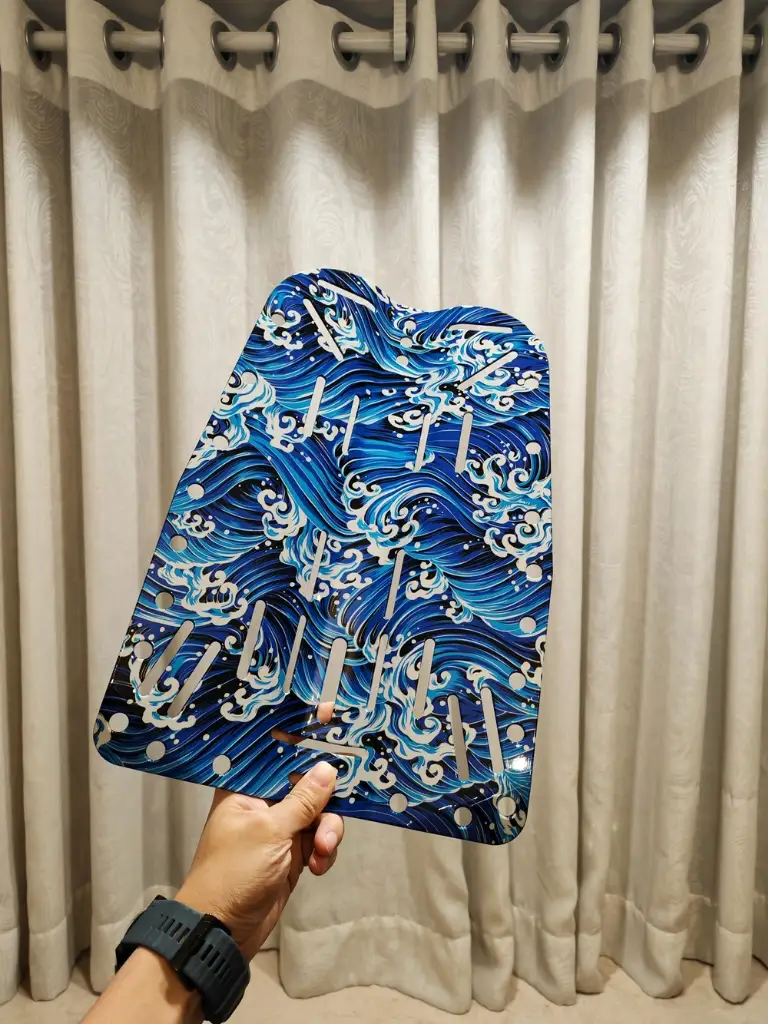
Custom diving backplates may require both functional manufacturing and visual branding. Possible customization options include custom outer shape, custom hole pattern, custom slot layout, customer logo cutout, printed surface pattern, color coating, anodized color, brushed stainless appearance, polished stainless appearance, batch labeling and custom packaging.
For branded diving products, buyers should provide artwork file, color requirement, surface finish requirement, coating or printing process requirement, scratch resistance expectation, sample approval requirement and packaging requirement. Visual design and functional performance should be reviewed together. A nice pattern does not help if the slots have burrs.
DFM Review for Diving Equipment Sheet Metal Parts
DFM means Design for Manufacturability. For diving equipment metal parts, DFM review helps identify manufacturing risks before production starts.
DFM review may check material suitability, sheet thickness, slot width, hole diameter, hole spacing, radius corners, edge finishing requirement, surface finish feasibility, logo cutout feasibility, sharp corner risk, burr control, flatness, coating risk, anodizing risk, packaging protection and batch repeatability.
DFM does not mean changing the customer’s design without approval. It means finding manufacturing risks before production. A design issue found before cutting is a question. A design issue found after cutting, finishing and packaging becomes rework, delay and cost.
Prototype and Sample Production
Custom scuba backplate projects often begin with samples. Prototype production helps confirm outer profile, slot position, slot width, hole position, material thickness, edge smoothness, surface finish, coating or anodizing result, harness fit, wing mounting compatibility and packaging method.
The goal is not one lucky backplate. The goal is a stable manufacturing route that can repeat in batch production.
First Article and Batch Production
After sample approval, the project can move to first article review and batch production. First article review may check material grade, sheet thickness, overall size, slot position, hole diameter, hole spacing, edge quality, flatness, surface finish, logo or pattern and packaging method.
Batch production focuses on repeatability. Before repeat production, confirm approved drawing revision, approved sample status, material grade, sheet thickness, cutting program, edge finishing method, surface treatment requirement, inspection plan, packaging standard and batch labeling.
Prototype proves the design. First article proves the manufacturing interpretation. Batch production proves repeatability. The 500th backplate should still match the approved version.
Quality Inspection for Diving Backplate Metal Parts
Quality inspection is important because diving equipment metal parts require functional fit and surface quality. Inspection may include material confirmation, sheet thickness check, overall dimension inspection, hole diameter inspection, hole position inspection, slot size inspection, slot edge review, burr inspection, corner radius review, flatness check, surface finish inspection, coating or anodizing appearance check and packaging inspection.
For critical or safety-related features, buyers should mark inspection points clearly on the drawing. Not every dimension needs tight tolerance. But important mounting and harness features must be controlled. Over-tolerancing increases cost. Under-tolerancing creates assembly and product risks. Both can be avoided with clear requirements.
Packaging Protection for Diving Equipment Metal Parts
Packaging is important for finished diving equipment parts. Stainless steel, aluminum, coated and printed surfaces can be scratched during handling and shipping. Packaging may include protective film, foam separation, corner protection, individual wrapping, layer separation, cartons, pallets, moisture protection, batch labels, part labels and custom packaging if required.
A perfect diving backplate that arrives scratched is no longer perfect. It is a packaging failure. Packaging is not decoration. It is the last manufacturing process before the buyer receives the part.
What Buyers Should Provide for Quotation
For accurate quotation, please provide STEP or STP file, PDF drawing, DXF or DWG cutting file, material grade, sheet thickness, quantity, prototype quantity, future batch quantity, slot dimensions, hole dimensions, critical tolerance requirements, edge finishing requirement, surface finish requirement, brushed polished anodized or coated requirement, color or artwork requirement if any, logo file if applicable, inspection requirement, packaging requirement and shipping destination if freight is needed.
A screenshot or photo helps explain the idea. But it is not enough for production. A complete drawing package helps MSTFAB quote faster and reduce manufacturing risk.
Manufacturing Scope and Responsibility Boundary
MSTFAB focuses on physical sheet metal fabrication and metal part manufacturing according to customer drawings. Customer CAD files, drawings, product design, artwork and intellectual property remain the customer’s property.
We can manufacture stainless steel and aluminum diving equipment metal parts such as backplates, mounting plates, brackets and related components based on customer-provided drawings and agreed requirements.
Our standard scope does not include complete diving equipment product design, final scuba equipment safety certification, load-bearing design responsibility, product liability for final diving use, functional testing of complete diving systems, certification testing, regulatory approval or final user safety validation unless separately agreed in writing.
For scuba diving equipment, the customer’s qualified engineering team should confirm final design, strength, safety, compatibility, testing and product compliance. This boundary keeps the manufacturing scope clear. You provide the approved drawings and requirements. We manufacture the physical metal parts according to the approved specification.
Why Choose MSTFAB for Custom Diving Equipment Metal Parts?
MSTFAB is a custom sheet metal fabrication factory in Guangzhou, China, supporting overseas OEM buyers, engineering teams and industrial purchasing departments.
- Stainless Steel and Aluminum Sheet Metal Fabrication: We manufacture custom stainless steel and aluminum sheet metal parts according to customer drawings.
- Laser Cut Backplates and Slot Features: We support laser cutting for backplate profiles, harness slots, tank band slots, mounting holes, logo cutouts and custom patterns.
- Edge Smoothing and Surface Finishing: We help review deburring, slot smoothing, corner rounding, brushing, polishing, anodizing or coating requirements according to the project.
- Prototype to Batch Production: We support sample production, first article review, low-volume production and repeat batch manufacturing.
- OEM Customization Support: We can manufacture custom shapes, custom slot layouts, customer-specific hole patterns, logo cutouts and branded metal parts based on customer drawings.
- Export Packaging Protection: We help protect visible surfaces, coated surfaces, aluminum parts and stainless steel parts during packaging and shipment.
A good diving equipment metal parts manufacturer should not only cut a plate. It should help buyers receive parts that are smooth, accurate, corrosion-aware, assembly-ready and protected during delivery.
Request a Custom Diving Backplate Quote
Send MSTFAB your drawings and project requirements. We can review material, thickness, laser cutting profile, slot size, hole position, edge smoothing, deburring, surface finish, anodizing, powder coating, logo cutout, inspection, packaging and manufacturing risk for your custom diving equipment metal parts.
Upload Diving Backplate Drawings →Frequently Asked Questions
Can MSTFAB manufacture custom scuba diving backplates?
Yes. MSTFAB can manufacture custom scuba diving backplates according to customer drawings, material requirements, thickness, slot layout, hole pattern and surface finish specifications.
What materials are used for diving backplates?
Common materials include stainless steel and aluminum. Stainless steel may be selected for strength and corrosion resistance, while aluminum may be selected for lightweight designs. Final material selection should be confirmed by the customer’s engineering team.
Can stainless steel diving backplates be laser cut?
Yes. Stainless steel diving backplates can be laser cut with custom outer profiles, harness slots, mounting holes, tank band slots and logo cutouts according to customer drawings.
Can aluminum diving backplates be customized?
Yes. Aluminum backplates can be customized by laser cutting or CNC processing, edge smoothing and suitable surface finishing such as anodizing or coating, depending on the project.
Why is edge smoothing important for scuba backplates?
Backplate slots and edges contact harness webbing and users. Sharp edges or burrs may damage webbing, scratch surfaces or create handling problems. Edge smoothing and deburring are important manufacturing steps.
Can MSTFAB make the decorative surface like the image?
MSTFAB can review decorative surface requirements such as coating, printing, color or pattern based on the customer’s artwork, material and finish requirement. Functional slot accuracy and edge quality should be confirmed together with the visual design.
What files are needed for a custom diving backplate quote?
The best RFQ includes STEP or STP files, PDF drawings, DXF or DWG cutting files, material grade, thickness, slot dimensions, hole positions, surface finish requirement, quantity and packaging requirement.
Can MSTFAB certify scuba diving equipment?
MSTFAB focuses on physical metal part fabrication according to customer drawings. Final diving equipment safety, strength, compatibility, certification and product liability should be confirmed by the customer’s qualified engineering team.
Can MSTFAB support prototypes and batch production?
Yes. MSTFAB can support prototype samples, first article review, low-volume production and repeat batch manufacturing based on approved drawings and samples.
Can MSTFAB protect customer drawings and designs?
Yes. MSTFAB respects customer drawings, CAD files, artwork and intellectual property. NDA or confidentiality requirements can be reviewed before cooperation.
MSTFAB provides precision sheet metal laser cutting services for OEM panels, brackets, enclosures and custom metal parts.
 WeChat Contact
 WhatsApp Me Directly