
Quick answer: For custom renewable energy enclosure fabrication, agree on the mechanical acceptance package before approving production: released drawings, material identification, critical-dimension results, finish approval, hardware checks and packing requirements. A cabinet photograph is useful, but it does not establish structural capacity, weather protection or the performance of the installed energy system.
MSTFAB fabricates drawing-based sheet metal shells, panels, brackets and specified mechanical assemblies. Batteries, inverters, wiring, cooling equipment and complete-system validation remain outside this fabrication scope unless separately agreed in writing. This guide covers supplier acceptance and production release, not project finance or a guaranteed service life.
Start with a document list, not a promise
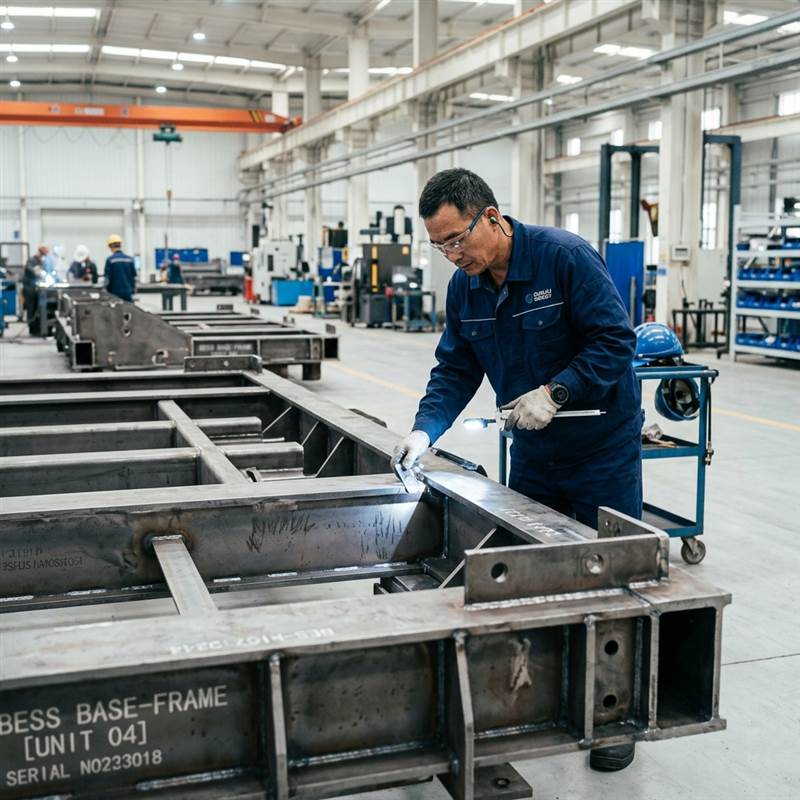
An RFQ saying only “outdoor cabinet, good quality” leaves both parties guessing. List each required record, who prepares it, when it is due and who approves it. Identify the drawing revision and the first-article quantity. If testing or independent review is required, establish the provider, sample configuration, method and acceptance criteria before pricing.
For the manufacturing route itself, see our sheet metal fabrication services. The decision here is narrower: what evidence allows your team to release this particular enclosure for repeat manufacture?
Match each acceptance decision to the right evidence
| Decision | Record to agree | What it does not establish |
|---|---|---|
| Drawing and material release | Approved CAD/PDF revision, BOM, grade and thickness; material documents where specified | Final equipment certification or approval of an unrecorded substitution |
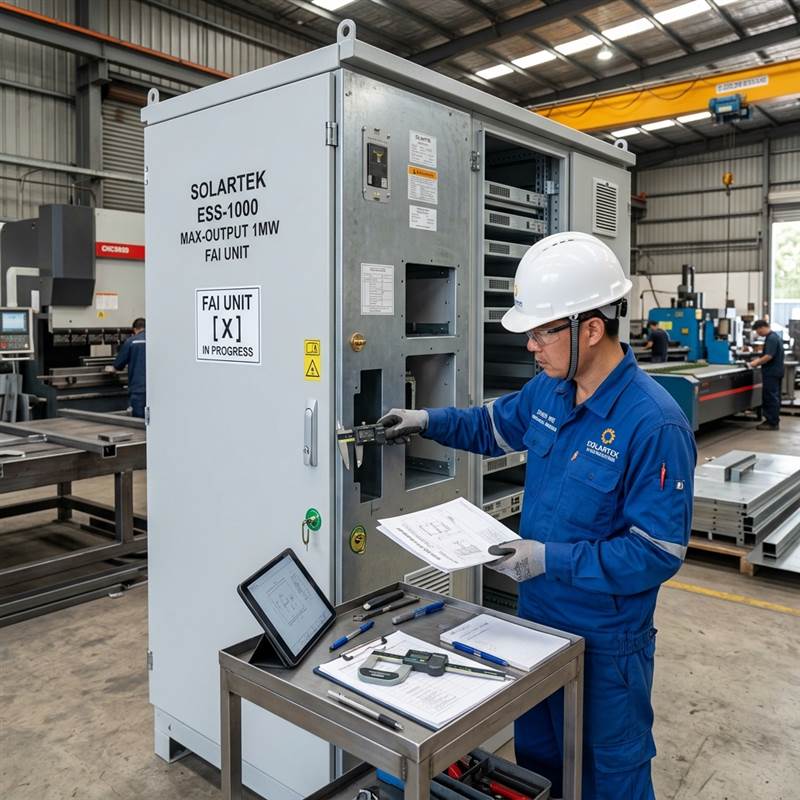
| Mounting and assembly fit | First-article dimensions against named datums, plus an agreed fit-up check | Payload, transport or lifting capacity without the applicable engineering validation |
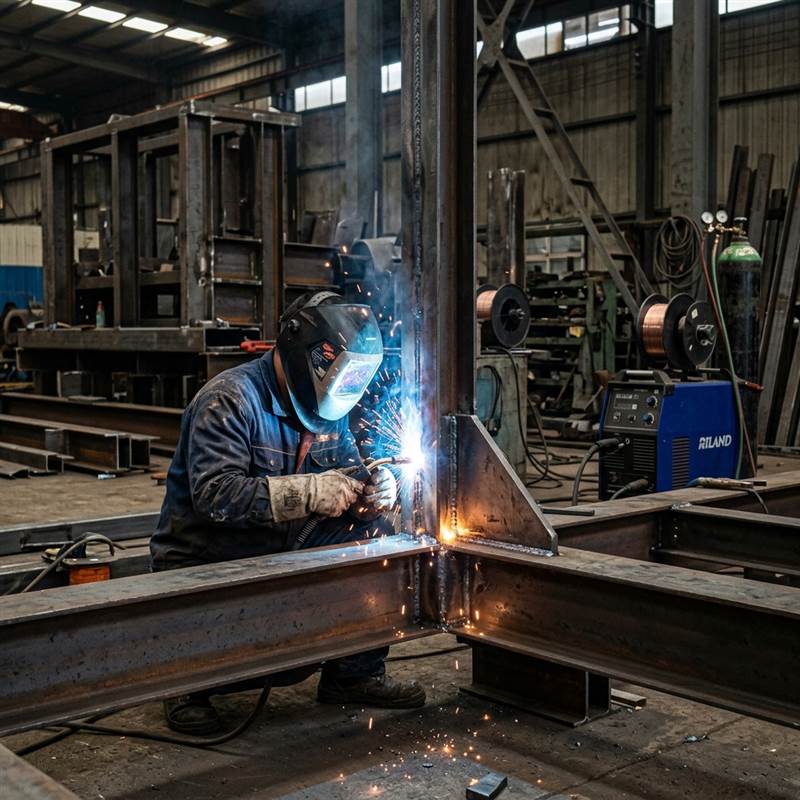
| Welded features | Drawing requirements, agreed inspection locations and specified weld records | Fatigue life merely because a weld appears continuous |
| Visible finish | Approved appearance sample, coating specification, masking notes and inspection criteria | A guaranteed outdoor lifetime from a coating photograph or a generic test report |
| Delivery condition | Packing approval, protected-face requirements, part identification and pre-shipment photos | Correct installation or commissioning at the destination |
Keep shell inspection separate from system validation
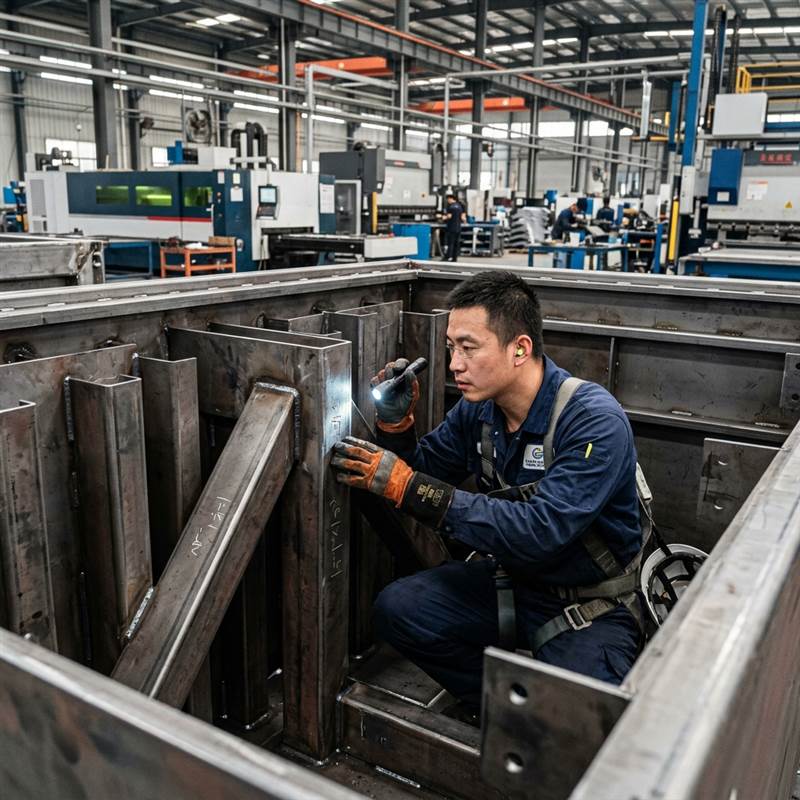
Checking a mounting hole is not the same as proving the mounted assembly can carry its operating load. Measuring coating thickness is not the same as qualifying a complete cabinet for a particular environment. A cooling-unit opening can be fabricated correctly while the system’s thermal design still needs verification.
Ask the equipment designer to define the load cases, installed components and required performance checks. The purchase order should distinguish metalwork inspection from testing of a fully configured assembly. An empty shell and a populated cabinet are not interchangeable test samples.

Use the first article to close open issues
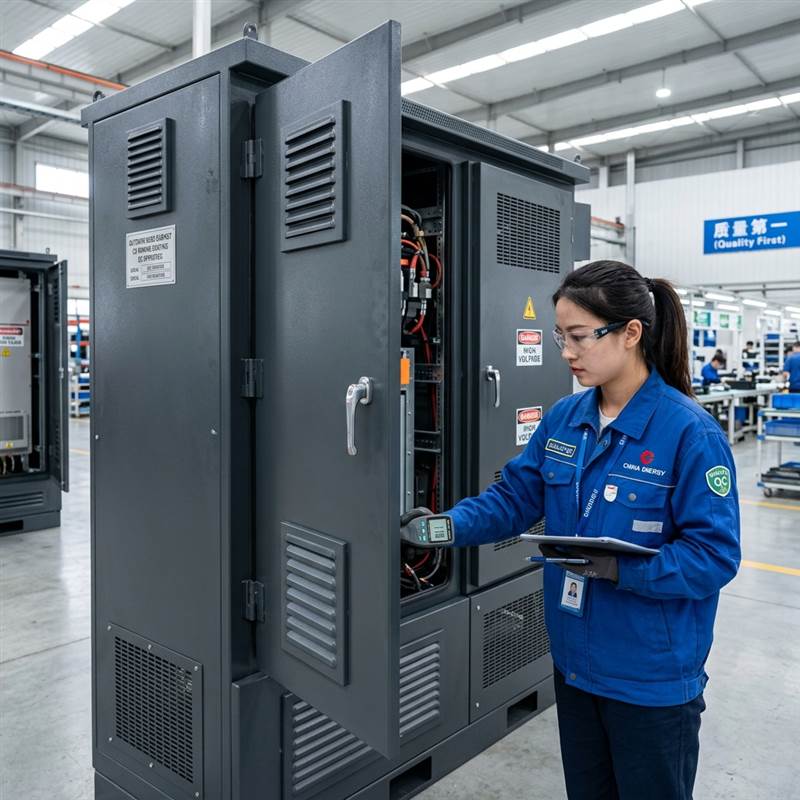
Record deviations against the drawing rather than approving them through an informal “looks fine” message. Each issue needs a disposition: rework, replace, accept this sample only, or revise the released design. State who has authority to approve the disposition. Approval of one sample should not silently authorize a permanent material or process change.
For example, if a door interferes with a buyer-supplied cooling unit, identify the affected revision, measure the interface and agree on the correction. Update both the model and the inspection sheet before repeat production. Otherwise, the next batch may faithfully reproduce the wrong opening.
What to settle before the repeat order
- Which first-article issues are closed, and which still prevent production release?
- Which approved sample or drawing controls appearance, gaps and hardware placement?
- Which records accompany each shipment, and which are supplied only when specified?
- What happens if material, coating, tooling or a subcontracted operation changes?
- Who approves changes, and how are cost and delivery effects confirmed?
Lead time should be quoted against the released scope, purchased items, finishing route and inspection requirements. A short quotation is not proof of good process control; a longer one is not proof of poor capability. Ask what is included and what could change the delivery date.
Send a release-ready RFQ
Provide STEP and PDF files with matching revisions, quantity, material and finish requirements, critical interfaces, required documents and packing expectations. Mark any unresolved inputs clearly. If the scope includes battery storage shells, our battery storage enclosure page explains the mechanical manufacturing boundary.
Before you approve: Check that the quotation, drawing, sample and inspection plan describe the same part. Agree on missing evidence before ordering, rather than expecting it to appear in the shipping carton.
Send your enclosure drawings and acceptance requirements for review.
 WeChat Contact
 WhatsApp Me Directly