
Sheet Metal Stamping vs. Laser Cutting Cost: Which Process Fits Your OEM Volume?
Fiber laser cutting with CNC press brake bending requires $0 in hard tooling NRE and allows instant CAD revisions, making it most economical for prototypes and low-to-medium OEM runs (1–1,000+ parts). Progressive or compound die stamping requires upfront tooling investment and multi-week build times, becoming cost-effective only when high annual volumes (typically 5,000–10,000+ pieces) amortize die costs.
- Tooling NRE vs. Unit Price: Fiber laser cutting and CNC bending require $0 dedicated die cost, whereas compound or progressive stamping dies typically require $1,500 to $30,000+ in upfront NRE.
- Break-Even Volume Threshold: Laser cutting dominates from 1 to 2,500+ units and on large enclosures; hard-tool stamping generally reaches break-even above 2,500–10,000+ annual pieces on small-to-medium brackets.
- Materials & Tolerances: Both processes support SPCC cold-rolled steel, SGCC galvanized steel, SUS304/316 stainless steel, and 5052-H32 aluminum, inspected to ISO 2768-m baseline and drawing-defined CTQ datums.
- Bridge Production Strategy: Launch EVT/DVT prototypes and initial commercial batches on fiber laser + CNC press brakes, then transition to progressive stamping only after 3D CAD geometry is frozen.
Why Custom Sheet Metal Stamping & Laser Cutting Quotes Vary So Widely
Let’s be honest: buying custom sheet metal parts overseas can feel like a gamble. You send a pristine CAD file, and what you get back are metal plates with edges sharp enough to slice a steak, bent at the wrong angle, and covered in mystery grease. If your supply chain relies on crossed fingers, it’s time to upgrade.
OEM Procurement Reality Check: Unit Price vs. Landed Assembly Cost
Job shops will quote you pennies for laser cutting and stamping, but they make up for it by skipping quality control. They use dull stamping dies, skip the deburring process, and throw your parts into flimsy cardboard boxes that get crushed in transit. You don’t need the cheapest parts; you need parts that actually fit together on your assembly line without needing a sledgehammer.
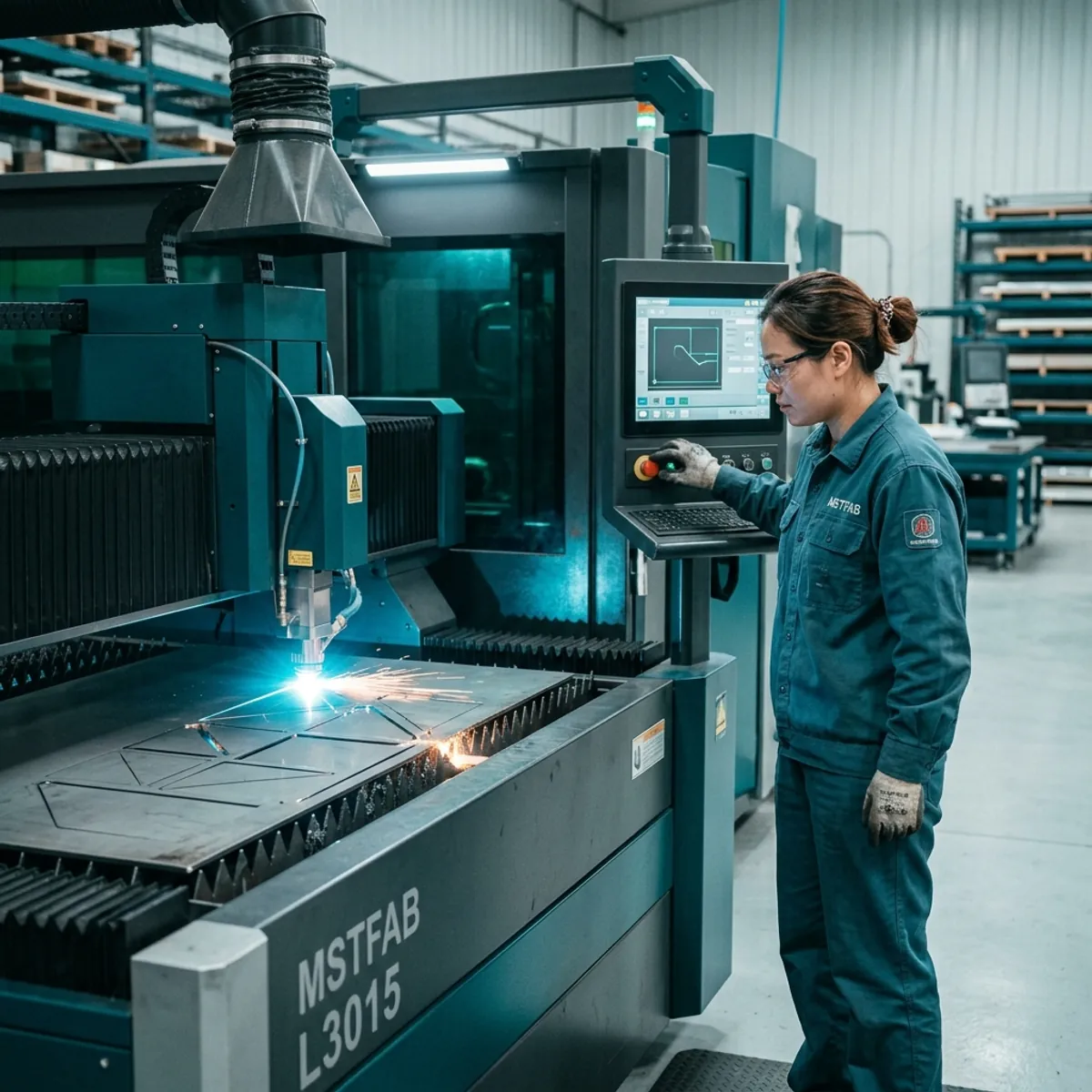
Our technicians operating high-precision CNC laser cutters. We slice through steel like butter, leaving edges so clean you could run your finger across them safely (though we still recommend gloves).
4 Critical DFM & Quality Risks in Custom Stamping and Laser Cutting
We deal with heavy-duty metal stamping and precision laser cutting every single day. Here are the headaches we solve so your engineers can sleep at night:
❌ 1. The “Razor Blade” Edges
The Gripe: Laser-cut parts arrive with massive burrs. Your assembly team spends hours filing them down manually.
Our Fix: Every part goes through automated deburring and edge-rounding. Smooth, safe, and ready to assemble.
❌ 2. Tooling Costs That Make You Cry
The Gripe: A shop quotes you $10,000 for a stamping die when you only need a batch of 500 pieces.
Our Fix: Smart engineering. If your volume is low, we use laser cutting and CNC bending to bypass die costs entirely. We only build stamping dies when the math actually saves you money.
❌ 3. The “Banana” Effect (Warping)
The Gripe: Your long metal brackets arrive looking like bananas because the supplier stamped them without stress-relief.
Our Fix: Precision material handling and calculated press tonnage. Flat means flat.
❌ 4. Shipping Damage Roulette
The Gripe: Parts survive the factory floor but get completely crushed during ocean freight due to thin cardboard packaging.
Our Fix: Heavy-duty wooden crates, custom foam inserts, and anti-rust vacuum sealing. Bulletproof logistics.
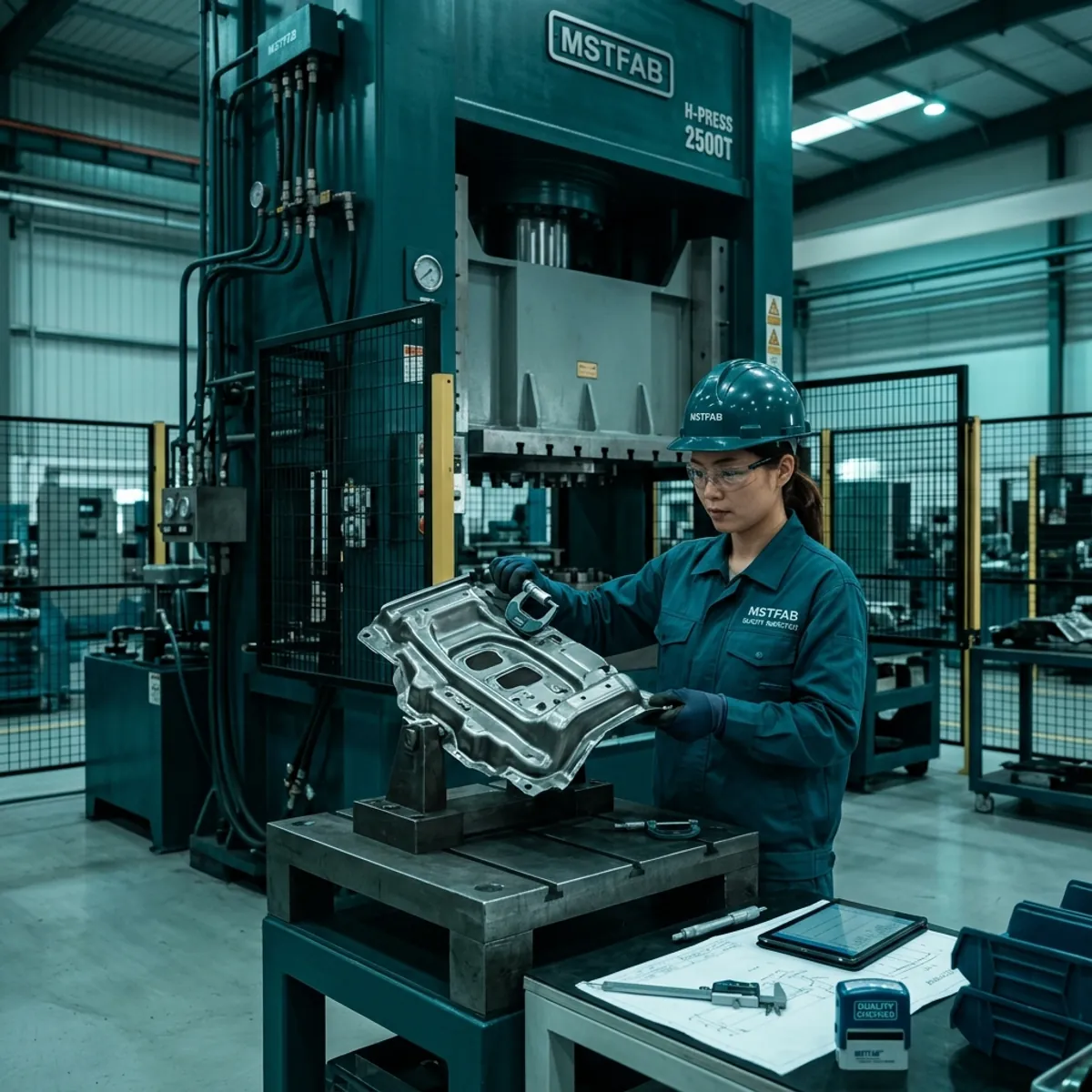
Checking parts right off the stamping press. When you’re punching metal with hundreds of tons of force, there is zero room for guesswork.
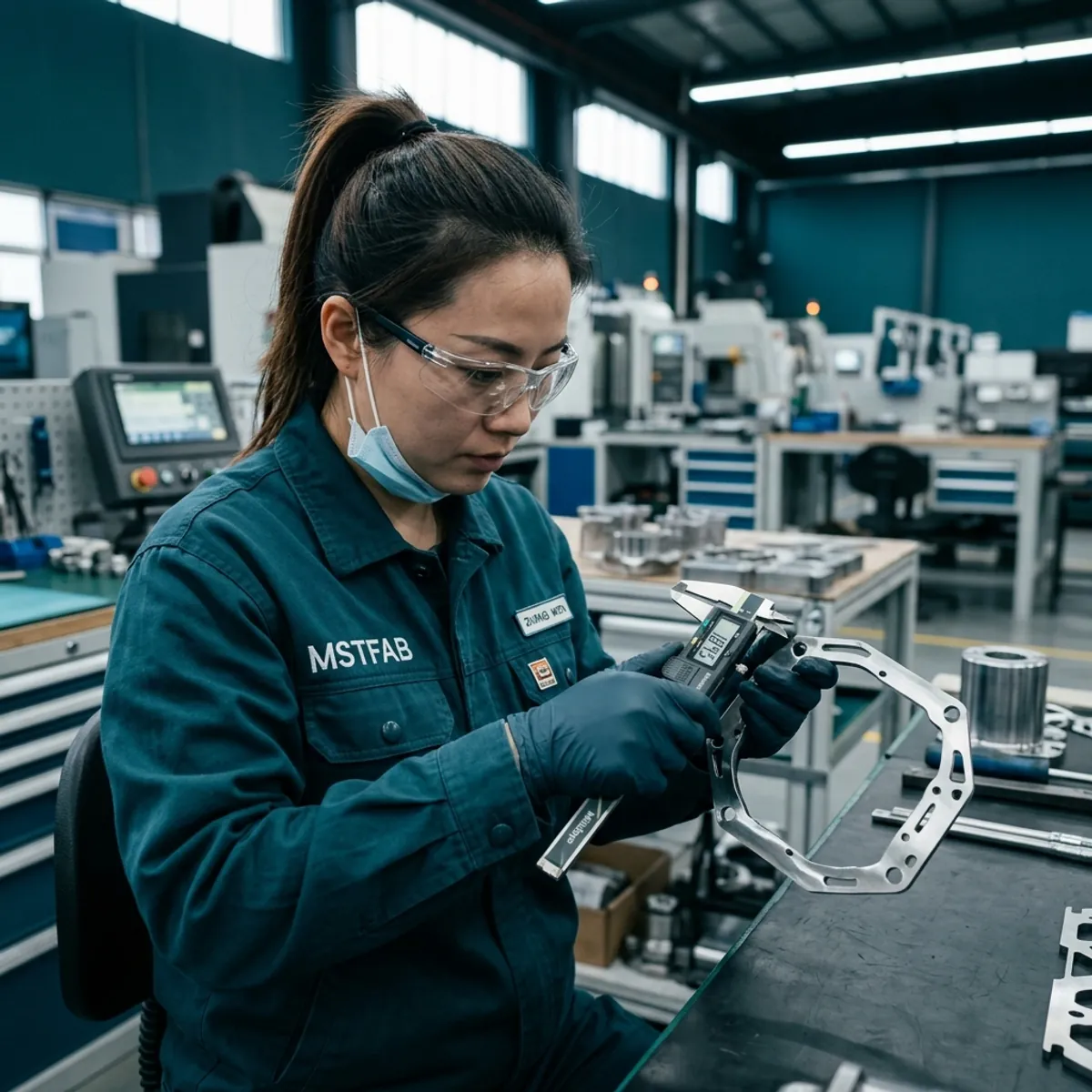
Trust, but verify. We use digital calipers and CMM equipment to ensure the material thickness and hole diameters are exactly what you asked for.
Sheet Metal Stamping vs. Fiber Laser Cutting: OEM Cost & Engineering Comparison
Use the engineering decision matrix below to evaluate whether progressive/compound die stamping or fiber laser cutting with CNC press brake bending fits your part geometry, tolerance requirements, and annual order volume:
| Comparison Factor | Fiber Laser Cutting + CNC Bending | Progressive / Compound Die Stamping | Design Revision Impact | Best-Fit OEM Application | ||||||||||||
|---|---|---|---|---|---|---|---|---|---|---|---|---|---|---|---|---|
| Tooling Cost (NRE) |
hard-die NRE (uses standard CNC laser optics & V-dies). | $1,500–$5,000+ (single/compound die) or $8,000–$30,000+ (progressive die). | Zero tooling scrap on laser; stamping revisions require costly die inserts or re-machining. | Laser for EVT/DVT & variable designs; stamping for locked, multi-year SKUs. | ||||||||||||
| Lead Time to First Parts | 3–7 business days after 3D STEP/2D PDF DFM confirmation. | 3–6 weeks for hard die steel machining, heat-treat, and press tryout. | Laser updates CAD/CAM program in hours; stamping halts production during tool modification. | Laser for rapid prototyping & urgent bridge launches. | ||||||||||||
| Break-Even Volume | Most economical from 1 to 1,000–2,500+ pcs depending on part size. | Typically breaks even at 2,500 to 10,000+ pcs/year once unit savings offset NRE. | Early ECN changes before break-even destroy stamping ROI. | Hybrid bridge: start on laser, transition to stamping after market validation. | ||||||||||||
| Tolerance Standard | Laser cut profile around ±0.10 mm; formed bends per ISO 2768-m (CTQ per drawing). | High die-to-die repeatability (±0.05–0.15 mm feature dependent) after tool tuning. | Tight datum changes are adjusted via CNC backgauge vs. physical die grinding. | Both support First Article Inspection (FAI) & CMM/caliper dimensional verification. | ||||||||||||
| Ideal Material Thickness & Size | 0.5 mm–20.0 mm in SPCC, SUS304/316, 5052/6061; handles large chassis & cabinets. | 0.4 mm–6.0 mm coil/strip stock; best for small-to-medium brackets, clips, and shields. | Thickness changes on stamped parts often require a completely new die clearance. | Laser + bending for large enclosures; stamping for high-volume small hardware. |
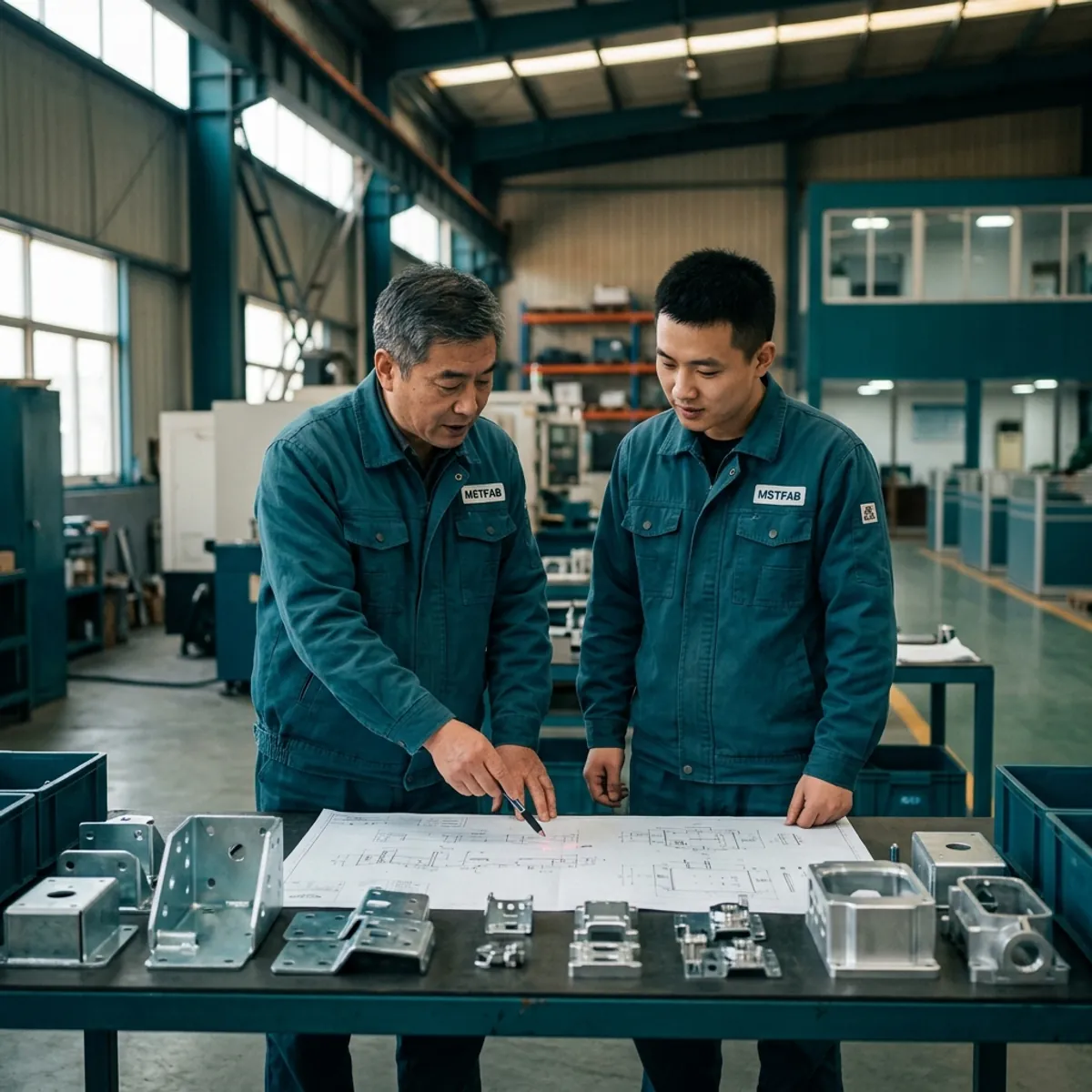
Our engineers actually look at your CAD drawings before hitting the “Start” button. We catch design flaws before they become expensive scrap metal.
Custom OEM Sheet Metal Parts We Manufacture:
We aren’t making tin cans. We partner with OEMs to manufacture serious industrial hardware:
- ✅ Heavy-Duty Equipment Chassis
- ✅ Automotive & EV Battery Brackets
- ✅ Telecommunications Enclosure Panels
- ✅ Complex Progressive Die Stamped Parts
- ✅ High-Volume Stainless Steel Mounts
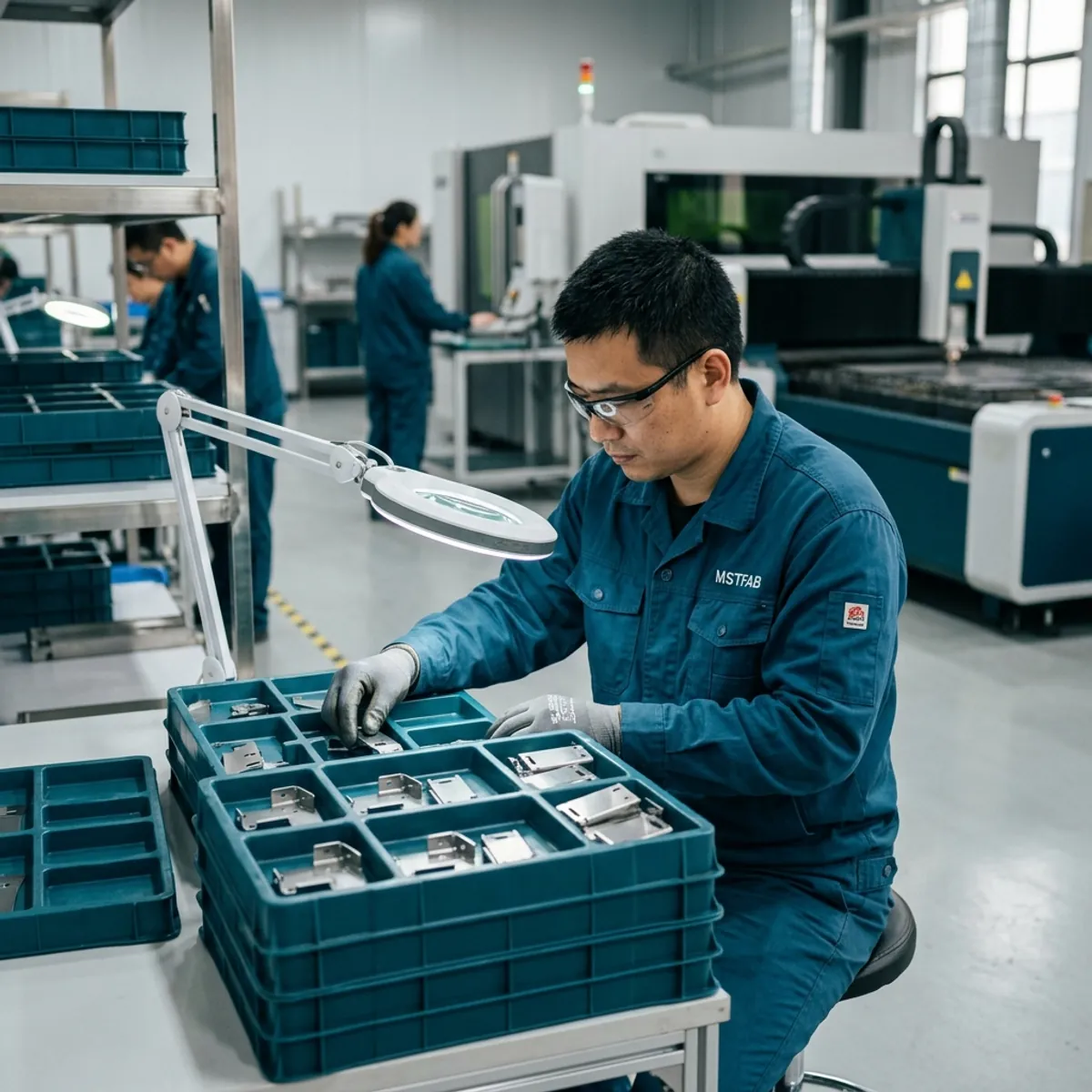
Sorting and visual inspection. If it has a scratch, a dent, or a bad finish, it doesn’t get past this table.
DFM Guidelines to Lower Custom Sheet Metal Stamping & Laser Cutting Cost
Sometimes a tiny change in your design—like adjusting a bend radius or standardizing a hole size—can cut your manufacturing costs by 30%. But a generic job shop won’t tell you that because they get paid either way.
Send us your files. We offer real Design for Manufacturability (DFM) feedback. We act like an extension of your own engineering team, not just a vendor pushing buttons.
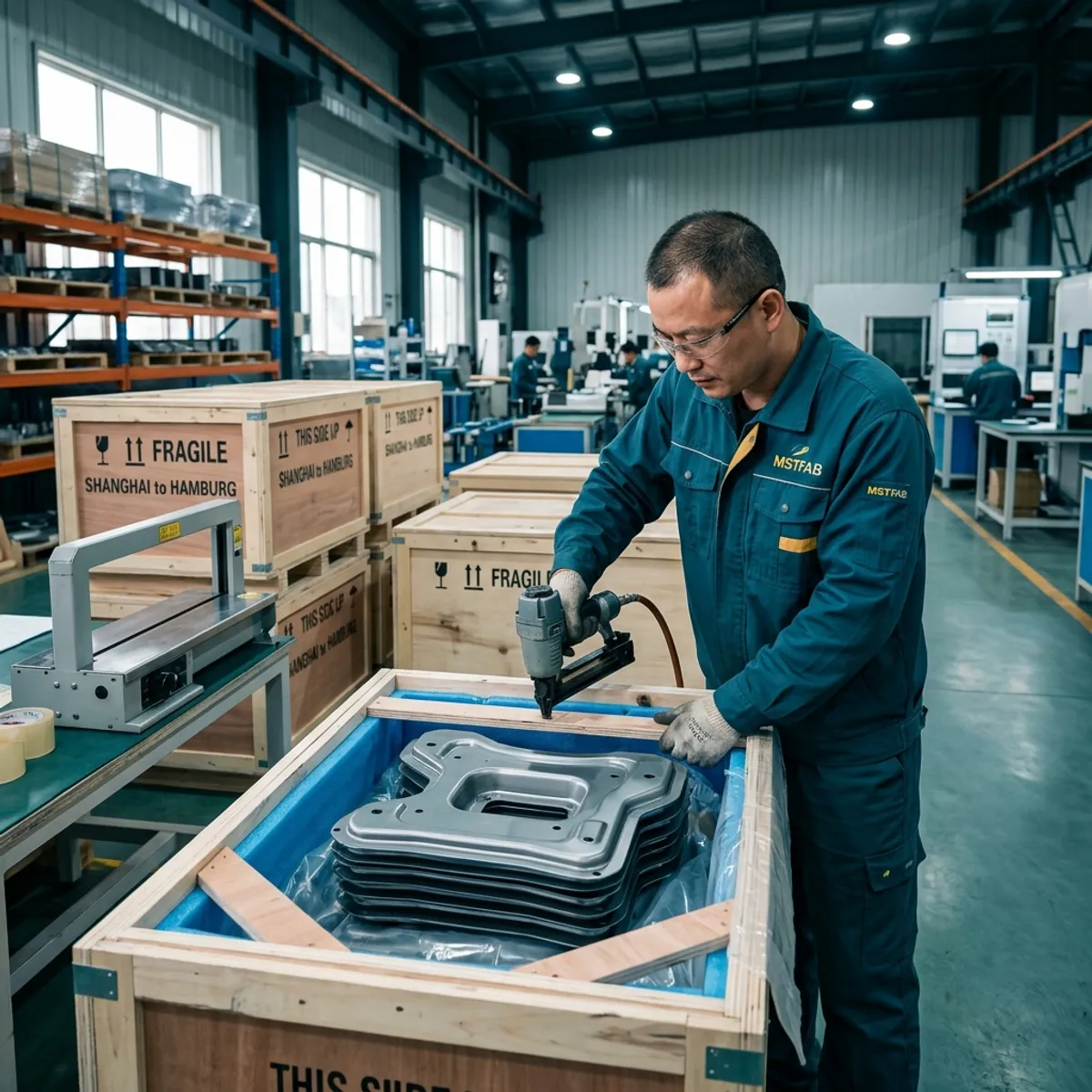
This is how serious metal parts should be shipped. Heavy-duty wooden crates that can survive forklifts, turbulent oceans, and rough truck rides directly to your facility.
Ready for Metal Parts That Actually Fit?
Stop dealing with bad communication, surprise tooling fees, and warped metal. Send us your 2D drawings and 3D STEP files, and let’s get you a no-nonsense quote from real manufacturing experts.
sheet metal laser cutting services
MSTFAB provides precision sheet metal laser cutting services for OEM panels, brackets, enclosures and custom metal parts.
 WeChat Contact
 WhatsApp Me Directly