
OEM SHEET METAL SUPPLIER EVALUATION
A custom metal parts manufacturing supplier can sound impressive on a website. The real question is simpler: can they make your sheet metal enclosure shell, panel, chassis or bracket to drawing, prove the quality, pack it safely and say clearly what is not included? That last part matters. MSTFAB is a sheet metal fabrication supplier, not a finished product assembler hiding in a factory coat.
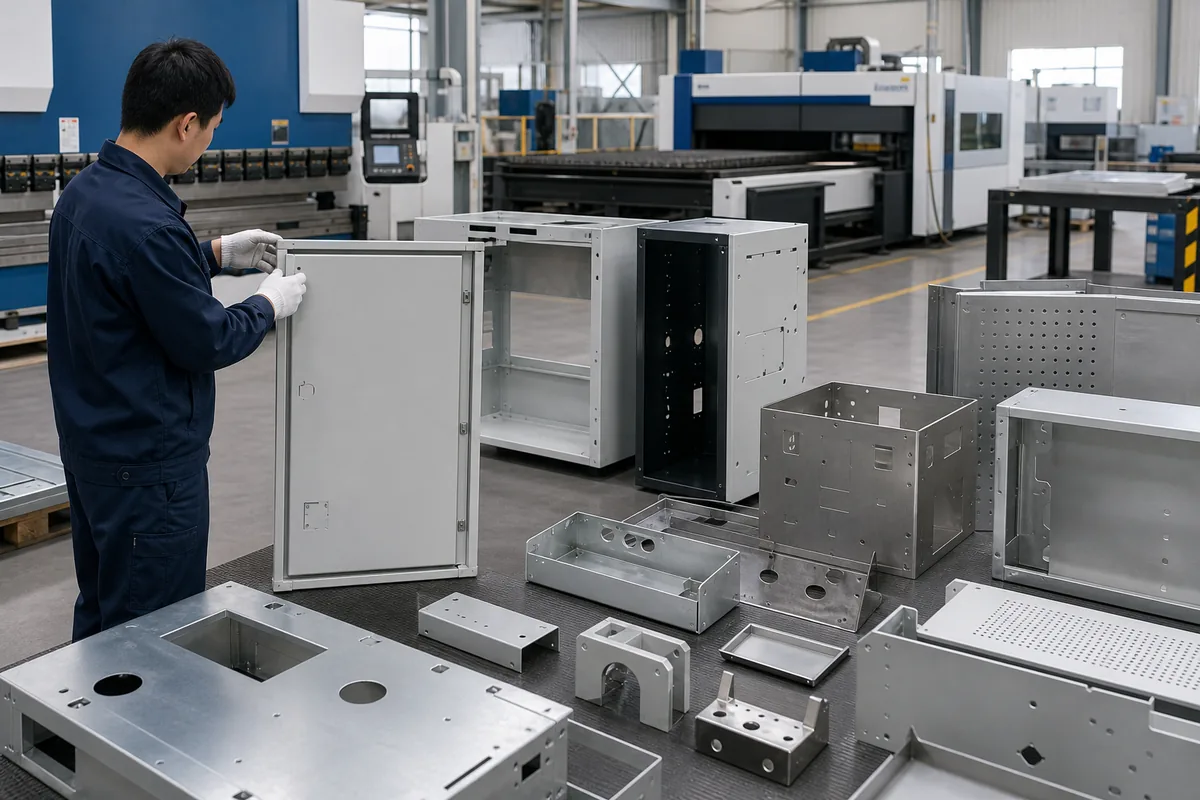
Quick Answer: How Should You Evaluate a Supplier?
Evaluate an OEM sheet metal parts supplier by checking eight things: drawing review, material control, laser cutting, CNC bending, welding fixtures, hardware planning, surface finishing, inspection evidence and export packaging. A reliable supplier does not just say “we can make it.” They ask about function, tolerances, finish, assembly sequence and shipping risk before quoting. The cheapest quote is only useful if it includes the work you actually need.
First: Confirm the Supplier Scope
The phrase “custom metal parts” is dangerously broad. It can mean sheet metal, CNC machining, casting, stamping, assembly or a very confident sales page. For MSTFAB, the practical scope is sheet metal fabrication from your drawings: cutting, bending, welding, inserts, finishing and packing.
| Buyer Need | MSTFAB Scope | Not Included |
|---|---|---|
| Equipment housing or enclosure | Empty metal box, cabinet shell, door, panel, chassis, bracket, cover and mounting rail. | Electronics, wiring, software, displays, batteries, motors or finished device assembly. |
| Ready for assembly line | Deburred cutouts, PEM inserts, welded studs, masked threads, coating, labels if specified, packing photos. | Your internal component installation, functional testing or final product certification. |
| Production supplier evaluation | DFM review, first article checks, dimension report, coating inspection and export packaging evidence. | A magic promise that every future engineering change is free. Nice try, but metal remembers. |
What a Serious Supplier Checks Before Quoting
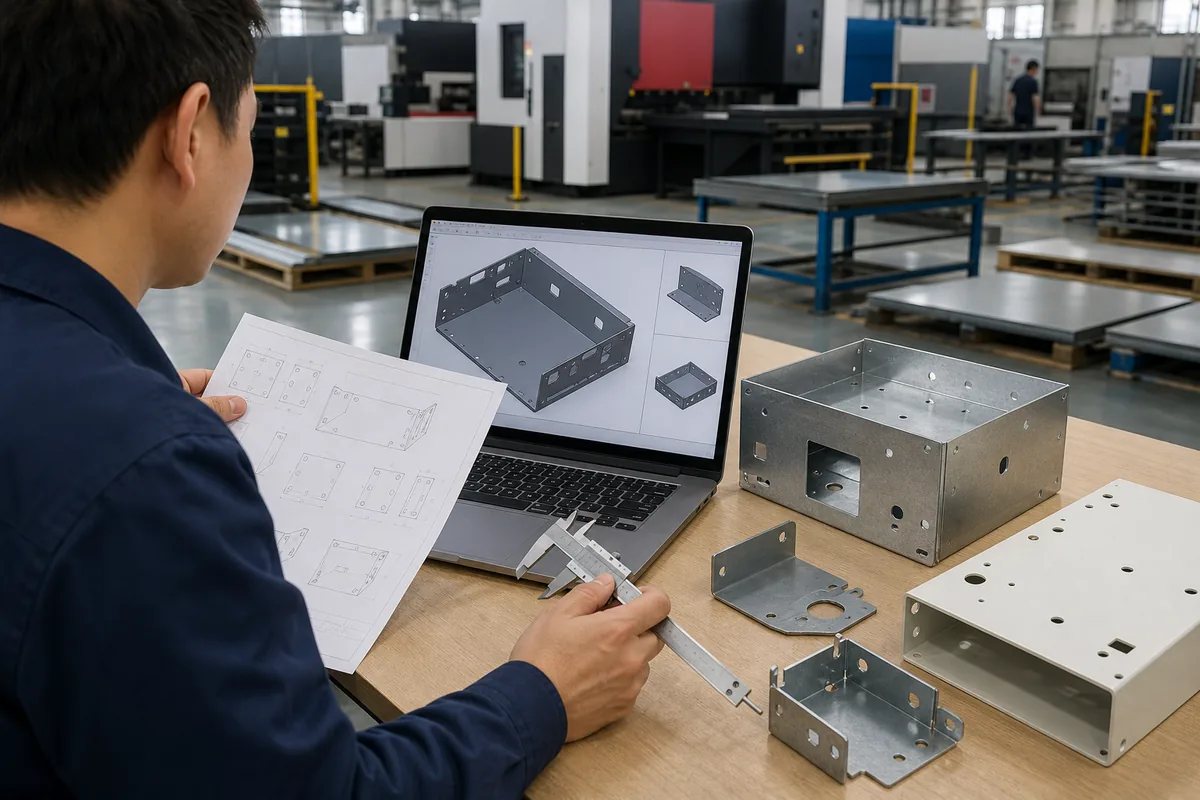
They check bend radius, hole-to-bend distance, tolerance stack, weld distortion and finish masking. If nobody comments on a risky drawing, the risk did not disappear. It just put on sunglasses.
SPCC, SGCC, 5052, 6061, 304 and 316 do not behave the same. Ask the supplier to confirm grade, thickness, stock and substitution rules before PO.
Laser cutting, bending, welding and hardware insertion each have limits. Good suppliers explain limits early because remakes are more expensive than uncomfortable emails.
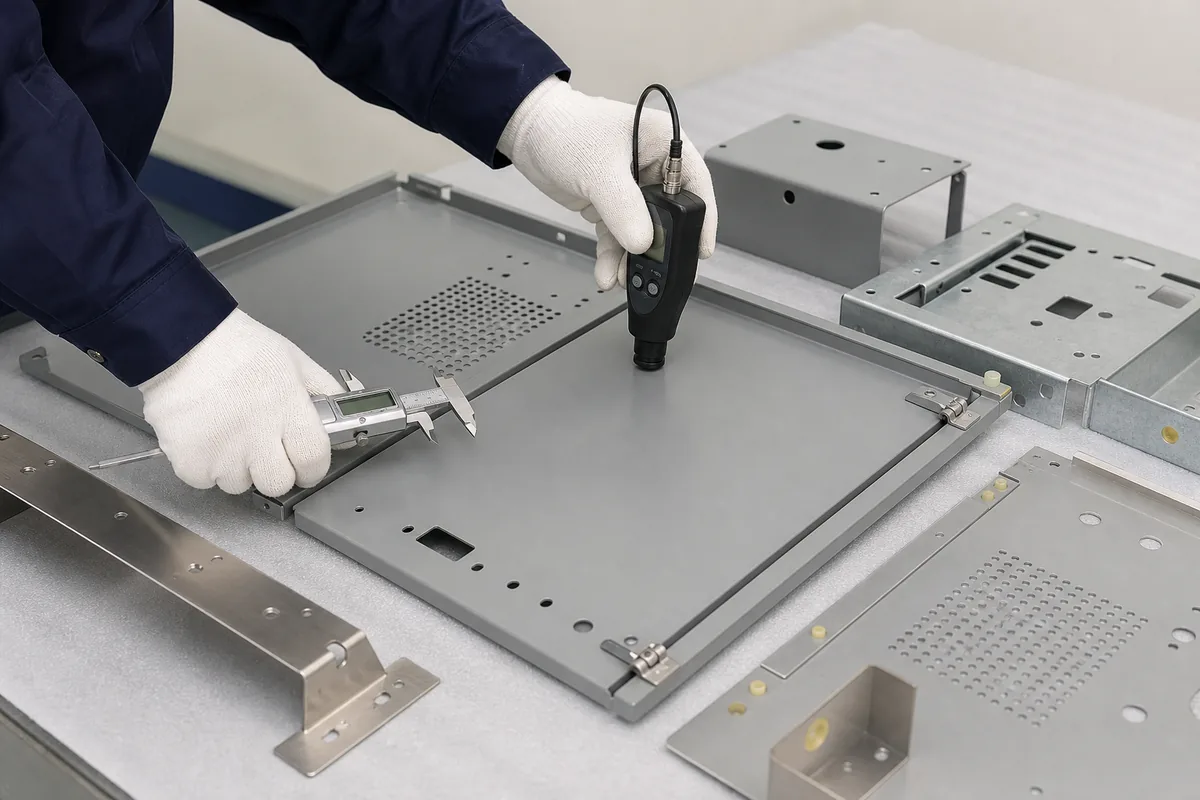
Photos are nice, but inspection records are better. Ask for first article dimensions, coating thickness checks, thread checks and packing photos for critical orders.
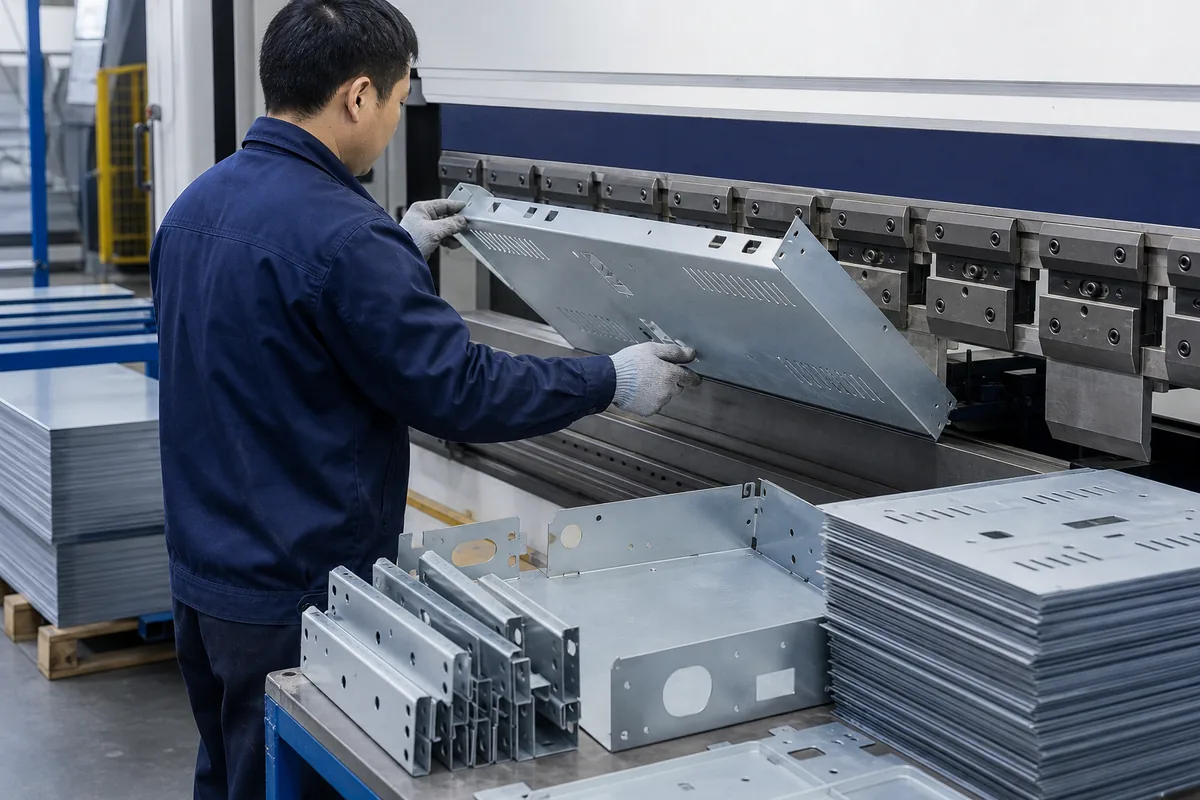
Cutting and Bending: Where Fit Problems Begin
Laser cutting starts the part, but bending decides whether it actually fits. Holes too close to bends move. Tight radii crack some alloys. Long panels can twist. A supplier should review your bend sequence and tooling before promising a delivery date. For deeper design rules, see our DFM design rules for sheet metal parts.
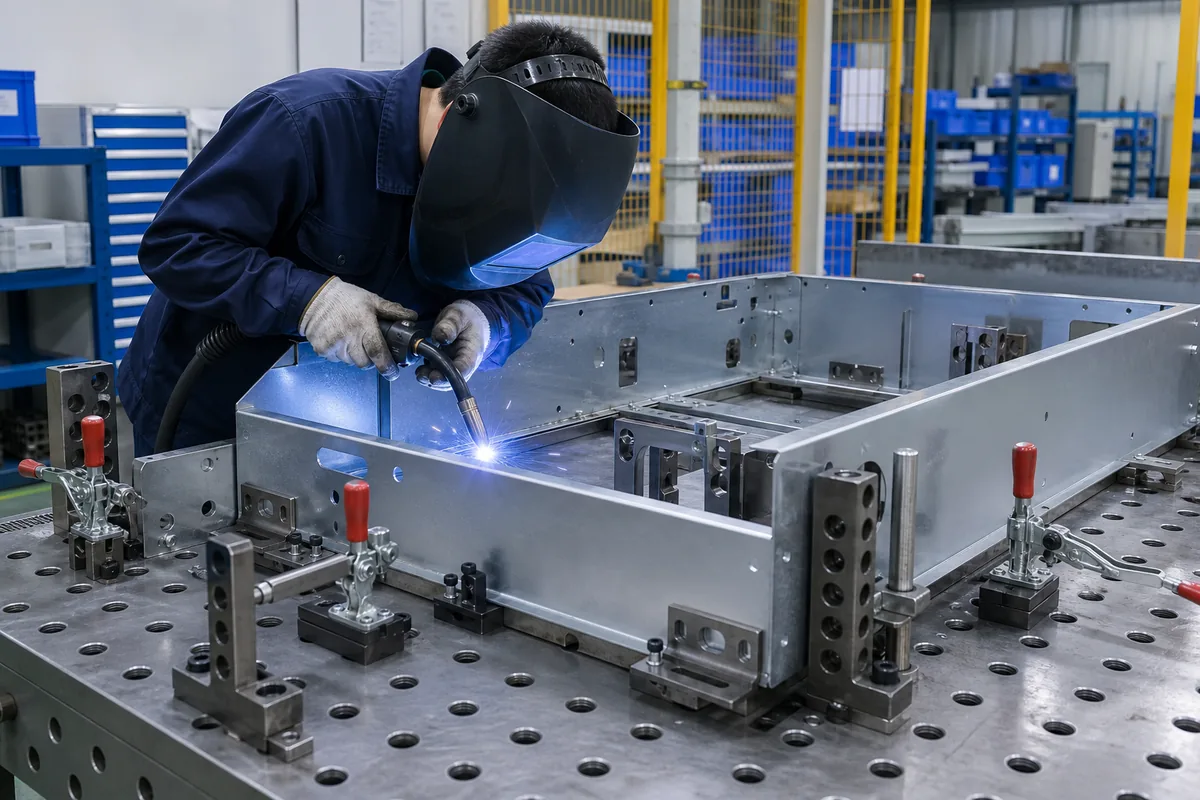
Welding Needs Fixtures, Not Just Skill
Welding is not only about a pretty bead. Sheet metal moves with heat. If the supplier welds a cabinet frame without a fixture, the finished shell may look fine until the door refuses to close. Ask how they control squareness, flatness and heat sequence, especially for enclosure frames, battery-style cabinets, equipment housings and welded brackets.
Hardware and Finish Must Be Planned Together
PEM nuts, welded studs, grounding points and threaded inserts should be planned before powder coating. Otherwise paint fills the threads, grounding points lose conductivity and your assembly technician gets a tiny scraper and a bad afternoon. Surface finish should be specified as a functional requirement: color, texture, coating thickness, corrosion target, masked areas and cosmetic surfaces.
For finish selection, use our sheet metal surface finishing guide. For tolerance decisions, read sheet metal tolerances explained for OEM buyers.
Trust Table: Buyer Questions That Expose Weak Suppliers
| Risk | Ask This | Good Evidence |
|---|---|---|
| Wrong supplier scope | Are you quoting sheet metal fabrication only or a finished product? | Clear include/exclude scope in the quote. |
| Material substitution | Can you confirm exact grade, thickness and finish before production? | Material certificate, incoming inspection and thickness photos. |
| Bending mismatch | What bend radius and tooling will be used? | DFM notes, bend sample or first article check. |
| Warped welded assembly | Will this be welded in a fixture? | Fixture photos, weld sequence and flatness/squareness check. |
| Hidden finish cost | Which areas are masked, and what coating thickness is required? | Masking plan, coating report and post-coat thread verification. |
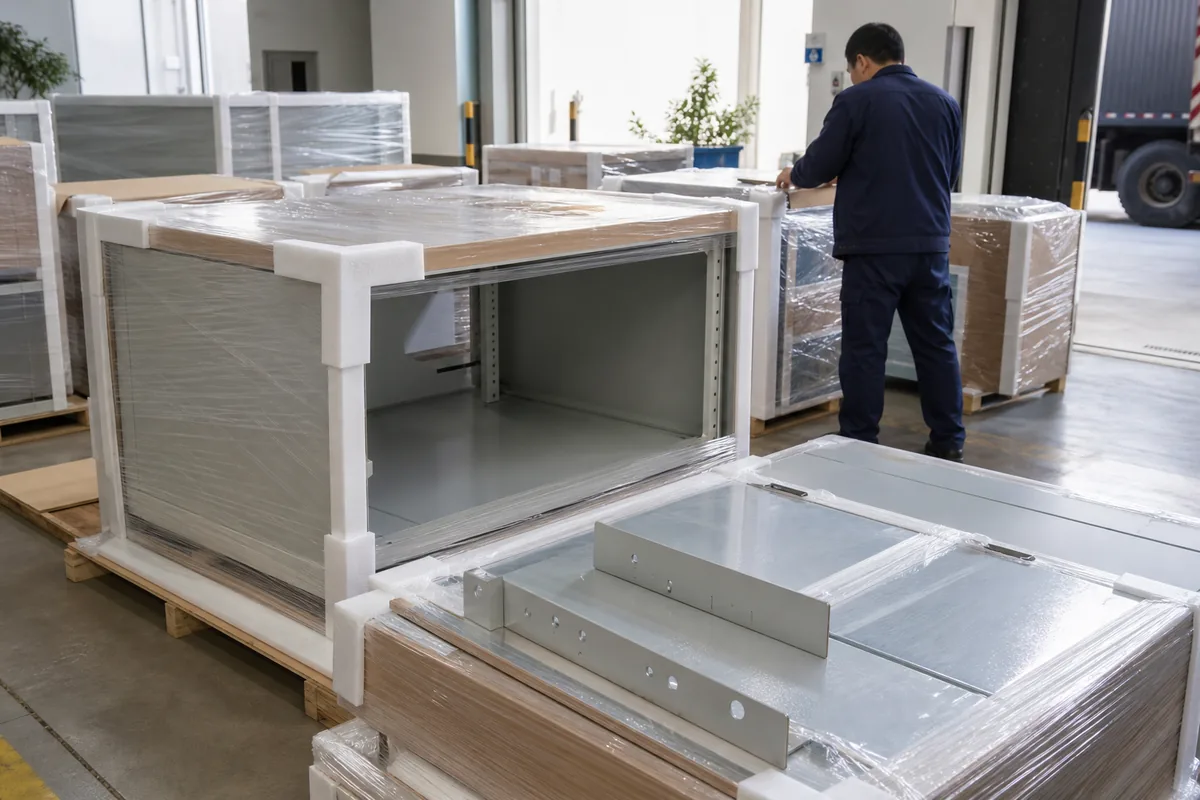
| Shipping damage | How are corners, doors and cosmetic panels packed for export? | Packing photos, foam guards, interlayers and pallet/crate plan. |
Export Packaging Is Not an Afterthought
Thin sheet metal parts can arrive scratched, bent or rubbed through if packaging is treated like a cardboard formality. For overseas orders, ask for foam edge guards, protective film, interlayers, pallet reinforcement and photos before shipment. The part is not finished when it leaves the powder coating line. It is finished when it reaches your receiving dock still looking like the drawing.
How to Compare Supplier Quotes
Compare quotes line by line: material, thickness, setup, tooling, cutting, bending, welding, hardware, finish, inspection, packaging, Incoterm and lead time. If one quote is far lower, find what is missing before celebrating. For a full quote-reading method, see How to Read a Sheet Metal Quote. For price drivers, see sheet metal fabrication cost factors.
Common Mistakes Buyers Make
- Using “custom metal parts” when the project is really sheet metal enclosure fabrication.
- Assuming the supplier also provides electronics, wiring or final product assembly.
- Sending only a STEP file with no material, finish, tolerance or quantity.
- Ignoring packaging until the first shipment arrives scratched.
- Accepting “standard tolerance” without defining what standard means.
- Comparing EXW and delivered quotes as if freight and duty are imaginary.
Frequently Asked Questions
Is MSTFAB a finished product manufacturer?
No. MSTFAB is a sheet metal fabrication supplier. We make empty enclosures, chassis, panels, brackets, covers, welded frames and related sheet metal parts. We do not supply electronics, batteries, wiring, software or finished devices.
What parts can MSTFAB manufacture?
We manufacture sheet metal enclosure shells, cabinet bodies, doors, panels, brackets, covers, chassis, mounting plates, welded frames, PEM hardware features and powder coated or stainless/aluminum parts from customer drawings.
What should I send for a supplier evaluation quote?
Send STEP and 2D drawings, material, thickness, finish, quantity, tolerances, hardware requirements, cosmetic surface notes, packaging requirements and target application. Clear RFQs make hidden costs easier to see.
How do I know if a supplier is reliable?
Look for DFM feedback, material confirmation, first article inspection, coating and masking checks, fixture control for welding and export packing evidence. Vague promises are cheaper than evidence for a reason.
Can MSTFAB help with assembly-ready features?
Yes, within sheet metal scope. We can add PEM inserts, welded studs, tapped holes, grounding points, mounting rails, labels if specified, and masked areas for your later assembly. We do not install or test the final electrical or mechanical system.
Need a Sheet Metal Supplier You Can Audit?
Send MSTFAB your drawings and target application. We will review manufacturability, material, bends, welds, finish, inspection and packing requirements, then quote the sheet metal fabrication scope clearly.
 WeChat Contact
 WhatsApp Me Directly