
Industrial equipment does not forgive “almost right” parts.
A bracket that is 2 mm off may stop a motor assembly from lining up. A control-panel cutout that is slightly too small may delay electrical installation. A welded frame that twists after fabrication may force your assembly team to drill, grind, shim, and quietly question every decision made before lunch.
That is why custom metal parts manufacturing for industrial equipment is not only about laser cutting metal sheets.
It is about making sure every part fits the machine, supports the load, survives vibration, matches the finish requirement, and remains consistent when the next production order arrives.
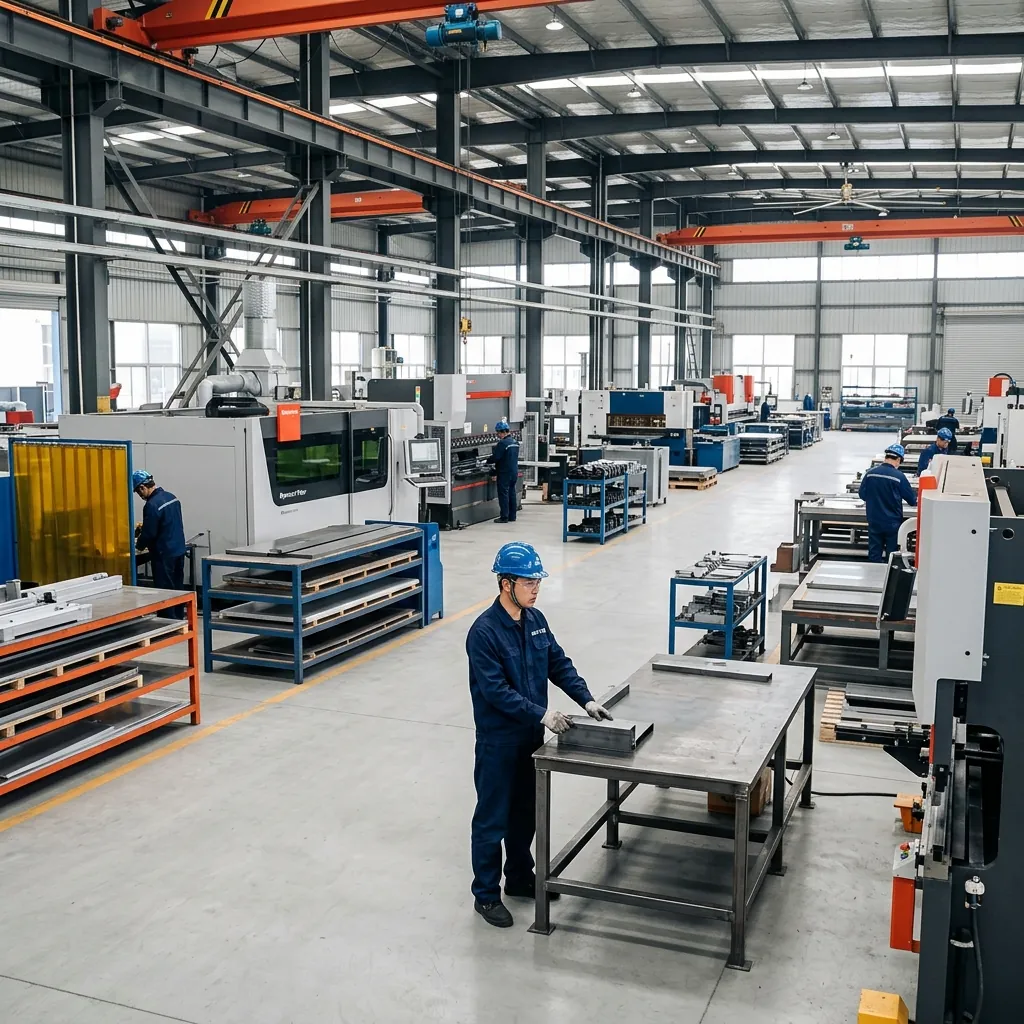
MSTFAB provides custom metal parts manufacturing services for industrial equipment, including brackets, panels, enclosures, frames, machine guards, electrical cabinet components, chassis parts, mounting plates, covers, trays, and welded metal assemblies.
The goal is simple:
Your metal parts should arrive ready for assembly, not ready for repair. Never give your assembly team a reason to EU REACH Regulation for a hammer.
Why Industrial Equipment Parts Require More Manufacturing Control
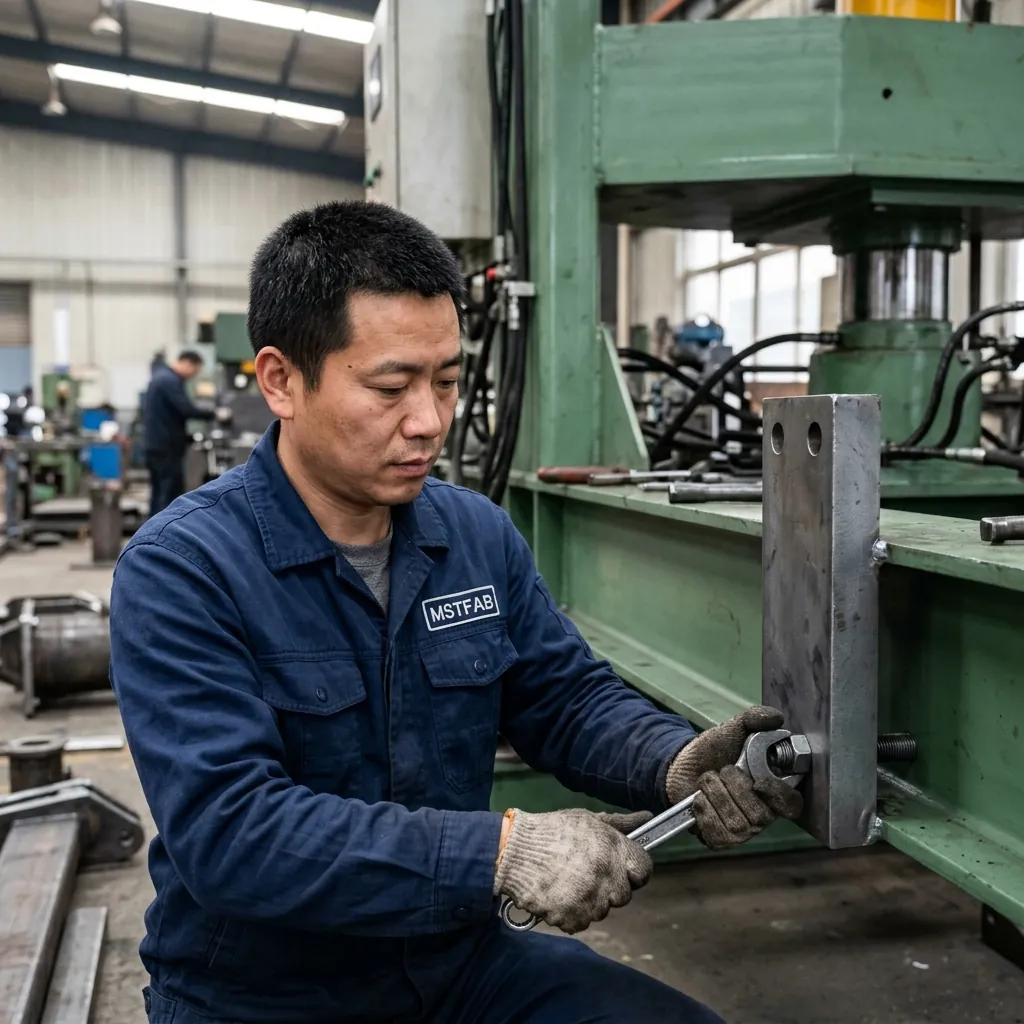
Industrial equipment parts must usually work with other parts. That sounds obvious, but it is where many fabrication problems begin.
A metal panel may need to fit around electrical components. A mounting bracket may need to align with a motor, fan, rail, sensor, or frame. A cabinet door may need to close correctly after powder coating. A welded base may need to remain flat enough for final machine assembly.
A part can look perfect when measured alone and still fail when installed in the final machine. Common buyer concerns include:
- Will mounting holes align with the equipment frame?
- Will bends match the final assembly dimensions?
- Will welding distort the part?
- Can the finish resist industrial handling and cleaning?
- Will threaded holes still work after coating?
- Can the part survive vibration during machine operation?
The answer is not simply “we have machines.” The answer should be a controlled manufacturing route from drawing review to export packaging.
OEM Buyer Trust Table: Identifying a Reliable Industrial Parts Supplier
| Process Stage | The “Cheap Quote” Reality | The MSTFAB Standard |
|---|---|---|
| Engineering Check | Cuts exactly what’s on the drawing, even if it’s impossible to bend. | Reviews CAD for bend interference, tolerances, and hardware fit before cutting. |
| Welded Frames | Welds it fast, leaving warped bases that rock on the floor. | Uses fixtures and controlled heat input to guarantee flat, square frames. |
| Surface Finish | Paints over threaded holes, forcing your team to re-tap them. | Masks all critical threads and grounding points before powder coating. |
| Verification | “Looks okay.” Ships without a formal report. | Full First Article Inspection (FAI) ensuring functional fit before mass production. |
| Packaging | Thin cardboard. Parts arrive scratched or bent. | Custom foam, edge protectors, and heavy pallets for secure ocean freight. |
Start With DFM Before Cutting Metal
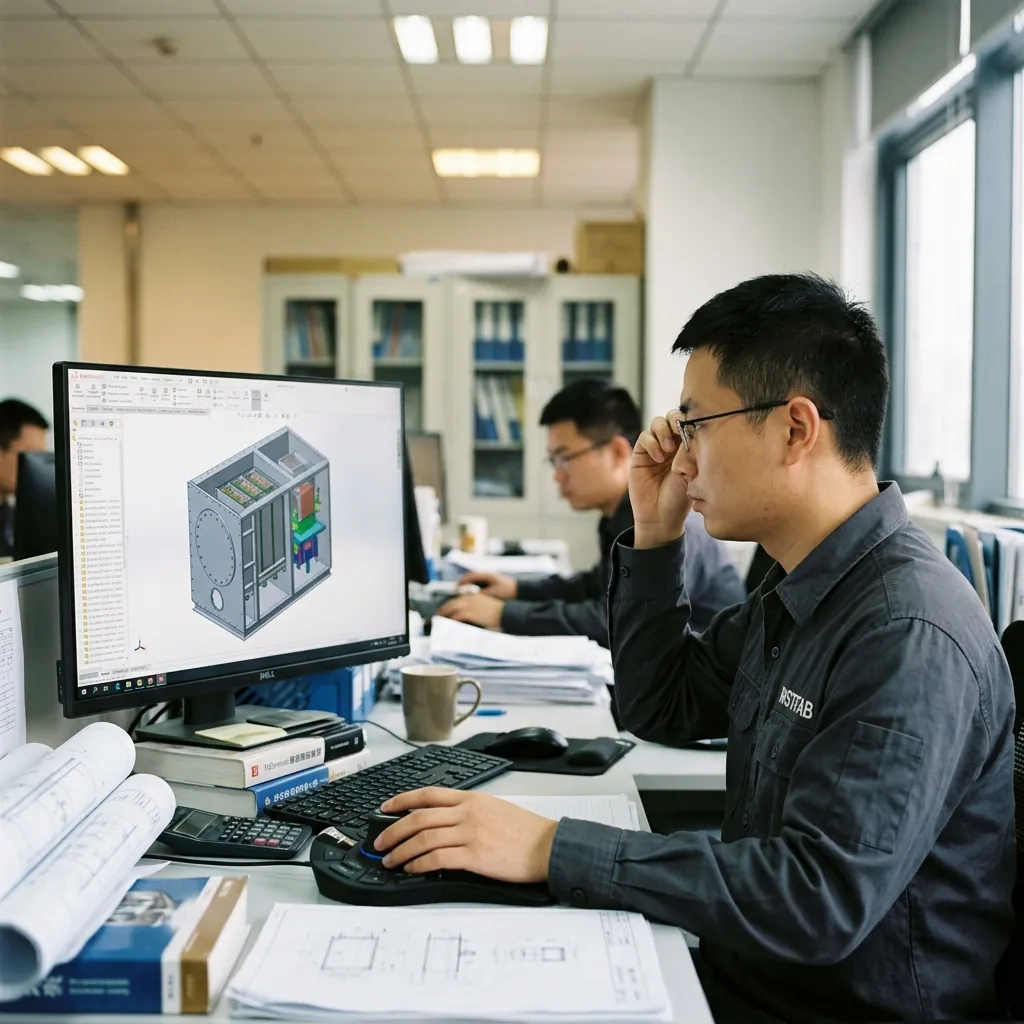
The best time to find a manufacturing problem is before anyone cuts metal. That process is called DFM: Design for Manufacturing.
For industrial equipment parts, a DFM review checks bend radius, hole-to-bend distance, welding access, distortion risk, and surface treatment compatibility.
For example, a threaded hole may need masking before powder coating. A welded base may need a specific welding sequence to reduce distortion. These are not unusual issues. They are normal sheet metal manufacturing issues. The difference is whether they are discovered before production or after your assembly team starts trying to “make it work.”
Material Selection for Industrial Equipment
Material should be selected based on function, environment, load, finish, weight, corrosion resistance, and cost. Choosing material only by the lowest quotation can create problems later.
Stainless Steel is often selected when corrosion resistance, hygiene, durability, or visible appearance matters (e.g., food processing or medical equipment). But “stainless steel” alone is not a complete instruction. A brushed front panel for a premium machine has very different requirements from an internal stainless support bracket.
Aluminium is used when weight reduction matters (e.g., electronic housings or battery enclosures). A lightweight part is useful. A lightweight part that flexes every time someone touches it is less useful.
Mild Steel and Galvanized Steel are commonly used for machine frames, mounting brackets, bases, guards, and structural panels. The right material is not always the cheapest option. It is the one that performs correctly in the final machine.
Hardware and Functional Features
Many equipment parts are not complete until hardware is installed. Requirements like PEM nuts, rivet nuts, tapped holes, and grounding studs should be confirmed before surface finishing.
Powder coating may block threaded holes. Grounding studs may need exposed metal contact. These features are easy to overlook in a quotation. They are much harder to ignore when the final machine is being assembled. No one wants an installation team to become part-time metal surgeons.
Quality Control and First Article Inspection (FAI)
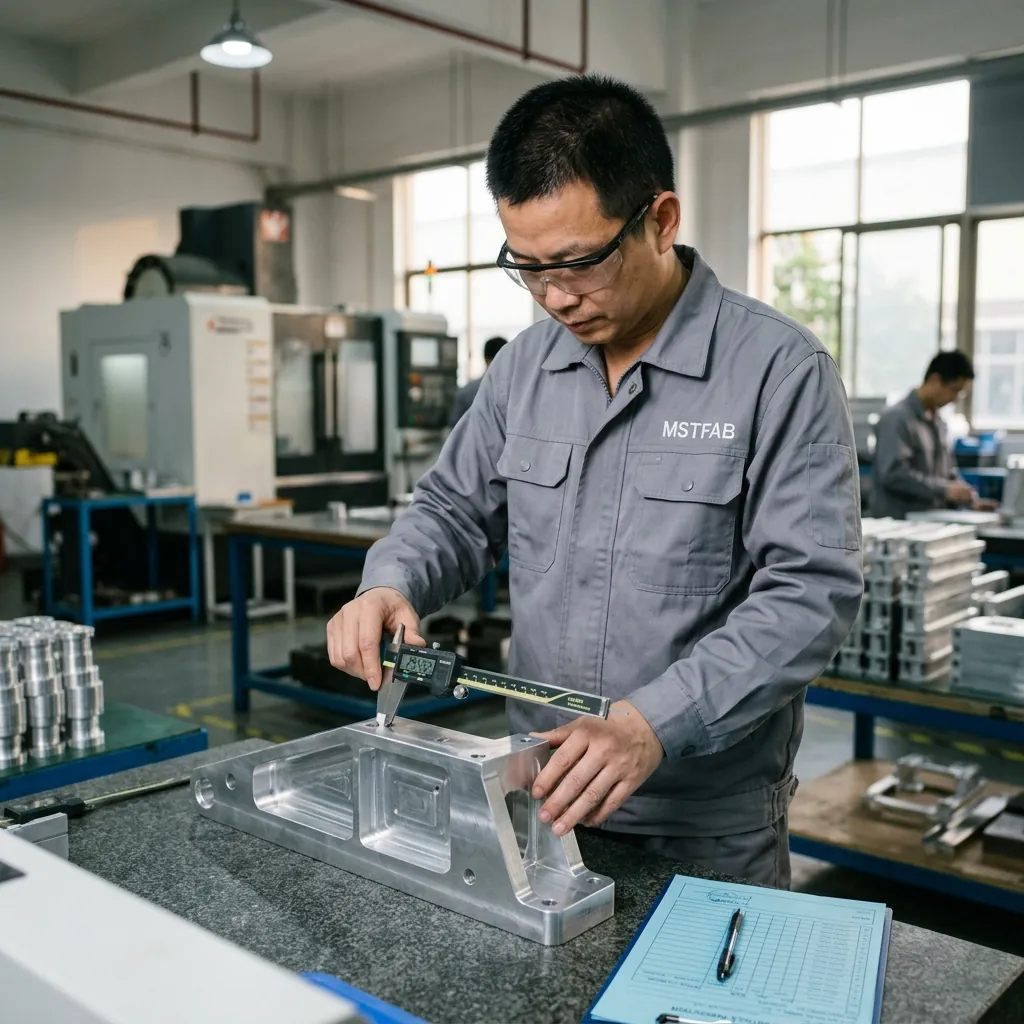
Quality control should focus on the features that affect real machine performance. Not every dimension needs the same inspection priority. A hidden internal flange may not require the same precision as a control panel opening.
Buyers should clearly identify which dimensions affect function, safety, sealing, alignment, or installation. Marking every dimension as extremely tight can increase cost without actually improving the machine. A better approach is to prioritize the dimensions that truly matter.
Export Packaging: Protecting Cosmetic and Structural Parts
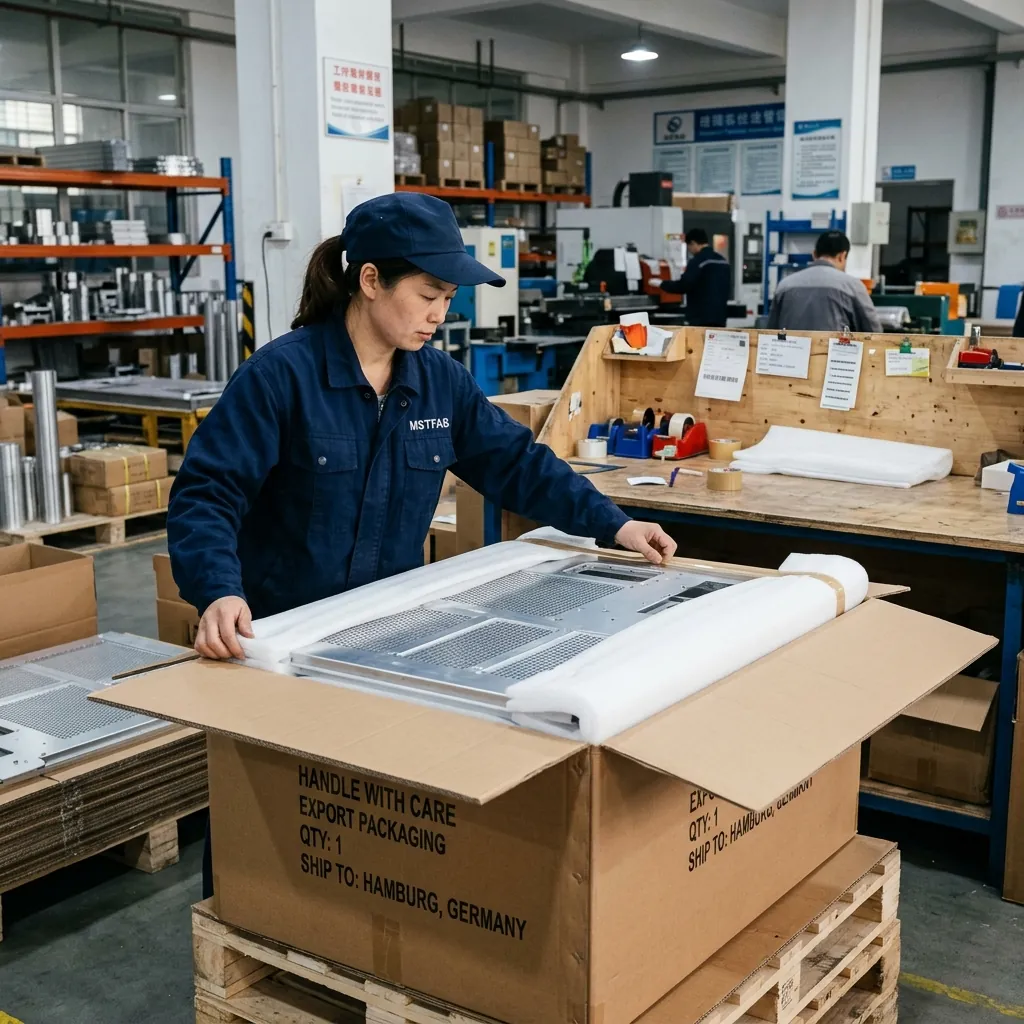
It does not matter how precisely a part was cut or welded if it arrives scratched, dented, or warped. Professional export packaging is a critical part of the manufacturing process, particularly for heavy industrial frames or cosmetic outer panels.
Start Your Industrial Equipment Metal Parts Project
A good industrial metal part should do more than match a drawing.
It should fit your machine, support the required function, survive daily use, arrive protected, and remain consistent when you reorder.
Send your drawings, material requirement, quantity, finish details, tolerance notes, and equipment application information through the MSTFAB quotation page. Our team will review the manufacturing route before production begins.
Because the best equipment part is not the one that looks good in a quotation.
It is the one that fits correctly, works quietly, and never gives your assembly team a reason to reach for a hammer.
Heavy-Duty Welded Fabrication for Industrial Equipment
Discover how we manufacture rigid, square, and highly stable welded machine frames and brackets for industrial applications.
 WeChat Contact
 WhatsApp Me Directly