
Machinery does not care how good a metal part looks in a supplier photo.
It only cares whether the part fits, supports, protects, aligns and survives daily operation.
A machine cover that vibrates loose is a problem.
A bracket with holes 2 mm off is a problem.
A welded frame that twists after fabrication is a problem.
A control panel cutout that does not match the switch is a problem.
A powder-coated threaded hole that no longer accepts screws is also a problem.
In other words, machinery parts do not forgive “almost right.”
MSTFAB provides custom metal parts manufacturing services for machinery, including sheet metal brackets, machine guards, covers, panels, enclosures, chassis parts, welded frames, mounting plates, support structures and custom assemblies.
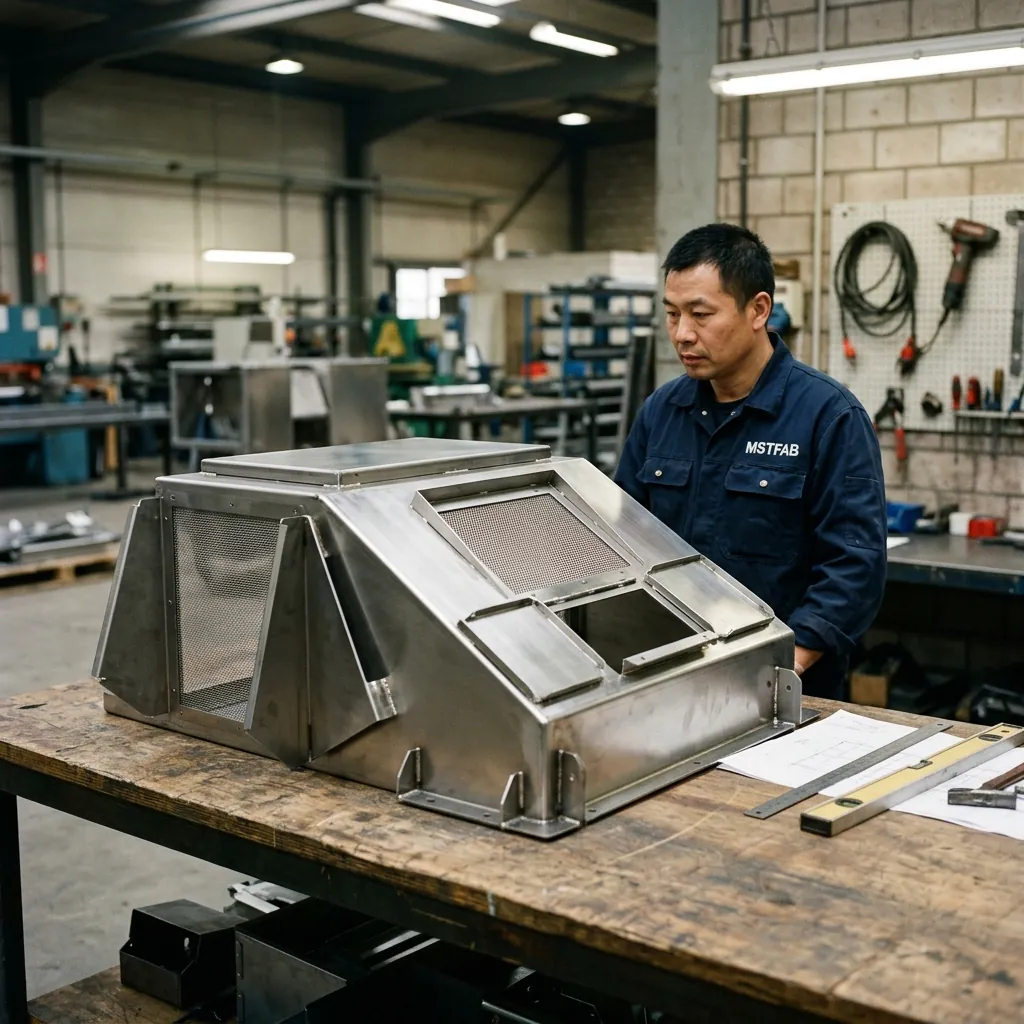
We work from buyer drawings, CAD files, samples and technical requirements to manufacture metal parts used in machinery, automation equipment, production lines, mechanical systems and OEM machine builds.
The goal is simple: Your custom metal parts should fit the machine, survive real use and remain consistent when you reorder.
Because a machine part that almost fits is not a machine part. It is a delay with bolt holes.
Why Machinery Metal Parts Need Better Manufacturing Control
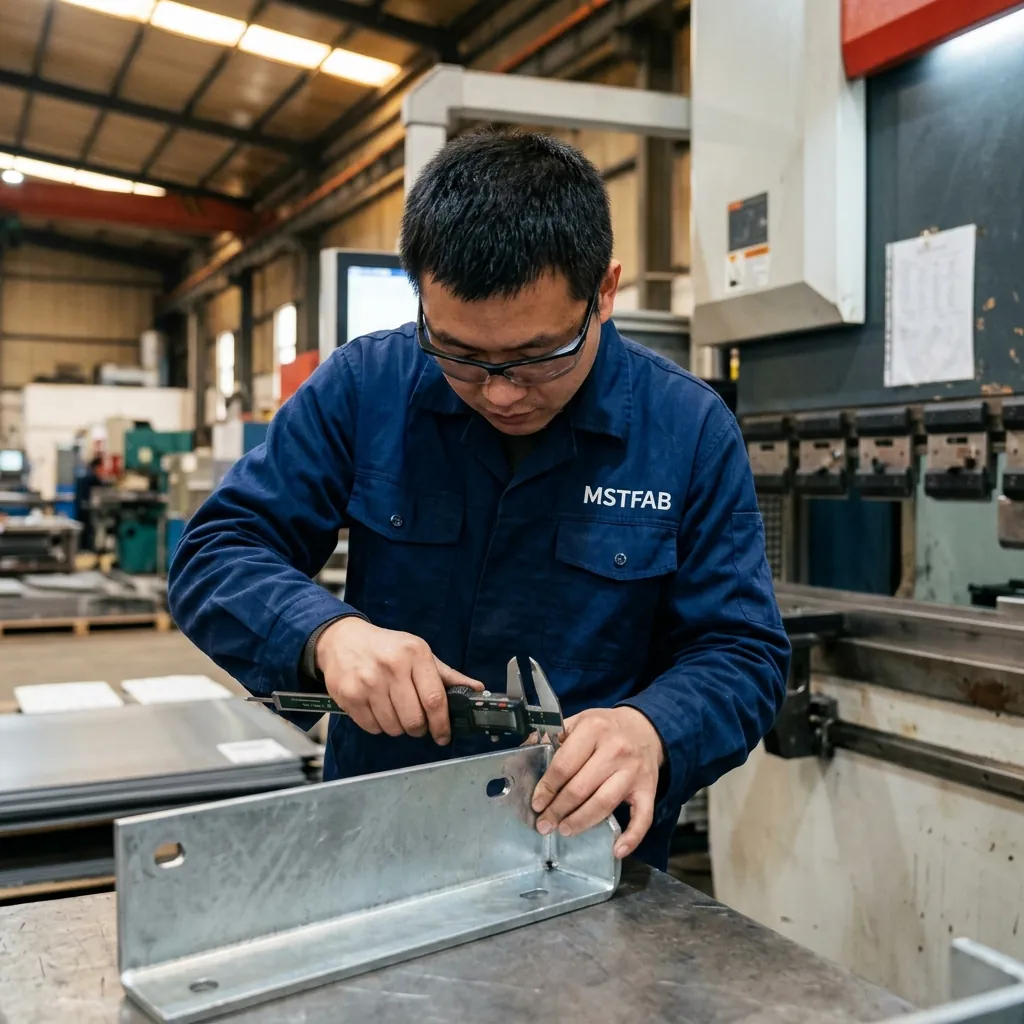
Machinery parts usually work with other parts. That is where many problems begin.
A bracket must align with a frame. A guard must clear moving parts. A panel must fit switches, displays and connectors. A welded base must stay flat. A machine cover must be strong enough to avoid vibration. A cabinet door must still close after powder coating.
A metal part can measure correctly by itself and still fail when installed on the machine.
This is why machine builders and OEM buyers should not only ask: “Can you make this part?”
They should ask: “Can you make this part so it fits my machine assembly repeatedly?”
Machine Builder Trust Table: Reducing Sourcing Risk
| Process | High-Risk Supplier | MSTFAB Standard |
|---|---|---|
| Holes & Alignment | Assumes laser cutting is enough. Parts need manual drilling during assembly. | Controls bend-to-hole distance to guarantee bolt-on assembly fit. |
| Welded Bases | No fixtures used. Frames warp from uncontrolled heat. | Engineered welding sequence on flat tables to eliminate twist. |
| Control Panels | Cutouts are slightly off, requiring filing on-site. | Precise CNC laser cutting ensures every switch and display drops right in. |
| Coating & Threads | Powder coat fills all threaded holes. | Strict masking and plugging of all functional threads before coating. |
DFM Review Before Cutting Metal
DFM means Design for Manufacturing.
For machinery parts, DFM is not optional decoration. It is risk control. A DFM review checks whether the part design can be manufactured, bent, welded, finished, assembled and repeated without unnecessary problems.
“We see it all the time,” explains Senior Mechanical Engineer David Chen. “A customer sends a drawing where a mounting hole is sitting right on the bend line. If we just cut and bend it blindly, that hole will stretch into an oval, and the bolt won’t fit. We catch these things before they become a headache on the assembly floor.”
These problems are normal in metal fabrication. The key is to find them before production, not after your machine assembly team is holding a drill and wondering who approved the drawing.
Material Selection for Machinery Parts
The cheapest material is not always the best choice. A low-cost material that bends, rusts, flexes or fails during operation will become more expensive later.
Stainless Steel is used when machinery parts need corrosion resistance, hygiene, durability or a clean appearance (e.g., food or medical machinery). But “stainless steel” alone is not enough. A hidden stainless steel support and a customer-facing brushed cover require different finish standards.
Aluminium reduces weight for electronic housings and control panels. A lightweight cover is good. A lightweight cover that shakes like a drum every time the machine runs is not good.
Mild Steel offers strength and cost control for heavy machine frames and powder-coated parts.
Welding for Machinery Frames and Supports
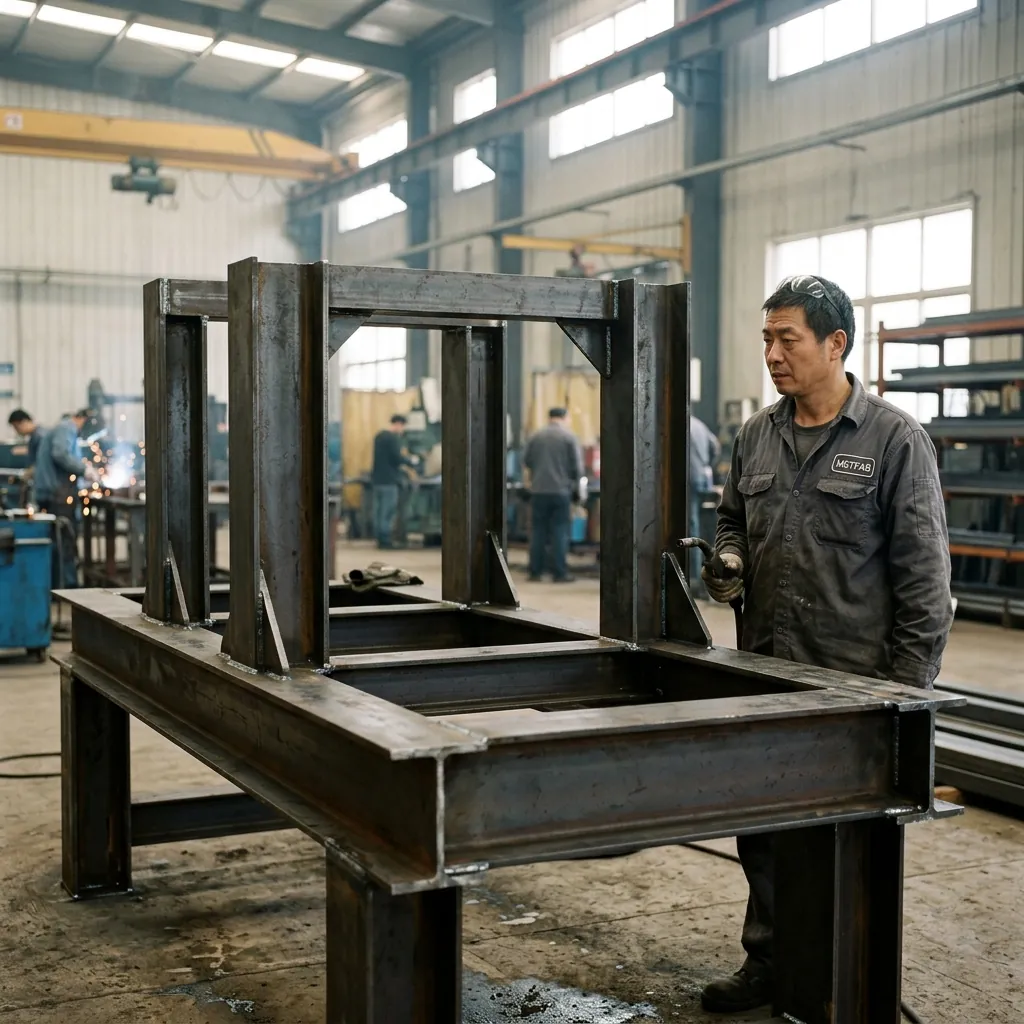
Welding adds strength, but it also adds heat. Heat can affect flatness, squareness, hole position, and final assembly fit. A welded part can be strong and still be wrong if it is twisted.
For machinery, distortion control matters because welded parts often connect with other mechanical components. A slightly distorted support may force the machine builder to drill, shim or rework the assembly.
That is not a manufacturing plan. That is punishment.
Hardware and Control Panels
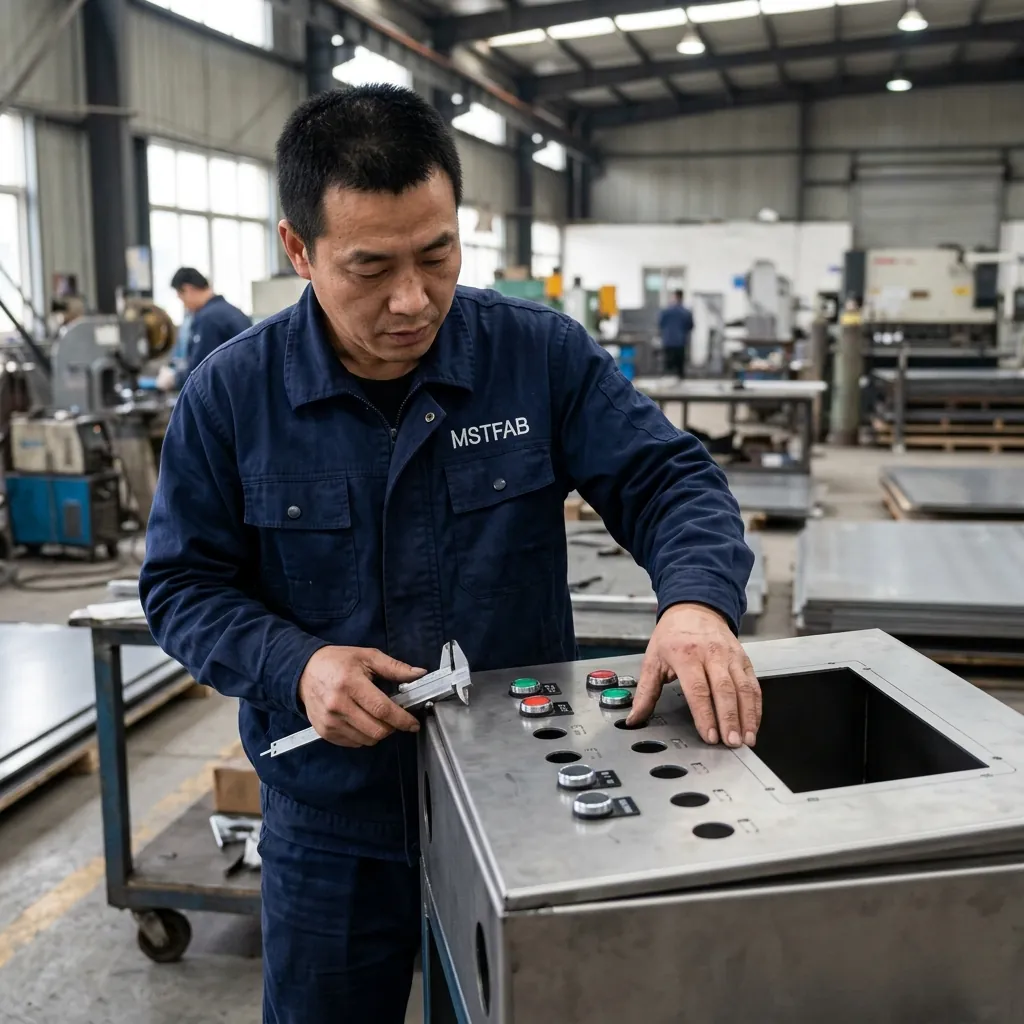
Many custom machinery parts need hardware installed before they are ready for assembly (PEM nuts, studs, rivet nuts, hinges). Powder coating can block threaded holes. Grounding points may require uncoated metal contact. If these details are missed, the final machine assembly team may need to modify parts on site, creating extra labor and very unhappy engineers.
Quality Control and First Article Inspection
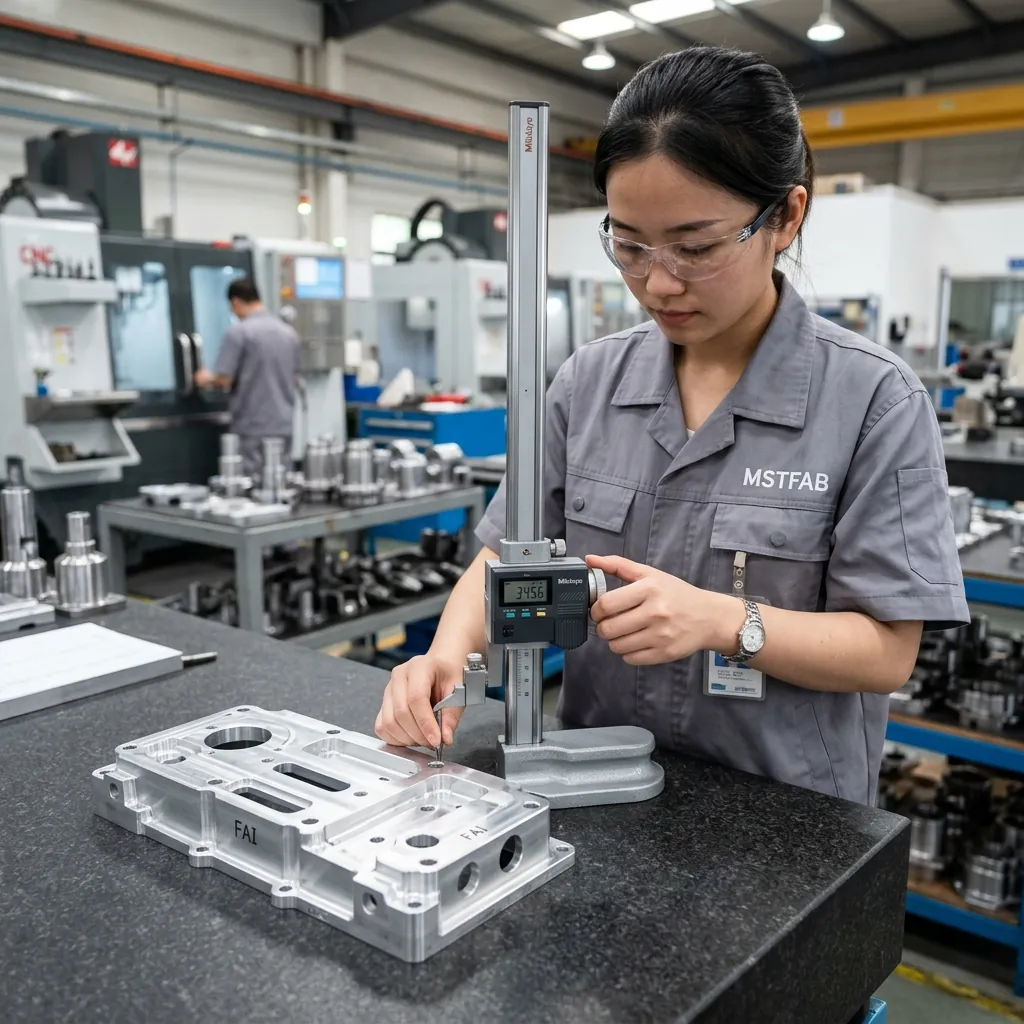
Quality inspection should focus on the features that affect machine function. Not every dimension has the same importance. A hidden internal flange may not need the same inspection priority as a motor mounting hole, sensor opening or control panel cutout.
Buyers should identify which dimensions affect function, safety, installation or maintenance. A practical quality plan controls what matters most.
Export Packaging for Large Machinery Parts
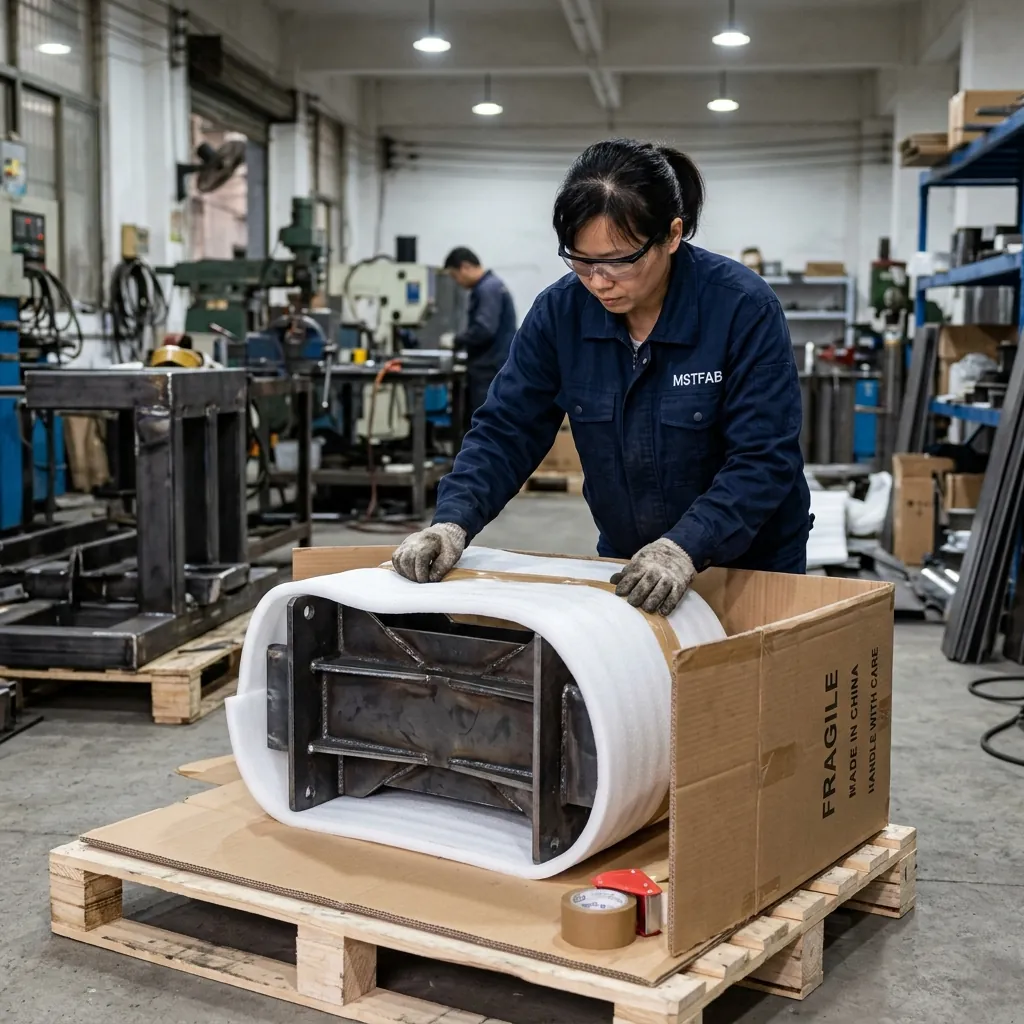
A beautifully welded frame or perfectly painted machine guard loses all its value if it is dented during ocean freight. Protective foam, heavy-duty cardboard, and reinforced pallets are non-negotiable for international machine builders.
Frequently Asked Questions
Can you manufacture custom metal parts for machinery?
Yes. MSTFAB supports drawing-based fabrication for machine covers, brackets, panels, guards, enclosures, chassis parts, mounting plates, frames and welded assemblies.
Can you produce prototypes before batch production?
Yes. Prototype and first-article orders can help verify fit, dimensions, hardware, welding, surface finish and assembly before repeat production.
Do you provide stamping services?
MSTFAB focuses on custom sheet metal fabrication through laser cutting, CNC bending, welding, finishing, hardware insertion, inspection and assembly. Dedicated stamping-die projects should be reviewed separately before quotation.
Start Your Custom Machinery Metal Parts Project
A good machinery metal part should not only match the drawing.
It should fit the machine, support the function, survive vibration, allow maintenance, arrive protected and remain consistent when reordered.
Send your drawings, material requirement, quantity, finish details, tolerance notes and machinery application information through the MSTFAB quotation page.
Our team will review the manufacturing route before production begins. Because the best machinery part is the one that fits correctly, works quietly and never gives your assembly team a reason to EU REACH Regulation for a hammer.
Precision CNC Bending for Machinery Components
Learn how we control springback and bending tolerances to ensure your machine covers and internal brackets fit perfectly on the assembly line.
 WeChat Contact
 WhatsApp Me Directly