
By: Frank, General Manager
Technical Review: Michael Chen, Export Coordinator & Quality Manager
Last Updated: July 3, 2026
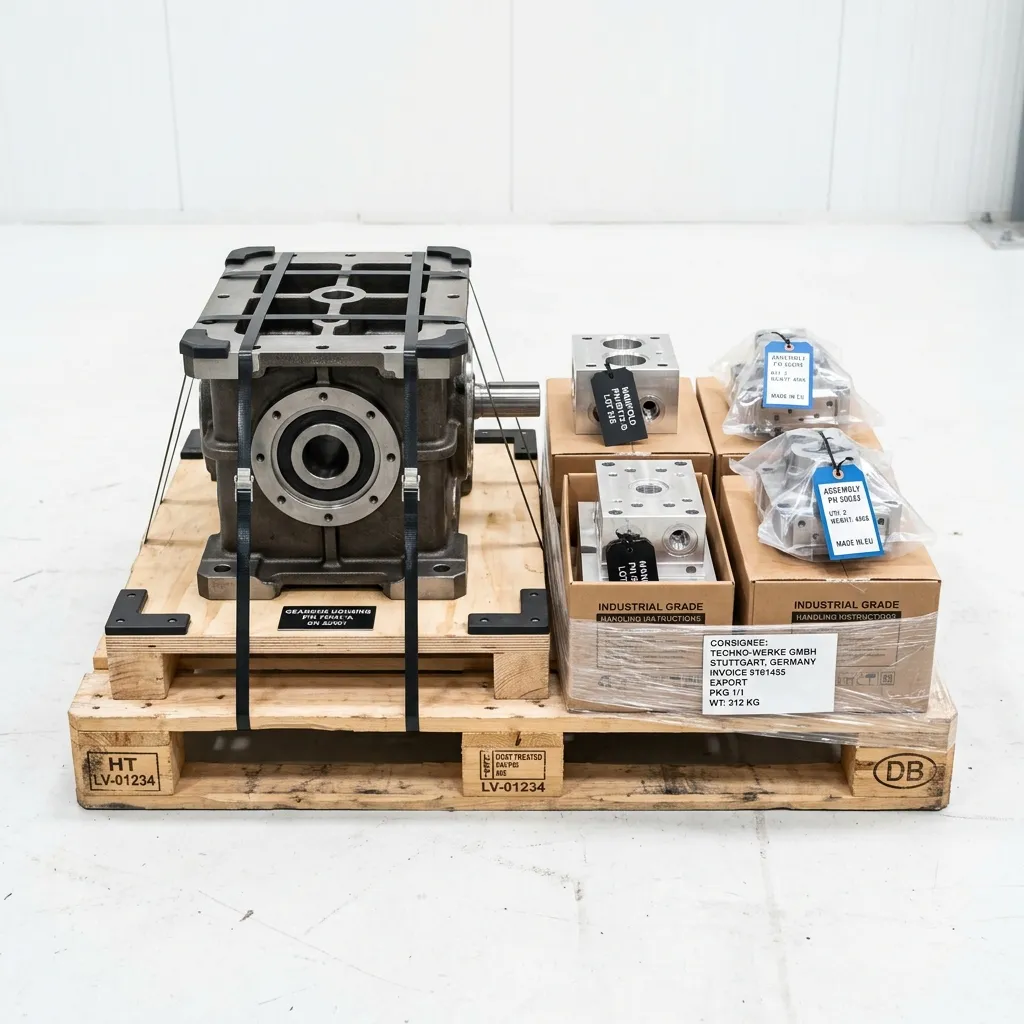
Exporting custom metal parts is not simply about making good parts and putting them in a carton.
A bracket may fit correctly at the factory but arrive with scratched coating. A cabinet may be manufactured accurately but be packed without enough corner protection. A welded frame may be ready for shipment, but the buyer may still need part labels, hardware separation, packing-list details, drawing revision confirmation, and practical guidance for receiving the goods.
That is why custom metal parts manufacturing services for export orders require more than laser cutting, CNC bending, welding, and finishing.
The complete export order needs to be controlled from drawing review through final packing handover.
At MSTFAB, we do not just focus on the metal. We focus on how overseas OEM buyers can receive brackets, panels, enclosures, cabinets, equipment housings, chassis parts, mounting plates, guards, and welded assemblies safely, clearly, and repeatably.
The goal is simple: Your metal parts should be manufactured correctly, packed logically, identified clearly, and delivered in a condition that supports the next stage of your production.
Why Export Orders Need More Planning Than Local Orders
A local order may travel a short distance from factory to assembly site. An export order goes through multiple handling stages:
- Factory inspection and internal warehouse movement
- Palletizing or crating
- Container loading or air-freight handling
- Port, terminal, and international transportation
- Customs clearance and domestic delivery
- Buyer receiving inspection and final assembly
That means the finished metal part must survive more than normal factory handling. It needs protection against surface scratches, corner damage, panel bending, hardware loss, and moisture exposure.
A part can be dimensionally correct and still fail the export order if the buyer receives it damaged, incomplete, mixed with another revision, or difficult to identify.
Export Manufacturing Starts With a Controlled RFQ
The best time to reduce export risk is before production begins.
A clear RFQ helps the factory understand not only what needs to be made, but also how the buyer needs to receive it. A supplier should not need to guess whether a brushed stainless steel panel can be stacked directly against another panel, or whether loose hardware should be bagged separately.
In export manufacturing, unclear instructions often become expensive assumptions. Learn how to prepare a foolproof request in our guide on how to get an accurate sheet metal fabrication quote.
Start With DFM Before Production and Export Packing
For export orders, DFM (Design for Manufacturing) should consider whether the finished part can be packed and shipped practically.
A large thin sheet metal panel may require reinforcement to reduce handling risk. A polished stainless steel cover may need separated packing to prevent surface contact. A welded frame may require a pallet or crate layout that prevents movement during transport.
Export packing is not something to “figure out at the end.” It should be part of the production plan to prevent common fabrication defects from occurring during transit.
Manufacturing Process for Export-Ready Metal Parts
A controlled export order follows a connected route where each stage affects the next.
A laser-cut panel may need a bend relief before CNC forming. A bent bracket may need PEM hardware before coating. A welded assembly may need a fit check before it is packed. A coated part may need protective film, foam separation, and edge guards before crate loading.
The finished export order should be viewed as one manufacturing system, not a collection of unrelated operations.
Prototype and First-Article Approval Before Export Batch Production
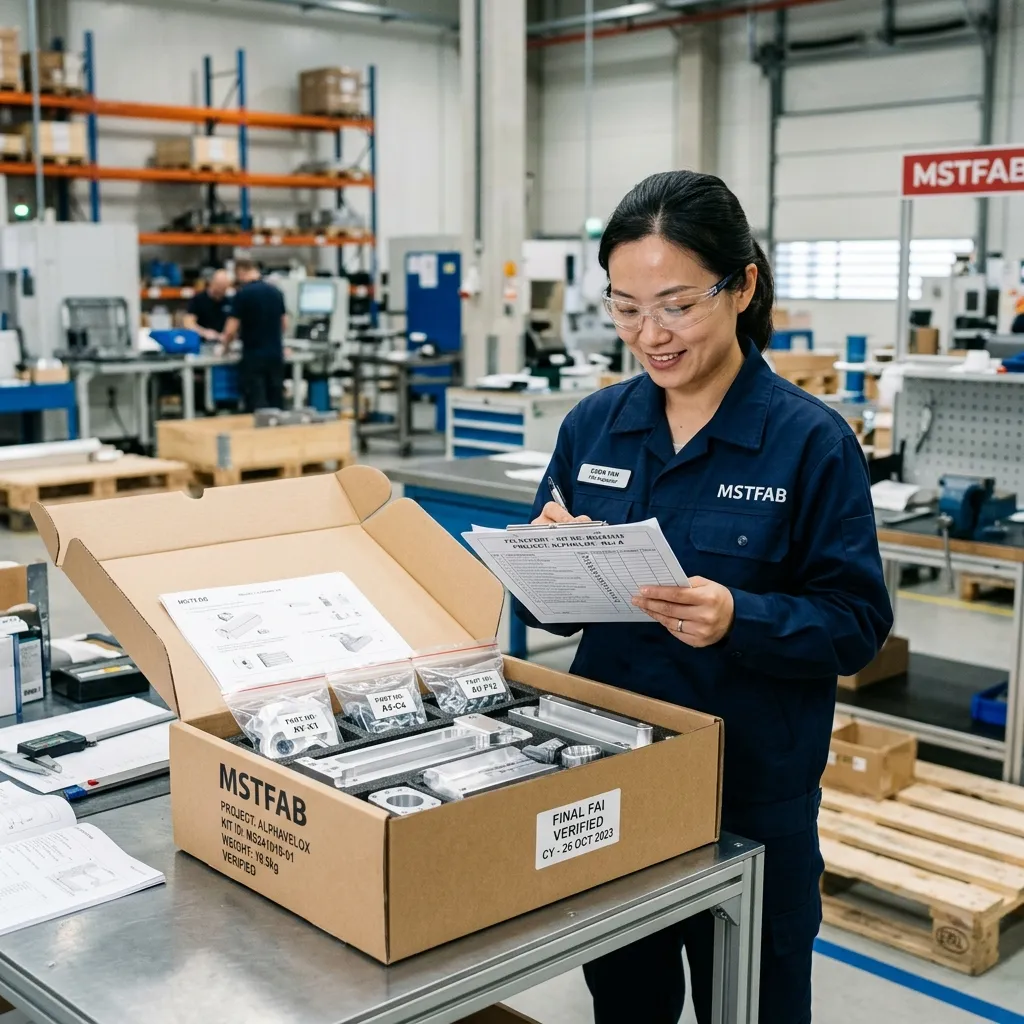
For new export projects, a prototype or first article can reduce expensive downstream problems. It helps verify dimensions, material, weld alignment, surface finish, packaging method, label format, and repeat-production feasibility.
A first article is more than a part photo. It is an opportunity to confirm that the manufacturing route, inspection plan, finish, and packing method all support the buyer’s real receiving process. For testing batches, review our prototype and low-volume production services.
Export Packaging Should Match the Part Type
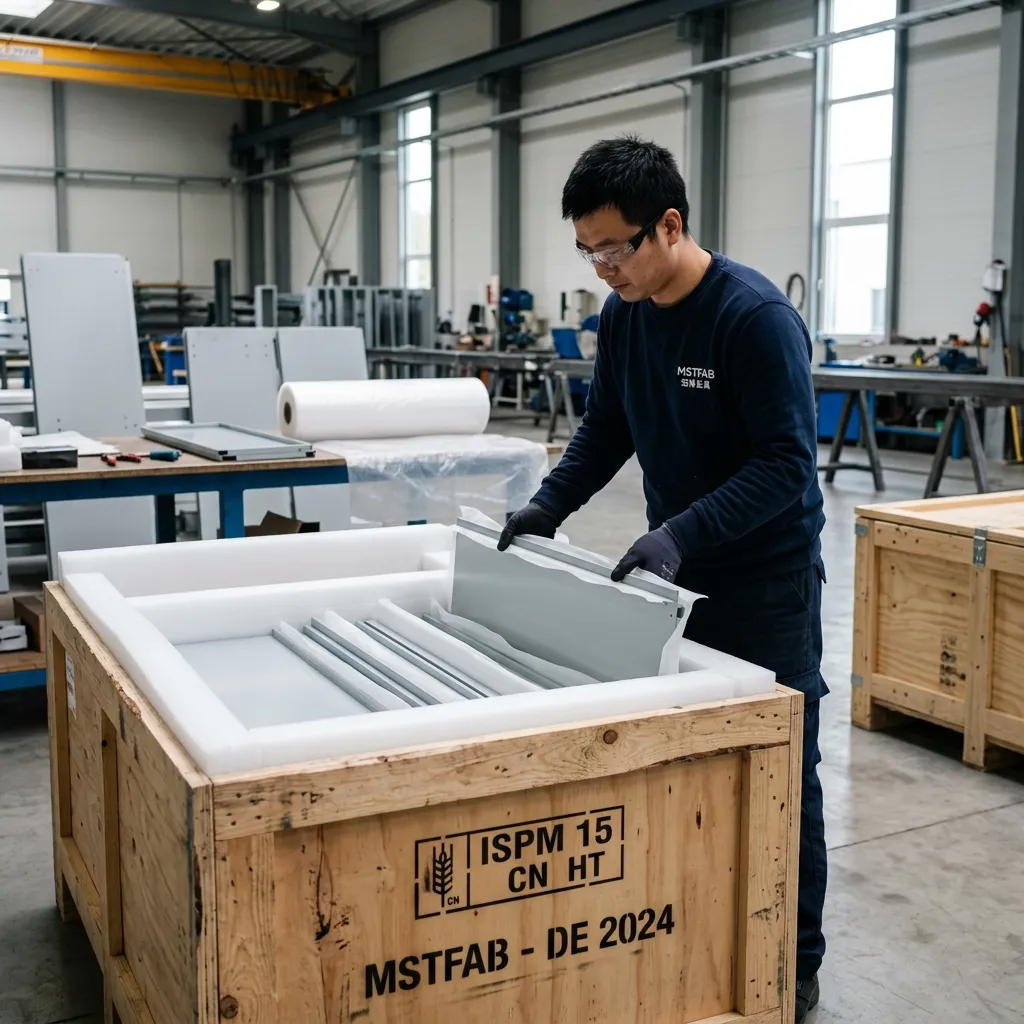
One packing method does not fit every fabricated part. A small internal bracket, a powder-coated enclosure door, a welded frame, and a polished stainless steel panel all require different protection levels.
Small Parts and Hardware
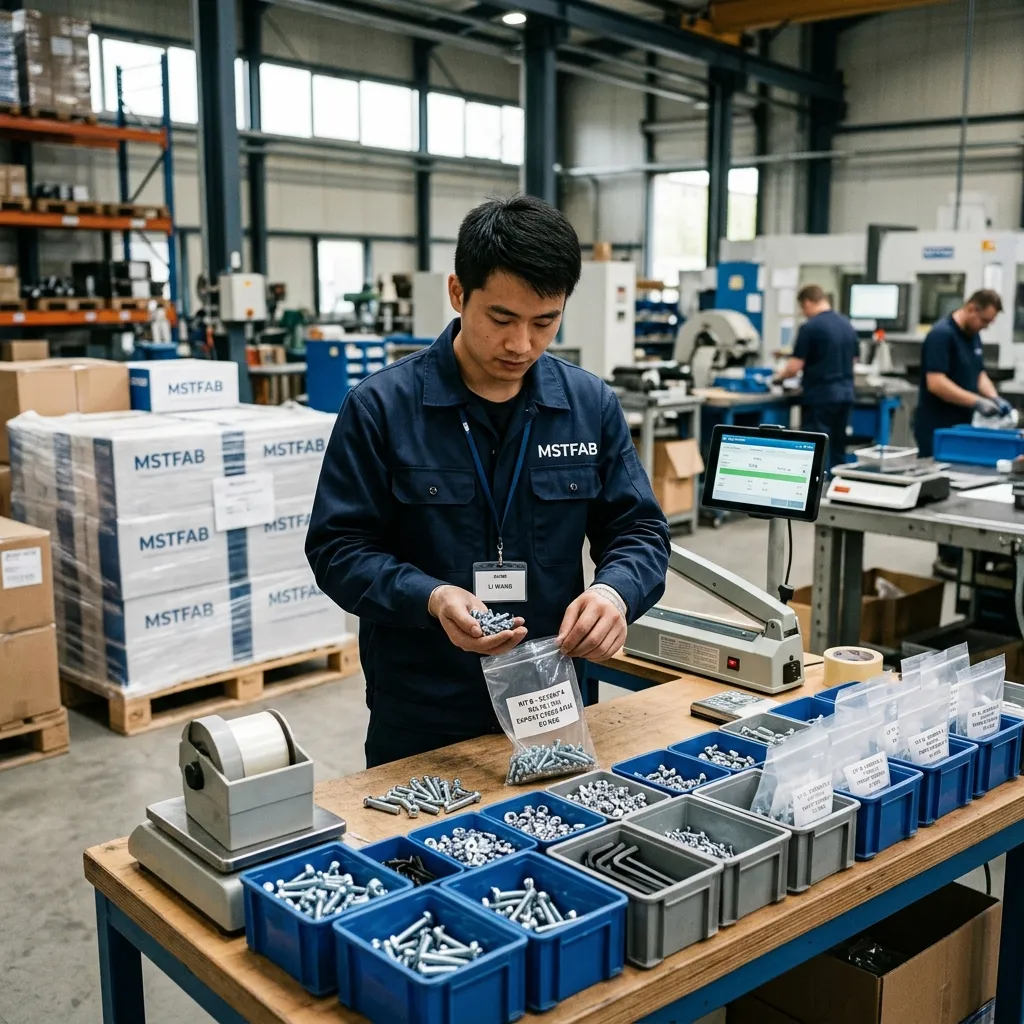
Small brackets, mounting plates, clips, and loose hardware may need part labels, separated bags, divider cartons, and assembly-kit identification.
Cosmetic Panels and Covers
Visible panels, brushed stainless steel covers, and powder-coated doors may need protective film, foam separation, edge guards, and surface-to-surface separation.
Large Welded Frames and Cabinets
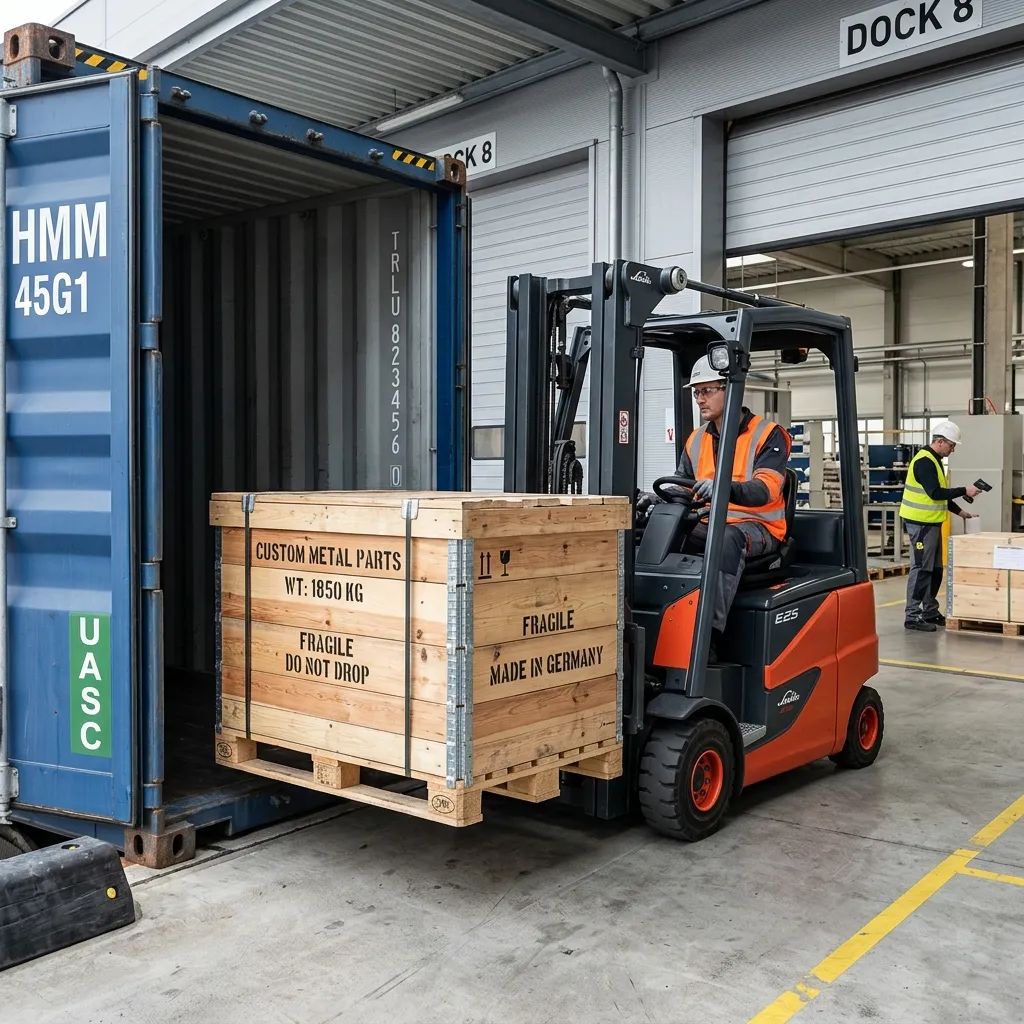
Large welded assemblies and machine bases need reinforced pallets, custom wooden crates, foam blocks, corner guards, lifting-point identification, and loading orientation notes.
Packaging should be designed around the real product, not selected only because the carton is available.
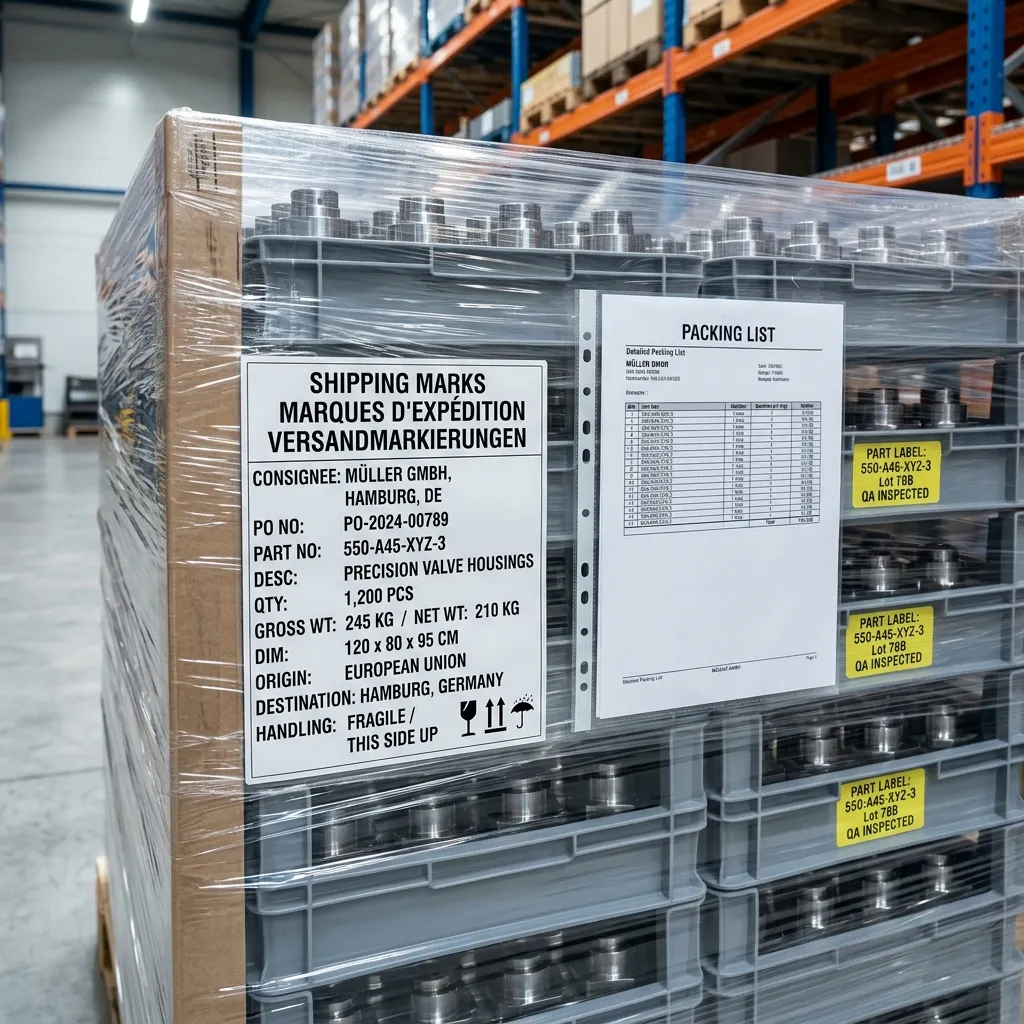
Labels and Packing Information Reduce Receiving Problems
Export receiving teams may not know the project as well as the original engineering team.
Clear identification helps reduce errors during unloading, warehousing, assembly, and incoming inspection. Useful label information includes buyer part number, supplier part number, drawing revision, quantity, carton number, handling orientation, and hardware-kit identification.
A label that is technically correct but does not match the buyer’s part-number system can still create delays.
Common Export Order Problems Buyers Should Prevent
Unclear Drawing Revision: A part can be manufactured correctly to the wrong drawing revision. Always confirm part number and revision date before production release.
Packaging Added Too Late: Waiting until shipment day to plan foam separation or crate packing limits available protection options.
Hardware Not Matched to the Parts: A well-made bracket becomes much less useful when the matching fastener kit is in another carton.
Surface Finish Not Defined Clearly: “Black” or “smooth” are not complete finish standards. Specify texture, gloss, visible faces, and masking needs.
Export Order Capabilities & Trust Metrics
OEM buyers rely on predictable, tightly controlled export procedures. Below is an overview of MSTFAB’s capabilities designed for flawless overseas delivery.
MSTFAB Export Order Guarantee
| Capability Domain | Details & Specifications | Buyer Value (OEM Trust) |
|---|---|---|
| Export DFM Review | Pre-production evaluation of fragility, stackability, and transit risk. | Prevents structural damage and cosmetic scratching during international handling. |
| Heavy-Duty Crating | Custom ISPM-15 wooden crates, reinforced pallets, and foam edge guards. | Ensures absolute dimensional and cosmetic integrity from our factory to your floor. |
| Hardware Kitting | Separated, labeled, and sealed hardware bags matched to assembly bills of material. | Eliminates missing fasteners, allowing your assembly team to work without interruption. |
| Clear Part Labeling | Custom markings showing buyer part numbers, revisions, and quantities. | Dramatically speeds up your incoming inspection and warehouse receiving processes. |
| Documentation Accuracy | Precise packing lists, commercial invoices, and FAI reports included. | Ensures smooth customs clearance and zero discrepancies in your accounting system. |
Start Your Export Metal Parts Project
A successful export order should do more than leave the factory.
It should arrive with the correct parts, correct revision, correct finish, correct hardware, clear identification, suitable packing, and practical support for receiving and assembly.
Send your drawings, material requirements, quantity, finish details, hardware list, packaging expectations, and destination information through our quotation page.
Because the best export metal parts order is the one that reaches your receiving team ready to check, store, assemble, and use.
For projects requiring consistent, repeatable welds across production batches, learn more about our robotic welding for export parts capabilities and how fixture-based automation improves weld quality for OEM sheet metal assemblies.
Export-ready parts start with accurate flat patterns. Our laser cutting and drawing review ensure flat patterns are dimensionally accurate before bending, welding or finishing.
 WeChat Contact
 WhatsApp Me Directly