
Buying custom metal parts from China is not only about finding the lowest quotation. It’s about finding a factory that actually cares what happens after the parts leave their door.
A supplier may offer a surprisingly low unit price for a bracket, enclosure, panel, cover, cabinet, or welded assembly. But the real question is whether that part will fit your product when it reaches your assembly line half a world away.
Will the holes align? Will the bend angle stay consistent? Will the welded frame remain square? Will powder coating block the threaded holes? Will the visible stainless steel surface arrive without scratches? Will the second order actually match the approved sample?
These are the questions that keep OEM buyers awake at night.
Let’s be blunt: A metal part that “almost fits” is not a successful part. It is an expensive, heavy souvenir with sharp edges.
MSTFAB provides custom metal parts manufacturing services in China for OEM buyers who need drawing-based sheet metal fabrication. This guide explains how buyers can reduce common sourcing risks before production begins.
Why OEM Buyers Source Custom Metal Parts From China
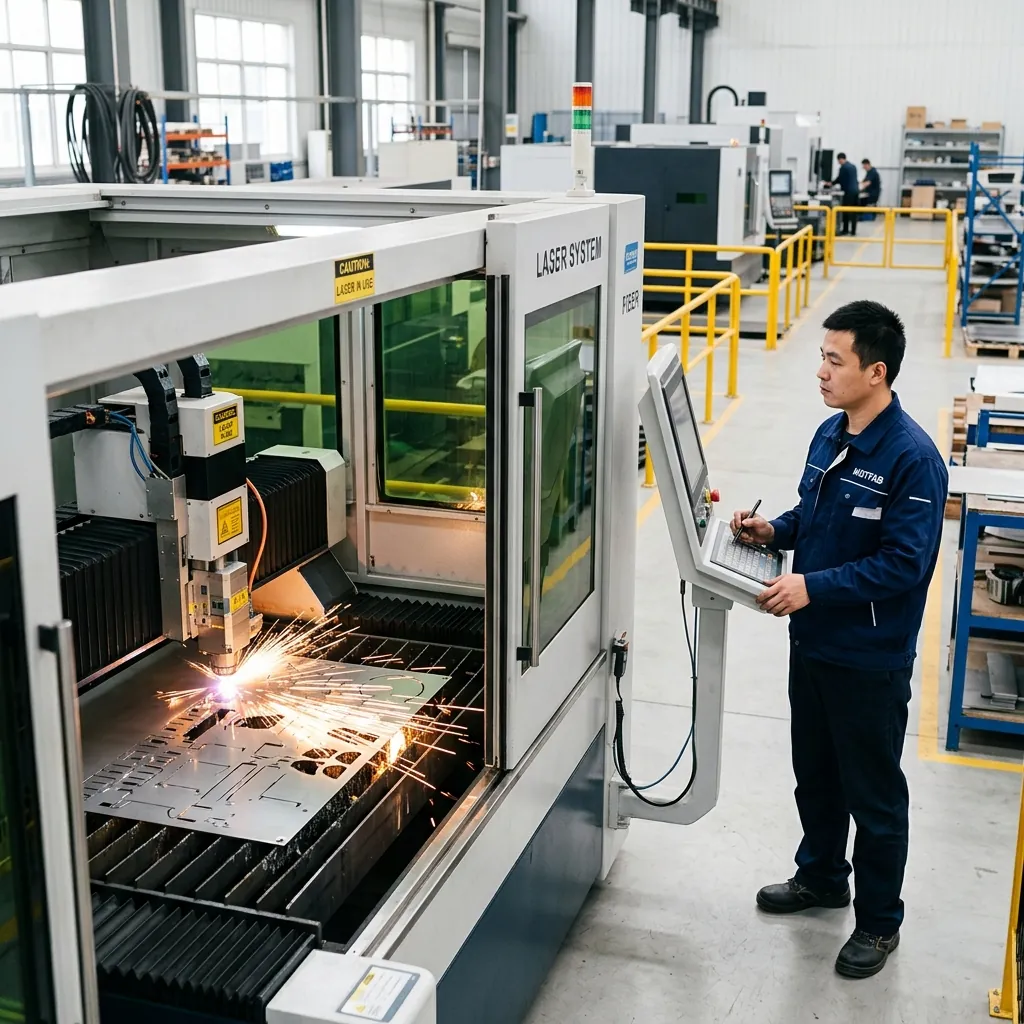
China is often considered for custom metal fabrication because buyers can access multiple processes within one supply chain: laser cutting, CNC bending, welding, hardware insertion, surface treatment, assembly, inspection, and export packing.
However, a factory location alone does not solve a manufacturing problem.
A successful project still depends on clear communication, manufacturable details, and functional inspection. When buyer and manufacturer do not agree on these details early, the result is predictable: delayed shipment, rework, extra freight, and a very long email chain with too many highlighted screenshots.
Sourcing from China: The Buyer’s Trust Table
To avoid headaches, here is a breakdown of how the typical “cheap” approach differs from a controlled, reliable manufacturing process:
| Process Stage | The “Cheap & Fast” Risk | The MSTFAB Controlled Approach |
|---|---|---|
| Drawing Review | Blindly cut the metal. Ignore impossible bends. | DFM review. Catch tolerance & assembly issues before cutting. |
| Welding | Weld fast, leave it warped. | Control heat input, use fixtures, guarantee squareness. |
| Surface Finish | Paint over threaded holes and grounding spots. | Mask threads, protect grounding points, apply consistent coating. |
| Quality Control | “Looks okay.” Pack it in a thin box. | Measure functional dimensions. Use custom export-grade packaging. |
| Repeatability | Batch #2 looks completely different from Batch #1. | Standardized CNC programs and tooling for consistent reorders. |
The First Rule: Review the Drawing Before Cutting Metal
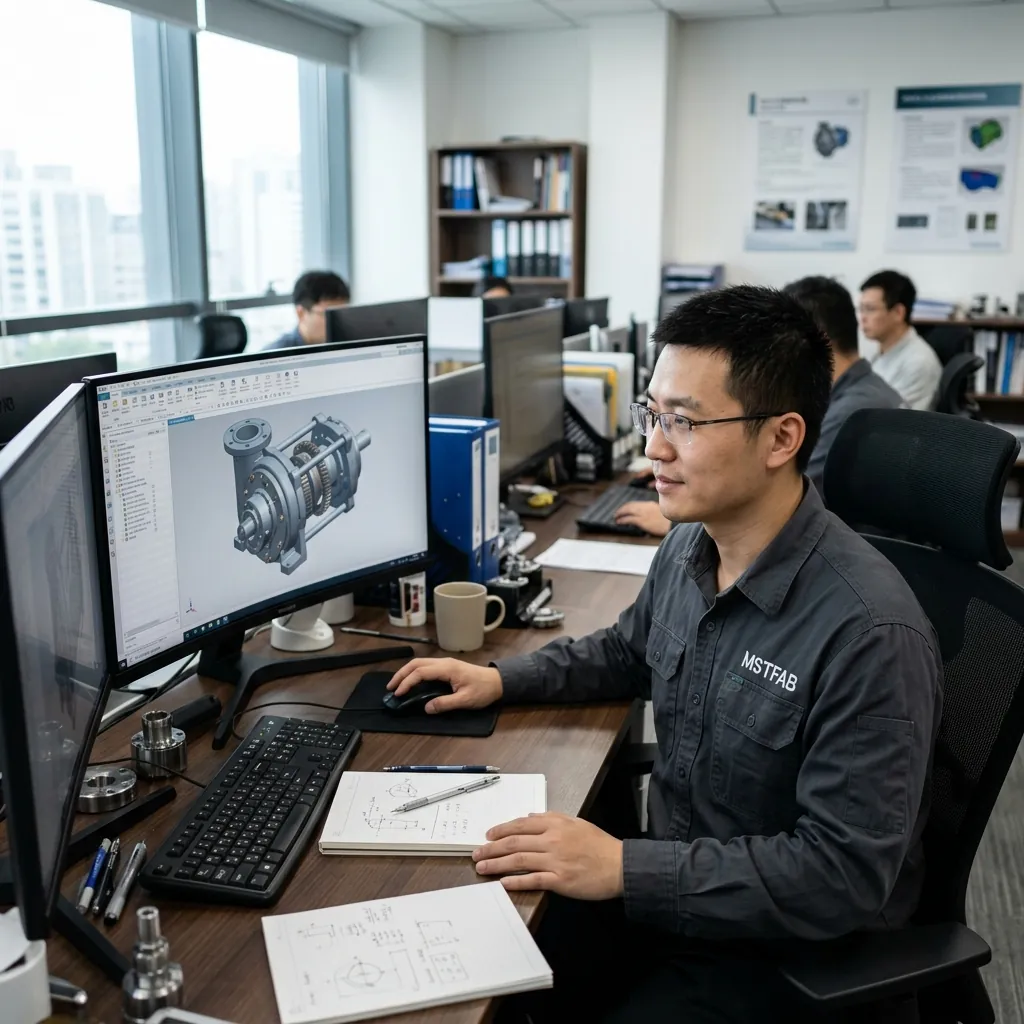
The most valuable stage in custom metal parts manufacturing is often the one buyers cannot physically see: The drawing review.
Before cutting material, the manufacturer should review whether the part is practical to produce, assemble, inspect, finish, and pack. This is DFM (Design for Manufacturing). DFM does not mean secretly changing your design. It means identifying risks before a digital file becomes a real metal part.
For example, a mounting hole placed too close to a bend may distort after CNC bending. Fixing this issue in a CAD drawing takes five minutes. Fixing it after 300 parts are bent, welded, coated, and shipped across the ocean is a nightmare.
Material Selection: Price Is Not the Only Factor
The cheapest material is not always the best material. Material should be selected based on the actual application, not only on the quotation spreadsheet.
Stainless Steel is commonly selected for corrosion resistance, durability, hygiene, and visible appearance. But buyers should clarify the grade, thickness, brushing direction, and whether protective film is required. A brushed panel and an internal mounting plate do not need the same appearance standard.
Aluminium is often used when lower weight matters. But aluminium is lightweight, and it may need careful design for bending radius and stiffness. A lightweight part is useful. A lightweight part that flexes like a diving board is less useful.
CNC Bending: Why “Just Bend It to 90 Degrees” Is Not a Production Plan
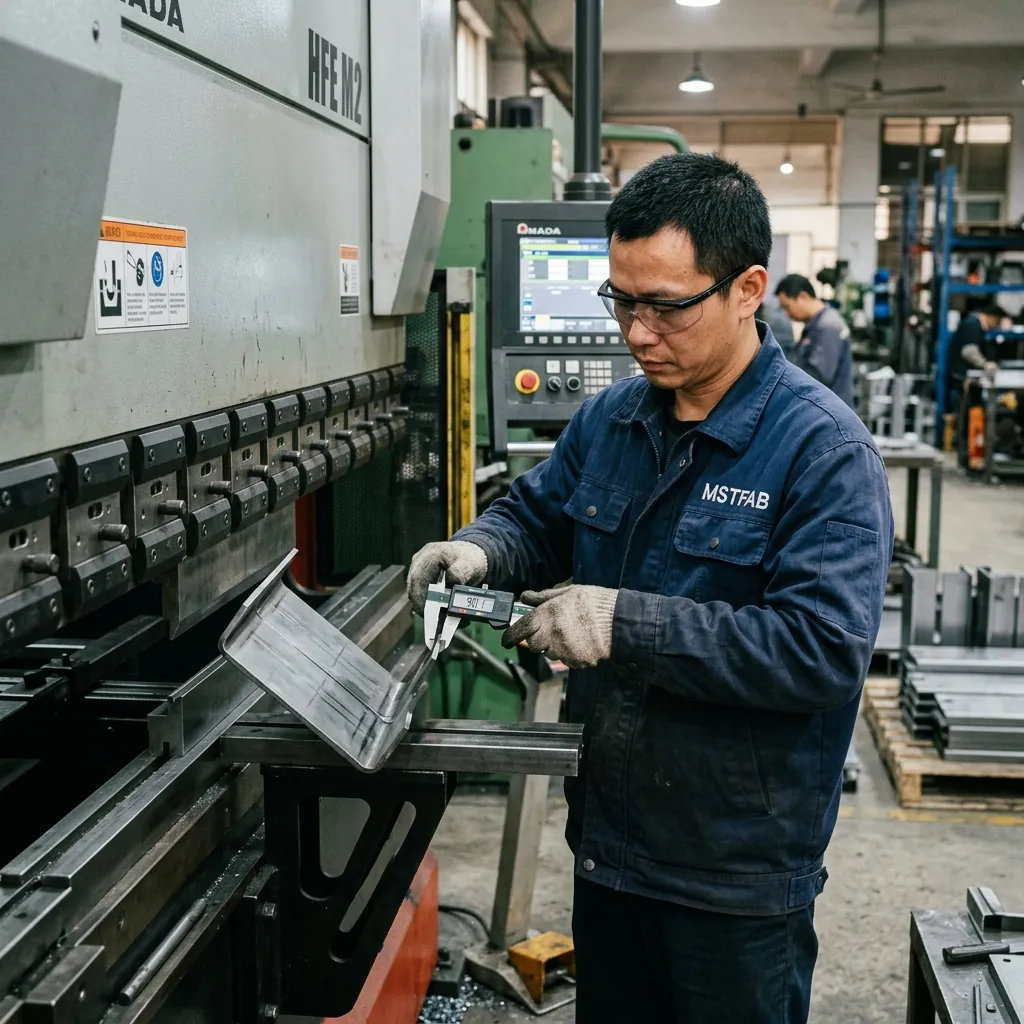
CNC bending turns flat sheets into useful three-dimensional parts. The final bending result depends on more than the angle shown on the drawing.
Springback happens because metal naturally moves slightly back toward its original flat shape after bending. Metal is very cooperative, but it does occasionally have opinions. Before approving production, buyers should confirm which dimensions are critical after bending, and whether the part needs to fit with another component.
Welding: Strong Parts Still Need to Stay Straight
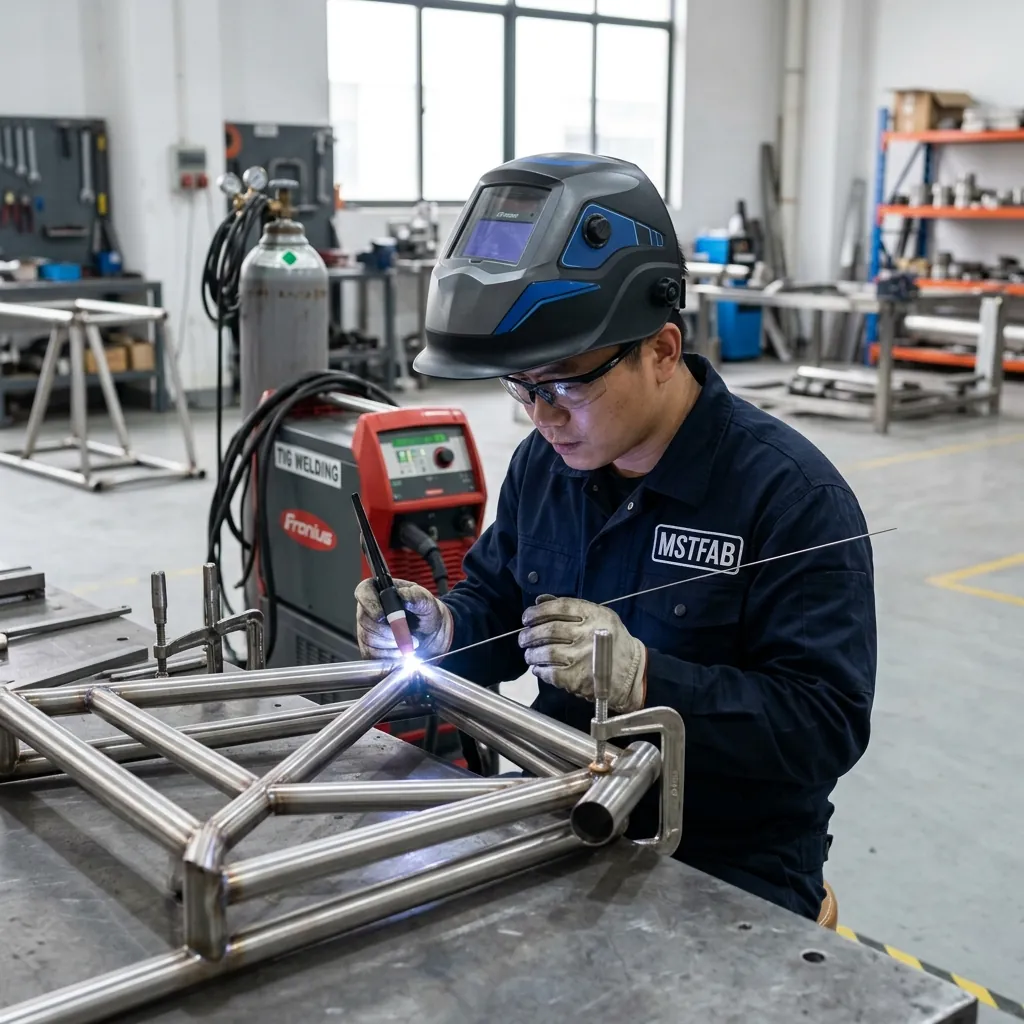
Welding adds strength, but it also introduces heat. A welded frame may be strong but still fail your project if the heat twists it out of square, meaning it no longer fits the machine.
“Nice-looking weld” is not a technical specification. It is better to define whether welds must be structural, smooth-ground, hidden, polished, or acceptable as standard industrial welds.
Hardware and Threads Must Be Considered Before Finishing
Many OEM metal parts need hardware (PEM nuts, rivet nuts, studs, hinges) before they can work properly. These details should be confirmed before coating or finishing begins.
Powder coating inside a threaded hole can stop a screw from fitting. The best time to solve these issues is before production. Your assembly line workers should not need to become amateur metal surgeons trying to tap blocked threads.
Quality Control Should Focus on What Actually Matters
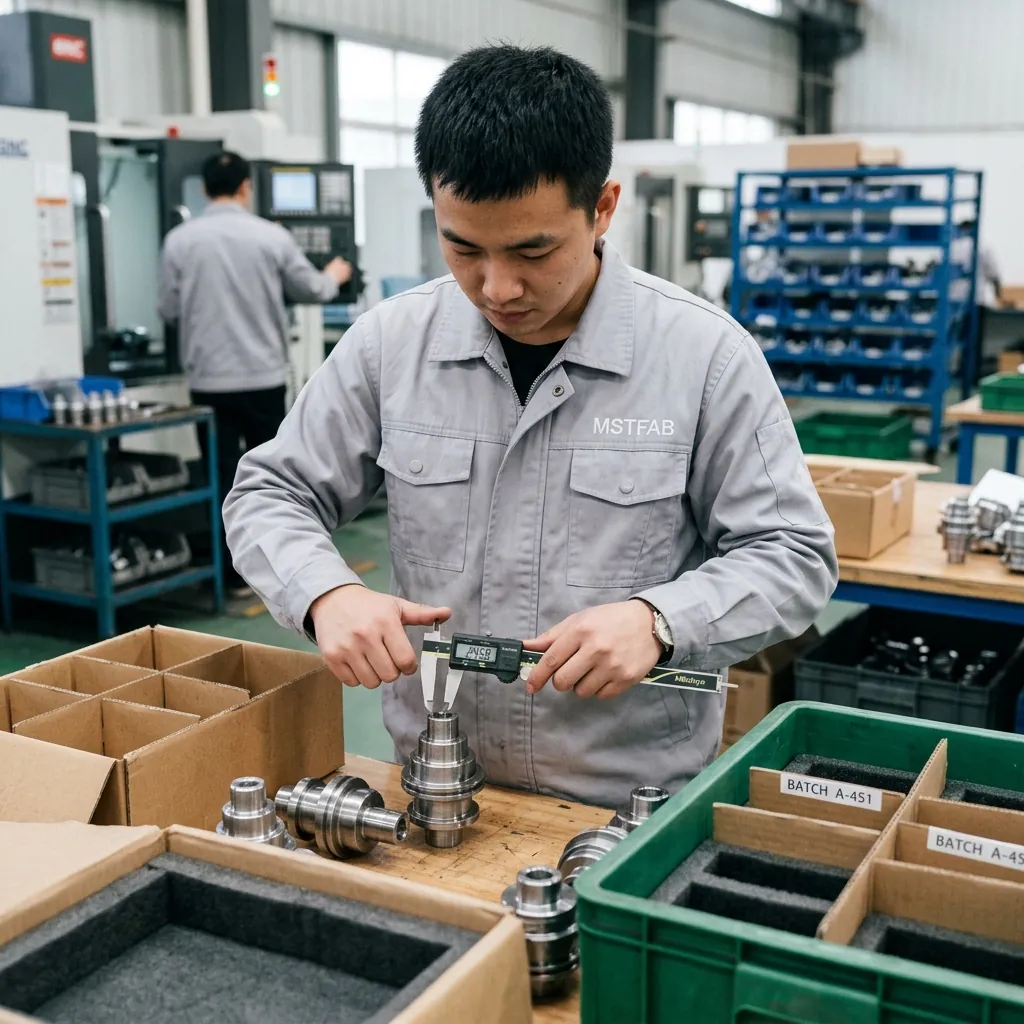
Not every dimension needs the same inspection priority. A hidden internal flange is not always as critical as a front display cutout.
Buyers should clearly identify what is truly critical to function. Marking every single dimension as extremely tight can increase cost and inspection time without actually improving the final product. A smart quality plan prioritizes what matters most.
Start Your Custom Metal Parts Project in China
A good custom metal part should do more than match a drawing on a screen.
It should fit your assembly smoothly, meet the functional requirement, survive international shipping safely, and remain highly consistent when you place your next order.
Send your drawing, material requirement, quantity, finish details, tolerance notes, and application information to MSTFAB. Our team will review the manufacturing route before production begins.
Because the best custom metal part is not the one that looks good in a cheap quotation. It is the one that fits perfectly, ships safely, and quietly does its job for years.
 WeChat Contact
 WhatsApp Me Directly