
Use this page for industrial equipment mounting details
Industrial equipment parts fail buyers in practical ways: mounting holes miss, panels flex, brackets interfere, or the finish chips during assembly. This guide focuses on those fit-up details.
This page has been separated from the broader industrial fabrication service page so Google and buyers can see the job of this article clearly. The useful question here is not “can someone make metal parts?” It is: what should a buyer check before sending drawings, approving a quote or moving into production?
- Mark mounting datum and assembly interfaces on the drawing.
- Use slots where installation adjustment is expected.
- Check bracket stiffness and panel flatness after bending.
- Specify finish durability based on the equipment environment.
- Ask for QC photos of the actual fit-up points.
| 1 | Mark mounting datum and assembly interfaces on the drawing. |
| 2 | Use slots where installation adjustment is expected. |
| 3 | Check bracket stiffness and panel flatness after bending. |
| 4 | Specify finish durability based on the equipment environment. |
| 5 | Ask for QC photos of the actual fit-up points. |
Industrial equipment buyers do not need a supplier who says “yes” to everything. That is how you get beautiful promises and parts that do not bolt on. You need a sheet metal partner who can turn drawings into repeatable guards, covers, panels, brackets and frames, then prove the batch is right before it ships. Less poetry, more fit-up.
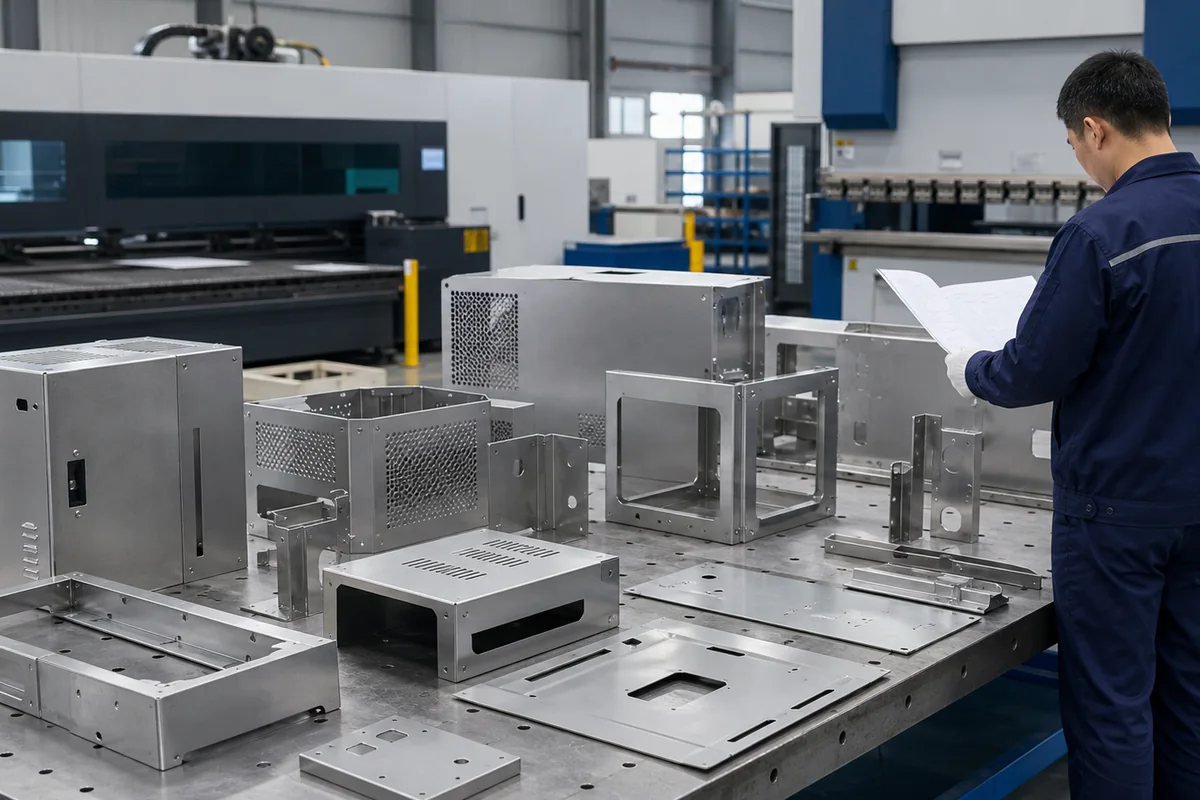
Quick Answer: What Does MSTFAB Manufacture?
MSTFAB manufactures custom sheet metal parts for industrial equipment: machine guards, access covers, doors, equipment housing shells, chassis plates, welded frames, mounting brackets, PEM hardware panels, formed covers and export-packed metal assemblies. We do not manufacture finished industrial machines, electronics, motors, sensors, batteries, wiring harnesses, software, hydraulics, pneumatics or complete equipment.
Fabrication Scope: Parts, Not Finished Equipment
This matters because a quote for metal fabrication is not the same as a quote for an assembled machine. Mixing those two is where purchasing meetings start to smell like panic.
| Buyer Need | MSTFAB Scope | Not Included |
|---|---|---|
| Machine guards and covers | Laser cut, bent, welded and finished metal guard panels, covers and access doors | Safety circuits, interlocks, sensors or completed machinery |
| Equipment housings | Empty sheet metal housing shells, chassis plates, base frames and mounting panels | Controllers, screens, wiring, software or electrical integration |
| Mechanical support parts | Brackets, rails, reinforcement ribs, welded frames, panels and sub-assemblies | Motors, bearings, pneumatic systems or hydraulic packs |
| Export-ready supply | Inspection records, photos, protective packing and shipment support for metal parts | Retail packaging, installed components or finished branded equipment |
What Industrial Equipment Buyers Actually Need
Parts That Fit the First Time
Mounting holes, tabs, slots and frame squareness decide whether your assembly team is calm or inventing new vocabulary. Critical dimensions must be marked and checked.
Repeat Batches, Not One Lucky Sample
A prototype can behave beautifully and a batch can wander off. Good production locks drawings, fixtures, material and inspection before volume starts.
Safe Edges and Useful Finish
Guards and covers often touch hands, cables or painted surfaces. Burr control, deburring and coating thickness are not tiny details. They are future complaints waiting politely.
Clear Quote Scope
A serious quote separates material, cutting, bending, welding, hardware, finish, inspection, packing and Incoterm. A one-line price is not simple. It is a mystery box.
Manufacturing Route for Industrial Equipment Metal Parts
The usual route is drawing review, laser cutting, bending, welding or hardware insertion, surface finishing, inspection and protective packing. The order may change depending on material and finish, but the discipline does not. Every step should protect the final fit of the metal part.
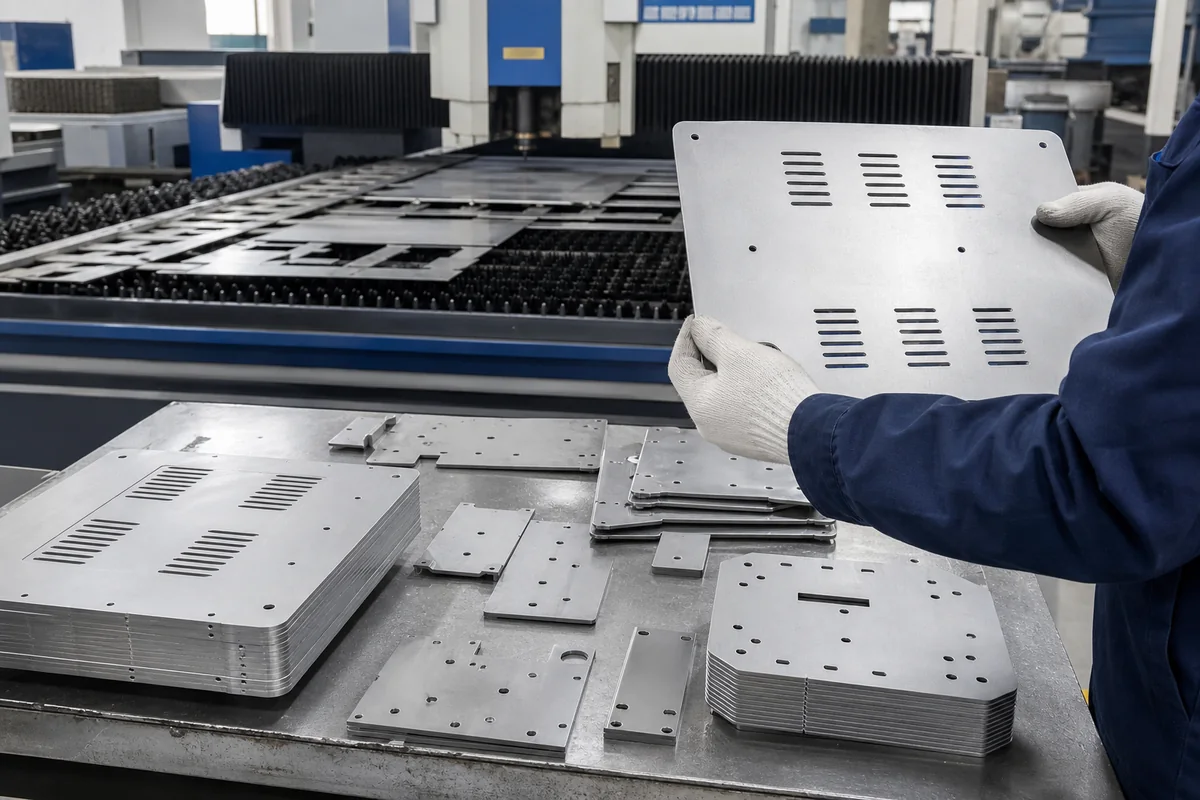
DFM Review Before Cutting Metal
A good supplier should review bend radius, hole-to-edge distance, weld distortion risk, PEM hole sizes, coating clearance and cosmetic surfaces before production. This is not nitpicking. It is where expensive rework gets prevented while it is still cheap. For deeper design rules, see our sheet metal DFM guide and sheet metal tolerances guide.
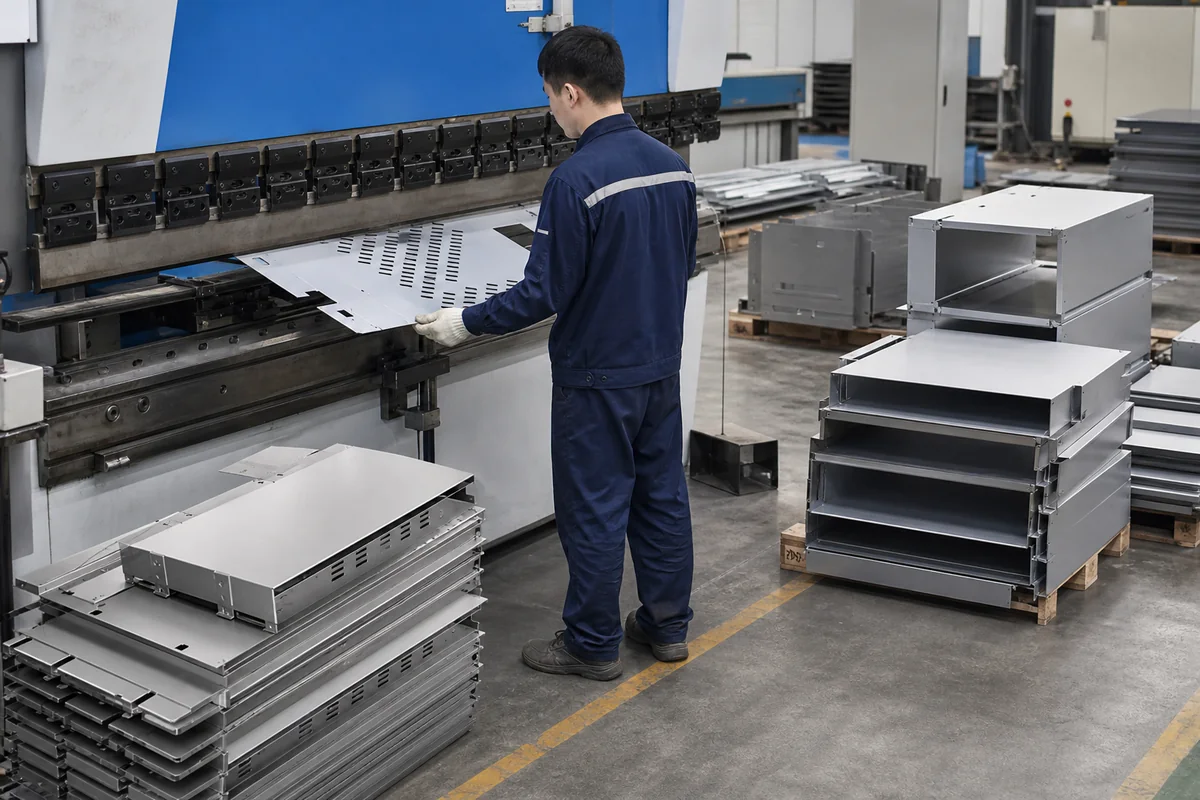
Bending Controls the Assembly Geometry
Industrial equipment panels are often large, flanged and full of openings. That combination likes to move. Bend sequence, tooling, grain direction and inspection points determine whether a cover sits flat or arrives with the confidence of a banana. If a part must align with rails, doors or brackets, mark those dimensions as critical.
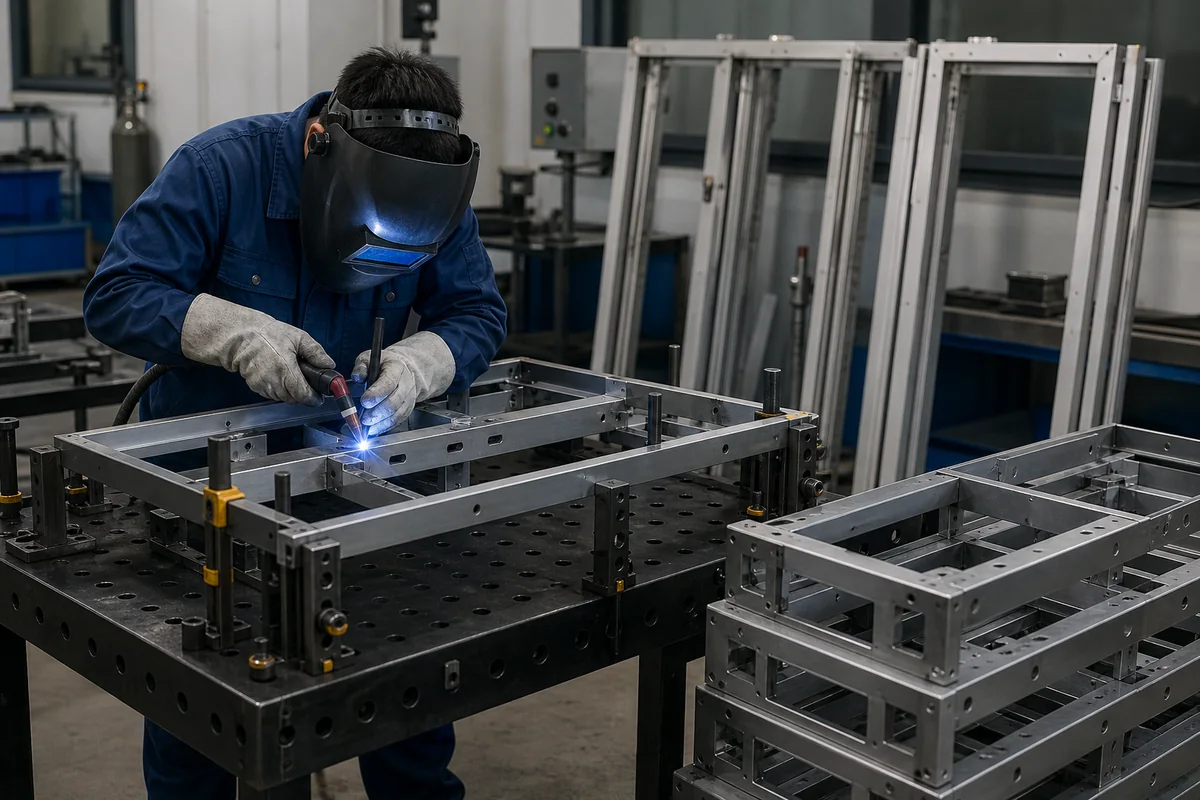
Welding and Frames Need Fixtures
Welding heat shrinks metal. On frames, doors and guard structures, that shrinkage can pull the part out of square. Fixture-controlled welding, tack sequence and practical tolerance expectations are what keep repeat batches usable. A pretty weld does not help much if the door no longer closes.
Hardware and Interfaces Are Where Trust Is Won
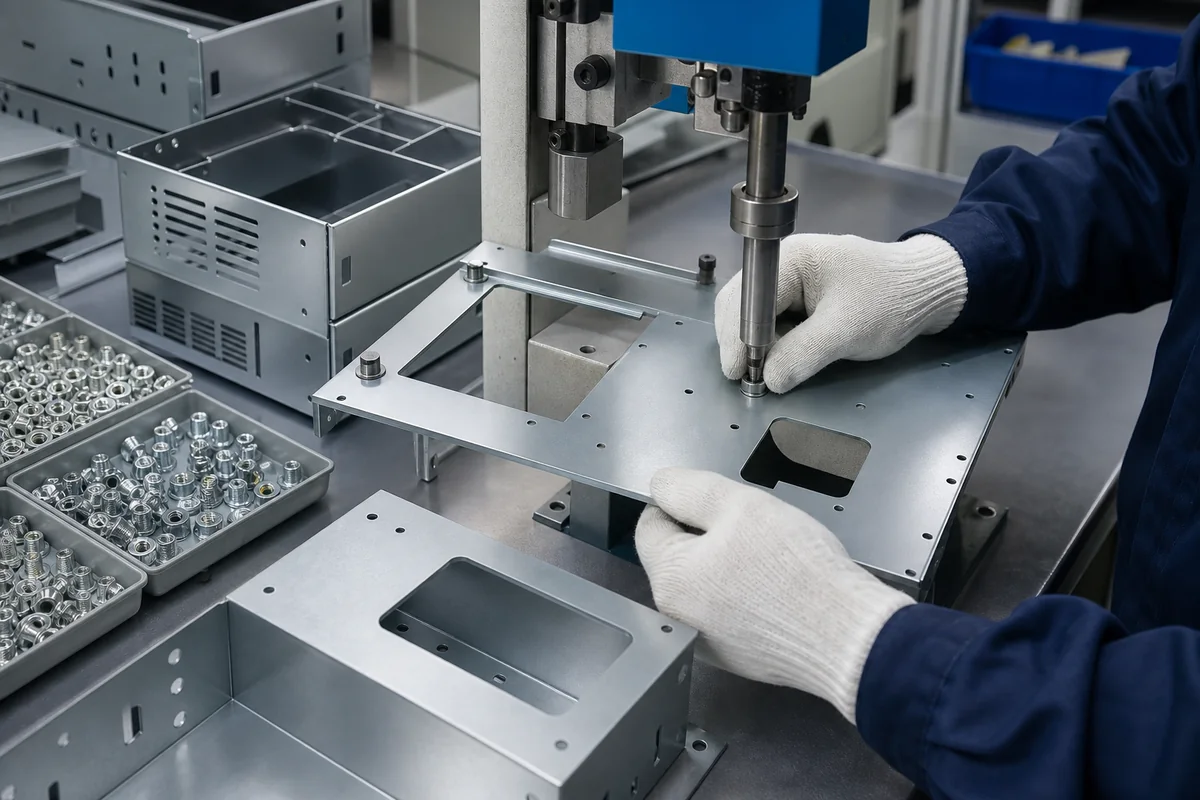
PEM nuts, studs, threaded holes and mounting slots are small features with large consequences. Ask how the supplier checks pull-out, thread quality, hole position and coating clearance. If a bracket has six holes and only five line up, congratulations, you have made a decorative object.
Trust Table: What OEM Buyers Should Ask For
| Risk | What to Ask MSTFAB or Any Supplier | Why It Matters |
|---|---|---|
| Wrong scope | Confirm the quote is for empty sheet metal parts only, not complete equipment. | Prevents confusion over electronics, motors, software and final machine assembly. |
| Drawing mismatch | Confirm drawing number, revision, material, finish and critical dimensions before production. | A correct part made from the wrong revision is still a wrong part. |
| Batch inconsistency | Ask for first article inspection, fixture plan and repeat-order control method. | Stops one good sample from becoming an inconsistent batch. |
| Weld distortion | Ask how frames, doors and brackets are fixtured and checked for squareness. | Industrial equipment parts often fail at assembly, not in the photo. |
| Finish problems | Define cosmetic sides, masking, coating thickness and threaded-hole requirements. | Coating can close holes, hide threads or make panels look inconsistent. |
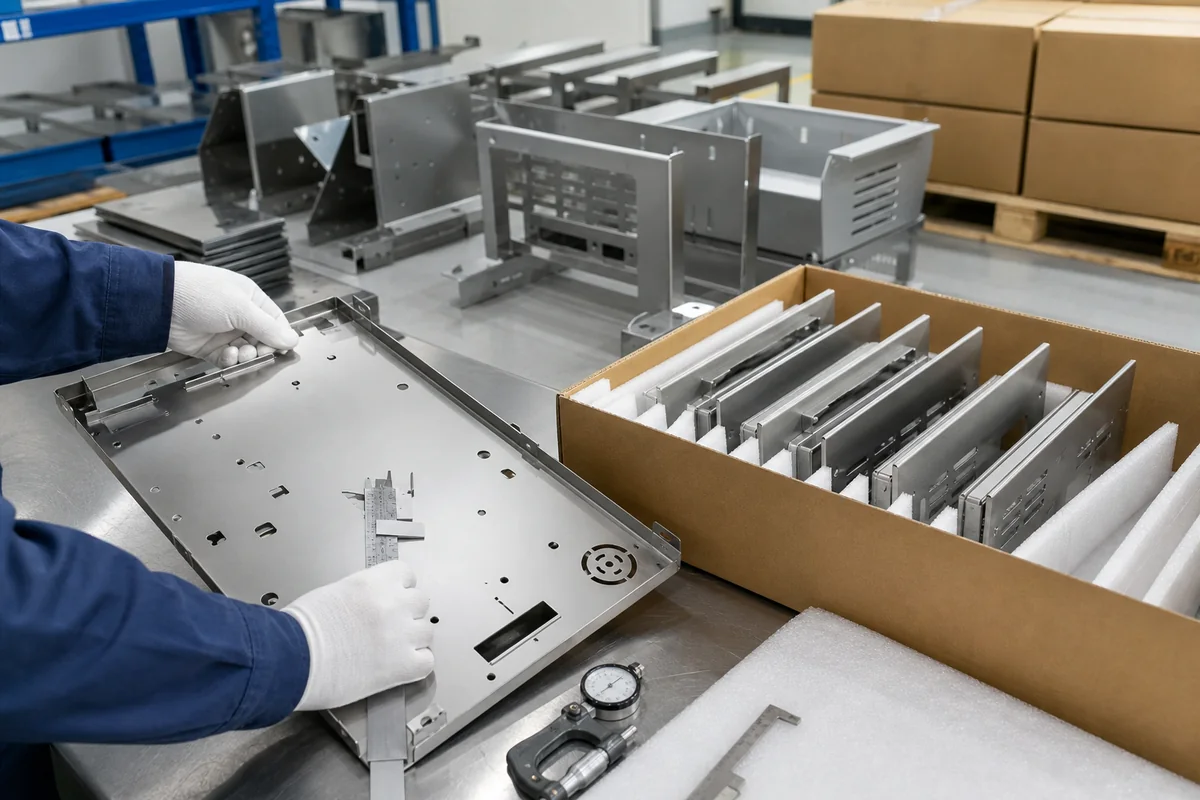
| Shipping damage | Request foam separators, carton limits, pallet plan and packing photos. | Large panels and guards are easy to scratch or bend in transit. |
Inspection and Packing Are Part of the Product
For industrial equipment parts, inspection should cover critical dimensions, hole patterns, squareness, weld position, surface defects, hardware installation and finish quality. Packing should protect edges, cosmetic surfaces and large flat panels. If packaging is treated as an afterthought, the ocean will perform its own quality test. It is not gentle.
How to Send a Better RFQ
- Send 2D drawings and 3D files with the same revision.
- State material grade, thickness, finish, quantity and annual forecast.
- Mark fit-critical dimensions, hole patterns and cosmetic surfaces.
- Separate the metal fabrication scope from any components you will install yourself.
- Ask for cutting, bending, welding, hardware, finishing, inspection and packing as visible line items.
- Confirm Incoterm and packaging before comparing overseas and local quotes.
For quote comparison, read how to read a sheet metal quote. For finish decisions, use the sheet metal finishing guide. Keep the internal links useful; your buyer is here to solve a problem, not go on a treasure hunt.
Common Mistakes to Avoid
- Writing “industrial equipment parts” without defining the exact fabrication scope.
- Expecting the metal supplier to include electronics, sensors, motors or final assembly.
- Leaving critical dimensions unmarked while tightening non-critical cosmetic edges.
- Ignoring weld distortion until the frame refuses to fit.
- Choosing the cheapest quote without checking packing, inspection and Incoterm.
- Sending different revisions to purchasing, engineering and the supplier. That one is chaos with attachments.
Frequently Asked Questions
What industrial equipment metal parts can MSTFAB make?
MSTFAB can manufacture machine guards, covers, access doors, equipment housing shells, chassis plates, welded frames, mounting brackets, PEM hardware panels and related sheet metal parts.
Does MSTFAB make complete industrial equipment?
No. MSTFAB supplies the sheet metal fabrication portion only. Electronics, motors, sensors, wiring, software, hydraulics, pneumatics and complete equipment assembly are not included.
What files should I send for a quote?
Send 2D drawings, 3D files, material grade, thickness, finish, quantity, annual forecast, critical dimensions, cosmetic surface notes and packaging requirements.
How do you reduce assembly risk?
By reviewing DFM risks, marking critical dimensions, using fixtures for welded frames, checking first articles and confirming hardware and finish requirements before batch production.
Why is packaging important for industrial equipment parts?
Large guards, covers and panels can scratch, bend or dent during export shipping. Foam separators, carton limits and pallet planning protect the parts you already paid to make correctly.
Need Custom Sheet Metal Parts for Industrial Equipment?
Send MSTFAB your drawings, material, finish, quantity and revision details. We will quote the sheet metal fabrication scope clearly: guards, covers, housing shells, frames, panels and brackets.
 WeChat Contact
 WhatsApp Me Directly