
Custom metal fabrication processes sound simple until one small bracket refuses to fit, one bend shifts by half a millimeter, or one “cheap” quote becomes a very expensive lesson in assembly drama.
If you are an overseas OEM buyer sourcing from China, you are not only buying metal parts. You are buying a process: drawing review, material selection, cutting, bending, welding, finishing, inspection and packaging. When that process is controlled, parts arrive ready to assemble. When it is not controlled, your purchasing team gets a free workout from carrying problems between engineering, production and suppliers. Nobody ordered that workout.
This guide explains the main custom metal fabrication processes in plain English, with the practical details that matter when you need reliable enclosures, brackets, chassis, panels or assemblies from a sheet metal factory.
What Are Custom Metal Fabrication Processes?
Custom metal fabrication processes are the manufacturing steps used to turn raw sheet metal, tube, bar or plate into parts made to your drawing. Common processes include laser cutting, CNC punching, bending, welding, CNC machining, surface finishing, assembly and quality inspection.
The important word is not only “custom.” It is also “processes.” A part may look simple on the screen, but the final result depends on how every step works together. A beautiful laser cut blank can still become a problem if the bend radius is wrong. A strong weld can still create trouble if heat distortion moves the mounting holes. A perfect powder coating can still make a buyer unhappy if threaded holes were not protected. Manufacturing has a sense of humor, but buyers usually do not enjoy the joke.
Why Overseas Buyers Care About the Full Process
Many sourcing problems do not happen because a supplier cannot make metal parts. They happen because the supplier only focuses on one step. Laser cutting is fast, but it is not a magic wand. Bending creates shape, but it also changes dimensions. Welding adds strength, but it also adds heat. Surface finishing protects the product, but it can change fit if masking is ignored.
For OEM buyers in the USA, Europe, Australia and other export markets, the real goal is not simply to get a low unit price. The goal is repeatable quality, stable assembly, predictable lead time and fewer unpleasant surprises after the shipment arrives.
The cheapest part is not always the lowest-cost part. If it needs rework, sorting, urgent replacement or extra meetings, it has already started charging hidden fees.
1. DFM Review: The Step That Saves the Most Headaches
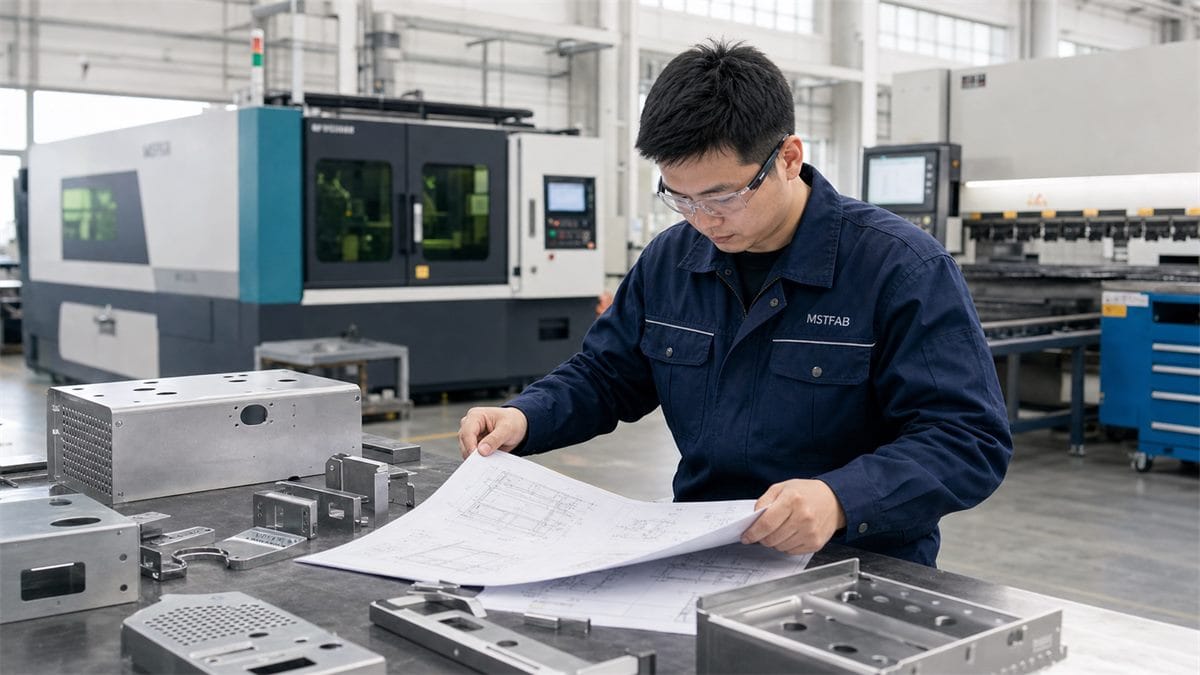
Before metal touches a machine, a good fabrication project starts with DFM review. DFM means design for manufacturing. It is the engineering check that asks: can this part be made consistently, economically and without creating assembly problems later?
During a DFM review, the supplier should check drawing clarity, material grade, thickness, tolerance stack-up, bend radius, hole-to-bend distance, weld access, hardware requirements, finish notes and packaging risk. If a supplier skips this step and says “no problem” too quickly, that may be the first problem.
For custom OEM work, MSTFAB reviews drawings before production so buyers can catch manufacturability risks early. A five-minute engineering note before production is much cheaper than a five-day argument after delivery.
2. Material Selection: The Part Starts Here
Material selection affects strength, corrosion resistance, weight, finish quality and cost. Stainless steel is useful for corrosion resistance and clean appearance. Aluminum helps reduce weight. Carbon steel offers strength and cost control. Galvanized steel can be a practical choice for outdoor or industrial parts when designed correctly.
The mistake is choosing material by price only. If a cabinet will sit outdoors, corrosion matters. If a bracket carries vibration, fatigue matters. If a housing needs cosmetic appeal, surface condition matters. A metal sheet is not just a metal sheet, in the same way a suitcase is not just a box with confidence.
3. Laser Cutting: Clean Blanks, Real Limits
Fiber laser cutting is one of the most common custom metal fabrication processes. It cuts flat sheet metal into accurate blanks, doors, brackets, panels, ventilation patterns and enclosure parts. It is fast, flexible and excellent for prototypes as well as production runs.
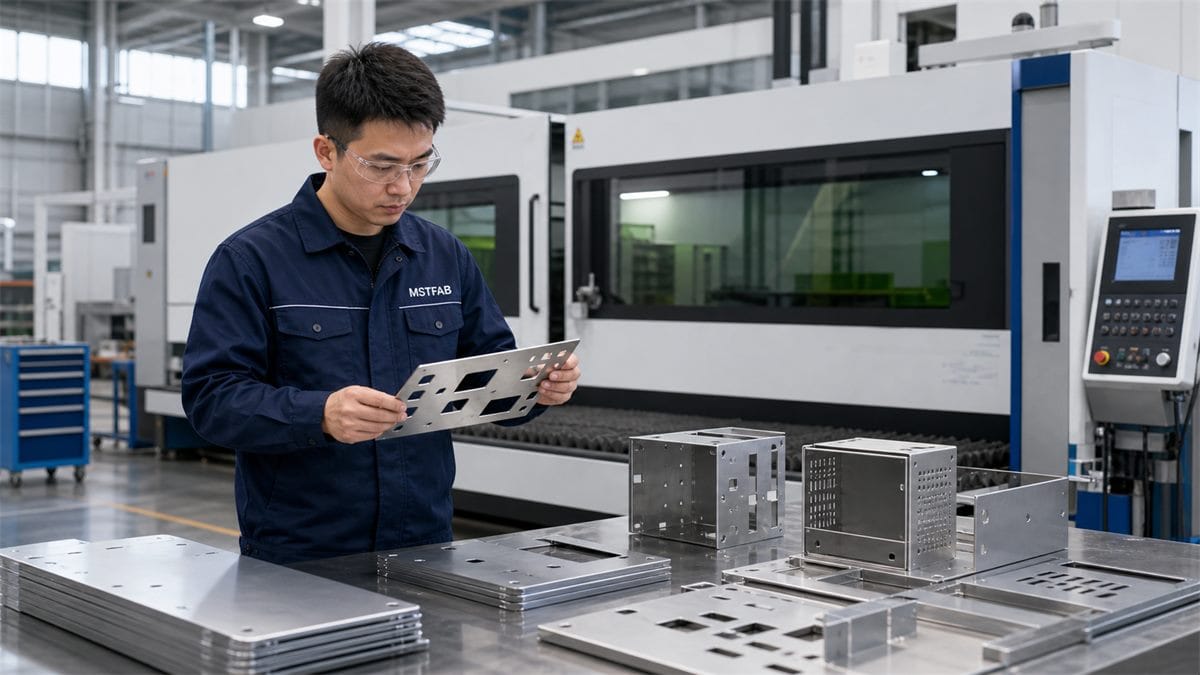
Laser cutting helps reduce tooling cost and makes design changes easier. It is ideal when a project needs precise outlines, slots, holes, logos, vents or complex geometry. However, laser cutting does not solve every issue by itself. Edge quality, heat affected areas, burr control, material flatness and downstream bending still need attention.
A good supplier thinks beyond the cutting program. They ask how the blank will bend, whether tabs will distort, whether holes are too close to bend lines and whether the grain direction or surface finish matters. That is how laser cutting becomes part of a controlled fabrication process instead of a shiny first step followed by confusion.
4. CNC Punching: Fast Holes, Louvers and Patterns
CNC punching is useful for holes, slots, louvers, knockouts and repeated patterns. For high-volume sheet metal panels, it can be very efficient. It is often used for electrical cabinets, server racks, equipment covers and ventilated panels.
The buyer pain point is simple: holes must be where the drawing says they are. If a mounting hole is slightly wrong, the assembly team may spend hours drilling, filing or saying things that should not be printed in a professional article. Reliable punching requires proper tooling, stable programs and inspection.
5. Sheet Metal Bending: Where Flat Parts Become Real Parts
Sheet metal bending is where many custom metal fabrication projects either become professional parts or become geometry puzzles. CNC press brake bending turns flat laser cut blanks into three-dimensional components such as brackets, chassis, covers, cabinets and enclosures.
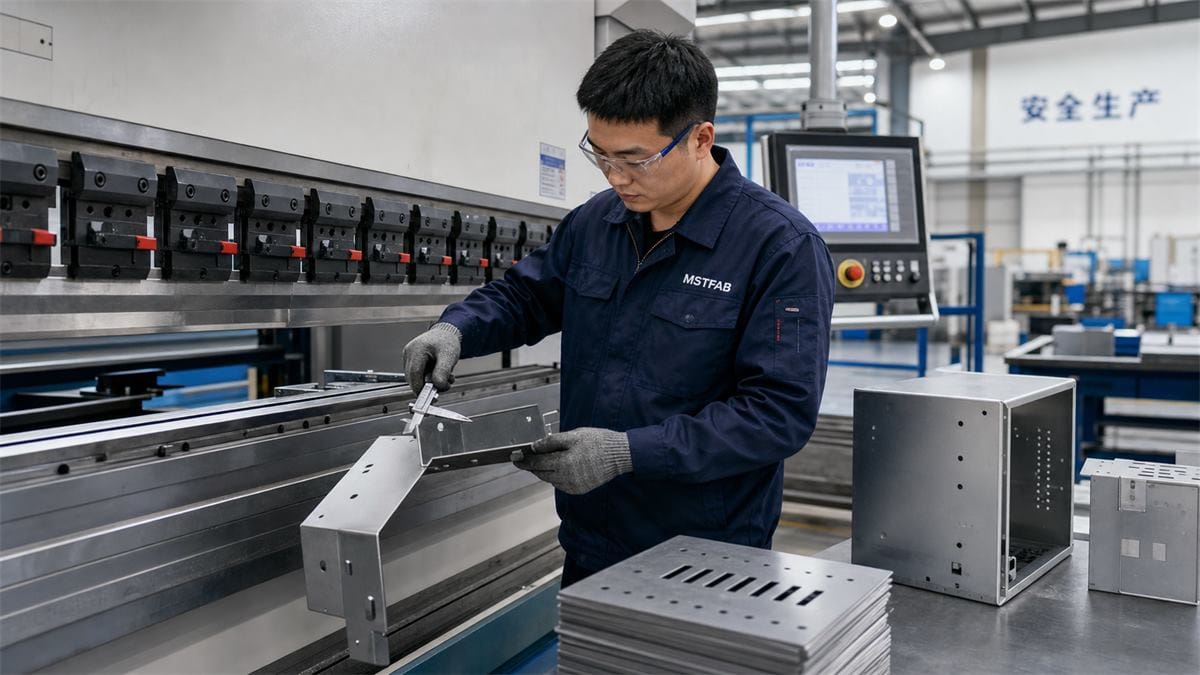
For deeper detail on this stage, see MSTFAB’s sheet metal bending services. This step is critical because bend angle, bend radius, flange length, material springback and tooling selection all affect final fit.
A drawing may show a clean 90-degree bend. The metal does not care about the drawing. It cares about thickness, grain direction, tooling, inside radius and operator setup. If these are not controlled, parts can become too wide, too narrow, twisted or impossible to assemble.
For overseas OEM buyers, bending accuracy is especially important because rework after shipping is slow and expensive. A supplier should understand bend allowance, K-factor, minimum flange length, hole-to-bend distance and the correct sequence for multi-bend parts.
6. Welding and Assembly: Strength Without Warping the Plan
Welding joins metal parts into a stable structure. Common methods include TIG welding, MIG welding and spot welding. The best choice depends on material, thickness, strength requirements and appearance expectations.
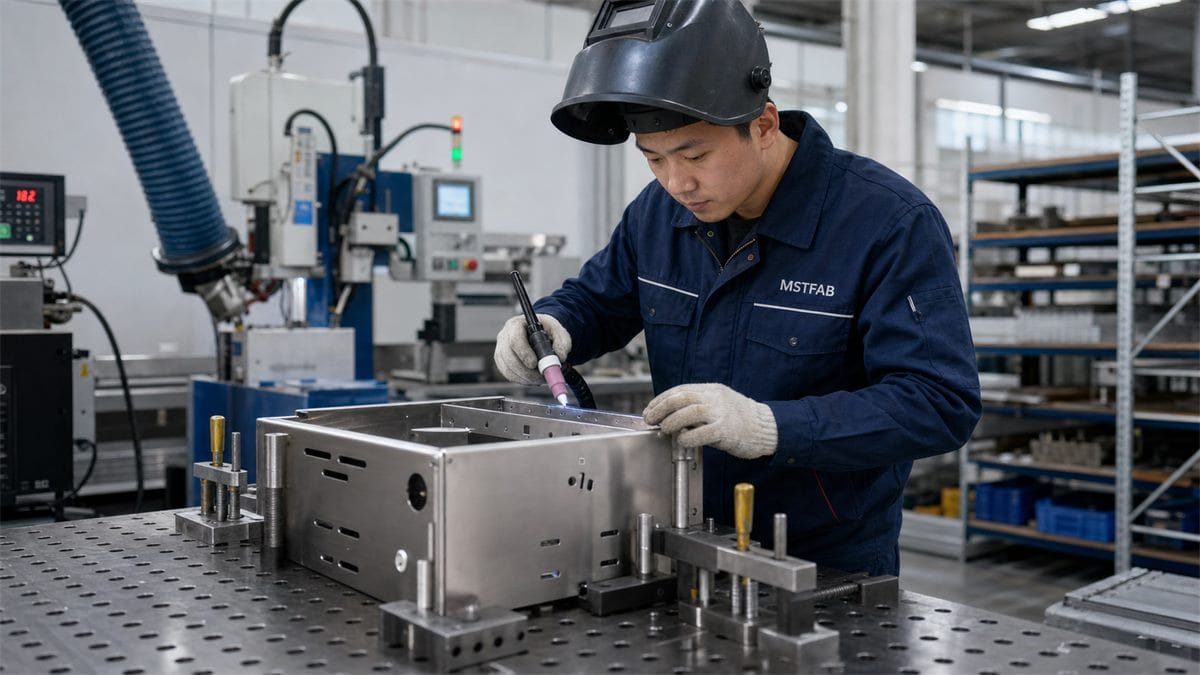
The main welding risks are heat distortion, inconsistent weld bead, weak joints, burn-through, poor fixture control and cosmetic damage. For enclosures, chassis and frames, a small welding distortion can move doors, hinges, mounting rails or threaded inserts out of alignment. That is when the part still looks like a cabinet, but behaves like a puzzle box.
Professional welding uses fixtures, controlled sequences, proper heat input, grinding standards and inspection. When welding is planned with bending and assembly in mind, the final product is stronger and easier to install.
7. CNC Machining and Hardware Installation
Some fabricated parts need secondary machining. Drilling, tapping, milling, countersinking and threading are common when tight tolerance features cannot be completed by sheet metal processes alone. PEM nuts, studs, standoffs and threaded inserts may also be installed during assembly.
This step matters because overseas buyers often receive parts that look good, then discover the threads are missing, inserts are loose, or fasteners do not match the assembly drawing. A clean inspection checklist avoids those small disasters.
8. Surface Finishing: Protection and First Impression
Surface finishing improves corrosion resistance, appearance and service life. Common options include powder coating, anodizing, brushing, polishing, plating, sandblasting and passivation. The best finish depends on environment, material and brand requirements.
Finishing also needs planning. Powder coating adds thickness. Anodizing changes appearance based on material and surface preparation. Brushed stainless steel can show handling marks if packaging is poor. If threaded holes, grounding points or sealing surfaces must stay clean, masking must be specified before production.
9. Quality Inspection: Trust, But Measure
Quality inspection turns a supplier promise into evidence. A good inspection process checks key dimensions, hole positions, bend angles, weld quality, surface finish, assembly fit, hardware installation and packaging. For export orders, photos, reports and clear communication help buyers verify quality before shipment.
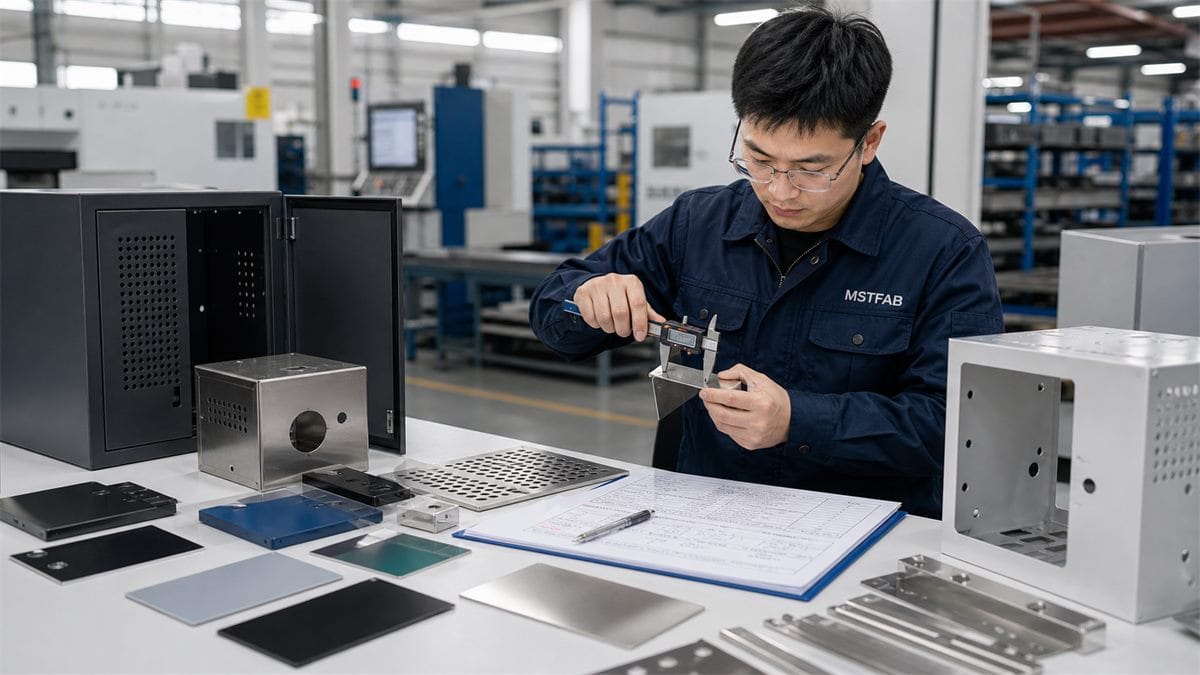
Inspection is not just about catching bad parts. It is about preventing repeated mistakes. When a supplier records issues and corrects the process, the next batch becomes more stable. That is the difference between a factory partner and a factory-shaped headache.
How the Complete Workflow Should Look
A professional custom metal fabrication workflow usually follows this order:
- RFQ and drawing review: confirm CAD files, PDF drawings, tolerances, materials, finishing notes and quantity.
- DFM feedback: identify bending, welding, hardware, finishing or packaging risks before quotation is locked.
- Prototype or first article: validate fit, function, finish and assembly details before batch production.
- Batch production: run cutting, bending, welding, machining, finishing and assembly under controlled instructions.
- Quality inspection: check dimensions, appearance, welds, hardware and packaging before export.
- Shipment support: pack parts to prevent scratches, deformation and moisture damage during transport.
Common Buyer Pain Points and How to Avoid Them
Here are the issues overseas buyers mention most often when custom metal fabrication projects go wrong:
- Vague quotations: ask suppliers to confirm material, thickness, finish, tolerance, packaging and inspection scope.
- Pretty samples, weak repeatability: check whether the supplier can control the same result across production batches.
- Assembly surprises: review bend sequence, hardware location, weld distortion and hole alignment before production.
- Surface finish mismatch: define color, gloss, texture, masking and acceptable appearance standard clearly.
- Poor communication: choose suppliers who ask engineering questions early instead of giving automatic yes answers.
A reliable fabrication partner should help buyers reduce risk, not simply quote a number and hope the metal behaves nicely. Hope is not a quality control method.
How to Choose a Custom Metal Fabrication Supplier
When comparing suppliers, look beyond the first price. Ask whether the factory has in-house laser cutting, CNC bending, welding, machining, finishing coordination and inspection. Ask for project photos, capability details and examples of similar OEM work. Ask how they handle design review, first article inspection and packaging.
For export buyers, communication matters as much as equipment. A supplier who understands drawings, responds clearly and explains risks early can save time even before production starts.
Final Thoughts
Custom metal fabrication processes are not separate islands. Laser cutting, bending, welding, finishing and inspection all affect each other. When the full workflow is planned correctly, OEM buyers get parts that fit, assemble and perform as expected. When one step is ignored, the problem usually arrives later, nicely packed inside a shipping carton.
For overseas buyers, the best supplier is not only the one with machines. It is the one that understands how drawings become real parts, how real parts behave during assembly and how small process decisions affect cost, lead time and reliability.
Need custom metal fabrication parts from China?
MSTFAB supports OEM buyers with drawing review, laser cutting, CNC bending, welding, surface finishing, inspection and export-ready packaging for custom sheet metal parts.
MSTFAB provides precision sheet metal laser cutting services for OEM panels, brackets, enclosures and custom metal parts.
 WeChat Contact
 WhatsApp Me Directly