
Laser-cut agricultural parts need defined hole patterns, cut-edge requirements and finished interfaces, not a blanket promise of precision. For farm machinery brackets, mounting plates, shields and access panels, distinguish the flat blank from the formed, joined or coated component. Laser cutting can establish a profile; it does not by itself demonstrate structural capacity, fatigue life, corrosion resistance or adequate machine guarding.
Which farm equipment parts suit a drawing-based cutting review?
Examples include mounting plates with bolt patterns, bent sensor brackets, removable covers, shields and cable or hose support plates. Identify each part’s actual function and mating component. A simple cover opening and a close-fitting locating hole should not receive the same acceptance note solely because both are cut by a laser.
This guide addresses flat-sheet cutting features and their downstream interfaces. Shafts, pressure-containing hydraulic parts, castings and complete equipment validation need their own processes and requirements; they are not implied by a sheet metal cutting quotation.
What should the drawing say about each cut feature?
| Feature or component | Define before cutting | Check in the required condition |
|---|---|---|
| Mounting plate bolt pattern | Hole size, pattern location, reference datums and the mating fastener or component. | Inspect agreed locations from the specified references, not only one hole diameter. |
| Slots and locating openings | Slot width, length, end geometry, orientation and whether adjustment or location is intended. | Verify the relevant profile and fit; do not treat an adjustment slot as a precision locating feature. |
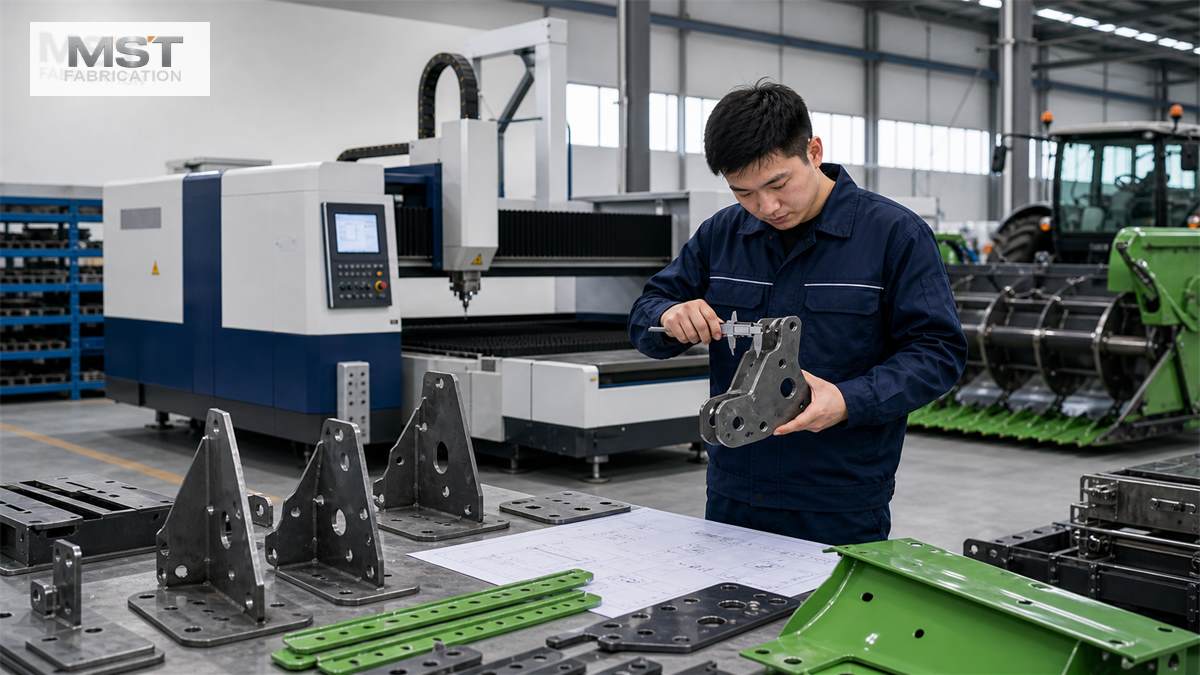
| Bent bracket or support | Formed geometry, bend direction, critical hole-to-face relationships and who controls the flat pattern. | Check formed interfaces after bending where those govern assembly acceptance. |
| Cover or service panel | Mating perimeter, flange details, latch/hinge openings and removal clearance. | Review the finished panel’s fit and service access with the agreed mating references. |
| Edges near hoses or wiring | Contact zones, burr/edge requirements, finish and any specified protective accessory. | Inspect designated edges and protection features; a clean-looking cut is not an abrasion-life test. |
Can every mounting hole be accepted directly after laser cutting?
No universal answer applies to every material, thickness and feature. State the functional requirement and have the proposed process reviewed. A clearance hole may have a different acceptance basis from a hole used with a locating pin or a specified press-fit item. Where secondary drilling, reaming or machining is needed, include it explicitly in the route and quote.
Do not enlarge holes or slots at assembly simply to make a sample fit without an approved disposition. Identify the failed relationship first: size, position, formed angle, coating condition or the mating part. Preserve the original measurement and record any authorized change.
How should cut edges and finishing be specified?
Identify edge requirements on the relevant locations, including burr removal, edge treatment and any weld preparation. If a measurable radius, roughness or other edge limit is required, put the agreed requirement on the drawing and confirm the inspection method. A generic “deburr” note should not be interpreted as an unspecified roundover on every functional feature.
TRUMPF’s process comparison notes that edge quality and post-processing depend on the cutting process and sheet thickness. Treat that as process background, not as a guaranteed edge condition for a particular MSTFAB part.
For field exposure, describe moisture, fertilizer contact, cleaning, trapped debris and abrasion as applicable. Specify the material and finishing system for that exposure, with masking and post-finish fit checks where needed. Neither laser-cut accuracy nor a coating color alone establishes corrosion performance.
Keep flat-blank approval separate from finished-fit approval
Illustrative review: a sensor bracket may have acceptable holes in the flat blank yet miss the equipment mounting points after bending. The release check therefore needs the relevant formed faces, hole relationships and assembly references. If coating affects the fit, define the delivered condition used for acceptance. This example is not an actual defect report or an MSTFAB customer result.
Use the formed drawing and approved production flat pattern consistently. When the buyer supplies a DXF and STEP model, agree their roles and resolve conflicts before cutting. For broader drawing-package questions, refer to the agricultural parts RFQ checklist.
What should an inspection package demonstrate?
- Identity: part number, drawing revision, material identification and sampled quantity.
- Defined characteristics: the agreed hole, slot, profile and formed-interface checks, with drawing references and results.
- Measurement condition: whether parts are flat, formed or finished, and any relevant support or fixture arrangement.
- Delivered condition: edge treatment, specified finish, labels, part counts and protected packaging.
- Disposition: unresolved nonconformities and approved deviations kept distinct from conforming results.
These records demonstrate only the characteristics actually checked. Load, vibration, impact and guarding performance require the equipment designer’s applicable requirements and validation. Do not substitute a dimensional report for those evaluations.
Frequently asked questions
What tolerance should I specify for laser-cut agricultural parts?
Define tolerances from the feature’s function and mating interfaces, then review feasibility for the chosen material, thickness and manufacturing route. There is no single tolerance suitable for every hole, edge and finished bracket.
Can a laser-cut flat sample prove a bent bracket will fit?
No. A flat sample can verify the characteristics actually measured in that state. Finished bracket fit also depends on formed geometry, relevant hole-to-face relationships, mating parts and finishing where applicable.
Does laser cutting make an agricultural guard safe or durable?
Not by itself. Cutting creates specified geometry; it does not establish adequate guarding, structural capacity, fatigue life or field corrosion performance. Those need the applicable design requirements and validation for the complete use condition.
Review the cutting and downstream scope together
See the existing laser cutting service and agricultural sheet metal fabrication scope. Send the controlled drawings for review, including material, thickness, quantity, critical interfaces, finish and inspection requirements. For quote comparison rather than geometry review, use the separate agricultural parts cost comparison guide.
Technical background: TRUMPF cutting-process comparison. Equipment-manufacturer ranges are not MSTFAB capability commitments.
 WeChat Contact
 WhatsApp Me Directly