
Custom Fabricated Metal Enclosures: A Comprehensive OEM Engineering & Sourcing Guide
Custom fabricated metal enclosures are the critical protective shells that house sensitive industrial controls, telecom equipment, power distribution systems, and medical devices. Sourcing custom enclosures is rarely difficult because metal is mysterious—it becomes difficult when a drawing, a factory floor, and the final assembly line quietly make different assumptions. A minor miscalculation in bend allowance, tolerance stack-up, or powder coating thickness can lead to catastrophic failures during field deployment, IP rating testing, or final assembly.
For OEM engineers and procurement managers, transitioning from a prototype CAD model to scaled, cost-effective batch production requires a deep understanding of sheet metal fabrication processes. This comprehensive 2000+ word technical guide breaks down everything you need to know about designing, sourcing, and manufacturing custom metal enclosures to ensure structural integrity, aesthetic excellence, and long-term durability in any environment.
1. The True Cost of Poor Enclosure Manufacturing
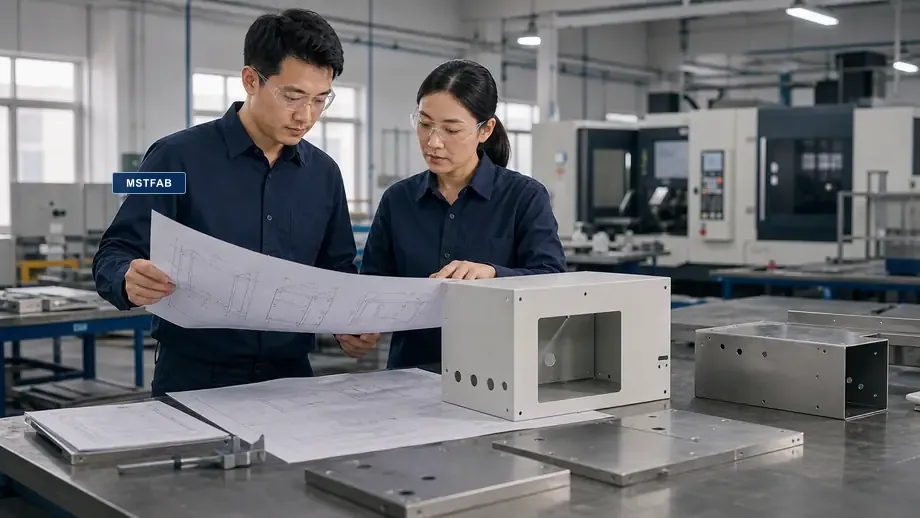
A low unit price on a quotation looks excellent—until your technicians start hunting for drills, files, and spare patience on the assembly floor because the mounting holes don’t align. The “cheap cabinet” invoice usually arrives later in the form of assembly rework, delayed product launches, and field RMAs (Return Merchandise Authorizations).
When selecting a fabrication partner for custom enclosures, consider the hidden risks and proactively demand evidence of robust process controls. Review material specifications, bend sequence planning, hole positioning, sealing details, and quality inspection checkpoints before authorizing mass production.
| OEM Buyer Risk | Critical Questions to Ask the Factory | Evidence Worth Requesting |
|---|---|---|
| Assembly Rework | How are bend sequence, hole position, and tolerance stack-up evaluated before laser cutting? | Detailed DFM (Design for Manufacturability) notes and a First-Article Inspection (FAI) dimensional report. |
| IP Rating Failure (Leakage) | How are door flanges designed, and how is gasket compression and hinge alignment tested? | Fit-up validation photos, IP test certificates, and continuous sealing inspection records. |
| Premature Coating Corrosion | What chemical pretreatment process is used before powder coating to ensure adhesion in harsh environments? | Surface finish specifications, salt spray test reports, and coating thickness (mil) checks. |
| Batch Inconsistency | Which critical-to-quality (CTQ) features are measured during the production run, rather than just on the first sample? | In-process quality control (IPQC) plans with traceable checkpoints and Cpk data for large runs. |
MSTFAB Quality Standard: At MSTFAB, we utilize advanced 3D unfolding software (like SolidWorks and RADAN) combined with K-factor analysis customized to our specific press brakes. This ensures that the flat pattern perfectly translates to your 3D design, guaranteeing zero assembly friction on your floor.
2. Selecting the Right Material for Your Enclosure
Material selection dictates the strength, weight, corrosion resistance, thermal conductivity, and ultimately the cost of your custom fabricated metal enclosure. While software allows you to assign any material to a CAD model, practical fabrication relies on understanding how these materials behave during cutting, bending, and welding.
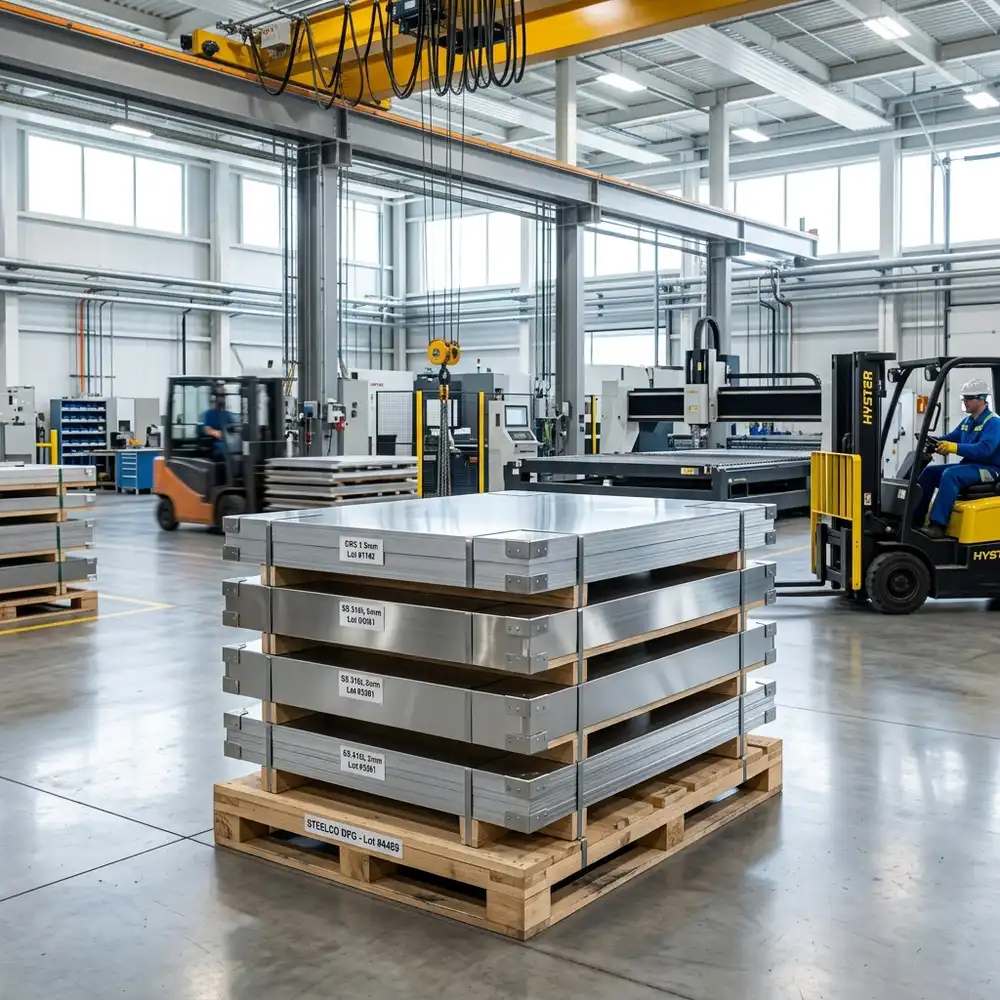
Cold Rolled Steel (CRS – SPCC)
Cold rolled steel is the most common and cost-effective material for indoor electrical cabinets, server racks, and control panels. It offers excellent structural rigidity and forms predictably. However, CRS has zero inherent corrosion resistance; it must be powder-coated or painted immediately after fabrication. It is ideal for NEMA 1 and NEMA 12 enclosures used in climate-controlled environments.
Galvanized Steel (SGCC / SECC)
Galvanized steel is coated with a layer of zinc, providing a sacrificial barrier against rust. It is a step up from CRS for environments with higher humidity or light industrial exposure. When designing with galvanized steel, engineers must account for the zinc layer during welding, as it can cause porosity and produce toxic fumes. Specialized spot welding or carefully ventilated MIG/TIG welding is required.
Stainless Steel (304 and 316L)
For food processing, pharmaceutical, marine, and highly corrosive industrial environments, stainless steel is mandatory. It requires no additional protective coating, though it is often given a brushed (No. 4) or orbital finish for aesthetic purposes.
- 304 Stainless Steel: The industry standard for outdoor electrical enclosures (NEMA 4X), washdown environments, and general corrosion resistance.
- 316L Stainless Steel: Contains molybdenum, which drastically improves resistance to chlorides (saltwater) and harsh industrial chemicals. It is the gold standard for marine enclosures and advanced chemical processing equipment.
Aluminum (5052-H32 / 6061-T6)
Aluminum is one-third the weight of steel, making it the preferred choice for pole-mounted telecom enclosures, aerospace equipment, and portable medical housings. It offers natural corrosion resistance and excellent thermal conductivity for heat dissipation.
- 5052-H32: The premier sheet metal alloy. It bends beautifully without cracking and welds easily.
- 6061-T6: Extremely strong but very difficult to bend. It is typically reserved for machined components or structural frames rather than bent enclosure walls.
3. Understanding NEMA and IP Ratings
Protecting the internal electronics from dust, water, and human contact is the primary function of a custom enclosure. In North America, NEMA (National Electrical Manufacturers Association) ratings are standard, while the rest of the world uses IP (Ingress Protection) ratings. Although not perfectly interchangeable, they follow similar principles.
Common NEMA Ratings for Custom Enclosures
- NEMA 1: General purpose indoor use. Protects against dust and light falling dirt. No water protection.
- NEMA 3R: Outdoor use. Protects against rain, sleet, and snow, and prevents ice formation damage. Common for utility boxes.
- NEMA 4: Indoor/outdoor use. Watertight and dust-tight. Protects against splashing water and hose-directed water.
- NEMA 4X: Identical to NEMA 4, but adds a strict requirement for corrosion resistance (typically dictating the use of 304/316L Stainless Steel or Fiberglass).
- NEMA 12: Industrial indoor use. Protects against falling dirt, circulating dust, lint, fibers, and dripping non-corrosive liquids. Common for factory floor PLC cabinets.
The IP Rating System Explained
An IP rating consists of two numbers (e.g., IP65). The first digit (0-6) indicates protection against solid objects (dust), and the second digit (0-8) indicates protection against liquids (water).
- IP54: Dust protected (limited ingress permitted) and protected against splashing water from any direction.
- IP65: Dust-tight (no ingress) and protected against low-pressure water jets.
- IP66: Dust-tight and protected against heavy seas or powerful jets of water.
- IP67/IP68: Dust-tight and protected against temporary or continuous immersion in water. (These require specialized deep-channel gasket designs and heavy clamping forces, rarely achieved with standard sheet metal folded boxes without significant engineering).
To achieve high IP or NEMA ratings (NEMA 4/IP66 and above), sheet metal enclosures rely heavily on precision continuous seam welding (no stitch welding), automated PU (Polyurethane) foam-in-place gasketing, and robust multi-point latching systems to ensure even compression across the door seal.
Ready to Start Your Custom Enclosure Project?
Ensure your sensitive equipment is protected with precision-engineered metal enclosures. Upload your CAD drawings today for a rapid DFM review and factory-direct OEM quotation.
4. Design for Manufacturability (DFM) Best Practices
The difference between a 50 enclosure and a150 enclosure often lies not in the material, but in the complexity of the fabrication steps. Designing with sheet metal requires adhering to specific geometric rules.
Maintain Consistent Bend Radii
Using a consistent inside bend radius across the entire part is the single most effective way to reduce costs. If an enclosure requires three different bend radii, the machine operator must stop the CNC press brake, remove the heavy tooling, install new tooling, recalibrate, and run a test piece for each different radius. A uniform radius (ideally matching the material thickness, e.g., 1.5mm radius for 1.5mm sheet) allows the part to be bent in a single continuous setup.
Hole-to-Bend Clearances
Placing a hole, cutout, or louver too close to a bend line will cause the feature to distort and stretch as the metal is drawn into the press brake V-die. As a rule of thumb, the distance from the edge of a hole to the start of the bend radius should be at least 2.5 to 3 times the material thickness.
Welding vs. Fastening
While continuous TIG welding provides the cleanest look and best waterproofing, it is labor-intensive, causes thermal distortion (warpage) in thin materials, and requires expensive post-weld grinding and blending. Whenever possible, consider using mechanical fasteners, spot welding, or interlocking tab-and-slot designs to reduce manufacturing time while maintaining structural integrity.
Self-Clinching Hardware (PEM Nuts)
Instead of tapping threads into thin sheet metal (which provides limited thread engagement and strips easily), use self-clinching fasteners like PEM nuts, studs, and standoffs. These are pressed into laser-cut holes under high tonnage, cold-flowing the sheet metal into the fastener’s undercut for a permanent, high-strength mounting point for PCBs, DIN rails, and backplates.
5. The Manufacturing Process Workflow
Producing a high-quality custom metal enclosure involves a synchronized sequence of advanced manufacturing technologies.
Laser Cutting & CNC Punching
The process begins with fiber laser cutting. High-wattage lasers slice through steel and aluminum with extreme precision (±0.05mm), creating the flat flat-pattern blanks. For enclosures requiring hundreds of ventilation holes, louvers, or extruded dimples, a CNC Turret Punch is often used in tandem with or instead of the laser, as it can stamp features that a laser can only cut.
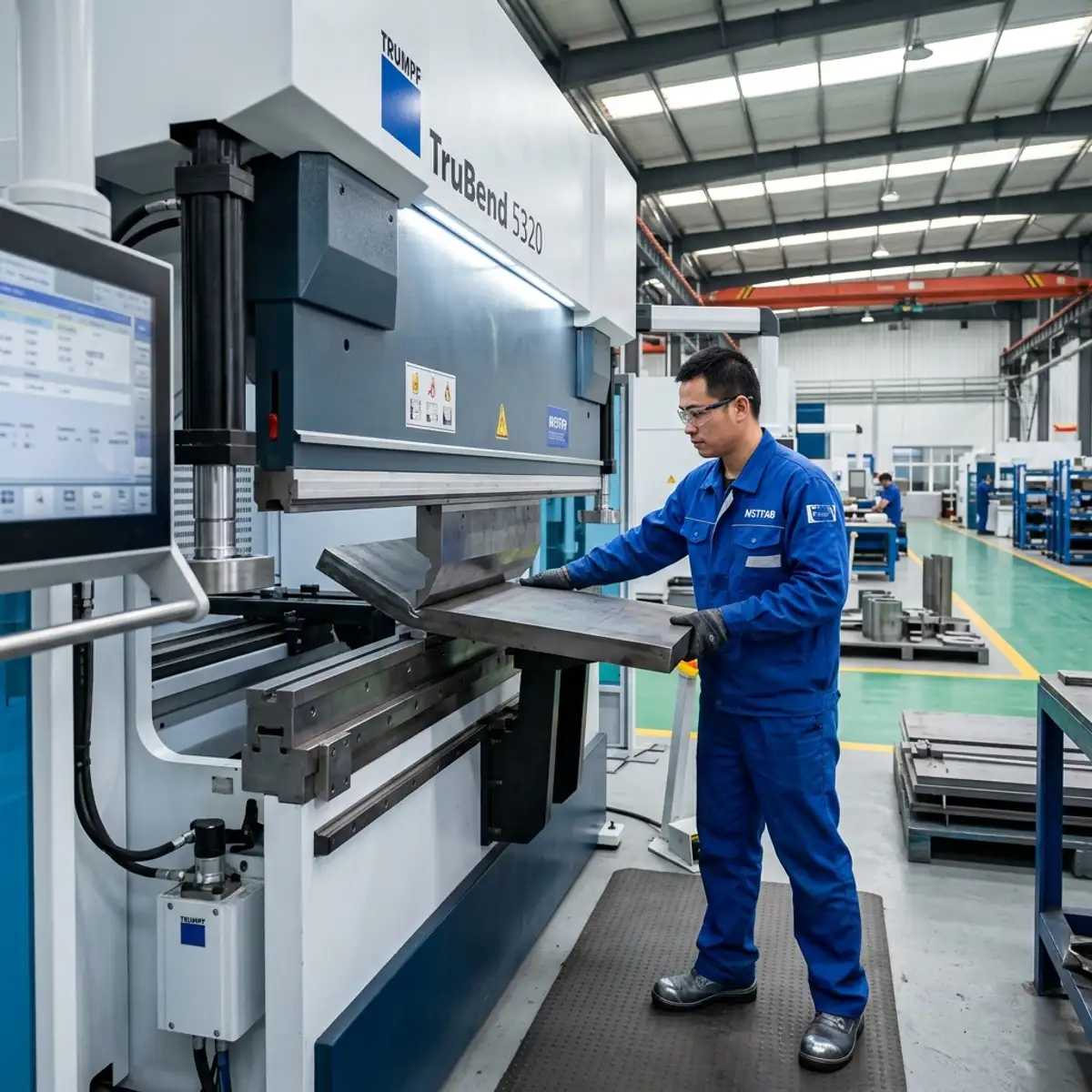
CNC Press Brake Bending
The 2D blank is transformed into a 3D shell using a CNC press brake. Modern press brakes feature multi-axis backgauges that ensure the metal is positioned perfectly for each bend, compensating for springback to hit precise angular tolerances.
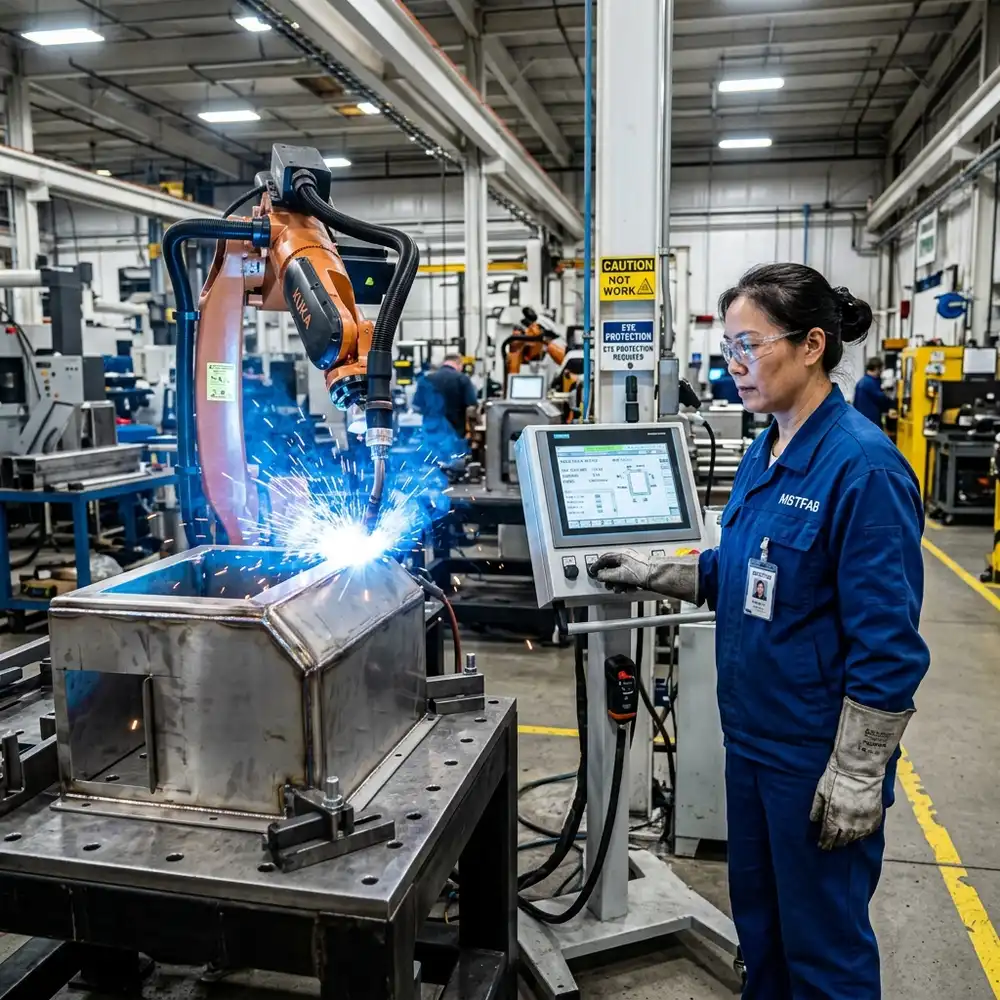
Welding and Grinding
For sealed NEMA 4 enclosures, the bent corners must be welded. Skilled welders use TIG or MIG welding to fuse the seams. However, robotic laser welding is increasingly being deployed at advanced facilities like MSTFAB for long production runs, offering near-zero distortion and incredibly smooth seams that require little to no grinding.
Surface Pre-treatment and Powder Coating
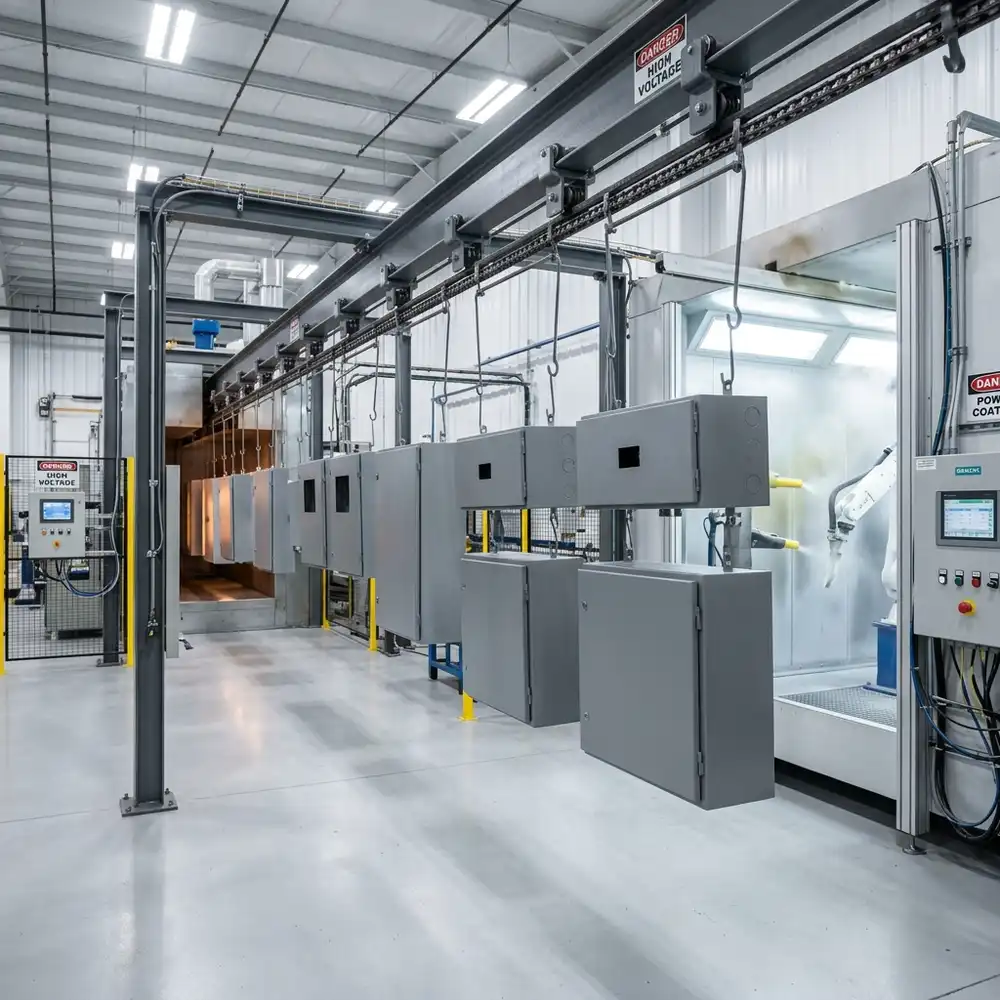
Before coating, the enclosure must be thoroughly cleaned. It passes through a multi-stage wash system to remove oils, scale, and welding soot, followed by a phosphating or silane conversion coating to provide a micro-porous surface for the paint to grip. The enclosure is then electrostatically sprayed with dry powder paint and baked in an oven at roughly 200°C (400°F). The powder melts and cross-links into a tough, scratch-resistant, and visually stunning finish.
6. Thermal Management and Heat Dissipation
Electronic components housed within the enclosure generate heat. Without proper thermal management, the internal temperature will exceed the operating limits of PLCs, VFDs, and power supplies, leading to system failure.
Passive Cooling: For low-heat applications, stamped louvers or laser-cut ventilation arrays allow ambient air to circulate via natural convection. However, this severely limits the IP rating unless specialized filter meshes are applied.
Active Cooling: For higher heat loads, exhaust fans combined with intake filters provide forced-air cooling. For NEMA 4/4X environments where no outside air can be introduced into the cabinet, closed-loop thermal management is required. This involves integrating an air-to-air heat exchanger or a specialized enclosure air conditioning (HVAC) unit mounted to the door or side panel.
7. Quality Control and Logistics for OEM Sourcing
For Western OEMs sourcing custom enclosures from overseas manufacturing hubs like China, rigorous quality control and logistics planning are the final, crucial steps. A reputable sheet metal fabrication partner will provide:
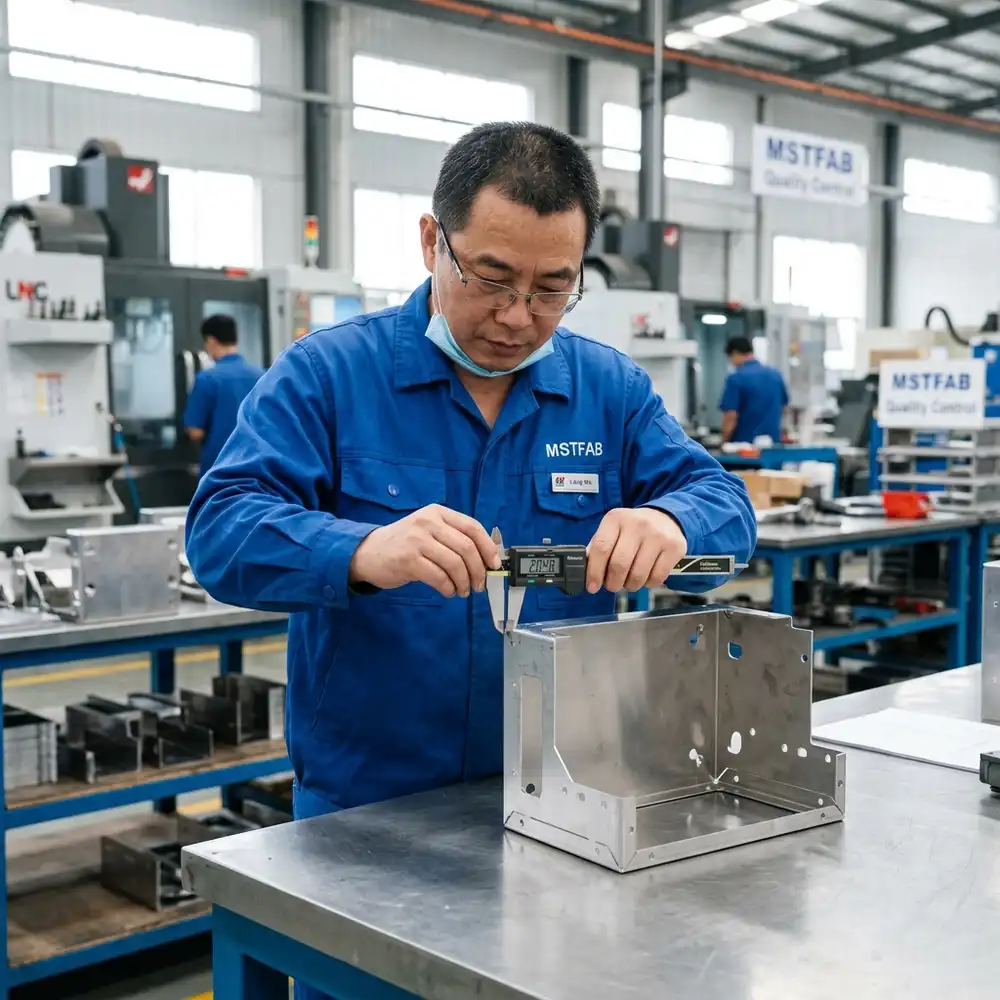
- First Article Inspection (FAI): A comprehensive dimensional report on the first physical unit before batch production begins, verifying all critical dimensions against the 2D CAD drawing.
- Go/No-Go Gauge Testing: Custom jigs used on the assembly line to instantly verify that complex hole patterns will align with the final hardware.
- Export-Ready Packaging: Enclosures are bulky and prone to denting during ocean freight. Premium manufacturers utilize custom-cut EPE foam, reinforced edge protectors, and heavy-duty ISPM-15 certified wooden crates. Furthermore, enclosures are often shipped “flat-packed” or nested if the design allows, drastically reducing container shipping volume and logistics costs.
Related engineering resource: If your project involves EV charging infrastructure, review our custom EV charger enclosure fabrication capabilities for outdoor sheet metal cabinet design, powder coating, and export-ready manufacturing.
FAQ: Frequently Asked Questions
What is the typical lead time for custom fabricated metal enclosures?
For prototype runs (1-5 units), lead times generally range from 7 to 15 days depending on material availability and finishing requirements. For mass production batches, lead times average 3 to 5 weeks. Complex enclosures requiring custom-ordered hardware, specialized UL-listed gaskets, or complex wiring integration may require additional time.
Can you reverse-engineer an existing enclosure without CAD files?
Yes. If you only have a physical sample or a hand-drawn sketch, our engineering team can use 3D laser scanning and manual metrology to recreate the enclosure in SolidWorks. We then optimize the design for modern sheet metal manufacturing processes before providing the final 3D model for your approval.
What is the minimum order quantity (MOQ) for custom enclosures?
At MSTFAB, we do not enforce strict MOQs. We understand that product development requires iterative prototyping. We gladly accept orders for a single prototype unit, while possessing the scalable automated infrastructure to produce thousands of units per month when you transition to mass production.
How do you ensure the enclosure achieves the required IP rating?
Achieving an IP65 or IP66 rating requires a holistic approach. We utilize continuous seam welding on all exterior joints, apply automated PU foam-in-place (FIP) gaskets that eliminate leak paths found in manual strip gaskets, and design multi-point cam-latching systems that guarantee uniform compression across the entire perimeter of the door.
custom sheet metal enclosure fabrication
MSTFAB manufactures custom sheet metal enclosures, electrical cabinets, control boxes and industrial metal housings for OEM buyers.
 WeChat Contact
 WhatsApp Me Directly