
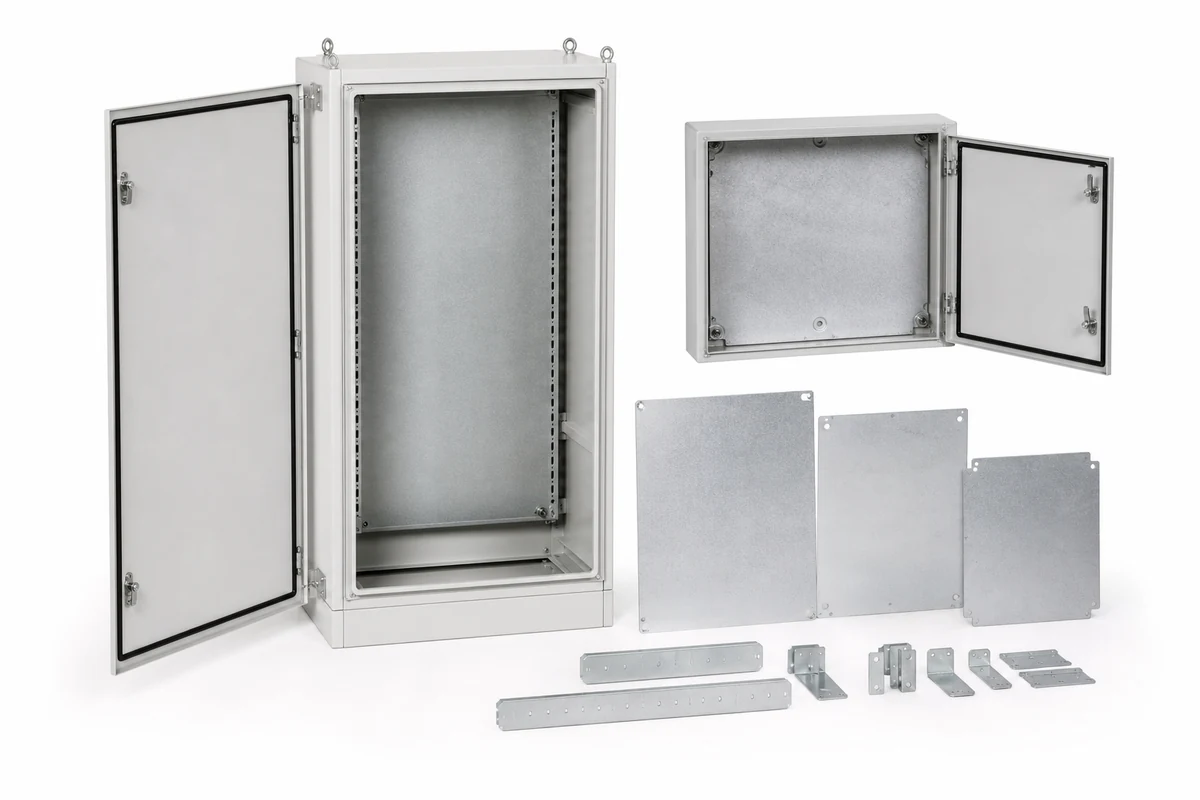
Use this handoff checklist before releasing an empty electrical cabinet shell to production: define the mechanical scope, component envelope, door interfaces, grounding points, masking, inspection and packing. For supplier capability and quotation support, see our custom metal electrical cabinet manufacturing page.
An electrical cabinet shell looks simple until the door rubs, the blank mounting plate cannot be installed, or powder coating fills the threads that were supposed to stay usable. At that point it is still a metal box, just a surprisingly expensive one.
MSTFAB supports drawing-based fabrication of cabinet bodies, doors, removable panels, blank mounting plates, brackets, gland plates, welded bases and mechanical hardware features. Our work is to make the metal structure fit the buyer’s component envelope and assembly plan, without pretending we are the company wiring the finished control cabinet.
Define the Cabinet Shell Handoff Before Quotation
Included in our sheet metal scope
- Laser-cut cabinet bodies, doors and removable panels
- CNC-bent frames, bases, flanges and brackets
- Blank mounting plates and cable-entry gland plates
- PEM inserts, welded studs, hinges and lock cutouts
- TIG/MIG welding, grinding and mechanical trial fit
- Powder coating, masking, dimensional inspection and export packing
Handled by the electrical integrator
- PLC, breaker, relay and terminal-block selection
- DIN rail electrical device installation
- Power and control wiring
- Electrical functional testing
- System-level IP/NEMA validation and final compliance certification
- Commissioning at the final installation site
Start With a Component Envelope, Then Design the Metal
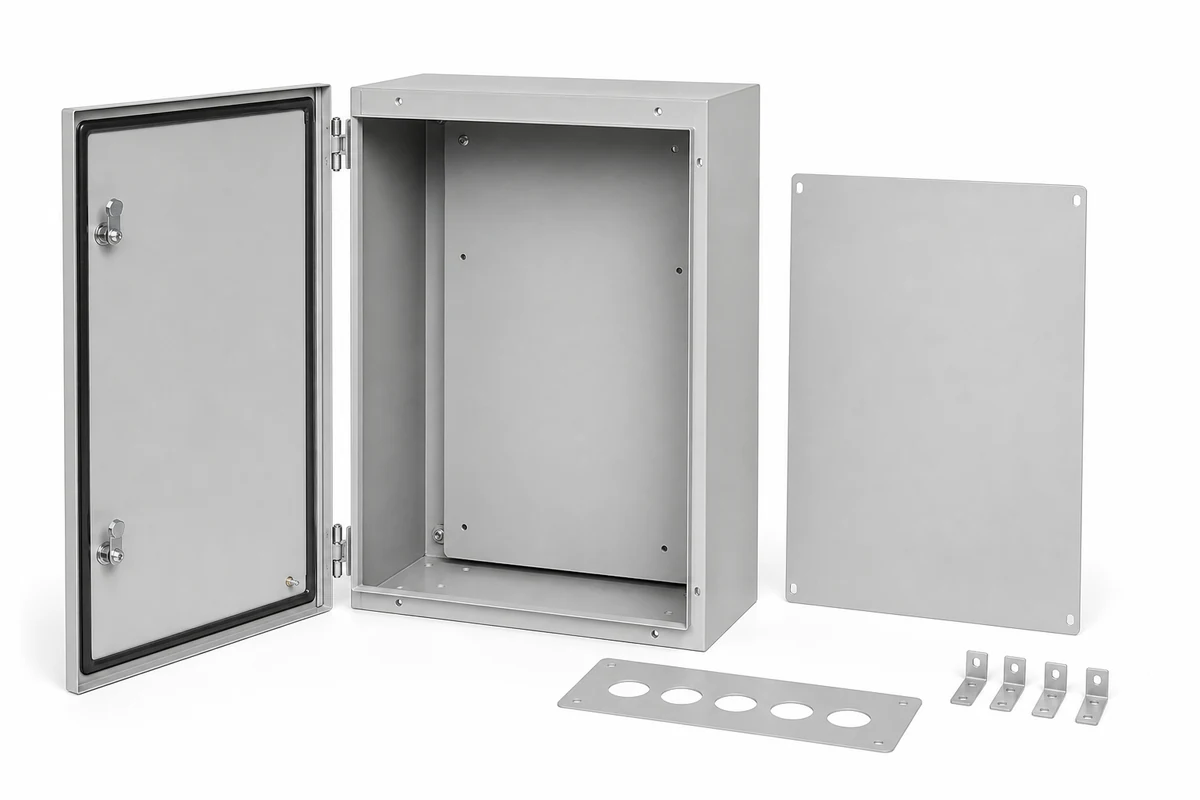
Although MSTFAB does not install the electrical equipment, the cabinet shell still needs to respect the space reserved for that equipment. Buyers should provide the mounting envelope, door-mounted cutouts, service-clearance zones, cable-entry direction, ventilation locations and keep-out areas in the drawing package.
We use that information to review the mechanical structure: whether the mounting plate can be inserted after welding, whether a bend blocks a fastener, whether a door cutout leaves enough edge distance and whether a gland plate can be removed without dismantling the cabinet.
| Drawing input | What MSTFAB checks | Why the buyer should care |
|---|---|---|
| Cabinet body and door drawings | Bend sequence, hinge clearance, door gap and welded squareness | Prevents rubbing doors and uneven gasket contact. |
| Blank mounting plate | Plate size, insertion path, mounting holes and stud locations | Allows the buyer to add its equipment later without reworking the shell. |
| Cutout schedule | Edge distance, bend proximity and tool access | Reduces distorted holes and impossible hardware installation. |
| Cable-entry plate | Panel stiffness, removable fasteners, cutout quality and sealing interface | Keeps field cable entry organized without supplying cables or glands. |
| Coating drawing | Masked threads, ground-stud contact areas, visible surfaces and color notes | Protects function while keeping the finish consistent. |
Sheet Metal DFM Finds Problems Before the First Cut
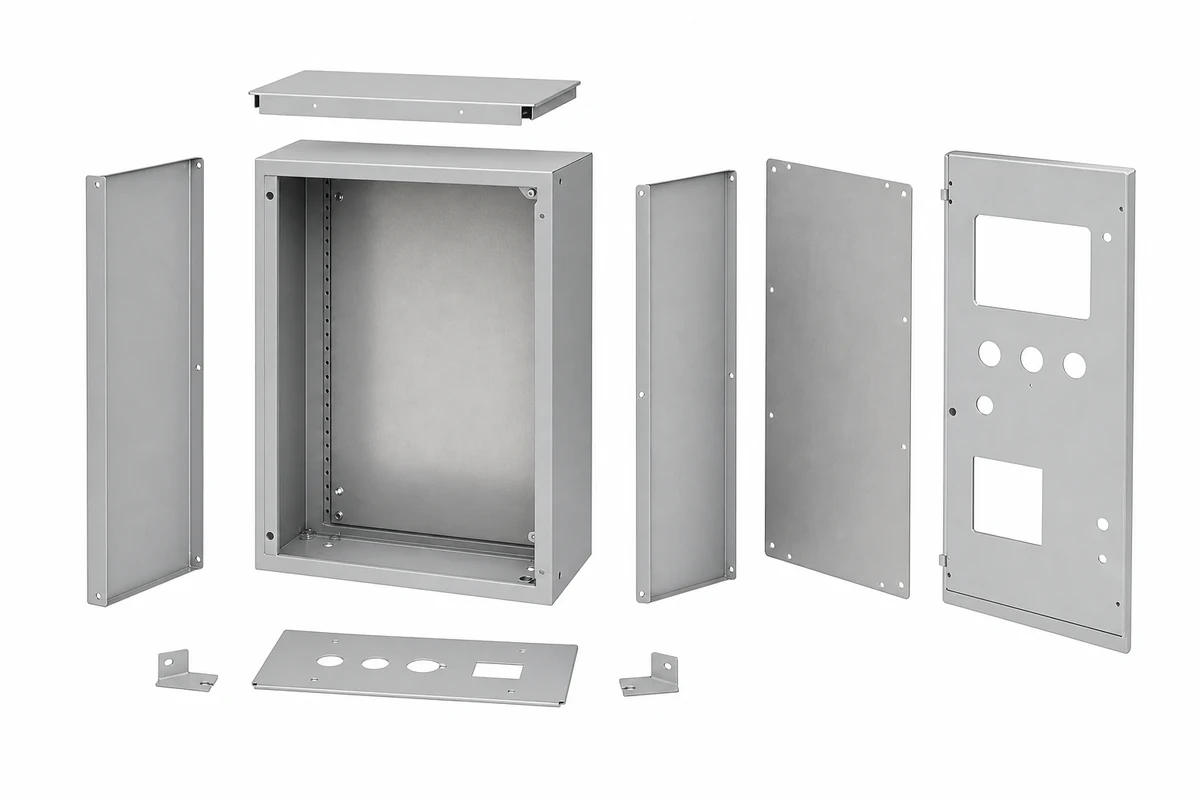
Our DFM review focuses on manufacturing risk inside the metalwork: bend reliefs, minimum flanges, hole-to-bend distance, weld access, distortion, removable-panel fit and coating build-up. We do not redesign the buyer’s electrical system. We make sure the specified mechanical enclosure can be cut, bent, welded, finished and repeated.
A practical DFM review may recommend moving a hole away from a bend, adding relief near a corner, changing a welded seam to a tab-and-slot fit, or standardizing fastener sizes. These are small drawing decisions that can save a large amount of factory vocabulary later.
Select Cabinet Shell Materials for the Installation Environment
| Material | Typical cabinet use | Fabrication note |
|---|---|---|
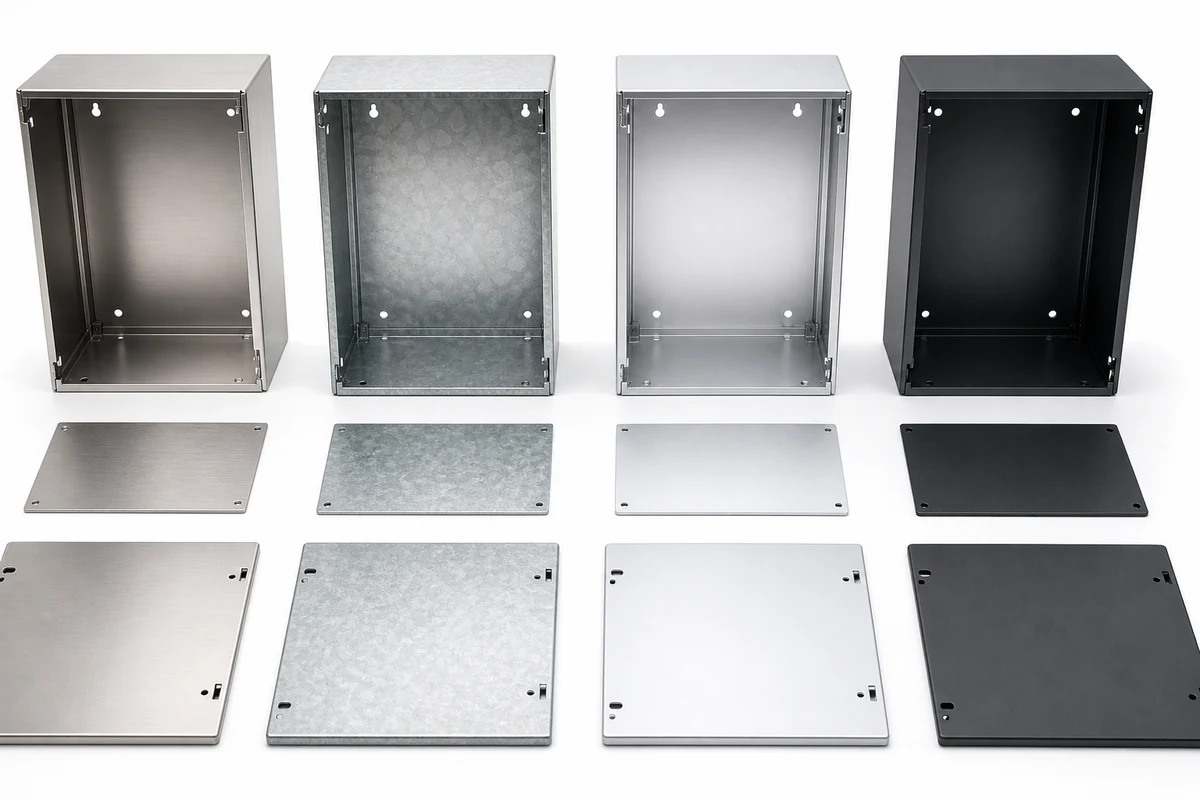
| Cold-rolled steel | Indoor machine cabinets, control boxes and equipment housings | Good forming and welding performance; normally protected with powder coating. |
| Galvanized steel | Utility cabinets and corrosion-conscious indoor/outdoor shells | Coating damage at cut and weld areas must be considered in the finishing route. |
| Stainless steel 304/316 | Washdown, coastal or corrosion-sensitive enclosures | Weld appearance, grain direction and surface protection require clear drawing notes. |
| Aluminum 5052 | Lightweight cabinets, doors and removable panels | Bend radius, weld distortion and finish matching need early review. |
Laser Cutting, CNC Bending and Welding Build the Shell
Laser-cut functional features
Our laser cutting services produce door openings, ventilation patterns, mounting holes, gland-plate cutouts and alignment features from drawing-controlled files. Cutouts are still metal features at this stage; the customer installs the electrical devices later.
CNC bending for squareness and fit
CNC sheet metal bending controls cabinet depth, flange position, panel overlap and door geometry. Consistent bend radii and realistic tolerances make repeat orders much calmer than relying on heroic adjustment at assembly.
Welding and mechanical hardware
Sheet metal welding is planned around heat input and access. PEM nuts, welded studs, hinges and brackets can be fitted to the shell, followed by grinding and mechanical trial assembly. This is hardware integration, not electrical assembly.
Door Gap, Hinge Alignment and Mechanical Trial Fit
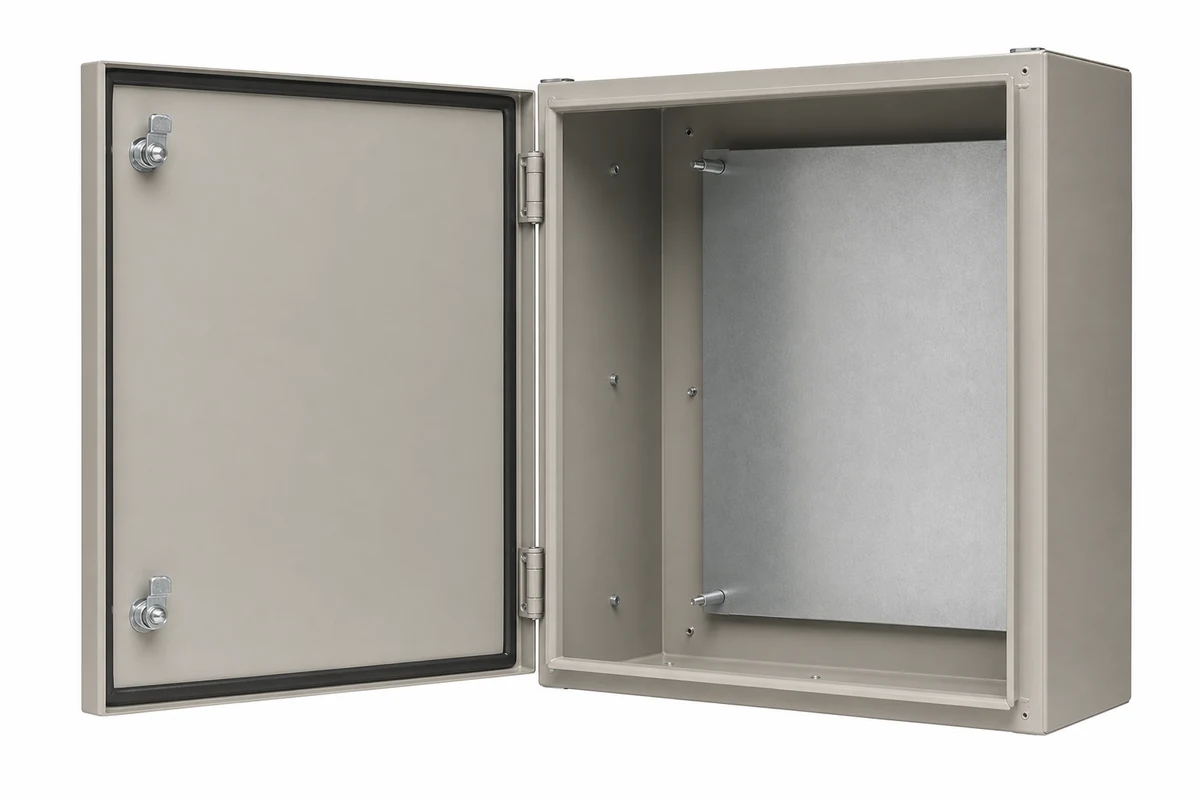
Before finishing, the cabinet body, door, blank mounting plate and removable panels should fit together as intended. Inspection can include overall dimensions, diagonal measurements, door gap, hinge alignment, lock cutout position and mounting-hole checks.
Where gasket performance or a formal protection rating matters, the buyer should define the required test method and final system responsibility. MSTFAB controls the fabricated interfaces shown on the drawing; we do not claim a complete cabinet rating based on a photograph and a confident nod.
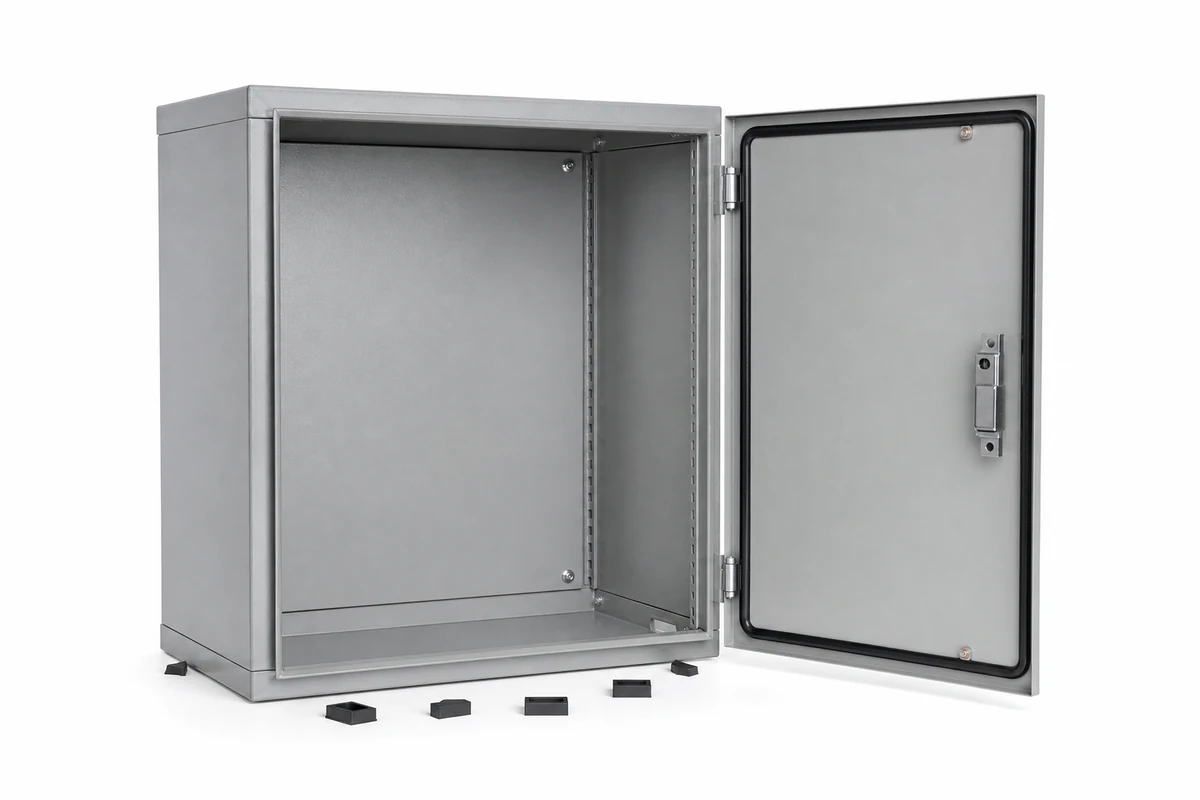
Masking and Ground-Stud Interfaces Before Powder Coating
Cabinet shells often include threaded holes, studs and bare-metal contact zones that must remain coating-free. The masking plan should be stated on the drawing or agreed sample. Our surface treatment services coordinate pretreatment, powder coating, masking and visual inspection for the fabricated metal parts.
MSTFAB supplies the mechanical grounding studs or contact areas when specified. The electrical integrator remains responsible for bonding hardware, wiring, continuity testing and final electrical compliance.
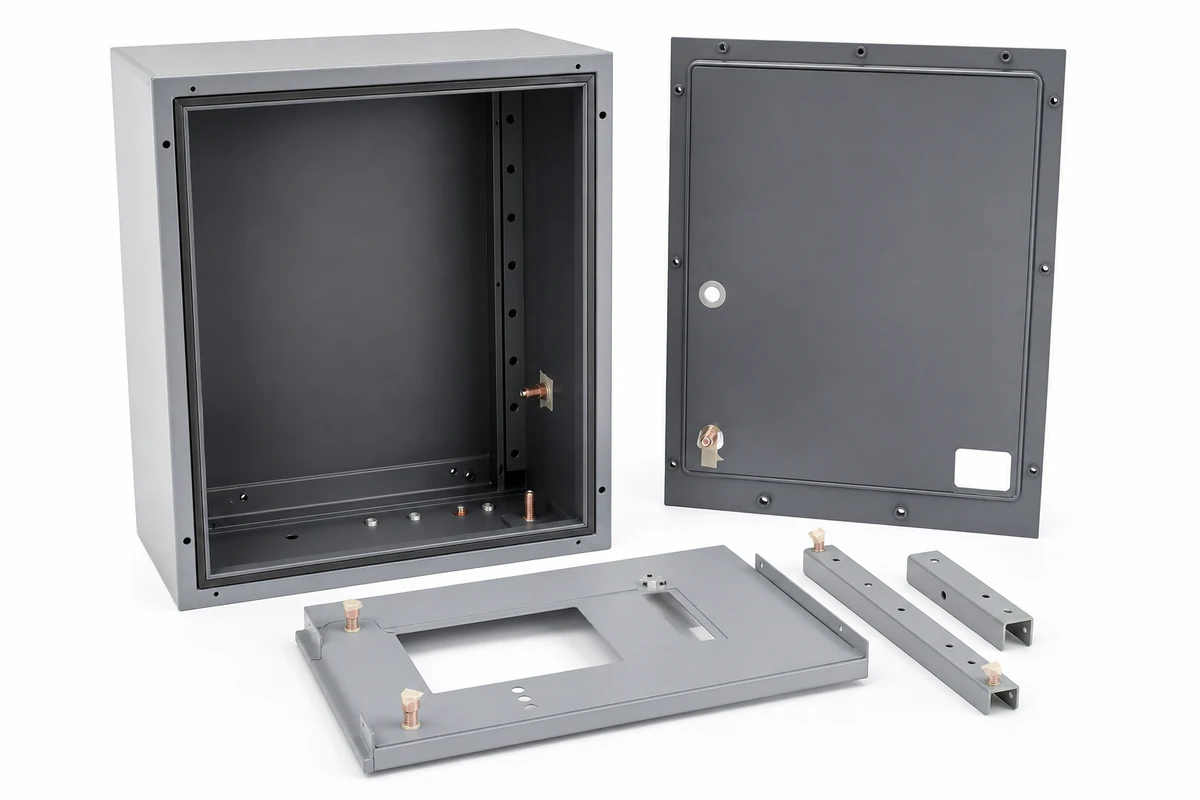
Inspection Evidence Buyers Can Request
| Control point | Typical evidence | Buyer value |
|---|---|---|
| Drawing and revision | Approved drawing number and revision record | Reduces production from obsolete files. |
| Material and thickness | Incoming material check; certificates when specified | Confirms the shell is built from the requested grade. |
| Critical dimensions | First-article or dimensional inspection report on request | Verifies mounting, door and cutout interfaces before batch release. |
| Coating and masking | Color sample, visual criteria, masked-area photos and thickness records when specified | Protects appearance and functional contact areas. |
| Packing | Packing photos, labels and crate plan | Reduces scratches, bent corners and loose panels in transit. |
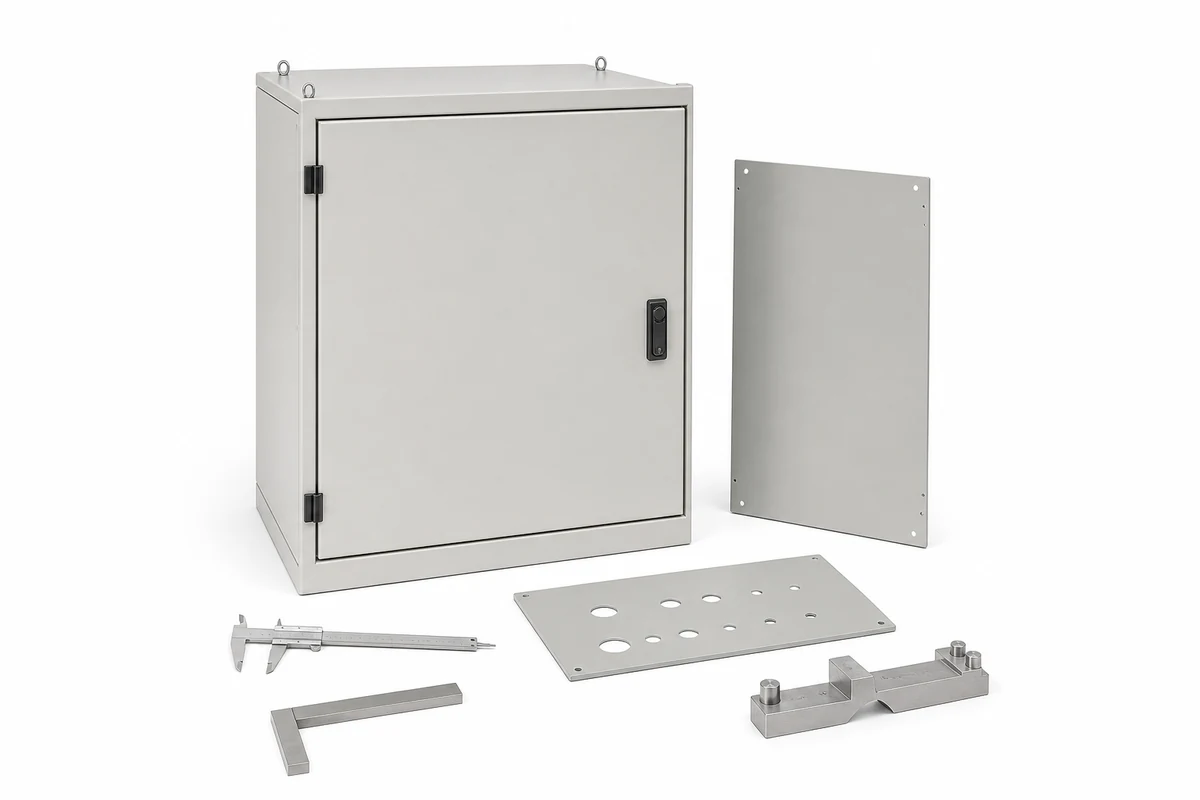
Export Packaging for Empty Cabinet Shells and Panels
Large doors and powder-coated panels are excellent at finding the one unprotected corner inside a crate. Protective film, foam separation, edge guards and internal blocking are selected around part size and finish. Our assembly and export packaging capability covers mechanical parts and empty enclosure assemblies, not wired control cabinets.
RFQ Checklist for Cabinet Shell Fabrication
- STEP model plus dimensioned PDF or DWG/DXF files
- Material grade and thickness
- Cabinet body, door, blank mounting plate and removable-panel drawings
- Critical cutouts, keep-out zones and required tolerances
- Weld symbols, PEM hardware and ground-stud locations
- Powder color, texture, gloss, masking and cosmetic-surface notes
- Quantity, prototype requirement, inspection documents and packing standard
For broader enclosure options, compare our custom sheet metal enclosure fabrication and industrial enclosure manufacturing pages.
Buyer FAQ
Does MSTFAB install electrical components or wiring?
No. We fabricate the cabinet shell and related mechanical sheet metal parts. Electrical components, wiring, functional testing and final system certification are handled by the buyer or its integrator.
Can you supply blank mounting plates and removable gland plates?
Yes. They can be laser cut, bent, fitted with mechanical hardware and finished according to the approved drawing.
Can you check the shell against our component layout?
Yes, when the buyer provides a component envelope, cutout schedule and keep-out zones. Our review covers mechanical fit and manufacturability, not electrical design approval.
Can inspection reports be supplied?
First-article, dimensional, coating and packing evidence can be defined in the RFQ and quotation according to project risk.
Need a cabinet shell, not a mysterious box full of surprises?
Send the cabinet body, door, mounting plate and cutout drawings. MSTFAB will review the sheet metal route, critical interfaces, finishing and packing requirements before quoting.
 WeChat Contact
 WhatsApp Me Directly