
Contract sheet metal enclosure fabrication should remove work from an OEM project, not move the surprise to receiving inspection. The useful question is not simply, “Can you make this box?” It is, “Can you make the same empty enclosure shell again, from the correct revision, with doors that fit and a finish that arrives intact?”
This guide explains what overseas engineering and procurement teams should include in an RFQ, what a contract fabricator should control, what changes the quote, and what evidence to request before approving production.
First, define the supply boundary
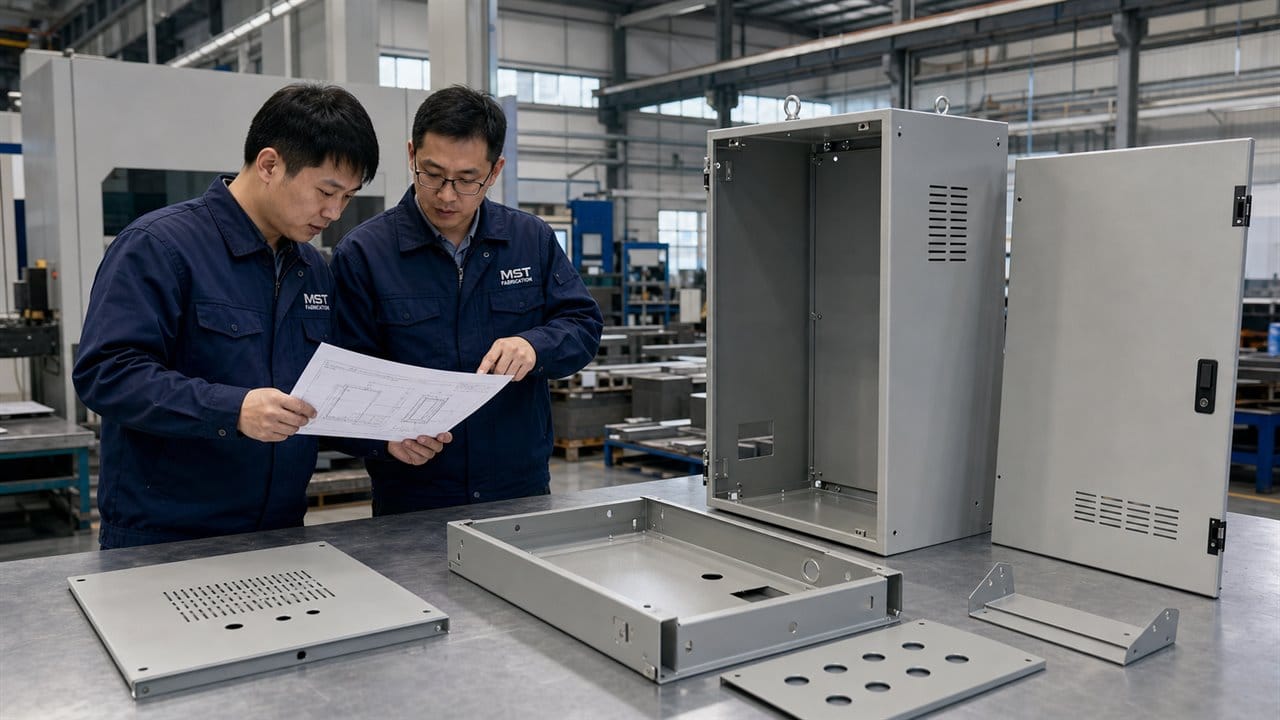
MSTFAB normally supplies: empty sheet metal cabinet and enclosure bodies, doors, panels, mounting plates, gland plates, bases, brackets, welded frames, specified mechanical hardware, surface finishing, inspection and export protection made from customer drawings.
Normally outside the metalwork scope: breakers, busbars, wiring, batteries, PCBs, displays, electrical design, programming, energized testing and final product certification. A metal shell can be excellent and still not be a certified electrical product; those are different jobs with different evidence.
What Contract Sheet Metal Enclosure Fabrication Covers
A contract fabricator converts released drawings into physical metal parts without the buyer owning the cutting, bending, welding and finishing equipment. For enclosure projects, that usually means coordinating the whole mechanical route: flat panels, formed shells, welded structures, doors, removable plates, inserts, hinges, locks, coating and packing.
This is more specific than generic contract metal fabrication services. The hard part is controlling interfaces across several processes. A hole can be correct after laser cutting and wrong after bending. A frame can be square before welding and creative afterward. Powder coating is durable, but it is not a geometry repair department.
For a broader view of the product category, see custom sheet metal enclosure fabrication and metal enclosure box fabrication.
When Outsourcing Makes Commercial Sense
OEM buyers often use an export sheet metal enclosure manufacturer when demand is real but does not justify building a complete fabrication line. Typical cases include prototype validation, low-volume metal cabinet fabrication, a new product ramp, overflow capacity, cost-down sourcing, or consolidating several parts into one inspected kit.
- Prototype to production: prove the geometry first, then lock the process for repeat batches.
- Variable demand: buy capacity when the project needs it instead of feeding idle machines all year.
- Multiple processes: keep laser cutting, CNC bending, welding, hardware, coating and inspection under one revision-controlled route.
- Export projects: add documentation and packing suitable for a long trip, not just a short forklift ride.
- Assembly readiness: receive shells, doors, panels and brackets that match the buyer’s later mechanical and electrical assembly.
Outsourcing does not mean outsourcing responsibility. A good supplier makes responsibility easier to see.
The RFQ Package That Produces a Useful Quote
A quotation is only as complete as the information behind it. If one supplier includes PEM hardware, masking and export packing while another excludes them, the prices are not competing; they are describing different projects.
| RFQ item | Why the fabricator needs it | Buyer check |
|---|---|---|
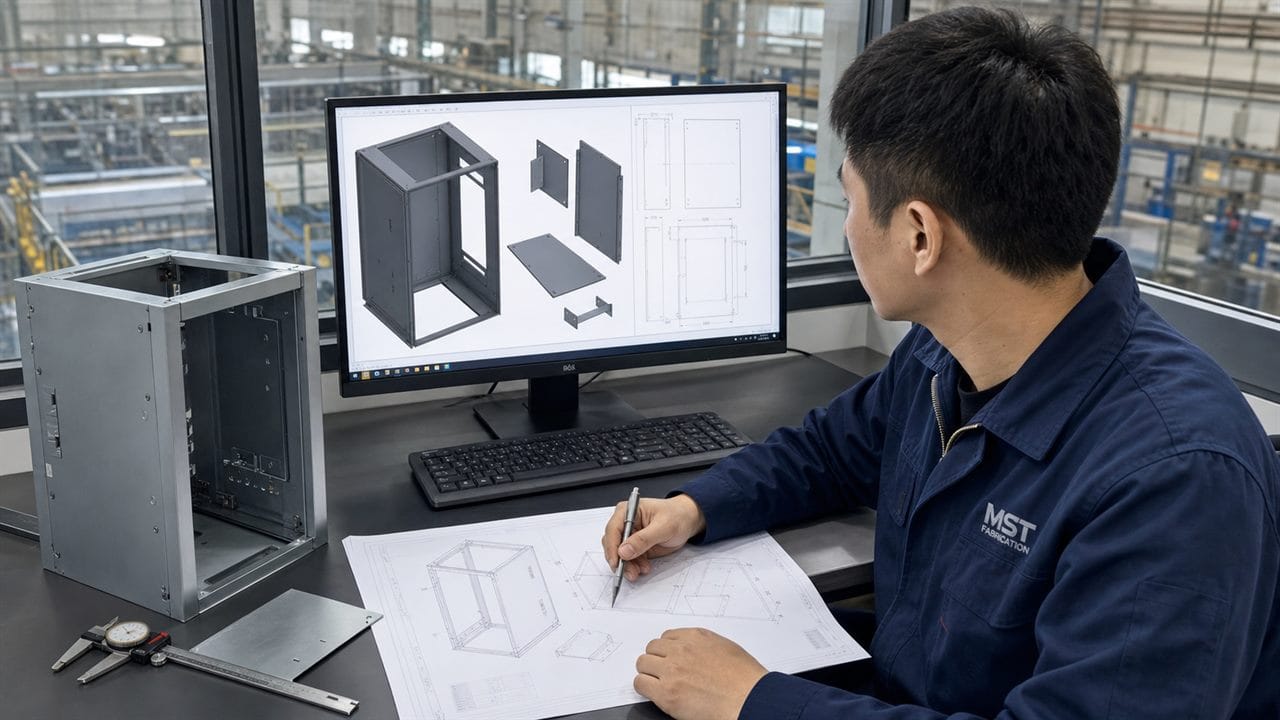
| 3D STEP or STP model | Defines overall geometry and supports flat-pattern review | Confirm the released revision |
| 2D PDF drawing | Defines tolerances, datums, threads, welds and inspection notes | Do not hide critical notes only in email |
| Material and thickness | Changes strength, bend behavior, finish and price | State grade, not only “steel” |
| Hardware or BOM | Controls inserts, hinges, locks, gaskets and purchased parts | Provide manufacturer and part number where fit matters |
| Finish specification | Defines color, texture, coating, masking and visible surfaces | Use RAL/Pantone or an approved physical sample |
| Quantity and forecast | Changes nesting, setup, tooling and batch strategy | Separate prototype quantity from annual demand |
| Inspection requirement | Defines reports, gauges, sample size and acceptance evidence | Identify CTQ dimensions before the first article |
| Packing requirement | Protects visible panels, edges, hardware and finish in transit | State labeling, kit and pallet needs |
The related guide what files are needed for a sheet metal fabrication quote gives a practical pre-RFQ checklist.
Buyer Pain Points the Fabricator Must Control
Revision drift
The approved sample was Rev B, production used Rev A, and the email subject said “latest.” Nobody enjoys this mystery. The quotation, traveler, first-article report and packing label should point to the same released revision.
Doors that fit before coating but not after
Weld distortion, hinge position, gasket compression and coating buildup all affect door fit. Fit-up checks must happen during fabrication and again after finishing.
Prototype success that does not survive batch production
A skilled operator can rescue one prototype. The production process must not depend on rescue. Bend programs, fixtures, inspection points and finish samples turn one good part into a repeatable batch.
A finish that looks good at the factory and tired after shipping
Visible surfaces need an agreed cosmetic standard and protection plan. Foam, film and corner guards cost less than explaining scratches to the end customer.
From Flat Sheet to an Empty Enclosure Shell
1. Laser cutting and flat-part control
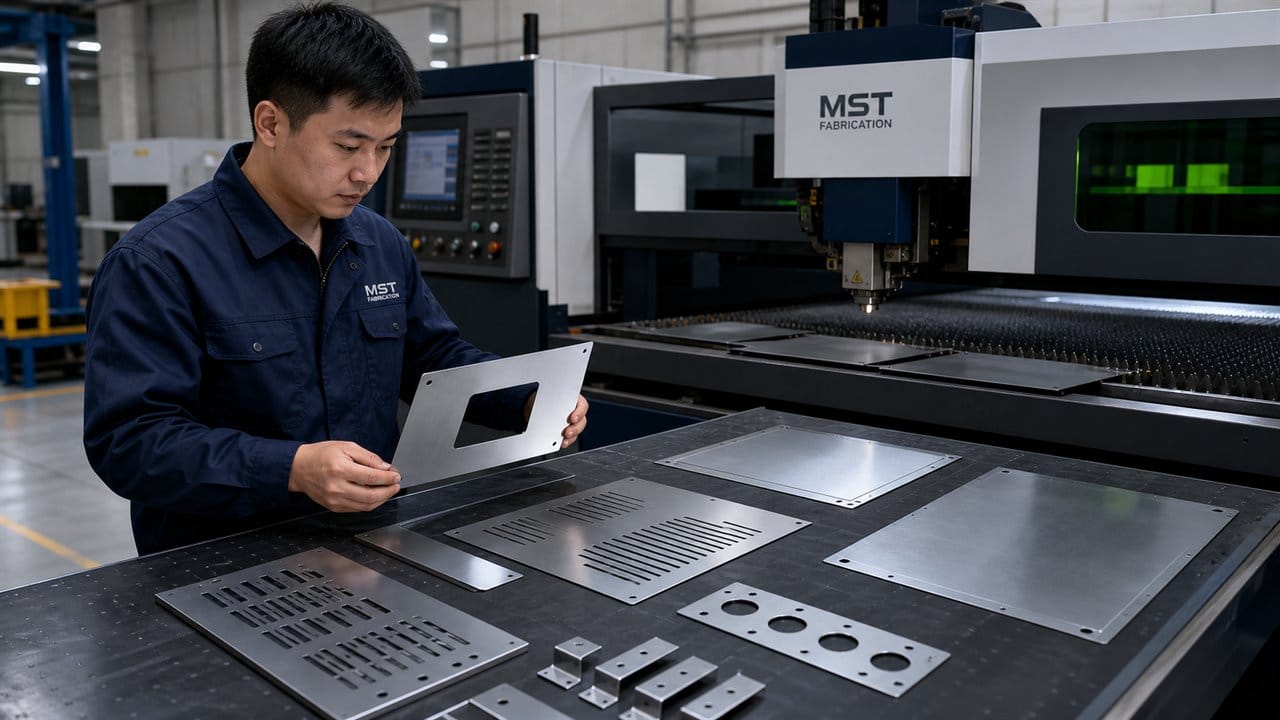
Laser cutting creates the door openings, vents, cable entries, bracket profiles and mounting features. The drawing review should flag holes too close to bend lines, narrow webs, tiny slots and cosmetic faces that need protection.
2. Deburring and mechanical hardware
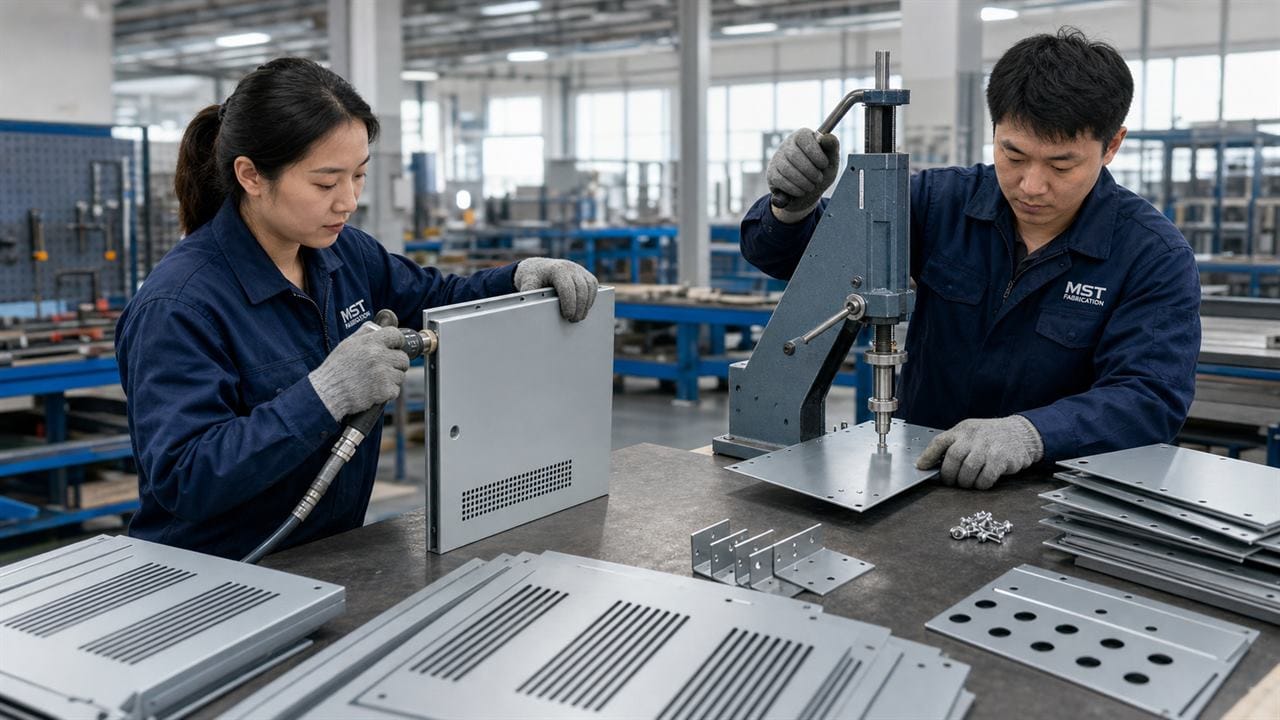
Cut edges are deburred before handling and assembly. Specified PEM nuts, studs or standoffs need the correct hole size, insertion direction and access. “It looked close enough” is not a recognized hardware standard.
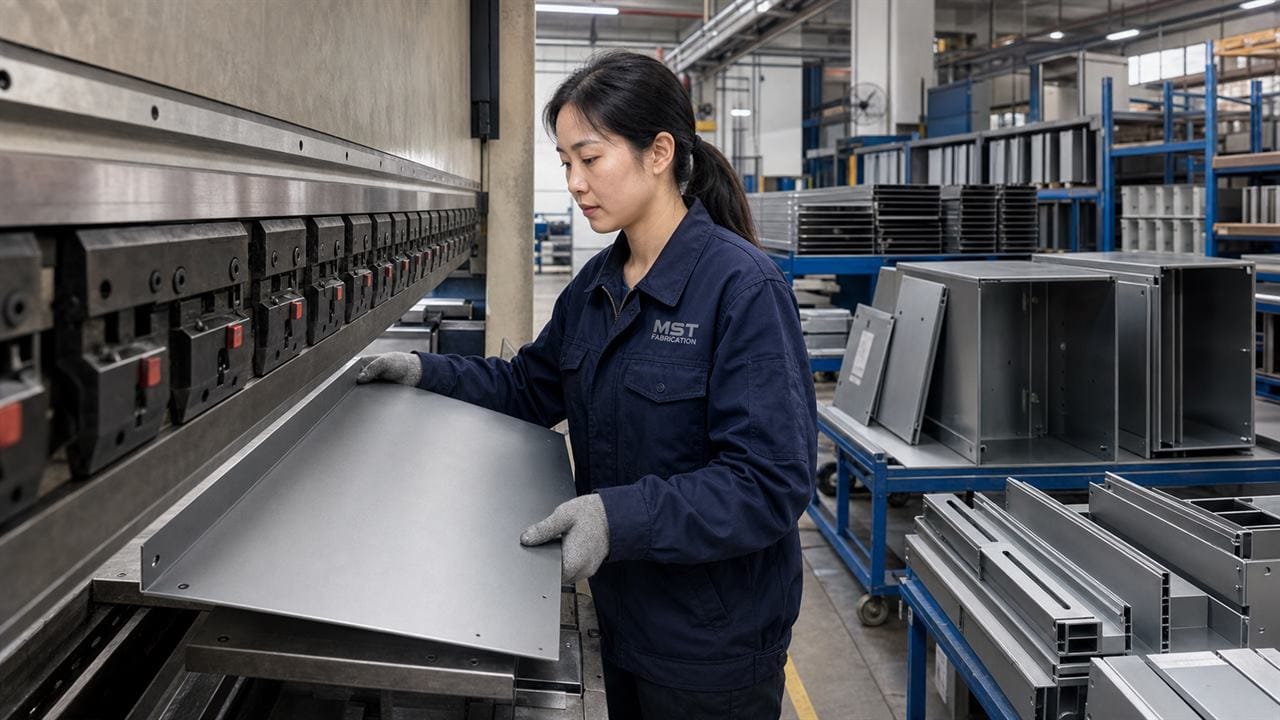
3. CNC bending and forming
CNC sheet metal bending turns flat patterns into bodies, doors and channels. Tooling, grain direction, bend allowance and sequence affect dimensions. Critical flange positions should be measured from functional datums, not whichever edge is easiest to reach.
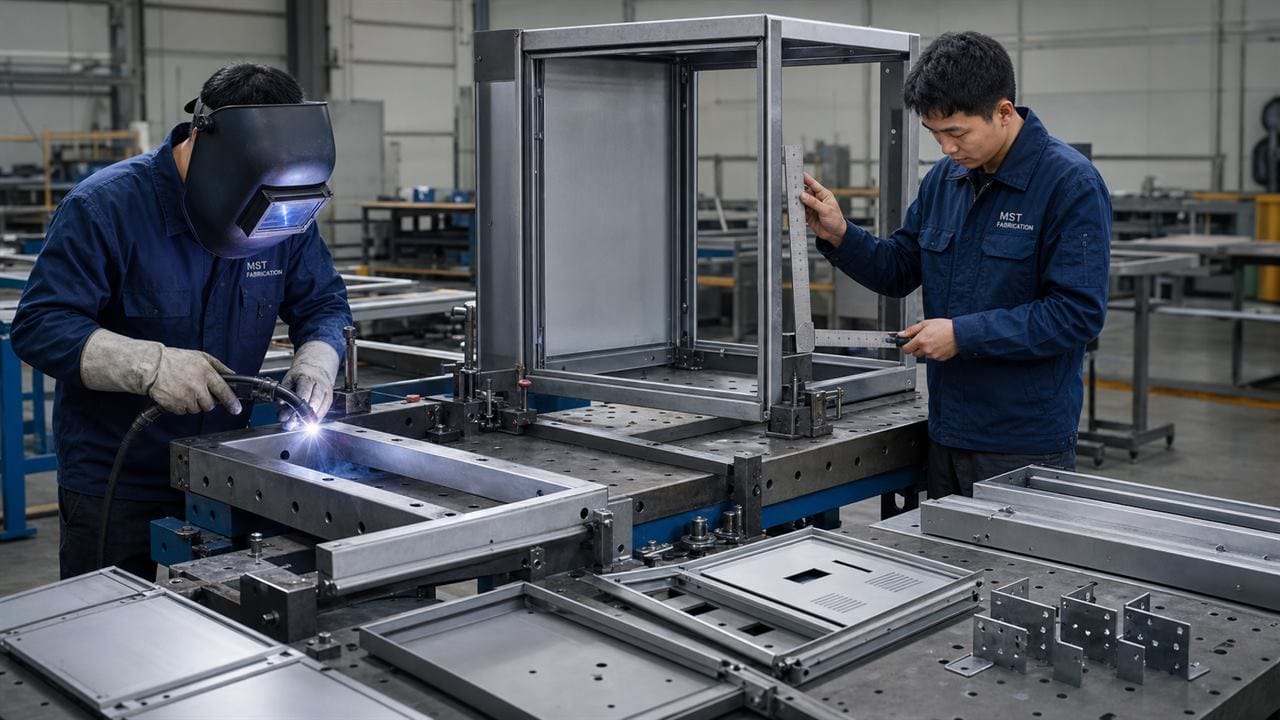
4. Welding, fixtures and distortion control
Sheet metal welding joins seams, frames, reinforcements and brackets. Fixture design, tack sequence, heat input and intermittent measurement help keep the cabinet square and the door opening usable.
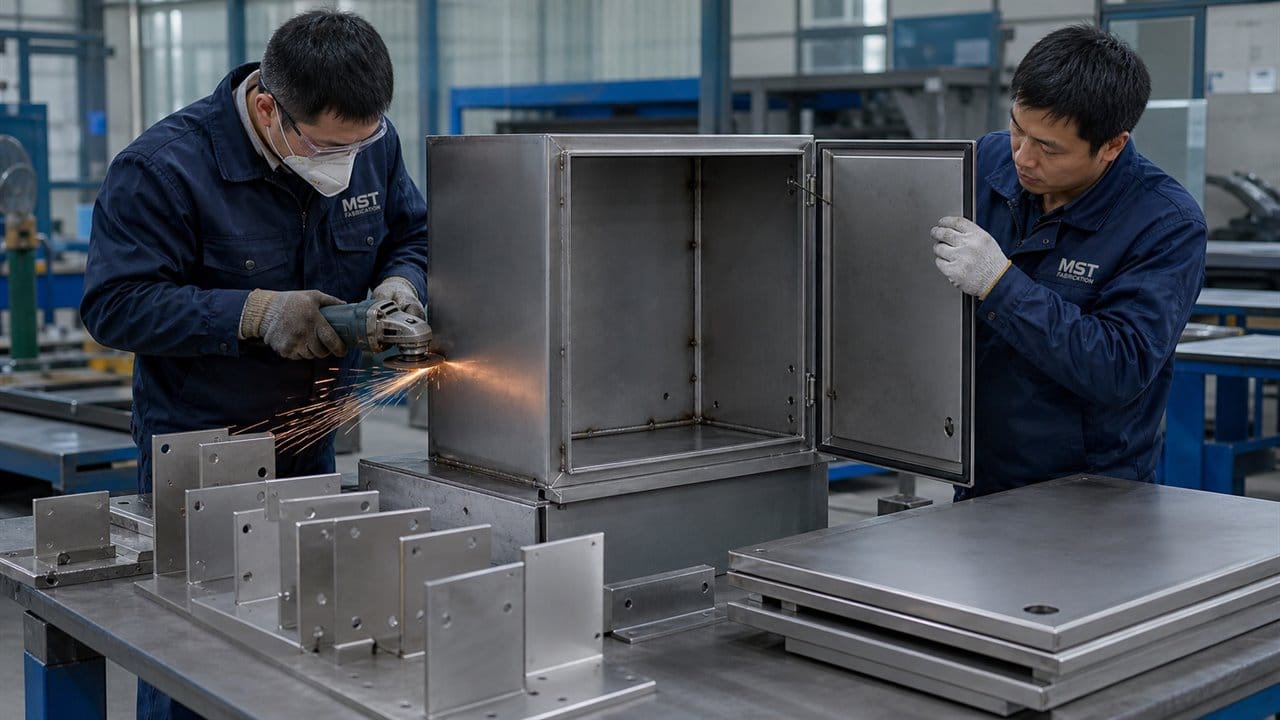
5. Weld finishing and door fit
Grinding should meet the cosmetic requirement without thinning edges or rounding features that need to seal. Hinges, locks, removable panels and gasket paths are fitted before finish so geometry problems are found while metal can still be corrected.
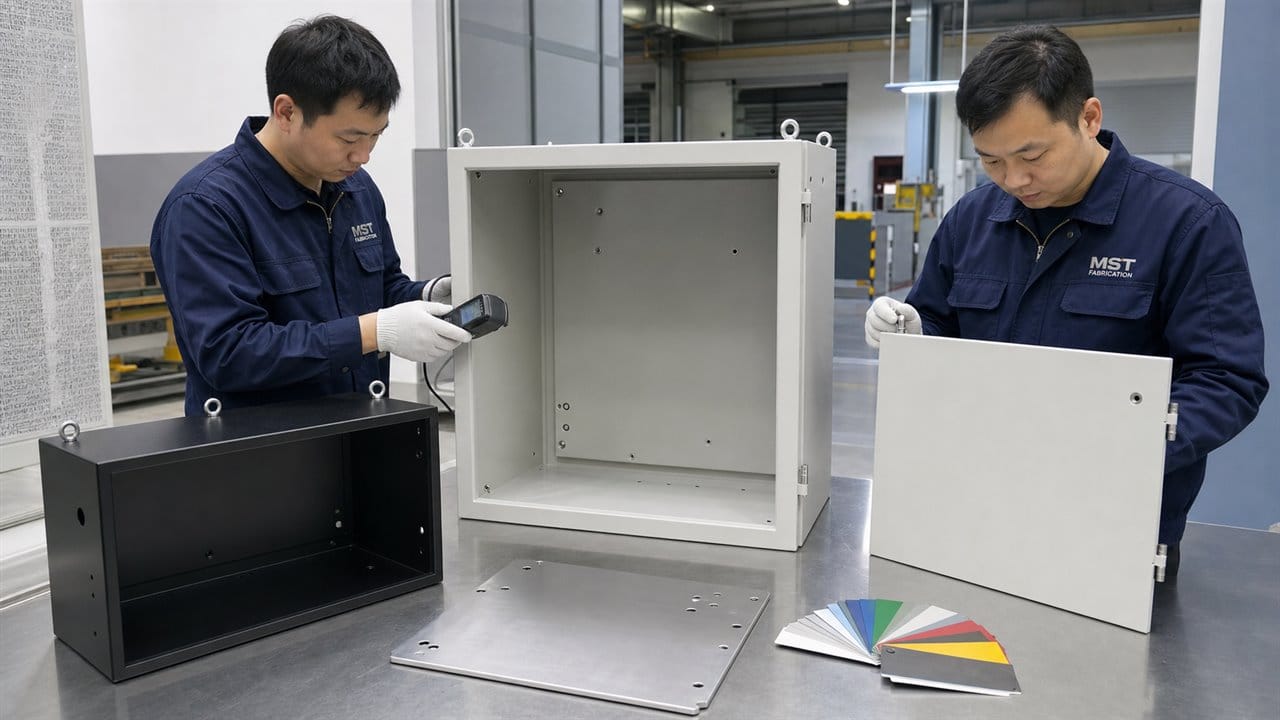
6. Powder coating and surface finishing
Powder coating for sheet metal fabrication should define pretreatment, color, texture, gloss, thickness, masking and acceptance on visible surfaces. Stainless steel, aluminum and galvanized material may need different finish routes.
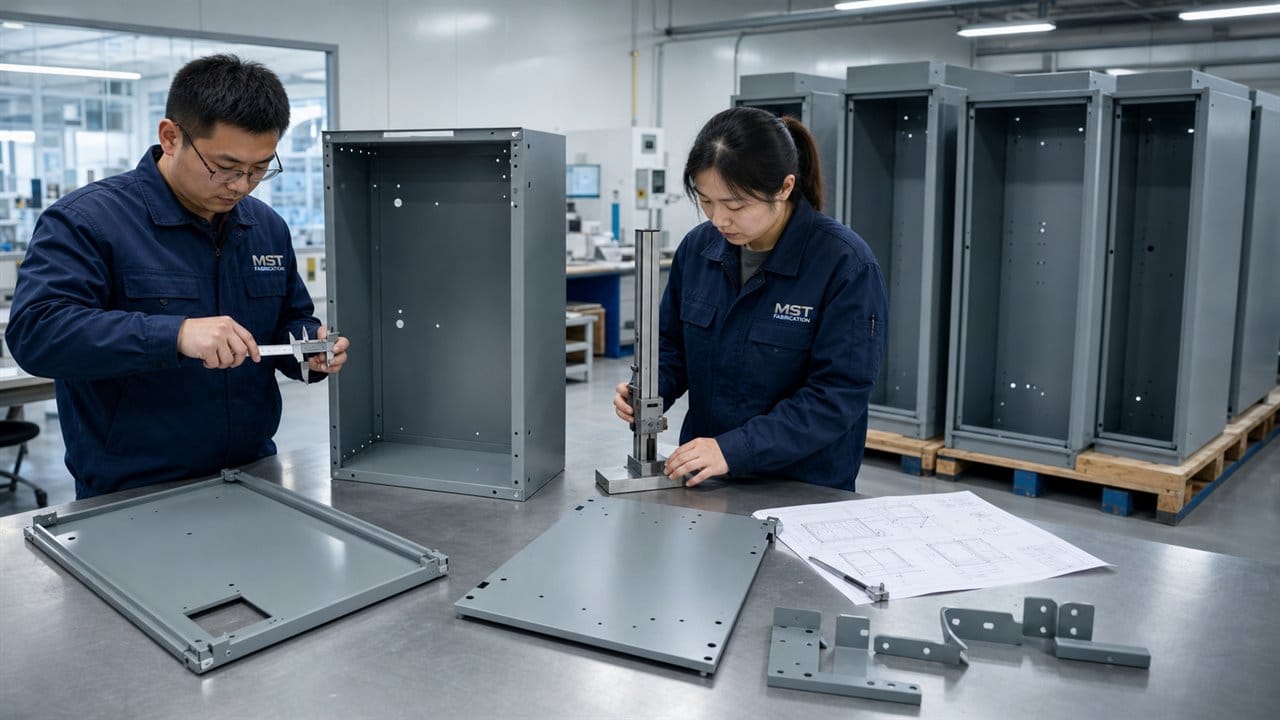
7. First article and batch inspection
The first article should connect measured results to the drawing revision. Sheet metal fabrication quality control then carries critical dimensions, fit checks and cosmetic standards into batch inspection.
8. Export packing
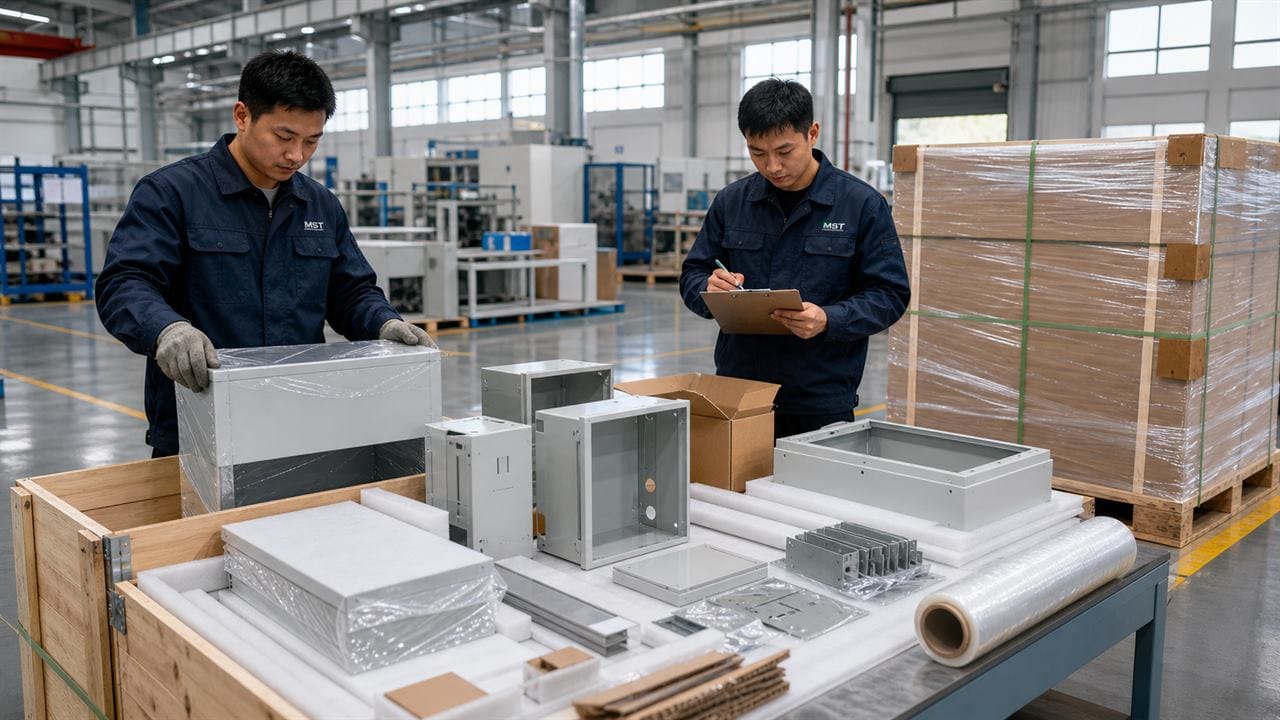
Finished shells, doors and panels should be protected from rubbing, corner impact and mixed revisions. Kit labels and packing photos make receiving easier. The part is not finished when QC signs it; it is finished when the buyer opens the crate and agrees.
What Changes a Contract Fabrication Quote
| Cost driver | Why it matters | Practical cost-control question |
|---|---|---|
| Material grade and thickness | Affects sheet cost, bend tonnage, welding and finish | Is the grade required by environment or copied from an old drawing? |
| Part size and nesting | Changes sheet utilization and handling | Can panel sizes or grain requirements improve nesting? |
| Bends and setups | Each setup adds handling and variation | Can two features be formed in one stable sequence? |
| Weld length and cosmetic grinding | Labor and distortion control rise quickly | Does every seam need a continuous cosmetic weld? |
| Hardware and purchased parts | Changes sourcing, installation and lead time | Are manufacturer, part number and approved alternatives clear? |
| Finish and masking | Changes pretreatment, handling and inspection | Which surfaces are cosmetic, grounded or left uncoated? |
| Tolerance | Tight tolerances need more control and evidence | Which dimensions truly affect assembly? |
| Quantity and release pattern | Changes setup amortization and capacity planning | Is this a prototype, pilot batch or repeat order? |
| Inspection and documentation | Reports and gauges require planned time | What evidence will receiving inspection actually use? |
| Export packing | Protects finish and reduces transport damage | Are parts shipped individually, as kits or as assemblies? |
A low quote can be correct. It can also be the shortest scope wearing a low price. Compare assumptions and exclusions before comparing totals.
Evidence an Overseas Buyer Can Request
| Evidence | What it helps prove | When to request it |
|---|---|---|
| Drawing revision record | The quoted, sampled and produced parts use the same release | RFQ and every engineering change |
| DFM comments | Manufacturing risks were reviewed before cutting metal | Before prototype approval |
| First-article report | Critical dimensions and interfaces match the drawing | Before batch production |
| Finish sample or approved color reference | Color, texture and appearance have a shared standard | Before coating the batch |
| In-process and final inspection record | Controls continue beyond the first part | With shipment or by agreed sampling plan |
| Packing photos | The approved protection plan was used | Before dispatch |
Trust is stronger when it is visible. A current quality certificate is useful; revision records, measurements and shipment evidence show how that system touched your actual order.
How to Compare Two Contract Sheet Metal Suppliers
- Put both quotations against the same drawing revision and quantity.
- Compare included processes, hardware, coating, inspection and packing line by line.
- Read exclusions before celebrating the total.
- Ask how prototype changes are released into production.
- Ask which dimensions and appearance points will be checked, by what method and at what sampling rate.
- Confirm who owns electrical design, testing and certification. For MSTFAB’s normal enclosure work, the answer is the buyer or system integrator.
- Confirm shipment terms, labeling, replacement responsibility and communication route.
The best custom metal fabrication manufacturer is not the one with the longest equipment list. It is the one whose scope, evidence and response match the risk in your project.
Questions OEM Buyers Ask
What is the difference between contract fabrication and buying a standard cabinet?
A standard cabinet follows a supplier’s fixed design. Contract enclosure fabrication follows the buyer’s drawing, interfaces, finish and inspection requirements.
Can MSTFAB support prototypes and repeat production?
Yes. Prototype and pilot quantities can validate geometry, hardware and finish before repeat orders. The important step is documenting approved changes before the next release.
Which files are best for an enclosure quotation?
Send a STEP or STP model plus a controlled 2D PDF drawing. Add material, thickness, finish, hardware, quantity, tolerances, inspection and packing requirements.
What is the normal MOQ?
MOQ depends on size, material, bought-out hardware, finish and setup. Share prototype quantity and expected repeat demand so the manufacturing route can be quoted honestly.
Does MSTFAB supply a fully wired electrical cabinet?
Not under the normal sheet metal fabrication scope. MSTFAB supplies the empty metal cabinet or enclosure structure and specified mechanical parts. Electrical components, wiring, programming and energized testing belong to the buyer or qualified integrator unless a separate written scope is agreed.
Does an enclosure drawing automatically guarantee an IP, NEMA, UL or CE rating?
No. Fabrication can follow design features related to sealing, construction and material, but final ratings depend on the complete product, components, assembly and required testing or certification. Define that responsibility before the RFQ, not after the rain test.
Send a drawing that is ready for a useful answer
Share your STEP model, 2D drawing, material, finish, quantity and critical checks. MSTFAB will review the empty enclosure shell and mechanical fabrication scope before quoting.
 WeChat Contact
 WhatsApp Me Directly