
A contract metal fabrication manufacturer is the quiet hero behind many OEM products. The customer sees the finished equipment. The purchasing team sees a stable supplier. The engineer sees parts that actually fit. The accounting department sees that nobody had to buy a laser cutting machine just to make one product family.
For overseas buyers, outsourcing sheet metal parts is often the smart move. You can keep your team focused on product design, sales and market growth while a specialized factory handles cutting, bending, welding, finishing, inspection and packing. In simple language: you build the business, the factory builds the metal. Everyone stays in their lane, and fewer people cry into spreadsheets.
This guide explains what a contract metal fabrication manufacturer does, how to evaluate one, and how to avoid the hidden costs that make a cheap quote look expensive after the first shipment.
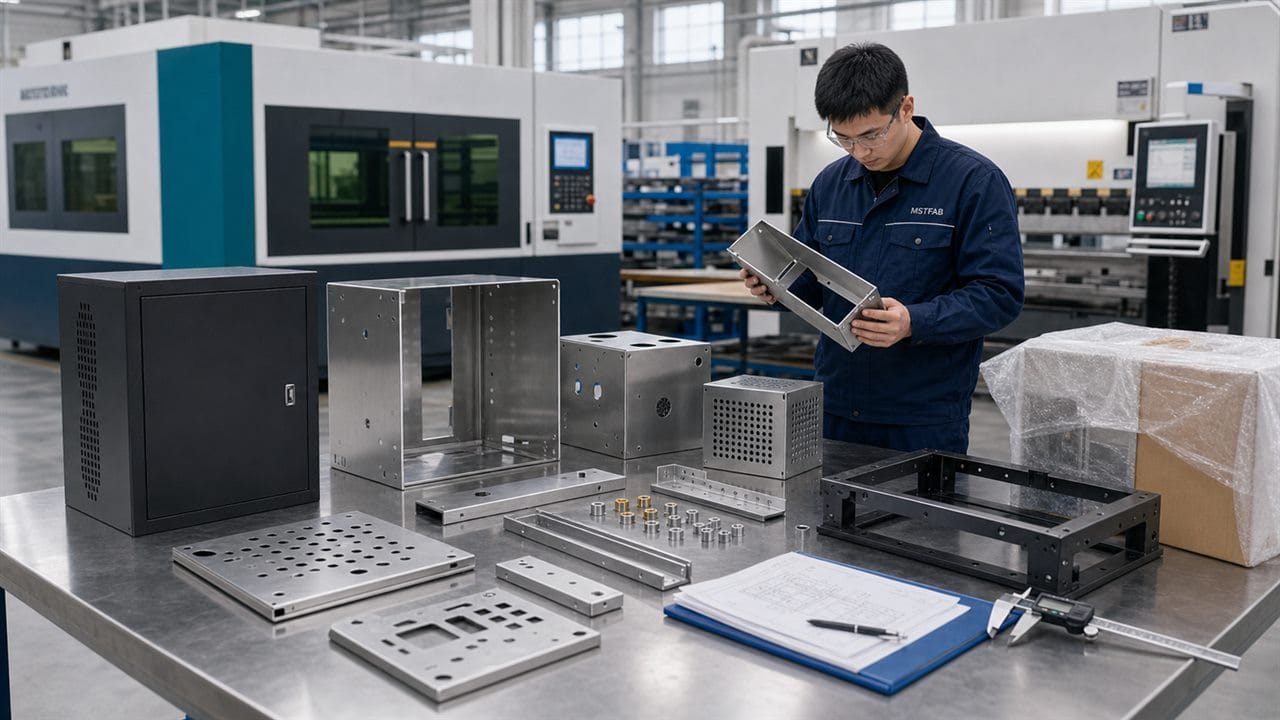
What Is a Contract Metal Fabrication Manufacturer?
A contract metal fabrication manufacturer produces custom metal parts, enclosures and assemblies according to your drawings, specifications and production requirements. Instead of building an in-house fabrication shop, OEM buyers outsource the work to a supplier with the equipment, technicians and process control already in place.
Typical contract sheet metal fabrication services include laser cutting, CNC punching, sheet metal bending, welding, grinding, powder coating, surface finishing, assembly, inspection, prototype builds and repeat production runs.
Buying every machine yourself for occasional production is like buying an airplane because you travel twice a year. Impressive, yes. Efficient, not usually.
Why OEM Buyers Outsource Metal Fabrication
Modern OEM teams face pressure from all directions: shorter lead times, tighter budgets, smaller engineering teams, more demanding customers and less patience for rework. Contract fabrication helps because it converts a capital-heavy manufacturing process into a supplier-managed production workflow.
- Lower capital investment: no need to purchase laser cutters, CNC press brakes, welding stations, coating lines and inspection equipment.
- Faster project launch: experienced teams can review drawings, make prototypes and prepare batch production faster than a new internal shop.
- Better process flexibility: one project may need stainless steel bending, another may need powder-coated mild steel enclosures, and another may need aluminum brackets.
- Reduced management load: the buyer does not need to hire and train every machine operator, welder, finisher and inspector.
- Scalable capacity: production can move from samples to batches without rebuilding your own factory every time orders grow.
The Pain Points a Good Fabrication Partner Should Solve
The real value of a contract metal fabrication manufacturer is not only making parts. Many factories can cut metal. The better ones prevent the problems that make overseas sourcing feel like a group project nobody volunteered for.
1. Drawings That Look Good but Are Hard to Manufacture
A drawing can be beautiful and still be painful to produce. Holes may be too close to bend lines, flanges may be too short for tooling, welded corners may distort, and surface finish requirements may conflict with the final assembly. A strong supplier performs DFM review before production, not after the container has left.
2. Process Gaps Between Cutting, Bending and Welding
Problems often appear where one process hands off to the next. A laser-cut blank may be accurate, but if the bend sequence is wrong, the enclosure will not assemble cleanly. A welded frame may be strong, but if heat distortion is ignored, holes will not line up. Contract manufacturing should connect the processes, not treat them like separate islands.
3. Surface Finish Surprises
Powder coating, anodizing, plating and brushing all affect appearance, corrosion resistance and assembly fit. Masking, grounding points, coating thickness and cosmetic inspection standards should be discussed early. A finish that looks good in a photo but blocks a threaded hole is not a success story.
4. Quality Control That Starts Too Late
Final inspection matters, but it should not be the first time anyone checks the part. First article inspection, in-process checks and clear critical dimensions help prevent batch-level surprises. Nobody wants to discover a tolerance problem only after 500 parts have learned the same mistake.
The Core Workflow: From Drawing Review to Export-Ready Parts
A practical contract sheet metal fabrication workflow should look like this:
- RFQ and DFM review: material, thickness, tolerances, finish, hardware, packing and annual volume are checked before quotation.
- Laser cutting or CNC punching: flat blanks, vents, slots, mounting holes and profiles are cut with repeatable accuracy.
- CNC sheet metal bending: flanges, enclosure bodies, brackets and panels are formed according to bend radius, bend allowance and sequence.
- Welding and assembly: TIG, MIG, spot welding, PEM hardware, hinges, inserts and sub-assemblies are completed under fixture control when needed.
- Surface finishing: powder coating, brushing, plating, anodizing or passivation is handled according to application requirements.
- Inspection and packing: critical dimensions, appearance, fit and export packaging are checked before shipment.
Why Sheet Metal Bending Deserves Special Attention
Bending is where flat metal becomes a real part. It affects enclosure fit, door alignment, weld gaps, gasket compression, mounting hole position and assembly speed. A supplier may cut perfectly, but if the bend data is wrong, your assembly team still gets a puzzle with missing instructions.
For projects with tight flanges, formed brackets, cabinet shells, enclosure bodies or repeatable bend angles, review MSTFAB’s Sheet Metal Bending Services. The page explains how bending control, tooling and drawing review help OEM buyers reduce fit-up risk before batch production.
Industries That Use Contract Metal Fabrication
Contract metal fabrication supports many product categories because metal parts appear everywhere once you start noticing them. Industrial equipment, electrical enclosures, agricultural machinery, EV chargers, telecom cabinets, medical equipment housings, control panels, storage systems and machine guards all depend on stable sheet metal production.
The common need is simple: the buyer wants parts made to drawing, delivered consistently, and packed so they survive the journey. That last point matters. A perfect part damaged by poor packaging is just an expensive paperweight with international shipping history.
How to Choose the Right Contract Metal Fabrication Manufacturer
A good supplier should be evaluated on more than unit price. Price matters, of course, but the cheapest quote can become the most expensive option if it creates rework, missed deadlines or quality disputes. Use these checks before choosing a partner:
- Manufacturing capability: confirm cutting, bending, welding, finishing, assembly and inspection capacity.
- Engineering communication: look for DFM feedback, drawing questions and practical suggestions before production.
- Material experience: check whether the factory handles mild steel, stainless steel, aluminum and galvanized steel for your part type.
- Quality control: ask about first article inspection, in-process checks, final inspection and photo evidence.
- Export experience: verify packing, documentation and communication for overseas OEM buyers.
- Repeatability: make sure the supplier can manage prototypes, small batches and repeat production with stable records.
What to Send for a Faster Quotation
If you want a useful quotation, give the supplier useful information. A vague request usually creates a vague price, and vague prices have a talent for growing later.
- 2D drawings with critical dimensions and tolerances
- 3D files such as STEP when available
- Material grade and thickness
- Surface finish requirement and color standard
- Hardware, inserts, hinges, locks or gasket requirements
- Prototype quantity, batch quantity and expected annual volume
- Inspection requirements and any test standards
- Packaging, labeling and shipping requirements
FAQ: Contract Metal Fabrication for OEM Buyers
Is contract metal fabrication only for large companies?
No. It works for startups, engineering teams, industrial equipment brands and established OEMs. The key is having clear drawings and realistic requirements. The supplier brings the manufacturing equipment and process experience.
Can one supplier handle prototypes and production?
Yes, if the supplier has both engineering review and batch production capacity. This is often helpful because the lessons from prototypes can be carried into tooling, bend data, welding fixtures and inspection plans for production.
Why not choose the cheapest quote?
You can, but cheap without process control is not a strategy. It is usually a subscription to rework. A better quotation explains material, process, tolerances, finish, packing and lead time clearly.
Does bending really affect final assembly that much?
Yes. Bend radius, angle, sequence and tolerance stack-up can change hole alignment, enclosure size, weld gaps and door fit. That is why bending review should happen before production, especially for cabinets, enclosures and formed brackets.
Final Thoughts
A contract metal fabrication manufacturer helps OEM buyers turn drawings into reliable metal parts without building a factory from scratch. The best partner is not only a machine shop with equipment. It is a process partner that understands DFM, cutting, bending, welding, finishing, inspection and export delivery.
For overseas buyers, that means fewer surprises, fewer quality arguments and fewer emergency meetings with the subject line “urgent production issue.” In manufacturing, boring repeatability is a beautiful thing.
Need a contract metal fabrication manufacturer for OEM parts?
MSTFAB supports overseas OEM buyers with drawing review, laser cutting, CNC bending, welding, surface finishing, inspection and export-ready packaging for custom sheet metal parts and enclosures.
 WeChat Contact
 WhatsApp Me Directly