
How should OEM hardware companies choose between China sheet metal fabrication and local domestic manufacturing?
Hardware OEMs choose between China sheet metal fabrication and local domestic manufacturing by evaluating six strategic trade-offs: (1) Total Cost of Ownership (TCO), where China delivers 30% to 50% savings on piece-part price and tooling NRE, (2) Production Volume, where local shops excel at ultra-low volume rapid prototypes (1–10 pcs in 3–5 days) while China dominates pilot and high-volume blanket production (100–10,000+ pcs), (3) In-House Vertical Integration, where top Chinese contract manufacturers integrate laser cutting, multi-axis bending, robotic welding, and automated powder coating under one roof, (4) Logistics Lead Time, where local shops avoid ocean freight transit (3–4 weeks), (5) Engineering Collaboration, requiring bilingual project managers and formal DFM reviews for overseas sourcing, and (6) Metrology Governance, where both options can achieve equal precision (±0.05 mm) provided AS9102 FAIR reports and CMM data are strictly enforced.
Every hardware engineering executive and procurement director faces the classic manufacturing dilemma: Should we source sheet metal parts locally or manufacture overseas in China? Choosing the right sourcing strategy is not a one-size-fits-all decision. The optimal model depends on your product’s lifecycle stage, annual production volume, assembly complexity, and delivery urgency.
Core Decision Drivers: China Contract Sourcing vs. Local Job Shops
1. Total Landed Cost (TCO) vs. Baseline Piece Price
While domestic job shops in North America or Europe face hourly labor rates of USD 75 to USD 120 per hour, Chinese contract manufacturers operate with highly skilled technicians at significantly lower baseline labor costs. Furthermore, China’s massive domestic raw material supply chain provides raw steel, stainless, and aluminum coil at lower baseline commodity pricing. When factoring in ocean freight, tariffs, and customs clearance, China sourcing typically delivers net landed savings of 30% to 50% on volume production runs.
2. Prototyping Speed vs. Volume Scalability
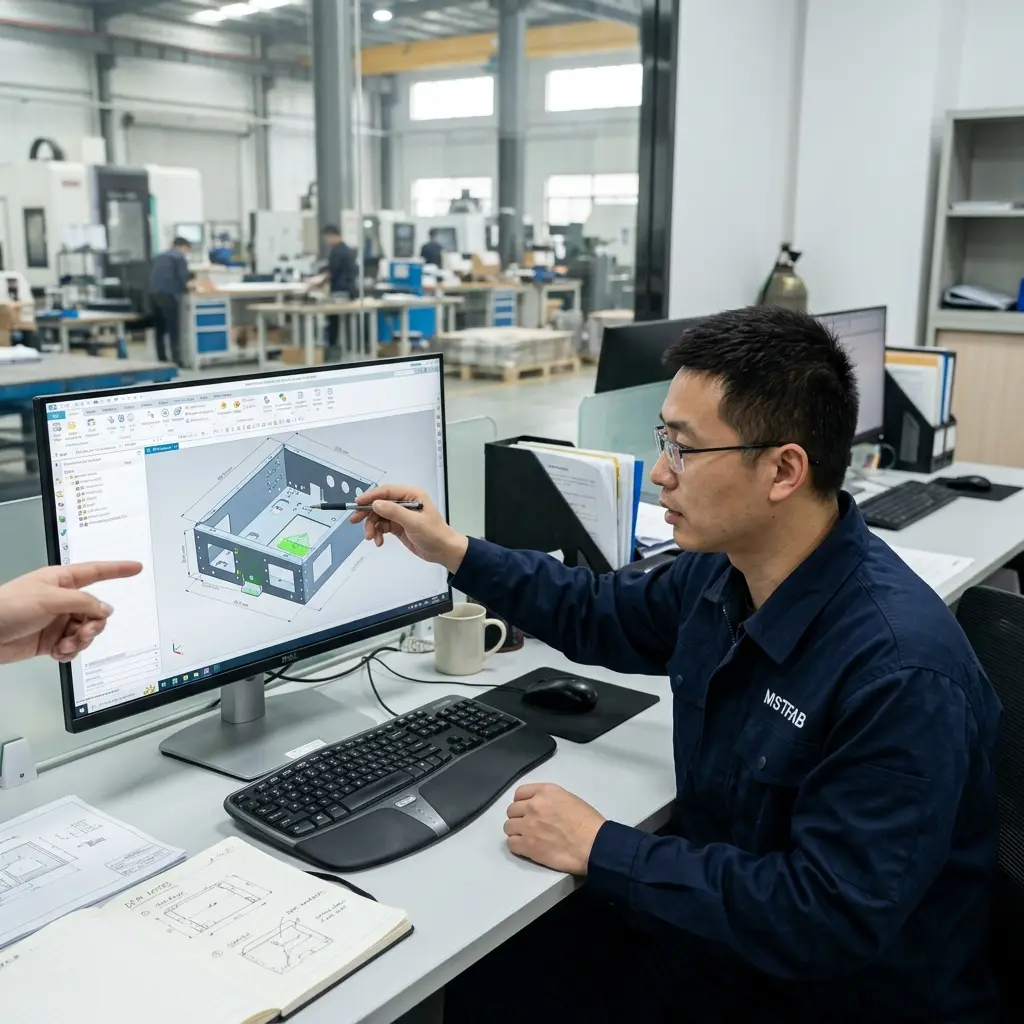
When engineering teams are iterating on daily mechanical revisions during early concept architecture (EVT stage), a local sheet metal shop within driving distance is invaluable. Local shops can laser cut and bend a prototype bracket in 48 hours. However, once the design freezes into Design Validation Testing (DVT) and Production Validation Testing (PVT), local job shops often struggle with capacity bottlenecks, high NRE tooling fees, and long powder coating queues. China excels at scaling rapidly from 50 pilot units to thousands of production assemblies per month.
3. Vertical Integration vs. Fragmented Subcontracting
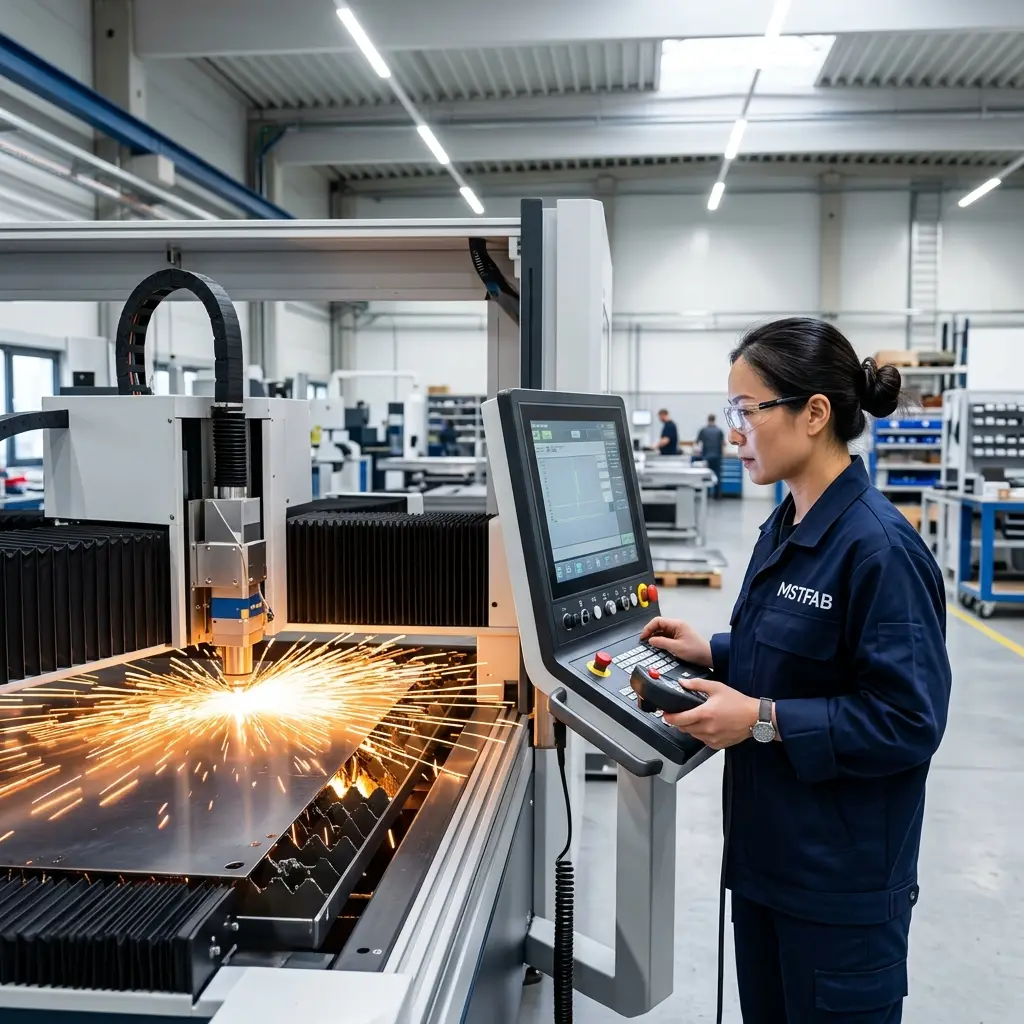
Many local domestic job shops are specialized: one shop cuts and bends, another handles TIG welding, while painting is subcontracted to an outside powder coater across town. This fragmentation introduces multiple queue delays, shipping surcharges, and finger-pointing if paint blisters or welds distort. Tier-one Chinese fabricators operate massive vertically integrated facilities where laser cutting, robotic welding, stamping, hardware insertion, automated powder coating, and turnkey sub-assembly take place within a single connected complex.
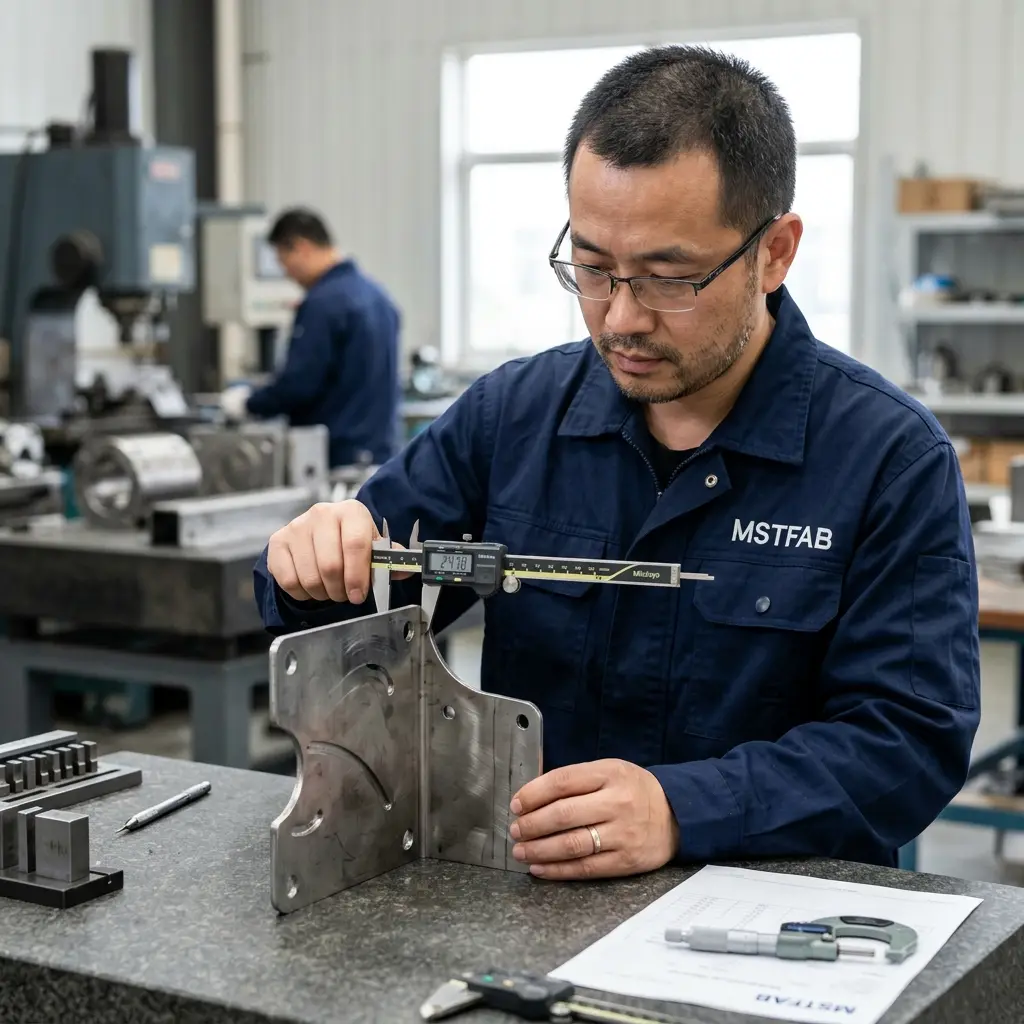
4. Quality Control & Metrology Standards
A common misconception is that domestic fabrication is inherently more accurate than overseas manufacturing. Modern Chinese contract manufacturers utilize identical state-of-the-art European and Japanese equipment: Trumpf fiber lasers, Amada CNC press brakes, and Zeiss CMM inspection arms. Quality is not a function of geography; it is a function of quality governance. Enforcing formal AS9102 First Article Inspection Reports (FAIR) and statistical process control (Cpk ≥ 1.33) ensures identical micrometer-level precision.
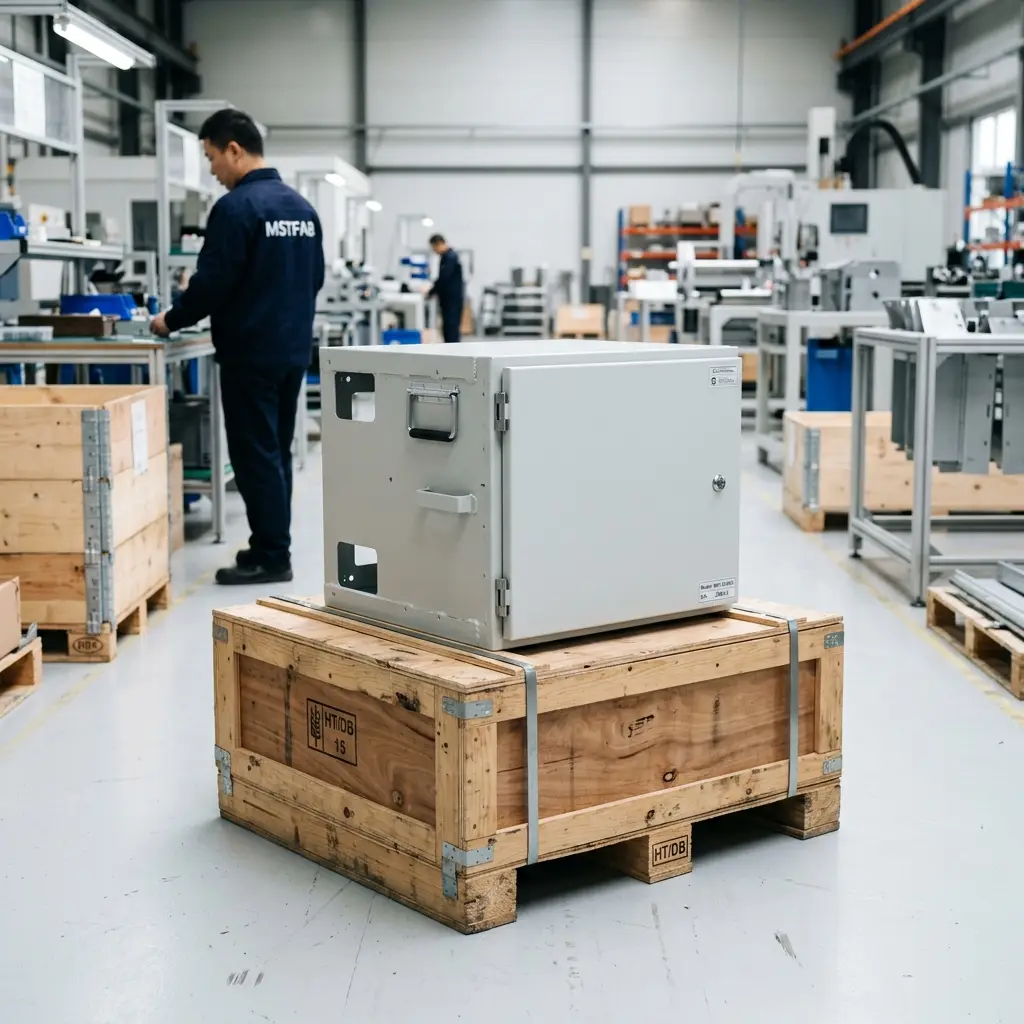
5. Packaging and Transit Risk Management
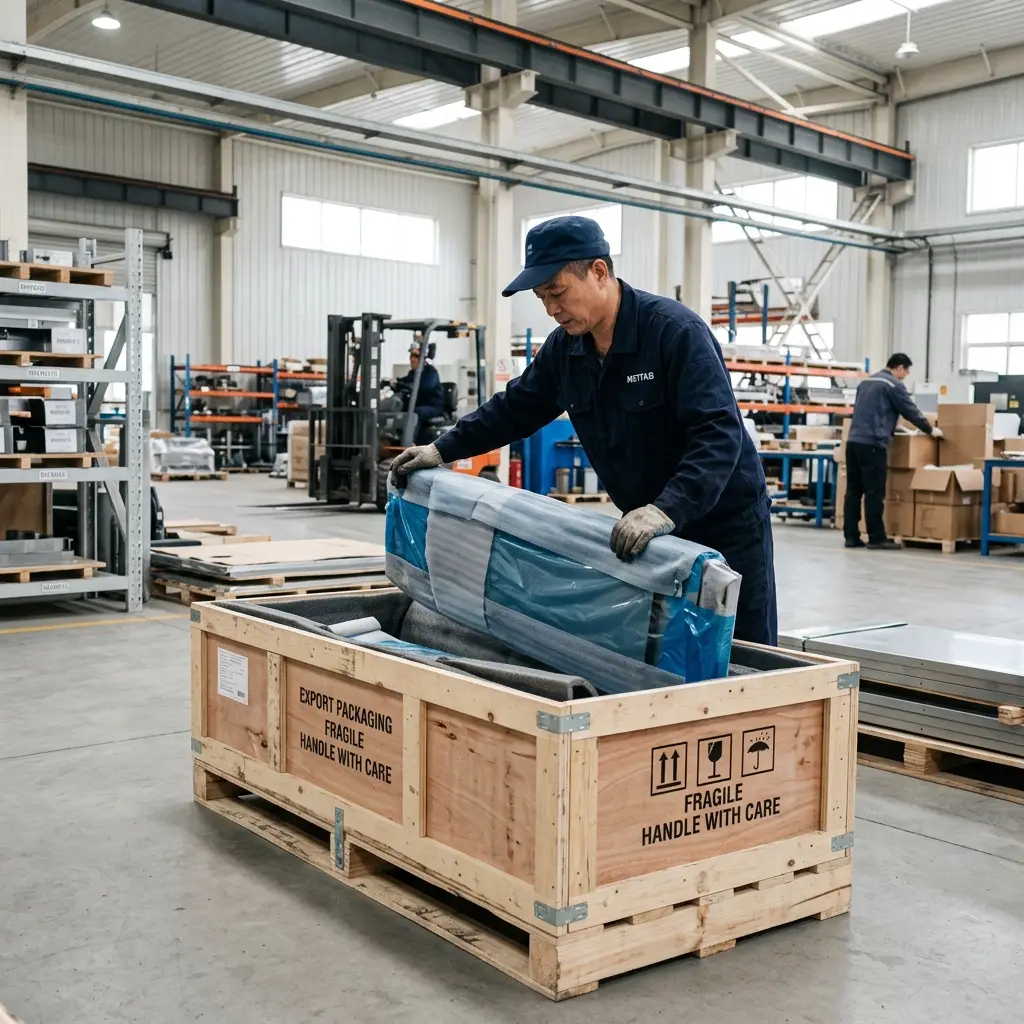
Domestic shipments can often travel in standard corrugated boxes or open wooden skids. Sourcing from China requires heavy-duty seaworthy export crating. Professional Chinese fabricators utilize ISPM-15 certified timber crates with high-density EPE foam cradles and desiccant barrier bagging to eliminate transit scratches, corner crushing, and humidity oxidation during international ocean voyages.
China vs. Local Sheet Metal Sourcing Decision Matrix
The comparative scorecard below highlights the key operational differences to guide your sourcing strategy:
| Decision Factor | Local Domestic Manufacturing | China Contract Manufacturing (MSTFAB) | Strategic OEM Recommendation |
|---|---|---|---|
| Unit Piece Price | Higher (high domestic labor & overhead) | 30% to 50% lower on volume releases | China wins for volume batches (>50 pcs) |
| Tooling & Setup NRE | USD 150 – USD 350 per setup | Low or waived on production blanket orders | China wins for complex multi-bend parts |
| Rapid Prototyping Lead Time | 3 to 5 business days (domestic ground) | 7 to 10 days (via express air courier) | Local wins for daily EVT design changes |
| Volume Production Lead Time | 4 to 6 weeks (shop queue bottlenecks) | 3 to 4 weeks production + 3 weeks sea freight | Equal with blanket PO buffer scheduling |
| Facility Vertical Integration | Often fragmented (subcontracts paint/plating) | Full in-house: laser, brake, weld, powder line | China wins for turnkey finished assemblies |
| Quality Documentation | Standard FAI on request | AS9102 FAIR, CMM metrology, MTR certs standard | Equal with proper contract specifications |
Compare China Sourcing Economics with MSTFAB
MSTFAB bridges the gap between Western engineering expectations and Chinese manufacturing scale. With modern CNC fiber lasers, precision multi-axis press brakes, automated powder coating, and full CMM inspection reports, we provide transparent contract manufacturing that saves 30% to 50% without quality risk. Contact our team for a comparative quote today.
 WeChat Contact
 WhatsApp Me Directly