
The Short Answer
Reliable carbon steel laser cutting requires matching the steel grade (SPCC cold-rolled vs. SPHC/Q235B/Q355B hot-rolled) to your thickness and forming requirements, choosing nitrogen vs. oxygen assist gas based on downstream powder coating, and controlling thermal flatness and bottom-edge dross before parts enter press brakes or welding fixtures. Locking these parameters during pre-production DFM prevents paint flaking, die marks, and assembly misalignment.
Explore this guide
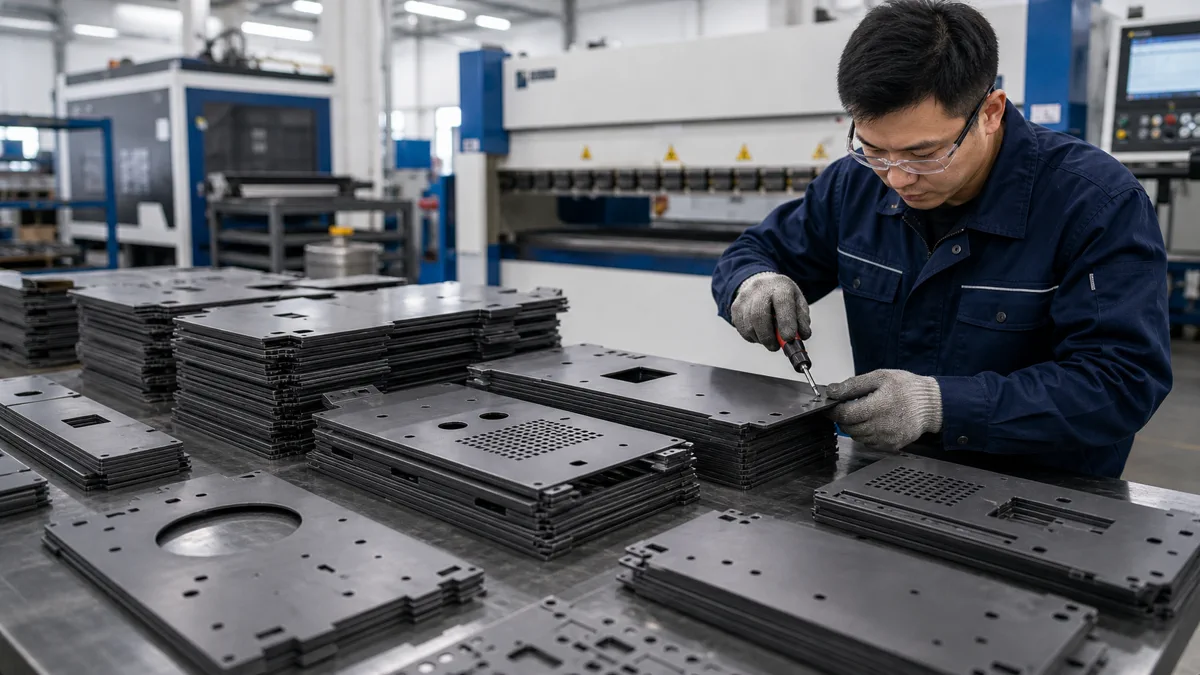
01 / Grade Selection and Material Condition
Match cold-rolled, pickled hot-rolled, and structural carbon steel to part function.
Carbon steel is the backbone of industrial machinery frames, equipment guards, and mounting brackets because it delivers high structural stiffness and weldability at an economical material cost. However, specifying simply “mild steel” or “carbon steel” on a drawing leaves surface scale, thickness tolerance, and yield strength open to interpretation.
Before releasing files for laser cutting services for DXF files, align the specific carbon steel grade and mill finish with your cosmetic, forming, and structural load requirements.
SPCC / DC01 / CRS (0.8–3.0 mm)
Cold-rolled low-carbon steel with a smooth, scale-free surface and tight gauge tolerance. Ideal for precision enclosures, internal chassis brackets, and cosmetic powder-coated panels.
SPHC / Q235B / A36 (3.0–12.0 mm)
Hot-rolled mild steel for structural mounting plates, base frames, and brackets. Specify pickled and oiled (HRPO) stock to avoid heavy mill scale that interferes with laser piercing and paint adhesion.
Q355B / S355 / HSLA (4.0–20.0 mm)
High-strength low-alloy structural steel used for heavy-duty load-bearing arms, agricultural machinery mounts, and equipment skids requiring higher yield strength.
Mill scale warning: Standard unpickled hot-rolled black steel carries a brittle iron-oxide mill scale. If the part will be powder coated, specify HRPO (pickled and oiled) or abrasive blasting so the coating bonds directly to base metal rather than flaking mill scale.
02 / Edge Quality, Assist Gas and Flatness
Control bottom-edge dross, oxygen oxide scale, and thermal bow during cutting.
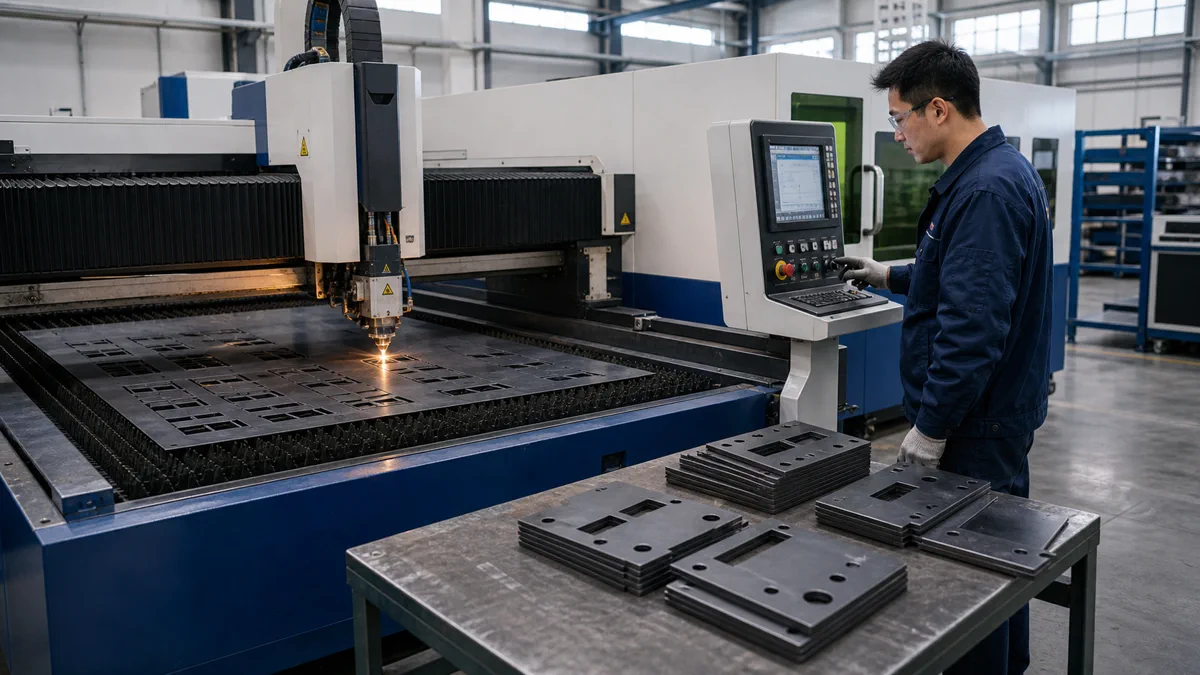
When OEM buyers reject laser-cut carbon steel parts, the failure rarely comes from X-Y laser positioning error. Instead, parts fail incoming inspection because slag (dross) clings to the bottom edge, heavy black oxide scale causes powder coat to peel along the cut perimeter, or residual coil stress causes long parts to bow after cutting.
- Nitrogen vs. oxygen assist gas selection: Oxygen cutting uses an exothermic reaction for fast cutting on thick plate but leaves an oxidized edge skin that must be ground or descaled before painting. High-pressure nitrogen cutting up to medium gauges produces a clean, oxide-free edge ready for immediate welding and powder coating.
- Dross-free nozzle and focal calibration: Bottom-edge dross prevents flat blanks from seating squarely against press brake backgauges. We calibrate nozzle standoff, beam centering, and gas purity per thickness lot and follow up with mechanical rotary-brush deburring.
- Thermal heat management and flatness: Long, narrow carbon steel strips and densely perforated panels release internal rolling stresses when heated. Skip-cutting paths, micro-tab bridges, and roller leveling keep blanks flat within drawing tolerances.
Our laser cutting services pair automated fiber laser parameter tables with mandatory edge deburring so parts move cleanly into downstream assembly.
03 / Secondary Forming and Welding
Integrate CNC bending, thread tapping, and fixture welding under one roof.
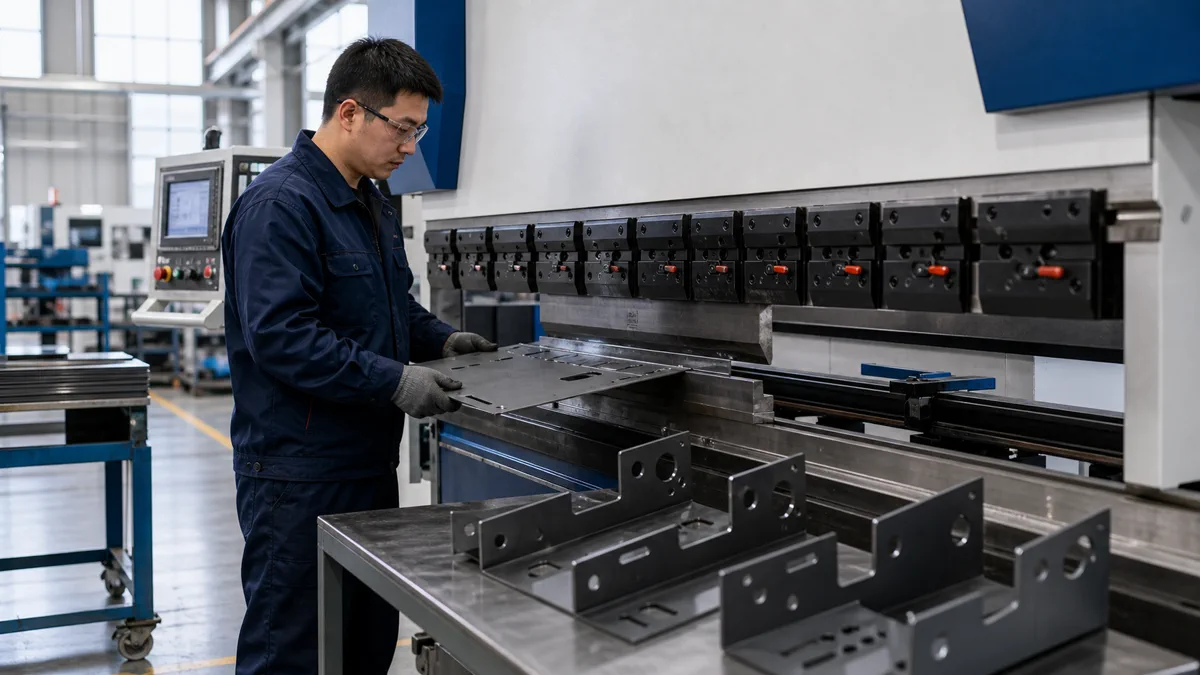
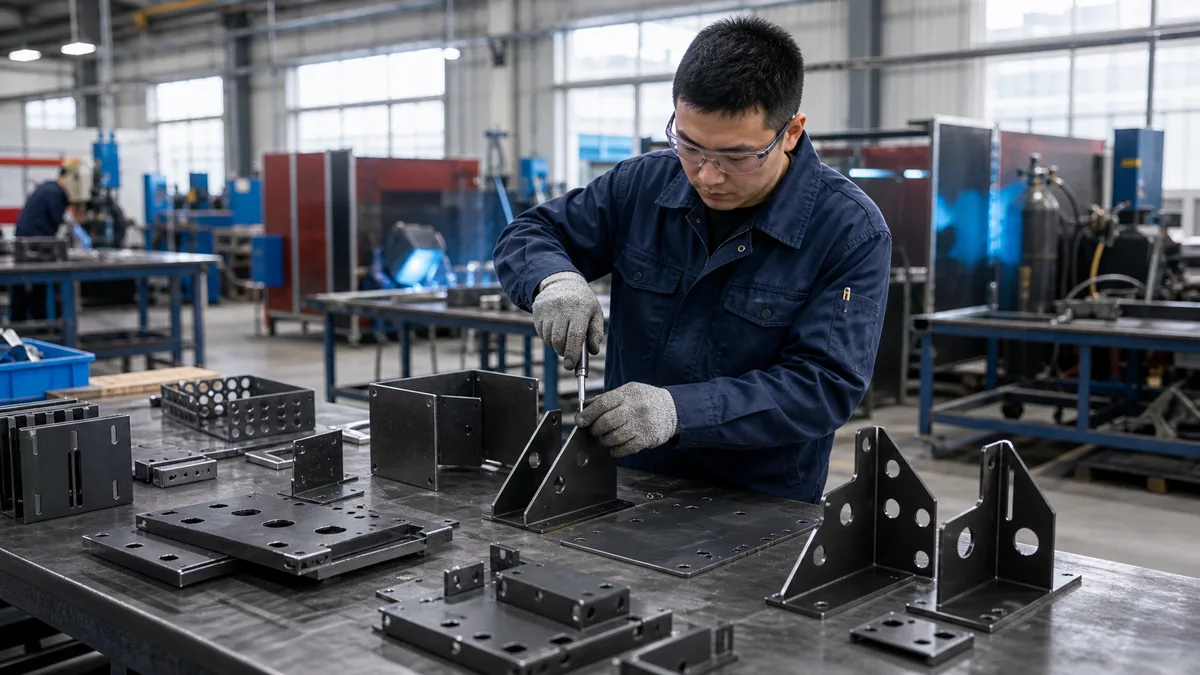
Buying flat laser-cut carbon steel blanks from one vendor and routing them to separate shops for bending, tapping, and welding creates tolerance stack-up disputes whenever a formed flange or weldment misses its datum.
- Unfold 3D STEP models using press-brake K-factors matched to the exact V-die opening and carbon steel tensile lot—accounting for thicker inside bend radii required on Q355B/S355 high-strength plate.
- Execute countersinking, chamfering, roll/cut tapping, and hydraulic PEM fastener installation on flat blanks before bending to ensure perpendicular thread axes.
- Use laser-cut tab-and-slot self-fixturing joints and heavy clamping tables during MIG and TIG welding to control angular distortion on structural frames.
Single-source fabrication ensures that kerf compensation, bend relief notches, and weld prep bevels are engineered together before the first sheet is loaded onto the laser bed.
Explore our CNC bending capabilities for carbon steel parts →
04 / Corrosion Protection and Finishing
Prevent flash rust and edge peel with proper pre-treatment and coating.
Unlike stainless steel or aluminum, bare carbon steel begins oxidizing as soon as it is exposed to shop humidity. A durable finish depends as much on edge preparation and chemical pre-treatment as on the topcoat itself.
- Edge rounding and oxide removal: Paint and powder coatings pull back from razor-sharp 90-degree laser edges during oven curing. Mechanical edge conditioning rounds sharp corners and strips laser oxide so film builds evenly across cut edges.
- Industrial powder coating (RAL / Pantone): Preceded by degreasing, derusting, and zinc/iron phosphate conversion pre-treatment to ensure cross-hatch adhesion and salt-spray durability for indoor and outdoor machinery panels.
- Electro-galvanizing (zinc plating): Available in clear/blue, yellow, or black trivalent passivate for precision mounting brackets, linkages, and hardware plates where thin coating build is critical for thread and bore fit.
- Hot-dip galvanizing and e-coating: Heavy-duty zinc immersion or electrophoretic primer for outdoor structural frames, trailer components, and corrosive industrial environments.
If your carbon steel parts are shipped bare for welding at your own facility, we apply dry-to-touch VCI anti-rust oil and seal them in VCI corrosion-inhibiting film before crating.
05 / Buyer Control Matrix
Verify five carbon steel fabrication controls before releasing production.
Use this engineering checklist during DFM review to confirm material grade, cut-edge condition, and coating preparation with your supplier.
06 / Inspection Handoff
Verify hole tolerances, flatness, bend angles, and coating thickness before shipment.
Waiting until container arrival to discover that laser-cut mounting slots are undersized after powder coating or that heavy brackets have inconsistent bend angles stalls your entire assembly line.
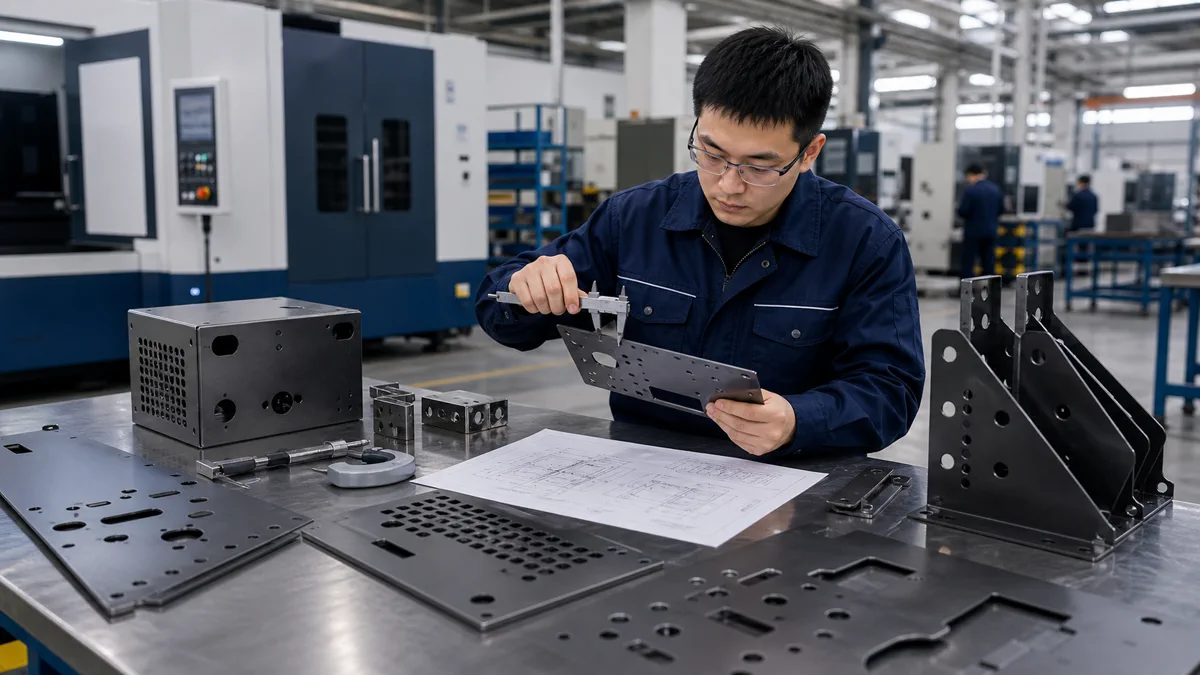
Our QC engineers inspect first-off laser blanks against your 2D PDF drawing using calibrated digital calipers, pin gauges, and optical comparators—checking critical hole-to-edge datums before releasing the batch to press brakes or welding.
Under our ISO 9001 quality management system, completed carbon steel parts undergo final dimensional verification, thread go/no-go gauge checks, and magnetic dry-film coating thickness testing.
Review our sheet metal quality control and inspection workflow →
07 / Packing and Release
Stop ocean-freight rust and coating rub with engineered export packaging.
Carbon steel parts face two major transit threats: condensation-driven flash rust on bare metal surfaces, and coating abrasion when heavy steel brackets shift inside poorly braced crates.
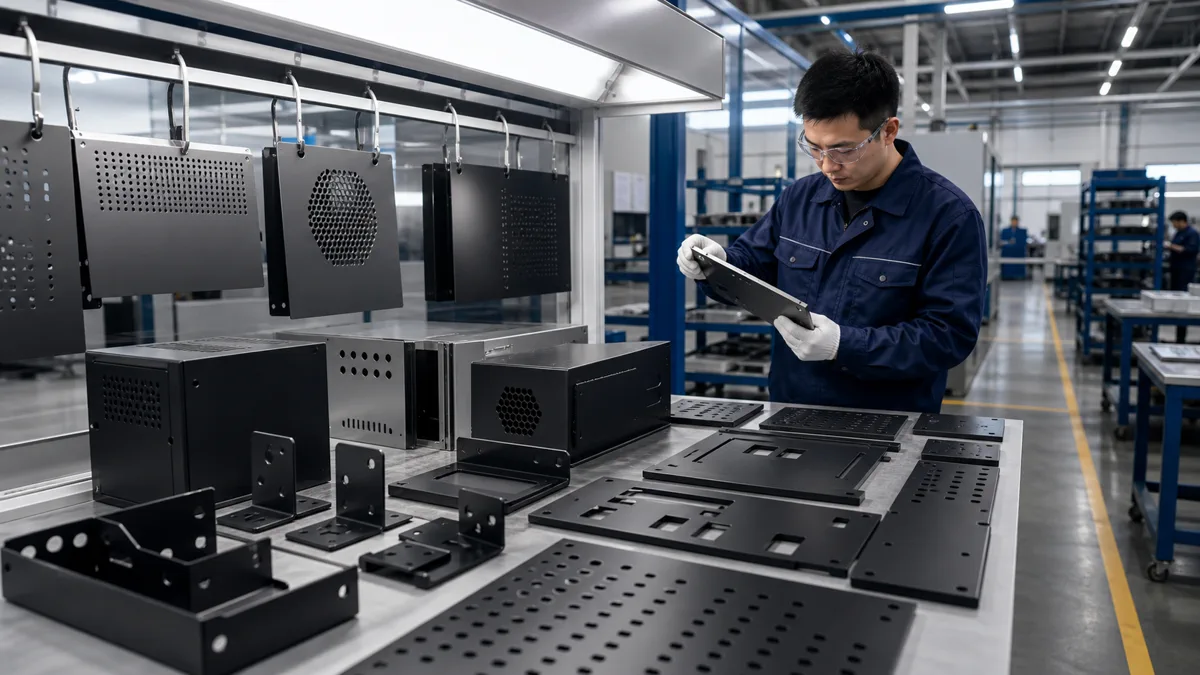
Through our export packaging process, bare carbon steel blanks are treated with VCI rust preventive and sealed with desiccant packs, while powder-coated and zinc-plated parts are foam-interleaved, strapped into rigid layers, and shipped in fumigation-free ISPM-15 plywood crates.
Manufacturing scope: MSTFAB manufactures custom build-to-print carbon steel laser-cut parts, formed brackets, welded frames, and empty enclosure shells to OEM drawings under ISO 9001 quality management. Final equipment assembly, electrical wiring, and end-product certification remain the responsibility of the OEM.
08 / Ready-to-Review RFQ
Include eight engineering details in your carbon steel laser cutting RFQ.
- 1:1 DXF + 3D STEP filesProvide clean 1:1 DXF flat patterns for flat plates and 3D STEP models for bent or welded carbon steel parts.
- 2D PDF drawing with tolerancesCall out critical hole diameters, flatness tolerances, datum edges, thread sizes, and weld symbols.
- Specific carbon steel gradeState SPCC, SPHC, Q235B (A36), or Q355B (S355) along with nominal sheet thickness in millimeters.
- Assist gas / edge requirementNote if oxide-free nitrogen laser cutting or full edge rounding is required for downstream paint adhesion.
- Secondary fabrication scopeDetail CNC press brake bending, countersinking, tapping, PEM fastener installation, or fixture welding.
- Surface finish or bare rust prepSpecify powder coat RAL code and texture, zinc plating color, hot-dip galvanizing, or bare oiled + VCI packing.
- Masking and thread protectionIdentify grounding pads, bearing bores, or tapped holes that must be masked before powder coating.
- Order quantity and batch scheduleShare prototype sample count, production batch volume, and delivery destination for accurate crating quotes.
Providing clear material grade, secondary forming, and coating callouts upfront lets our engineers confirm sheet nesting and return an accurate, no-surprise quotation.
Carbon steel laser cutting questions from OEM buyers
Should we specify cold-rolled (SPCC) or hot-rolled (SPHC / Q235B) carbon steel for laser-cut parts?
Use cold-rolled steel (SPCC / DC01) for thicknesses from 0.8 mm to 3.0 mm when you need tight thickness tolerances, sharp bend definitions, and a smooth cosmetic surface for powder coating. Use hot-rolled steel (SPHC / Q235B / Q355B) for structural brackets and plates from 3.0 mm to 20 mm; specify pickled and oiled (HRPO) finish if you want scale-free surfaces without abrasive blasting.
Why does powder coating sometimes peel along the edges of laser-cut carbon steel?
When carbon steel is laser cut using oxygen assist gas, a thin, brittle iron-oxide layer forms along the cut edge. If powder coating is applied directly over that oxide skin without nitrogen cutting or mechanical edge descaling, the oxide layer can delaminate under thermal cycling or impact. We prevent this by using nitrogen cutting or mechanical rotary-brush edge conditioning prior to phosphate pre-treatment.
Can MSTFAB handle CNC bending, tapping, and welding after carbon steel laser cutting?
Yes. We provide complete turnkey fabrication including fiber laser cutting, mechanical deburring, CNC press brake forming, countersinking, tapping, PEM hardware insertion, MIG/TIG structural welding, and surface finishing under one quality system.
How do you prevent bare carbon steel laser-cut blanks from rusting during sea freight?
For customers who order unpainted carbon steel parts for welding in their own factories, we apply a light film of weld-compatible anti-rust oil, wrap stacks in VCI (Volatile Corrosion Inhibitor) stretch film with desiccant bags, and pack them inside sealed fumigation-free plywood crates.
What file formats should we send for a carbon steel laser cutting quote?
For flat laser-cut plates, a 1:1 DXF or DWG file paired with a 2D PDF drawing showing thickness, material grade, and tolerances is ideal. For parts that require CNC bending or welding, please include the 3D STEP (.stp / .step) model so we can unfold the flat pattern using our exact press-brake tooling deductions.
What thickness range of carbon steel can you laser cut cleanly?
Our high-power fiber lasers routinely cut carbon steel from 0.8 mm thin-gauge sheet up to 20 mm structural plate, holding clean edge perpendicularity and repeatable hole-to-edge tolerances across prototype and batch production runs.
Technical references
Reference these international standards when specifying thermal laser cut edge quality, general sheet metal tolerances, and structural carbon steel grades on your drawings.
- ISO 9013 — Thermal Cutting: Classification of Thermal Cuts, Geometrical Product Specification and Quality Tolerances
- ISO 2768-1 / 2768-2 — General Tolerances for Linear, Angular and Geometrical Sheet Metal Dimensions
- ASTM A1008 / A36 — Standard Specifications for Cold-Rolled and Structural Carbon Steel Sheet and Plate
Send your carbon steel DXF, STEP, and PDF files for a technical quote.
Share your drawing package, steel grade, and finishing requirements. MSTFAB will review edge quality, bend radii, and coating specs to provide a fast, transparent quotation.
Request a Carbon Steel Cutting Quote →
Have a question first? caroline@mstfab.com
 WeChat Contact
 WhatsApp Me Directly