
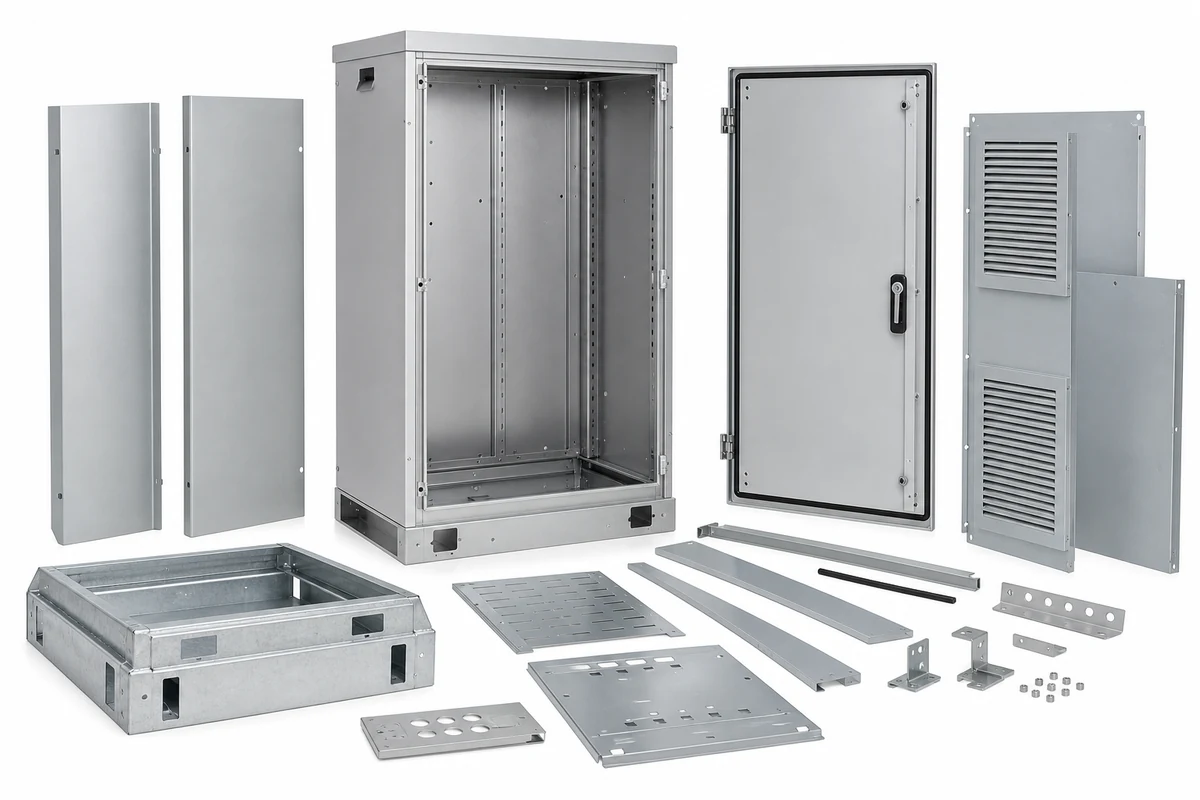
A battery storage equipment enclosure looks simple until the prototype arrives and the door does not close, the coating scratches during packing, or the ventilation panel blocks service access. At that moment, the enclosure is no longer “just a box.” It becomes the expensive box everyone wants to talk about in a meeting.
This guide is written for OEM engineers and procurement teams sourcing battery storage enclosure fabrication from a custom sheet metal factory. It focuses on the physical metal housing: cabinet shells, doors, vent panels, cable gland plates, mounting plates, brackets, rain lips and welded bases. In plain English: MSTFAB makes the enclosure parts that protect your system; final integration belongs to the buyer or system partner.
Battery Storage Enclosure Fabrication: Empty Metal Shells, Not Finished Systems
For ranking and buyer clarity, the keyword target here is not a complete battery storage system. It is battery storage equipment enclosure sheet metal design and custom metal enclosure fabrication. That distinction matters because buyers need the correct manufacturing partner for the correct job.
| MSTFAB manufactures | Normally handled by buyer or integrator |
|---|---|
| Empty battery storage enclosure cabinet shells and doors | Final electrical layout, system certification and field commissioning |
| Laser-cut panels, louver plates, cable gland plates and mounting plates | Installed electrical devices, software, monitoring and safety logic |
| CNC-bent shells, rain lips, return flanges and support rails | Energy components, thermal equipment selection and system-level validation |
| Welded base frames, hinge plates, latch brackets and lifting lugs | Final site installation, connection work and maintenance planning |
| Powder coating, dimensional inspection, surface checks and export packing | Local electrical compliance and final product ownership |
5 Enclosure Problems OEM Engineers Often Overlook
Most enclosure problems start small. A missing bend note. A vague gasket path. A cable plate that was “obvious” to one engineer and invisible to everyone else. Then the production team opens the crate and the fun begins.
| Problem | Why buyers care | Sheet metal fix before RFQ |
|---|---|---|
| Door and gasket geometry is not defined | Poor door fit creates sealing risk and awkward field adjustment | Specify gasket path, door gap, hinge side, latch position, return flange and compression area |
| Ventilation and filter service access is treated as decoration | Bad louver placement can block maintenance and trap dust or water | Define louver direction, removable filter frame, service clearance and rain hood geometry |
| Cable gland plates are forgotten until late | Late cutouts cause rework, coating damage and slow assembly | Use removable gland plates with revision-controlled cutouts and hole patterns |
| Material and coating are chosen only by price | Outdoor corrosion, scratched panels and bent doors hurt product reliability | Confirm steel or aluminum grade, thickness, pretreatment, powder coating, masking and packing protection |
| Large panels are packed like small brackets | Long painted doors and side panels can bend or scratch during export shipping | Plan foam, corner protection, carton, pallet and photo evidence before shipment |
How MSTFAB Builds Battery Storage Enclosure Sheet Metal Parts
A reliable enclosure comes from controlled steps, not from hoping the final assembly will forgive the drawing. MSTFAB reviews manufacturability before cutting material, then keeps the same project logic through bending, welding, finishing and packing.
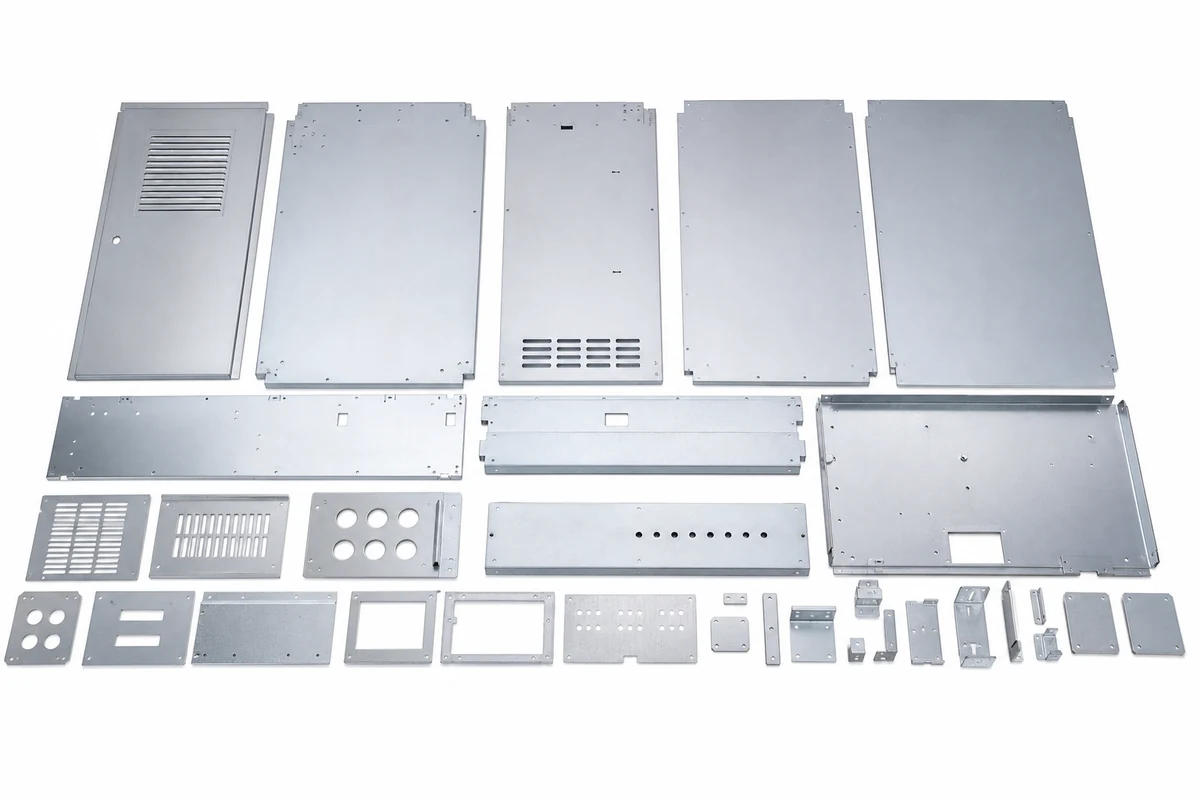
Laser-Cut Panels
Doors, side panels, vent covers, mounting plates and cable gland plates are cut with clean edges and controlled hole positions.
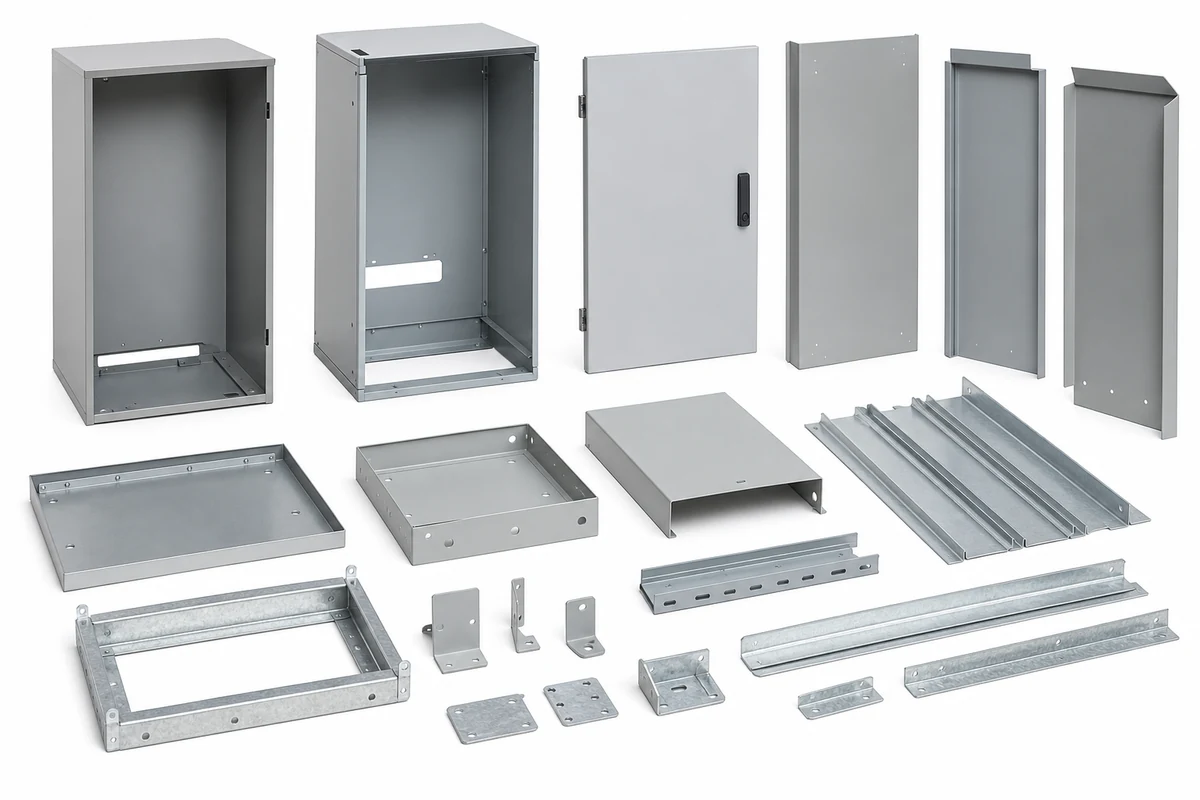
CNC-Bent Shells
Cabinet bodies, door returns, rain lips, base trays and support rails are formed for fit and repeatability.
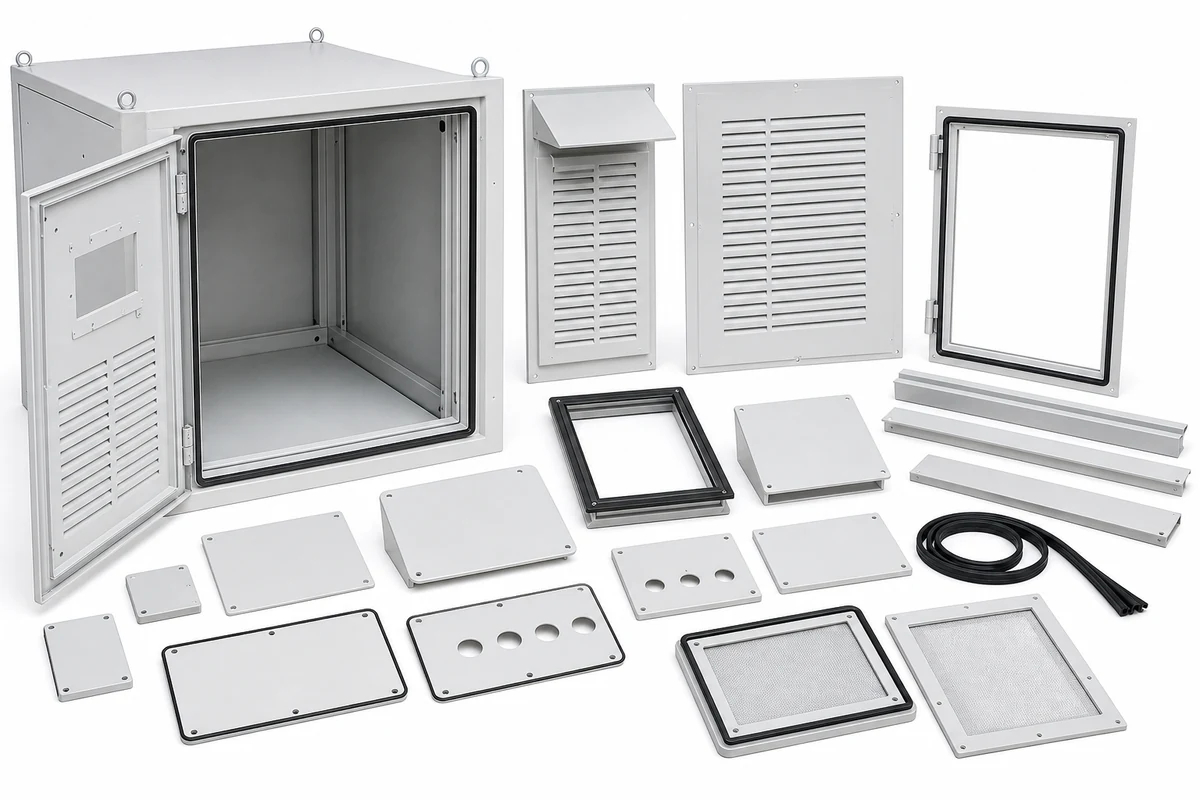
Sealing and Ventilation
Gasket channels, louvers, rain hoods, filter frames and removable covers are reviewed as part of the enclosure shell.
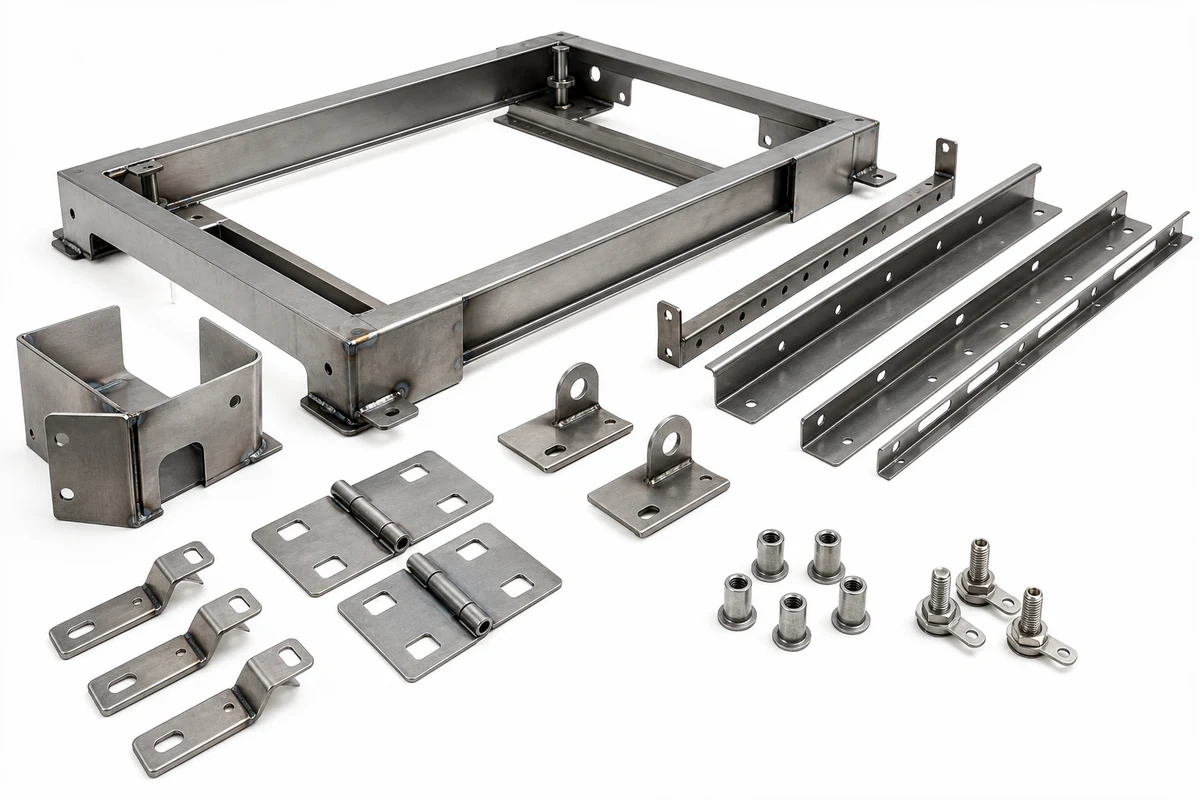
Welding and Hardware
Base frames, hinge plates, latch brackets, lifting lugs and PEM hardware are checked before coating.
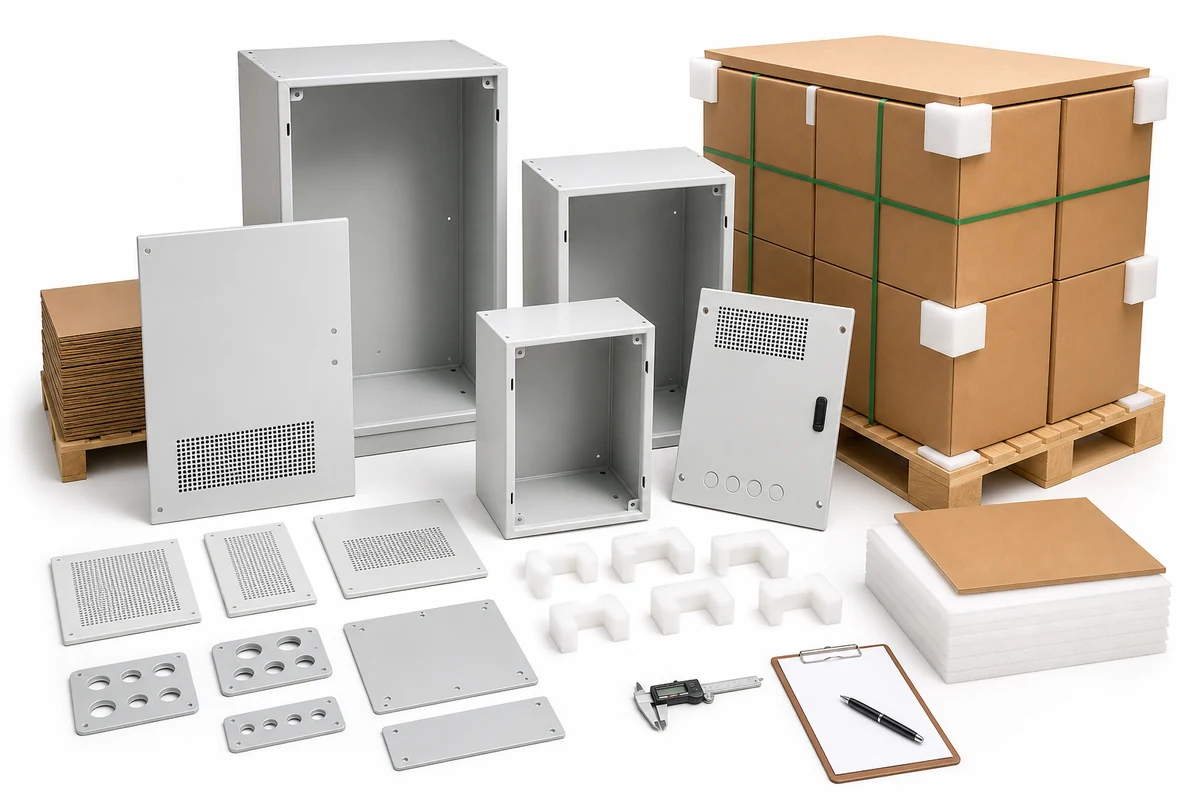
QC and Export Packing
Dimensions, finish, edges and packing protection are reviewed before international shipment.
Related manufacturing pages: laser cutting services, sheet metal bending services, welding services and surface treatment.
Custom Battery Cabinet Sheet Metal Fabrication: Doors, Frames, Panels and Mounting Structures
Quick answer: a battery cabinet looks like one product, but a fabrication factory sees separate parts — doors, welded frames, removable panels and internal mounting structures. Each has its own process, inspection points and order quantity, so it should be quoted and accepted as its own BOM line. MSTFAB makes the metalwork from customer drawings; batteries, electronics and system integration stay with the buyer.
| Component | Main fabrication work | Confirm before quoting | Typical acceptance focus |
|---|---|---|---|
| Cabinet doors | Laser cutting, bending, hinge and latch preparation | Hinge and latch positions, gasket channel, reinforcement plates | Overall size and diagonal, hinge and latch positions, edge and surface appearance |
| Welded frames | Cutting, forming, welding, inspection | Reference dimensions, weld locations, mounting interfaces | Squareness, mounting hole positions, welding distortion against the drawing |
| Removable panels | Cutting, bending, surface finishing | Cutouts, hole patterns, fastening method, finish | Fit in the approved opening, cutout positions, finish protection |
| Mounting structures | Cutting, bending, drilling, welding as required | Hole patterns, thickness, attachment positions, load requirements set by the OEM | Hole pattern and flatness per drawing, hardware installed as specified |
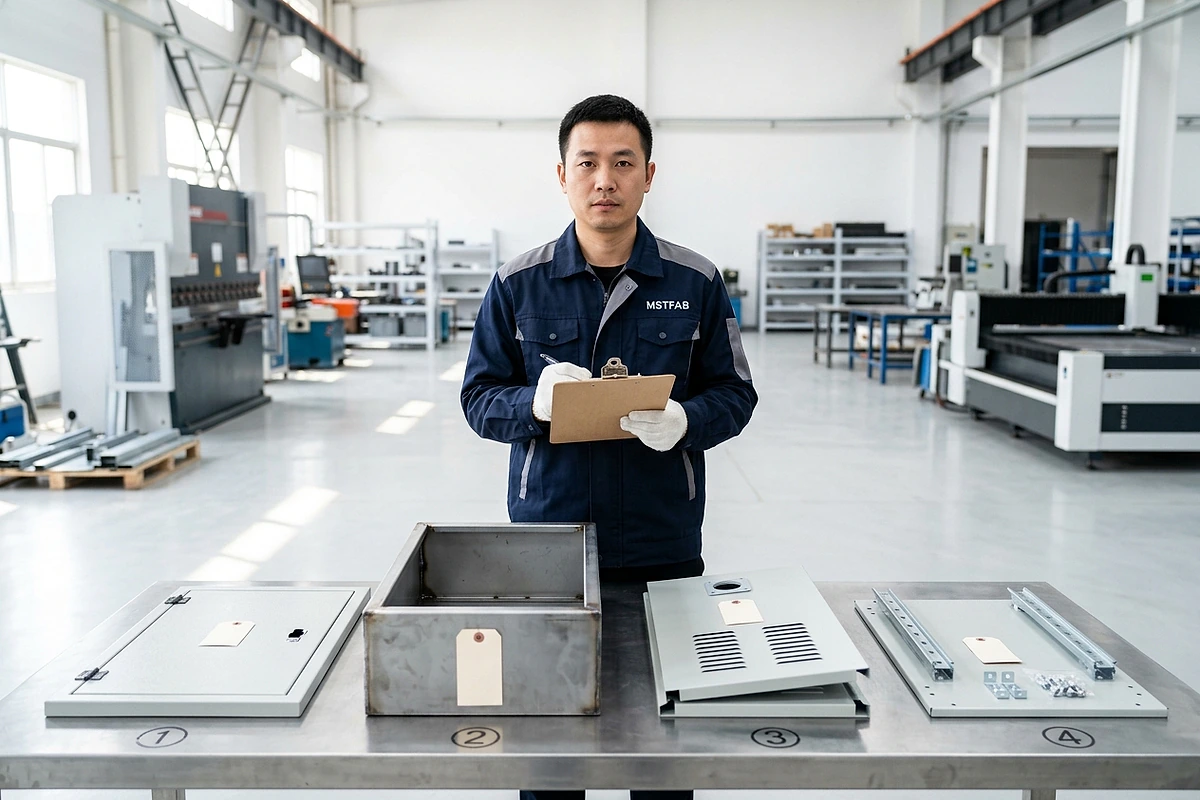
Quote each component on its own work. A welded frame needs different production preparation from a flat ventilation panel. A buyer ordering 100 doors and 300 brackets should see pricing based on each part’s real requirements. Keep part numbers, drawing revisions, material, finish and quantity on separate BOM lines so quotations are easy to compare and individual parts easy to reorder.
Check shared interfaces together. Doors, frames and panels meet at hinge lines, openings and fastening points. Where components share an interface, review them as a set before production so that fit is judged against the same drawing baseline. MSTFAB reviews drawing-defined features and can discuss practical fabrication adjustments before cutting.
Plan batches and repeat orders. Components can be delivered in batches by part number or cabinet model, as agreed in the quotation. The approved first sample becomes the reference for repeat orders, so keep the drawing revision, critical dimensions and finish requirement unchanged unless a revision is agreed in advance. Label and protect loose parts so a mixed shipment is easy to sort.
Responsibility stays clear. Structural loads, acceptance limits, electrical safety, ingress protection and system certification remain with the OEM; surface finishing is coordinated with established external partners. For the full scope, see the BESS cabinet shell scope matrix, the mechanical interface checklist and our custom sheet metal fabrication services.
RFQ Checklist for Battery Storage Enclosure Metal Shells
If you want a quote that is useful, send information that lets a sheet metal factory quote the real work. “Make it strong and outdoor-ready” is not a specification; it is a wish with a purchase order attached.
| RFQ item | What to send | Why it improves price and lead time |
|---|---|---|
| 3D and 2D drawings | STEP or STP model plus PDF or DWG drawing with revision number | Supports bend sequence, DFM review, tolerance checks and inspection planning |
| Material and thickness | Cold-rolled steel, galvanized steel, stainless steel or aluminum with exact thickness | Controls strength, forming, coating and cost |
| Outdoor requirement | Sealing concept, rain lip, louver direction, drainage and service access notes | Prevents door, gasket and ventilation surprises after sample approval |
| Hardware list | Hinge, latch, PEM nuts, studs, lifting points, gasket and mounting plate details | Prevents hole-position mistakes and late assembly changes |
| Finish standard | RAL color, texture, gloss, masking, corrosion expectation and appearance class | Protects cosmetic quality and functional contact areas |
| Quantity and packing | Prototype quantity, batch quantity, annual volume, carton and pallet requirements | Helps match tooling, unit price, scheduling and export protection |
Useful quotation resources: what files are needed for a sheet metal fabrication quote, online drawing upload quote review and custom sheet metal enclosure quote guide.
Trust Signals for OEM Battery Storage Enclosure Buyers
| Trust signal | What it tells buyers | Evidence to request |
|---|---|---|
| DFM review before cutting | The supplier checks risk before it becomes a sample problem | Marked drawing comments, bend suggestions and hardware-risk notes |
| In-house sheet metal process | Laser cutting, bending, welding and finishing can be coordinated under one workflow | Workshop photos, sample photos and first-article inspection records |
| Outdoor enclosure experience | The factory understands door fit, gasket channels, louvers, rain lips and coating protection | Similar enclosure shell examples and packing photos |
| Dimensional inspection | Critical holes, mounting plates and door fit are checked before shipment | Inspection reports, photos and agreed sampling plan |
| Export packing discipline | Large panels and painted shells are protected during international transport | Pallet, foam, carton and pre-shipment photo evidence |
Related MSTFAB Pages for Battery Storage Enclosure Projects
Need Battery Storage Equipment Enclosure Shells?
Send your STEP files, 2D drawings, material, finish, hardware notes, quantity and export packing requirements. MSTFAB will review the sheet metal enclosure scope and quote clearly.
FAQ
Does MSTFAB supply complete battery storage systems?
No. MSTFAB focuses on custom sheet metal enclosure shells, doors, panels, mounting plates, brackets and semi-finished metal parts for buyer-side integration.
Can MSTFAB fabricate outdoor battery storage enclosure shells?
Yes. We can fabricate outdoor-use sheet metal housings with rain lips, gasket channels, louver panels, removable gland plates, welded bases, powder coating and export packing according to drawings.
What files help MSTFAB quote faster?
Send STEP or STP files, 2D drawings, material and thickness, finish, hardware list, critical tolerances, quantity and packing requirements.
Can MSTFAB manufacture battery cabinet doors and frames separately?
Yes. Custom doors, welded frames, panels, mounting brackets and structural metal components can be reviewed and quoted individually from drawings.
Can you support prototype and repeat production of battery cabinet parts?
Yes. MSTFAB supports prototypes and later production orders based on reviewed drawings and agreed manufacturing requirements. Repeat orders should reference the approved drawing revision.
Can battery cabinet components be quoted and delivered in separate batches?
Yes. Doors, frames, panels and mounting structures can be listed as separate BOM lines, with quantities and delivery batches agreed in the quotation.
 WeChat Contact
 WhatsApp Me Directly