
BESS Cabinet & Battery Enclosure Shell Manufacturing: Structural & DFM Guide
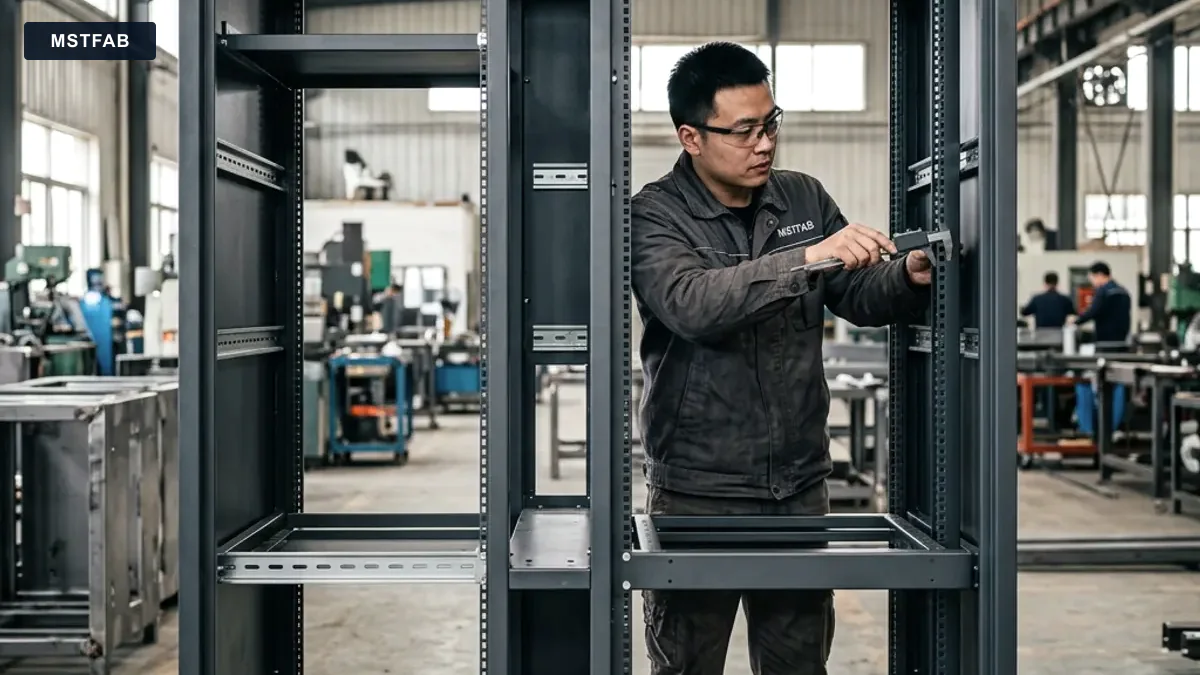
Outdoor and commercial Battery Energy Storage System (BESS) cabinets must support high battery module deadweight (500–2,500+ kg) while maintaining weatherproof door sealing: combine 2.5–3.0 mm welded structural steel frames and load-bearing L-rails with 1.5–2.0 mm SGCC or SUS304/316L exterior cladding panels.
- Rack Frame & Module Rail Flatness: Control vertical post pitch and horizontal battery tray guide rails within ±1.0 mm across the bay so heavy LFP battery packs slide in without binding.
- Deflagration & Venting Interfaces: Laser-cut precision roof or rear explosion-relief vent apertures with reinforced perimeter bolt frames and continuous gasket seats.
- Build-to-Print Mechanical Scope: MSTFAB fabricates welded BESS cabinet frames, outer doors, battery tray rails, and C11000 copper busbars to OEM drawings (battery cells/BMS excluded).
BESS CABINET CONTRACT SCOPE
A BESS cabinet shell purchase order should separate fabricated metalwork from battery, electrical, thermal and safety-system responsibilities. The best scope matrix is boring in exactly the right way: every line has an owner, drawing and acceptance record.
Put the Responsibility Matrix on Page One
| Work package | Typical owner | Release evidence |
|---|---|---|
| Sheet metal frame, doors and panels | MSTFAB when included in the approved drawing scope | Controlled files, material, finish and inspection plan |
| Mechanical hardware and gaskets | Named in the purchase order | Part numbers, installation method and fit checks |
| Battery, electrical and controls | BESS product owner or integrator | System BOM, wiring and validation owned outside shell scope |
| Thermal and fire strategy | Qualified system engineering team | Loads, selected components, interfaces and validation plan |
| Completed-system compliance | Product owner and applicable certification program | Defined configuration and responsible test party |
Use the Drawing Package to Define the Empty Shell
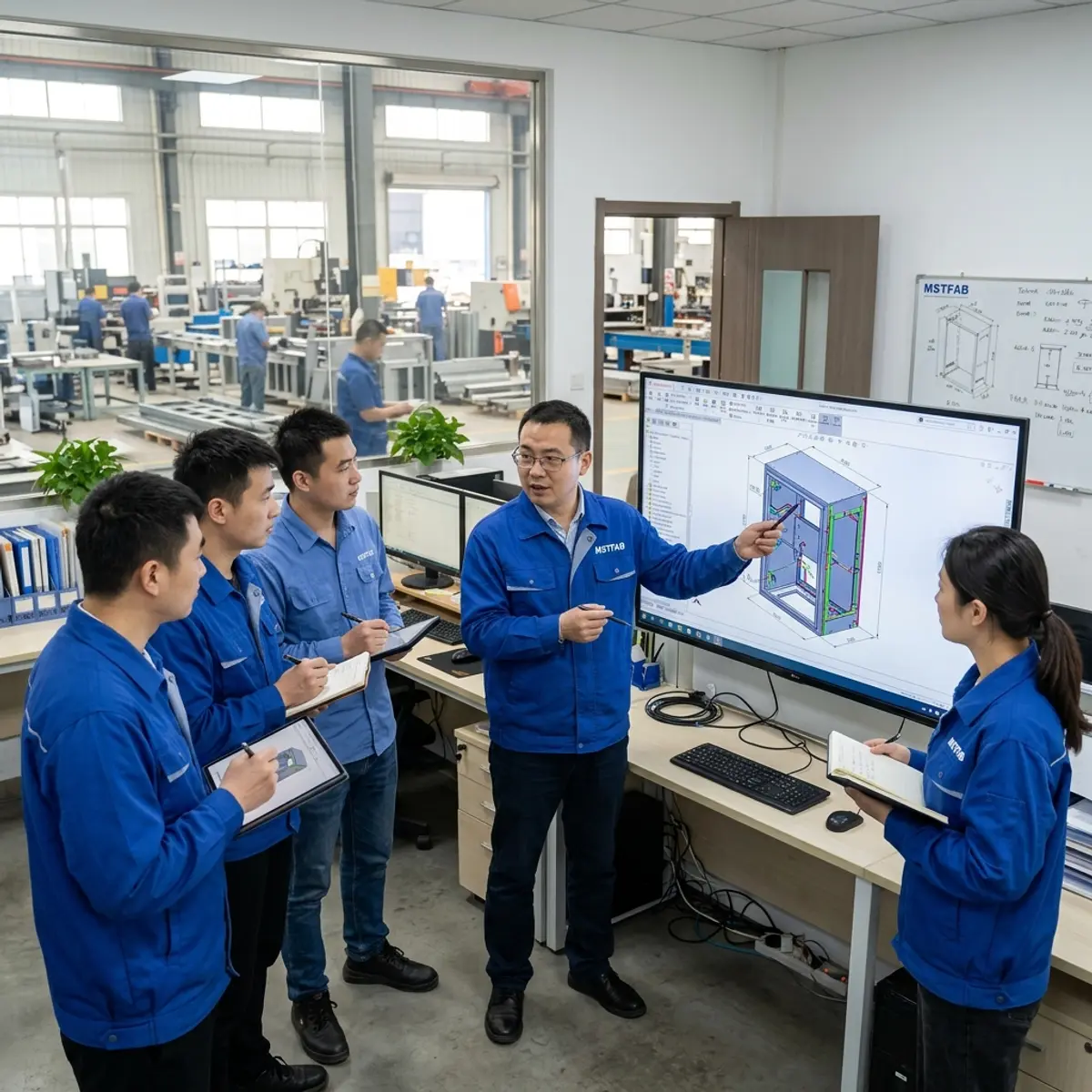
Send the cabinet assembly model, controlled 2D drawings, interface drawings, load cases, hardware schedule, finish specification, CTQs and packing requirement. Mark removable panels, door swings, cable entries, cooling cutouts, base anchors, lifting provisions and equipment keep-out zones.
Match Inspection Evidence to the Contract Scope
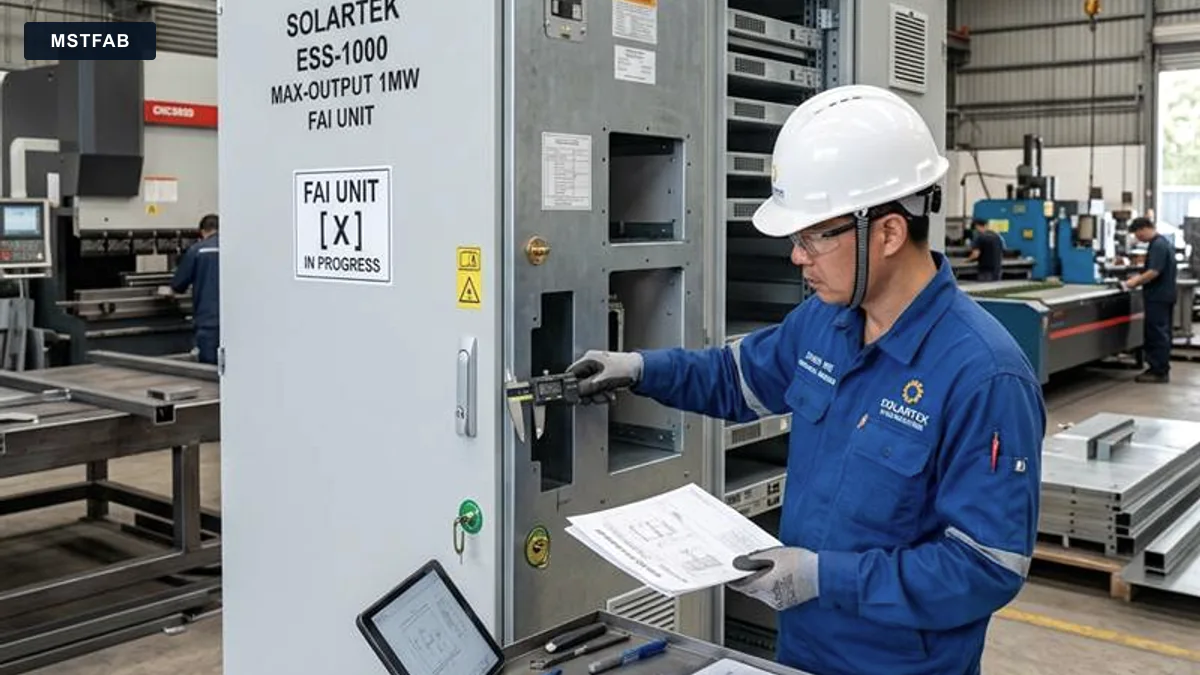
Inspect frame geometry, door and panel fit, hardware identity, cutouts, mounting interfaces, finish, masking and packing. Do not ask a shell inspection report to prove battery performance, airflow capacity, fire safety or a completed environmental rating. Those questions need the assembled system and its responsible validation plan.
Buyer Trust Table
| Commercial phrase | Evidence to request | Buyer value |
|---|---|---|
| “Cabinet assembly” | Included parts, excluded systems and assembly level | Stops scope from expanding after quotation |
| “Cooling ready” | Buyer-selected component and controlled mechanical interface | Confirms fit without claiming thermal performance |
| “Tested cabinet” | Named test, sample configuration, result and responsible party | Shows exactly what was verified |
| “Production approved” | FAI, deviations and released revision baseline | Controls the repeat order |
BESS Cabinet Purchase-Order Checklist
- Empty-shell assembly level defined
- Included doors, panels and brackets listed
- Hardware and gasket ownership stated
- Battery and electrical systems excluded or assigned
- Cooling components and interfaces assigned
- Load and installation inputs supplied
- CTQs and first-article evidence agreed
- System validation owner named
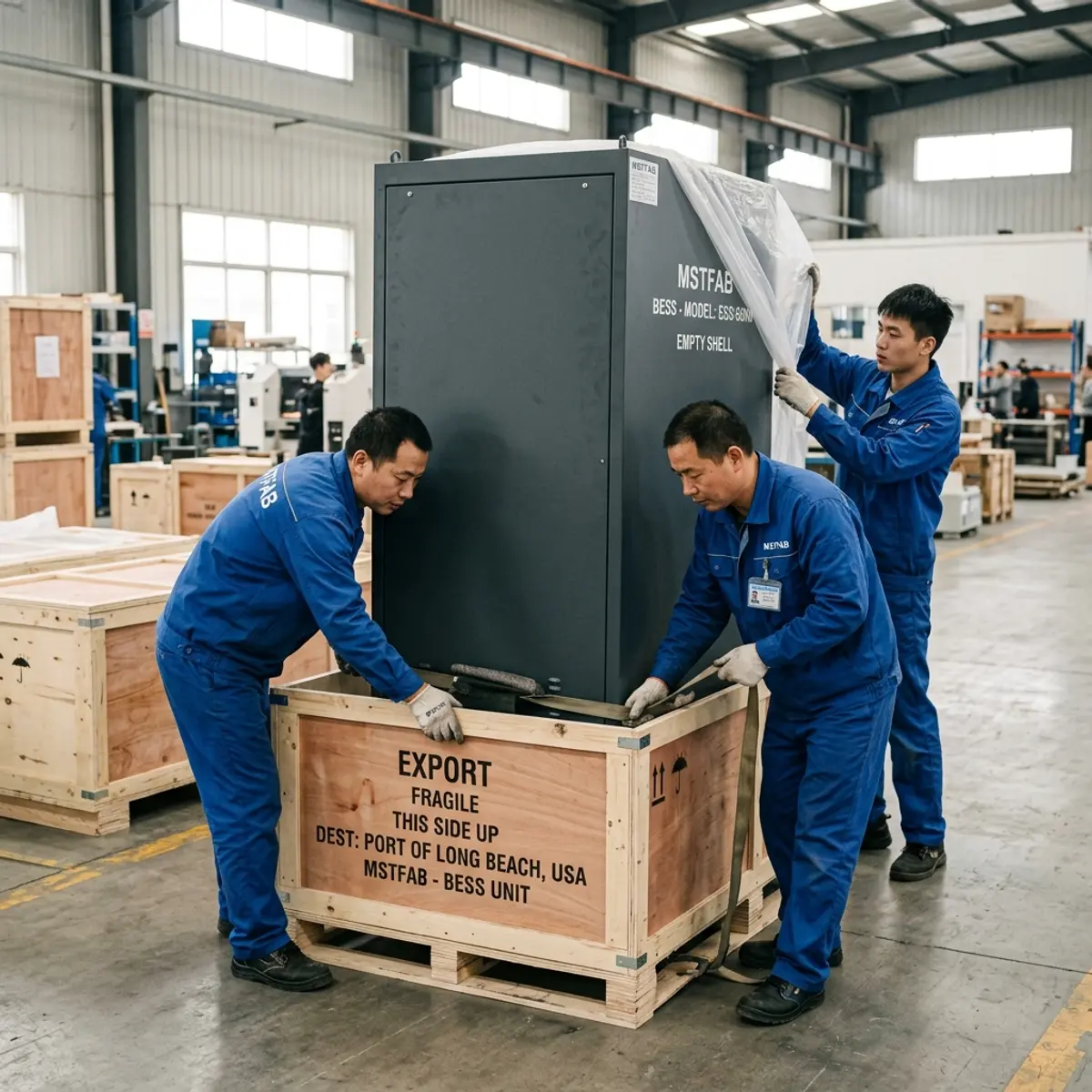
- Loose parts and packing method defined
- Changes require buyer approval
Frequently Asked Questions
Does MSTFAB supply a complete BESS?
No. MSTFAB supplies the drawing-defined empty cabinet shell and agreed mechanical parts, not the complete energy storage system.
Can customer-supplied cooling hardware be installed?
It can be considered when the component, installation method, electrical boundary and acceptance checks are explicitly included in the approved scope.
Can the empty shell carry an IP or NEMA rating?
Ratings depend on the applicable standard, sample configuration and verification. The buyer must define the target and responsible test program.
Quote the Scope Matrix With the Drawings
Send the cabinet files, included parts, buyer-owned systems, finish, CTQs and packing requirement for review.
 WeChat Contact
 WhatsApp Me Directly