
Battery Enclosure Manufacturer for Energy Storage Startups
How to source custom battery cabinet shells, welded frames, doors, mounting plates, sealing features and pilot production—while keeping system safety engineering and certification responsibilities clear.
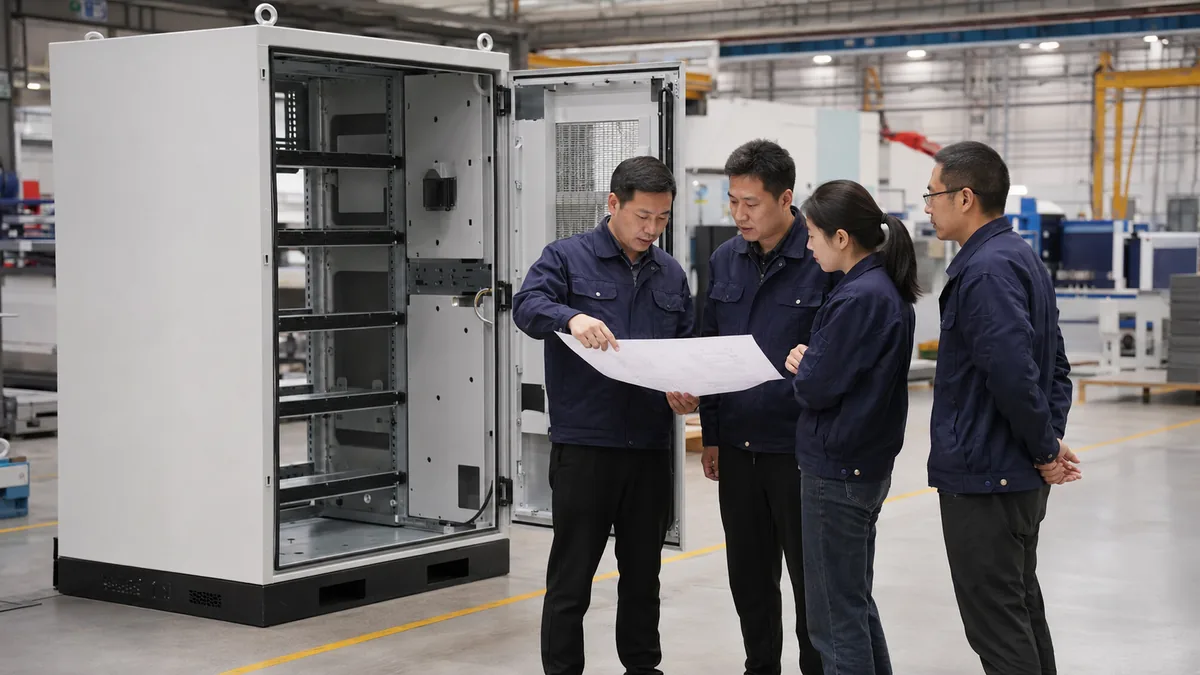
A battery enclosure manufacturer for an energy storage startup should turn controlled drawings into repeatable sheet metal cabinets, frames, shelves, doors, panels and mounting structures. The supplier should provide DFM, suitable laser cutting and bending, controlled welding, hardware installation, surface treatment, first-article inspection and export packaging. It can manufacture features specified for cooling, cable routing, bonding, sealing or pressure management, but the system designer and qualified test laboratories remain responsible for battery safety, fire behavior, electrical compliance, ingress performance and certification.
A battery energy storage system cabinet is not a generic electrical box. It may carry substantial module loads, protect sensitive equipment outdoors, maintain door and gasket geometry, support cooling hardware and keep serviceable parts aligned through transport and installation. A fabrication defect can create fit, sealing, grounding or structural problems before the electrical system is even energized.
This guide is written for commercial searches for a BESS enclosure manufacturer, custom battery cabinet manufacturer or energy storage cabinet fabrication supplier. It focuses on the scope a sheet metal factory can control and the information a startup should include in an RFQ.
Safety boundary: an empty sheet metal cabinet cannot be described as “UL 9540 certified,” “UL 9540A compliant,” “zero propagation” or “fire containing” by appearance alone. Those outcomes depend on the complete energy storage system, installation and test program. Cabinet features must be derived from qualified system engineering and verified by the applicable laboratories and authorities.
What a BESS sheet metal manufacturer actually delivers
Laser-cut and CNC-bent panels, door returns, hinges, latches, removable covers and access panels.
Welded bases, uprights, cross-members, shelves, lifting interfaces and module support structures.
Rails, mounting plates, dividers, brackets, gland plates and service-access features.
Openings and lands for ventilation, ducts, cooling components, bonding and cable management.
Pretreatment, coating, masking, gasket lands, roof details and corrosion-aware hardware.
Revision control, first-article reports, weld and dimensional checks, pilot builds and packing records.
MSTFAB’s published route covers custom sheet metal fabrication, laser cutting, CNC bending, welding, hardware, surface treatment, inspection and export packaging. Whether a specific battery cabinet fits that route depends on size, thickness, weld requirements, tolerances, finishing and forecast quantity.
Start with the system hierarchy, not a cabinet render
Energy storage hardware is usually nested: cells are assembled into modules or packs, packs are installed in racks or shelves, and those structures are integrated with electrical protection, controls, thermal management and the outer cabinet or container. The sheet metal supplier needs the mechanical envelope and interface data for each part it must locate, carry or protect.
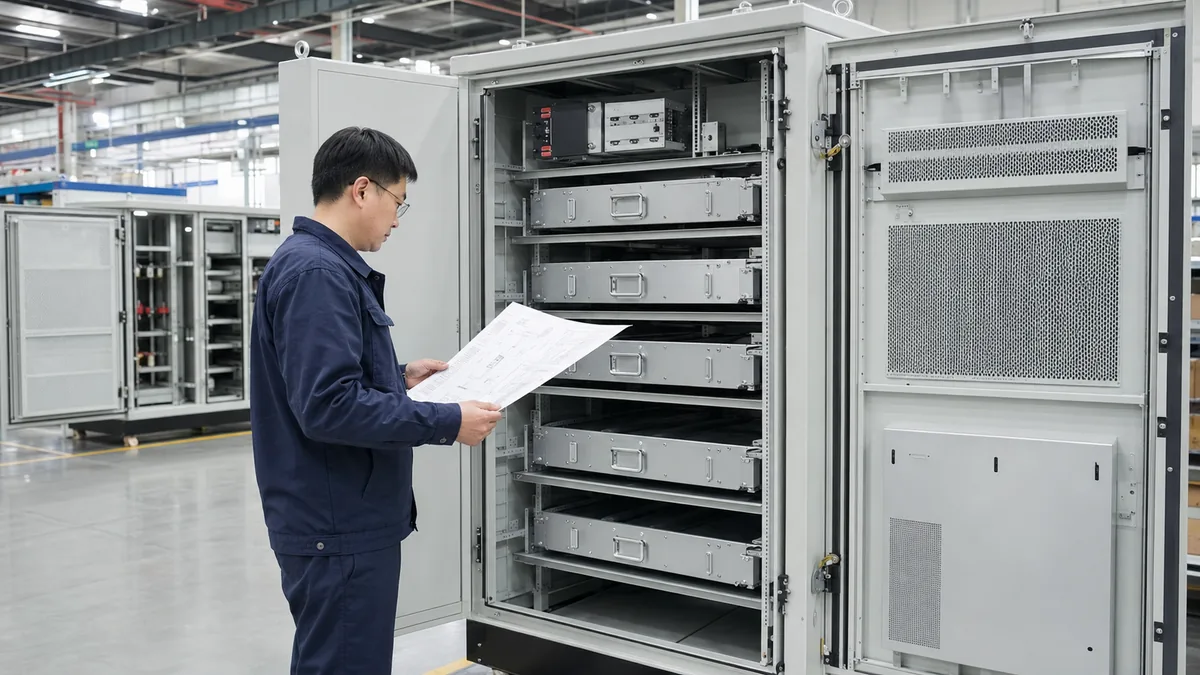
Provide representative module mass and dimensions, center of gravity, insertion path, fastener locations, cable bend radius, ventilation or cooling interfaces and maintenance access. If the system architecture is still changing, use adjustable rails, replaceable gland plates or modular mounting panels only where they add practical value.
Battery cabinet RFQ: the information that affects price and risk
- STEP model plus controlled 2D drawings and revision
- Cabinet size, target quantity and forecast stages
- Material grade, thickness and certificate requirement
- Module loads, center of gravity and mounting interfaces
- Door opening, service clearance and removal sequence
- Critical dimensions, datums and general tolerances
- Weld symbols, weld quality and distortion controls
- Bonding points, masked lands and hardware specifications
- Cooling, ventilation, duct and cable-entry interfaces
- Gasket type, compression target and sealing test plan
- Finish, color, cosmetic zones and corrosion environment
- Inspection records, packing, destination and Incoterm
Include the applicable system standards and validation plan as design inputs, but ask the fabricator to quote measurable cabinet requirements. “Must pass certification” is not a manufacturing dimension. Weld size, door-gap tolerance, mounting-hole position, coating system, masking, gasket compression and inspection records are.
Eight technical areas to review with a battery enclosure manufacturer
1. Structural load path and welded frame design
The enclosure team should define the static, transport, lifting, anchoring, anti-tip and—where applicable—seismic loads. The fabricator then reviews material thickness, bends, stiffeners, gussets, weld access and distortion risk. The outer skin should not be assumed to carry module loads unless the structure is intentionally designed and validated to do so.
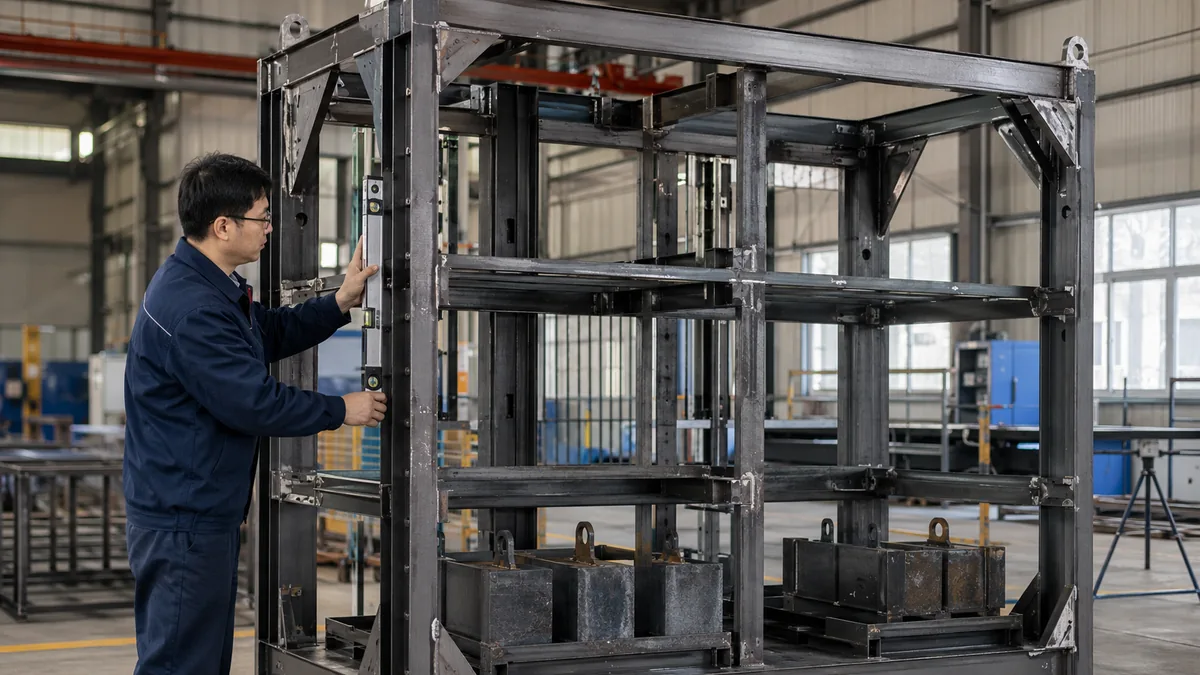
Specify lifting and handling interfaces separately from in-service loads. Ask how weld sequence, fixtures and inspection will control squareness, door alignment and rack geometry after welding.
2. Directed ventilation and pressure-management interfaces
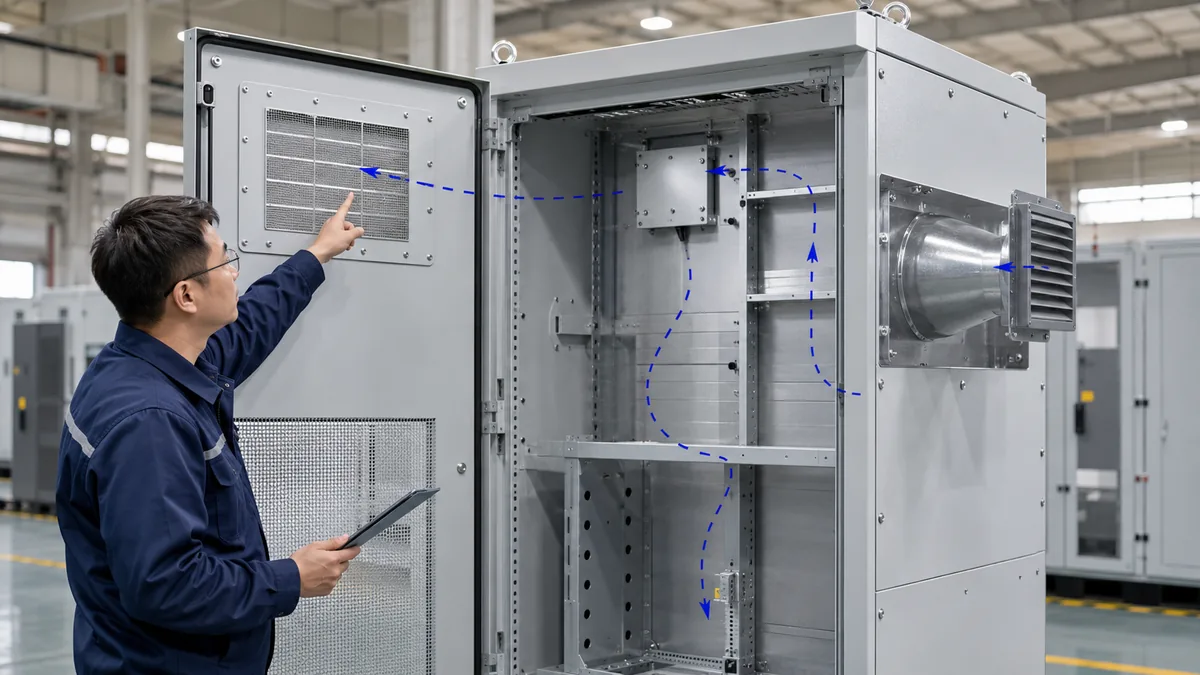
Ventilation openings, exhaust ducts, relief panels and deflectors must come from the system’s hazard analysis and test strategy. A sheet metal factory can manufacture the required geometry and inspect openings, fasteners and sealing lands. It should not size a pressure-relief system or choose a safe exhaust direction without the necessary cell, gas, thermal and installation data.
3. Electrical segregation, cable routing and bonding features
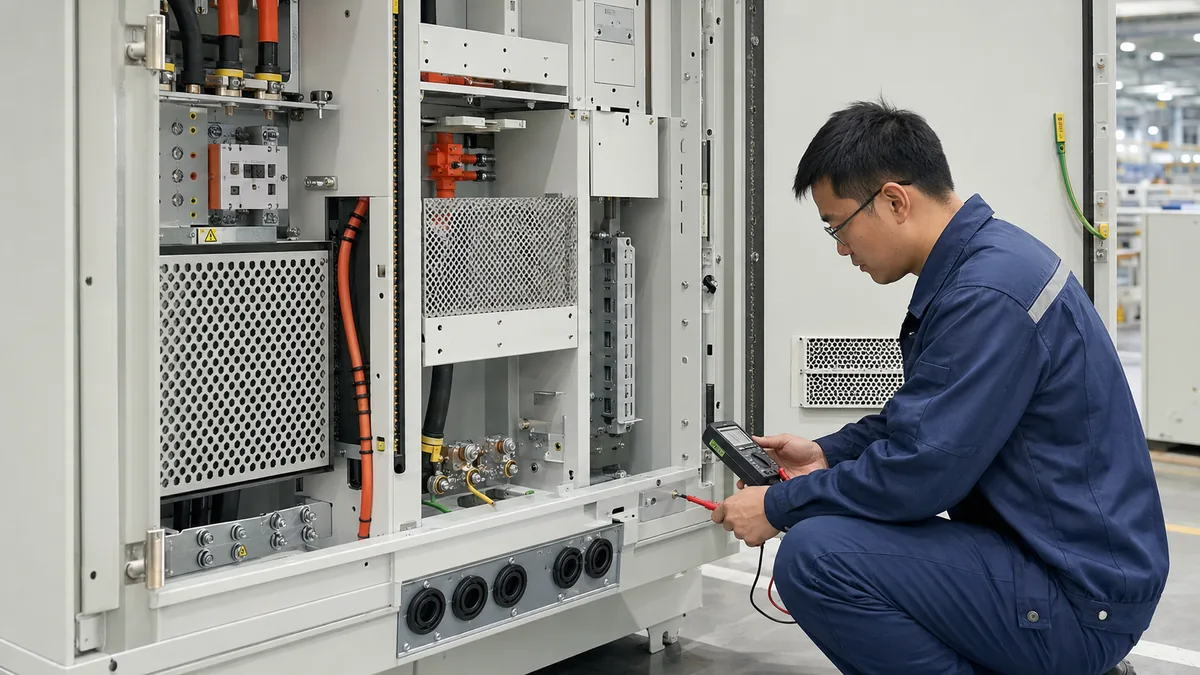
The electrical design authority should define high-voltage and control zones, access restrictions, insulation systems, creepage and clearance, protective-earth connections and interlocks. The cabinet supplier fabricates dividers, guards, gland plates, studs, masked contact lands and cable supports to those drawings.
Do not rely on the paint finish for bonding. If continuity is required, identify the hardware stack, coating mask, contact surface and acceptance test. Avoid asking a sheet metal supplier to select creepage distances from system voltage alone; pollution degree, material group, overvoltage category, environment and the applicable standard all matter.
4. Air- or liquid-cooling component interfaces
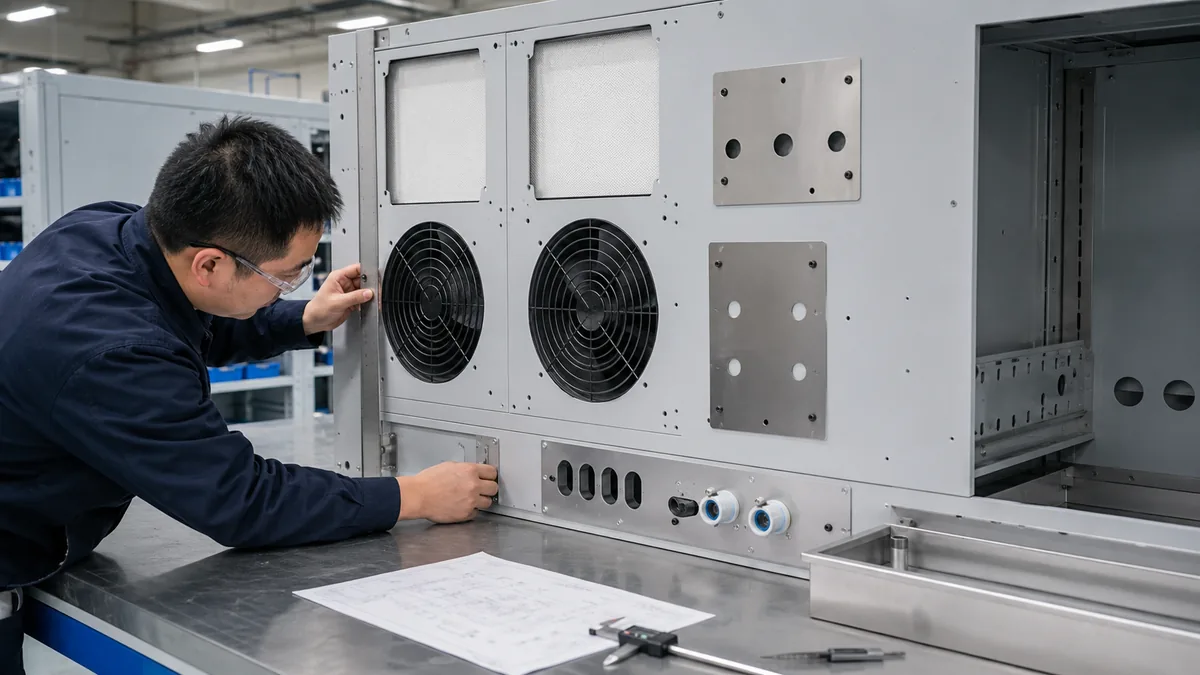
Battery cabinets may use air cooling, liquid cooling or another thermal architecture. The correct choice depends on cell chemistry, power profile, ambient conditions, layout, controls and system design. A sheet metal manufacturer can produce fan panels, duct transitions, equipment mounts, hose pass-throughs and flat mounting lands.
Cold plates, coolant circuits and leak testing are separate scopes unless the quoted supplier explicitly has the engineering, joining and pressure-test capability. Define who supplies and validates every fluid component; do not assume a cabinet fabricator is automatically a cold-plate manufacturer.
5. Outdoor sealing and corrosion protection
An ingress rating is demonstrated on the finished assembly under the applicable test conditions; it cannot be guaranteed by adding a gasket to an unfinished shell. Cabinet contributors include door stiffness, flange geometry, gasket land, latch spacing, cable-entry hardware, roof and drip details, weld quality and coating.
Material and finish should be selected for the actual environment, desired service life, galvanic couples, maintenance and cost. Coated carbon steel, aluminum and stainless steel each have tradeoffs. A coastal project does not automatically require 316 stainless, and a generic salt-spray duration does not predict field life by itself. Define the corrosion system with qualified engineering input.
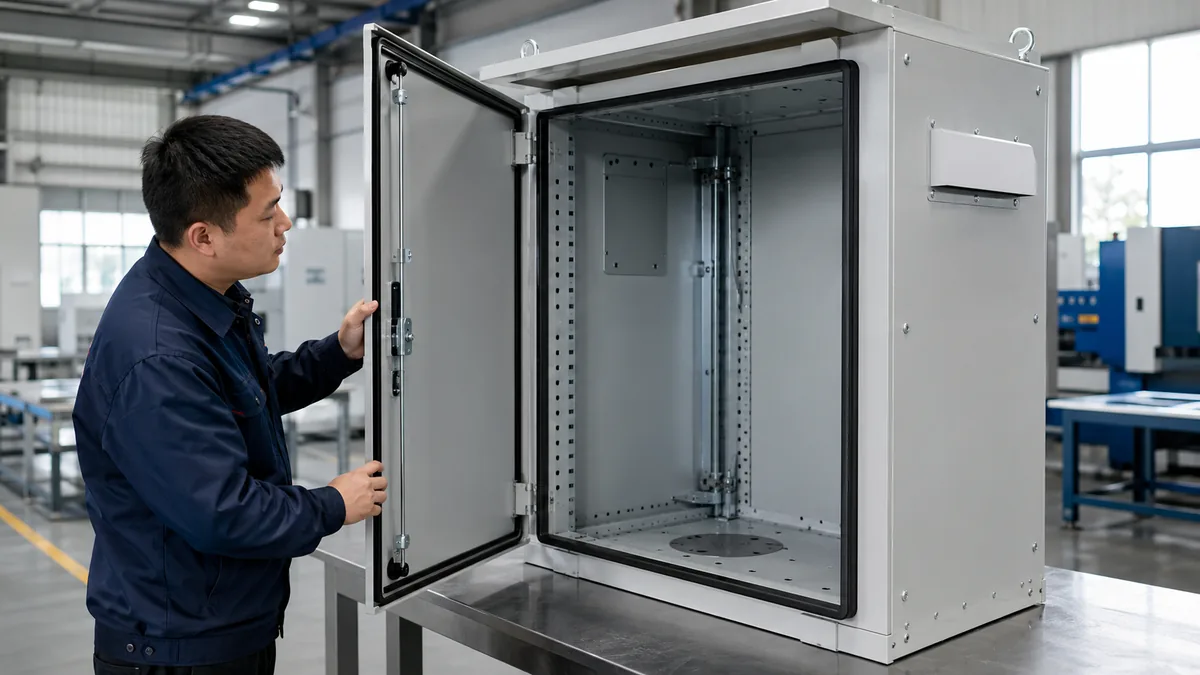
Review MSTFAB surface treatment capabilities and define pretreatment, coating, color, gloss, thickness, masking and cosmetic acceptance in the RFQ.
6. Serviceability, installation and change control
Confirm module insertion and removal, hinge direction, door retention, tool access, removable panels, lifting points, anchoring, cable routing and replacement clearance. A startup can save redesign time by performing a representative assembly build before locking the cabinet.
Keep the 3D model, 2D drawings, bill of materials, hardware list and inspection plan on the same revision. If a module, thermal component or cable gland changes, evaluate the affected cabinet features before authorizing production.
7. First-article inspection and pilot verification
A meaningful first-article plan measures the dimensions that control module fit, door alignment, gasket compression, mounting interfaces, electrical bonding features and site installation. It should also verify material, hardware, welds, coating and assembly function according to the agreed scope.
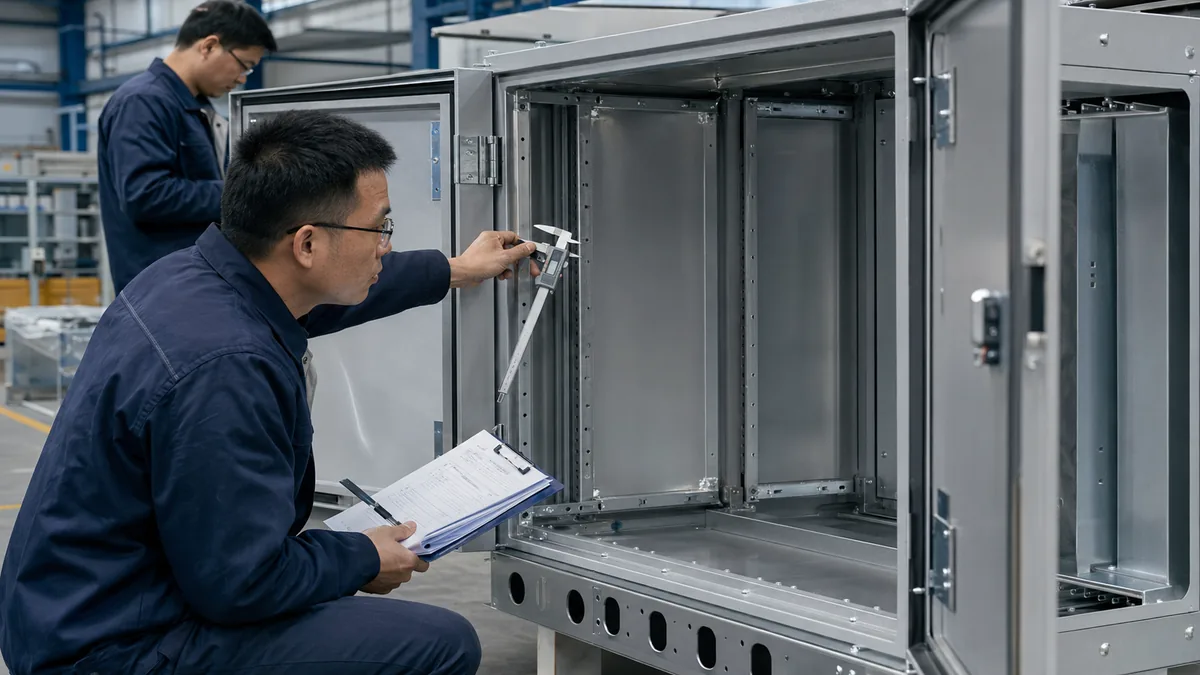
Dimensional approval of an empty cabinet is not a substitute for system-level thermal, electrical, fire, transport or environmental testing. Build those verification gates into the startup schedule before production volume.
8. Pilot production and export packaging
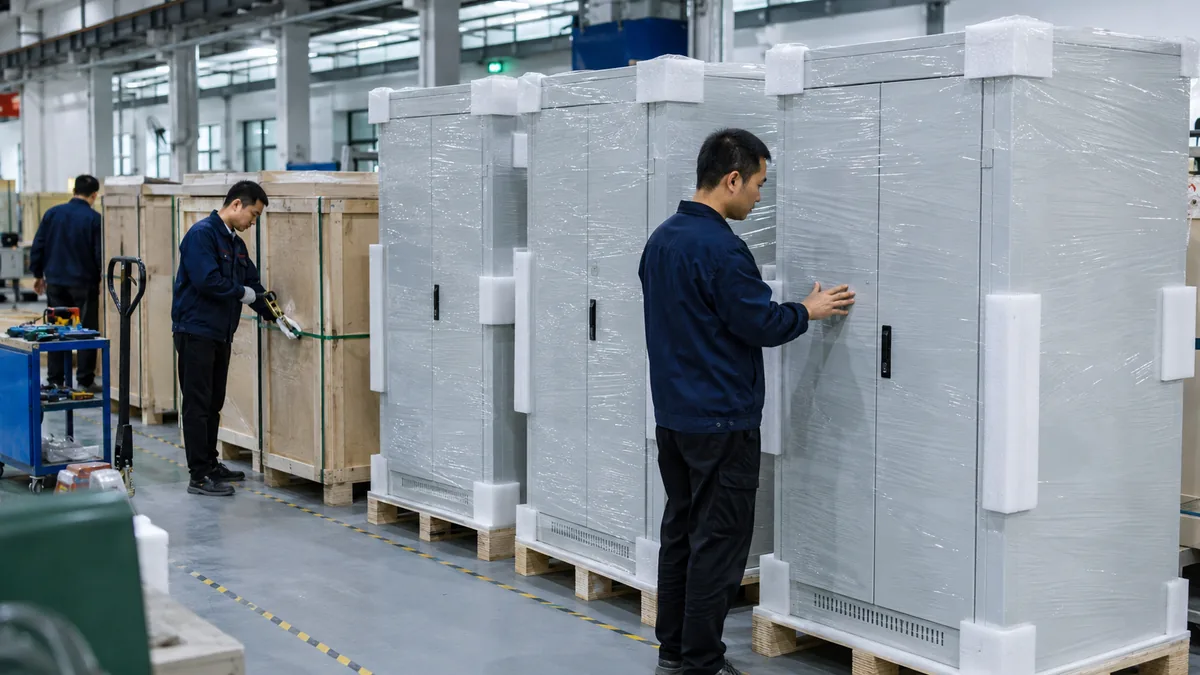
Large cabinets are vulnerable to door movement, coating damage, moisture and deformation during handling. Define door restraints, internal bracing where needed, edge protection, moisture barrier, pallet or crate design, lifting points and unloading method. For early-stage companies, a pilot batch is also the time to validate work instructions, labeling locations, assembly sequence and packaging.
How UL 9540, UL 9540A, IEC 62619 and UN 38.3 relate to the cabinet
| Reference | What it addresses | Cabinet sourcing implication |
|---|---|---|
| UL 9540 | Safety evaluation and certification of complete energy storage systems and equipment. | The cabinet supports the system design, but an empty fabricated shell is not the complete certified ESS. |
| UL 9540A | A test method for evaluating thermal-runaway fire propagation in battery energy storage systems. | It is not a generic enclosure certification. Fabricated barriers, openings and joints must match the system design that is tested. |
| IEC 62619 | Safety requirements and tests for industrial secondary lithium cells and batteries, including stationary applications. | Use the system and battery requirements to derive measurable cabinet interfaces and validation steps. |
| UN 38.3 | Lithium cell and battery transport testing within the UN Manual of Tests and Criteria. | Do not describe it as a cabinet structural or shipping-crate certification. Coordinate product transport and packaging responsibilities separately. |
Use current, project-specific requirements from the applicable authorities and qualified experts. Official background is available from UL on energy storage system testing and certification and the UL 9540A test method, from IEC for IEC 62619:2022, and from UNECE for the UN Manual of Tests and Criteria.
Red flags when comparing battery enclosure suppliers
- The supplier promises UL 9540A, fire containment or zero propagation from a cabinet drawing alone.
- It quotes a welded cabinet without asking about loads, datums, module interfaces or door function.
- Pressure relief, creepage, ingress rating or seismic performance is offered without system requirements and a verification plan.
- There is no defined weld sequence, fixture strategy or dimensional inspection after welding.
- The coating quote omits pretreatment, masking, cosmetic zones or environmental requirements.
- The prototype is visually approved but CTQs and revisions are not recorded.
- Cold-plate or coolant-loop work is included without clear joining, cleaning and leak-test capability.
- Export packing is vague despite large cabinet size and cosmetic surfaces.
Commercial questions for an energy storage startup
- Which one-time costs cover programming, fixtures, gauges or samples?
- Which parts can use standard material and tooling?
- What changes between prototype, pilot and forecast production?
- Which CTQs receive recorded inspection, and at what sampling level?
- Who owns fixtures and what happens after a design revision?
- What finish batch minimums and color controls apply?
- Which Incoterm, export packing and destination charges are included?
- What customer approvals are required before each production gate?
Use a controlled trial order before volume. The sheet metal supplier trial-order plan and prototype-versus-production consistency guide explain how to carry the approved process forward.
Why shortlist MSTFAB for custom battery cabinet fabrication
MSTFAB is a Guangzhou sheet metal source factory producing custom enclosures, cabinets, panels, frames, brackets and welded assemblies. Its published capabilities include laser cutting, CNC bending, welding, hardware installation, surface treatment, inspection and export packaging within an ISO 9001 quality-managed workflow.
For battery storage projects, the commercial fit is strongest when the startup supplies controlled mechanical requirements and retains qualified ownership of the cell, electrical, thermal, fire and certification design. MSTFAB can then review manufacturability, identify process risks, produce an inspection plan and quote a prototype-to-pilot route based on the actual drawings.
Request a battery enclosure manufacturing review
Send STEP and 2D drawings, material and finish, module loads, interface requirements, CTQs, quantities and target delivery date. MSTFAB will review the sheet metal scope and return drawing-specific manufacturing questions.
Key takeaways
- A battery enclosure manufacturer controls cabinet fabrication and repeatability—not the safety outcome of the complete BESS.
- Define structural loads, module interfaces, doors, sealing, cooling, cable routing and bonding before quotation.
- Treat UL 9540A as a system-level test method, not a generic enclosure certificate.
- Use first-article inspection for cabinet CTQs and separate system-level safety and environmental validation.
- Verify the complete process through a controlled pilot batch and export-packaging trial.
Frequently asked questions
What does a battery enclosure manufacturer make?
A sheet metal battery enclosure manufacturer can produce cabinet shells, doors, welded frames, shelves, mounting plates, internal dividers, brackets, cable-entry panels, vents and specified cooling or bonding interfaces. Exact scope depends on drawings and capability.
Can a sheet metal battery cabinet be UL 9540A certified?
UL 9540A is a test method for evaluating thermal-runaway fire propagation in battery energy storage systems. It is not a generic certificate for an empty sheet metal cabinet. The tested system construction and application determine the result.
Does a BESS cabinet need to contain a battery fire?
The fire and propagation strategy must come from the complete system hazard analysis, applicable codes and testing. The cabinet may include specified barriers, vents or interfaces, but a fabricator should not promise containment from sheet thickness or appearance alone.
What material is best for an outdoor battery cabinet?
There is no universal material. Coated carbon steel, aluminum and stainless steel have different strength, weight, corrosion, joining and cost tradeoffs. Select material and coating for the actual environment, service life and validation plan.
Should every stationary battery cabinet use liquid cooling?
No. Air and liquid cooling are both used, and the choice depends on the system. The cabinet manufacturer should fabricate the specified thermal interfaces; it should not select the cooling architecture without system data.
Does UN 38.3 certify the battery enclosure or shipping crate?
No. UN 38.3 addresses lithium cell and battery transport testing. Cabinet structure, product packaging and logistics still need separately defined requirements and responsibilities.
What files should I send for a BESS cabinet quote?
Send a STEP model, controlled 2D drawings, material and finish, weld and hardware requirements, module loads and interfaces, CTQs, quantity stages, inspection scope, packaging destination and requested delivery date.
Can MSTFAB support battery enclosure prototypes and pilot runs?
Yes. MSTFAB reviews prototype, pilot and repeat-order sheet metal enclosure projects. Feasibility, MOQ, tooling, lead time, inspection and packaging are confirmed after the complete manufacturing route is reviewed.
 WeChat Contact
 WhatsApp Me Directly