
An aluminum telecom battery cabinet with AC cooling sounds like a simple procurement item until the side panel cutout is 3 mm off, the rain hood blocks service access, or the door gasket path does not match the cooling-interface frame. Then the cabinet shell becomes very popular in the project meeting, usually for the wrong reason.
This guide is for OEM engineers and sourcing teams buying aluminum telecom battery cabinet enclosure shells from a sheet metal fabrication factory. It focuses on the metal work: AL5052 or aluminum sheet selection, laser cutting, CNC bending, welded base frames, louver panels, AC mounting openings, sealing details, surface finishing and export packing. MSTFAB does not supply a finished telecom power system; we manufacture the enclosure parts that make the buyer’s final integration easier.
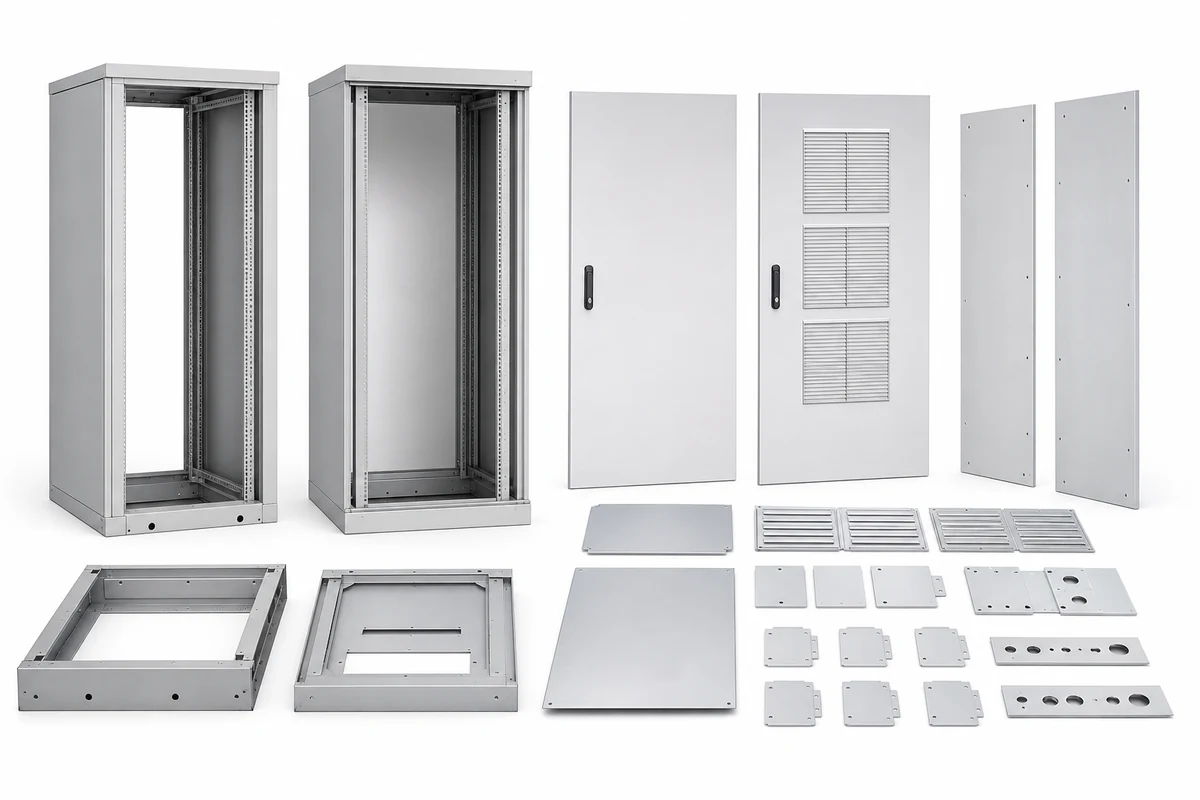
What MSTFAB Manufactures for Aluminum Telecom Battery Cabinet Projects
The keyword here is precise: aluminum telecom battery cabinet AC cooling enclosure shell. That means the physical sheet metal housing and cooling-interface structure, not the battery cabinet after electrical devices are installed.
| MSTFAB sheet metal scope | Normally handled by buyer or integrator |
|---|---|
| Empty aluminum cabinet bodies, doors, roofs, side panels and plinth bases | Battery selection, telecom equipment layout and site-level installation |
| AC cooling cutout interface panels, gasket frames, rain hoods and blank covers | Cooling equipment choice, refrigerant system, electrical connection and thermal validation |
| Laser-cut louver panels, perforated ventilation plates and removable filter frames | Field airflow testing, filter maintenance schedule and telecom system commissioning |
| CNC-bent return flanges, drip edges, rails, brackets and cable gland plates | Final wiring, power devices, monitoring units and communication modules |
| Welding, hardware insertion, powder coating, dimensional inspection and packing | Final system certification after buyer-side assembly and field installation |
Procurement Problems That Usually Cost More Than the Cabinet Shell
Cheap cabinet shells can look clever on a spreadsheet. Then the first batch arrives, the AC opening needs hand filing, and the savings quietly move into the rework column. Nobody enjoys that column.
| Buyer pain point | Why it matters | How to prevent it before production |
|---|---|---|
| AC cooling cutout tolerance is vague | The cooling-interface plate must match the buyer’s unit, gasket and screw pattern | Send the interface drawing, opening size, hole pattern, gasket compression area and service clearance |
| Aluminum thickness is chosen only by weight | Large doors and side panels can flex, oil-can or vibrate in transport | Review panel size, bend return, reinforcement ribs, mounting rail layout and handling points |
| Louver direction is treated as cosmetic | Outdoor cabinets need rain protection and maintainable airflow paths | Define louver direction, rain hood geometry, filter frame access and drainage path |
| Door sealing is checked too late | Gasket squeeze, hinge offset and latch position determine practical sealing performance | Confirm door gap, gasket channel, latch pull direction and hinge reinforcement before sampling |
| Export packing is an afterthought | Long painted panels scratch easily and aluminum corners dislike ocean freight drama | Use foam, corner guards, panel stacking rules, carton or pallet details and pre-shipment photos |
Fabrication Process for AC-Cooling Telecom Cabinet Shells
A good cabinet shell is built in a chain. If the first link is a fuzzy drawing, the last link is usually an awkward email with too many exclamation points. MSTFAB reviews the metal enclosure structure before cutting material.

AC Cooling Interface Panels
Side panels and doors can include cooling-unit openings, gasket frames, blank covers and rain hood mounting features according to buyer drawings.
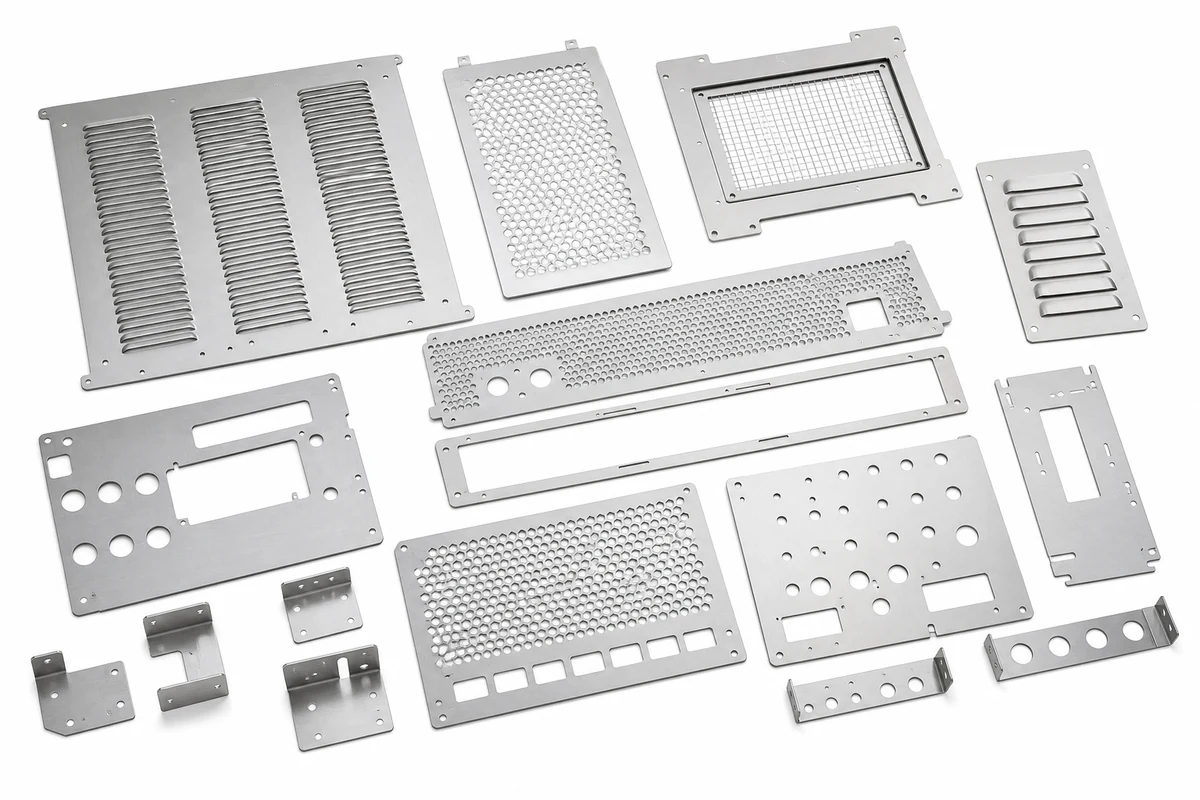
Laser-Cut Louvers and Plates
Louver panels, perforated plates, removable filter frames, gland plates and brackets are cut with controlled hole positions.
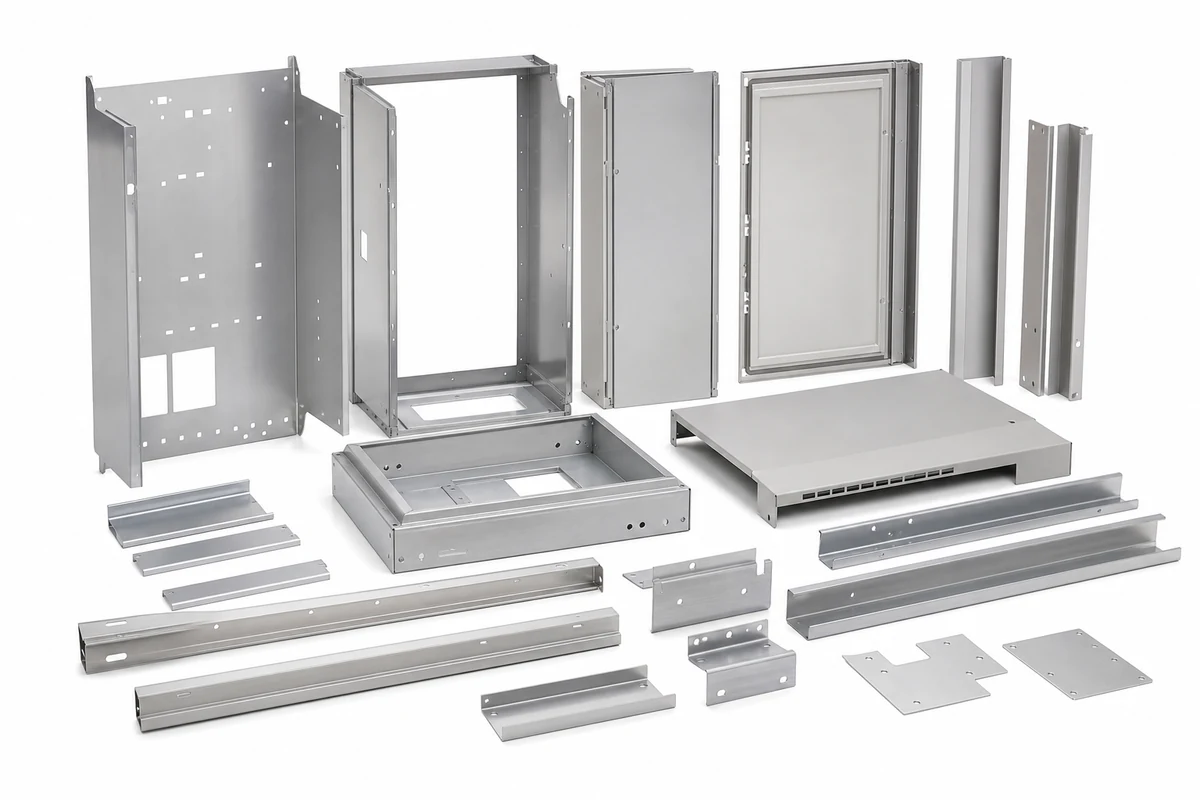
CNC-Bent Cabinet Shells
Door returns, roof caps, base trays, rails and side shells are formed for fit, repeatability and stable assembly.
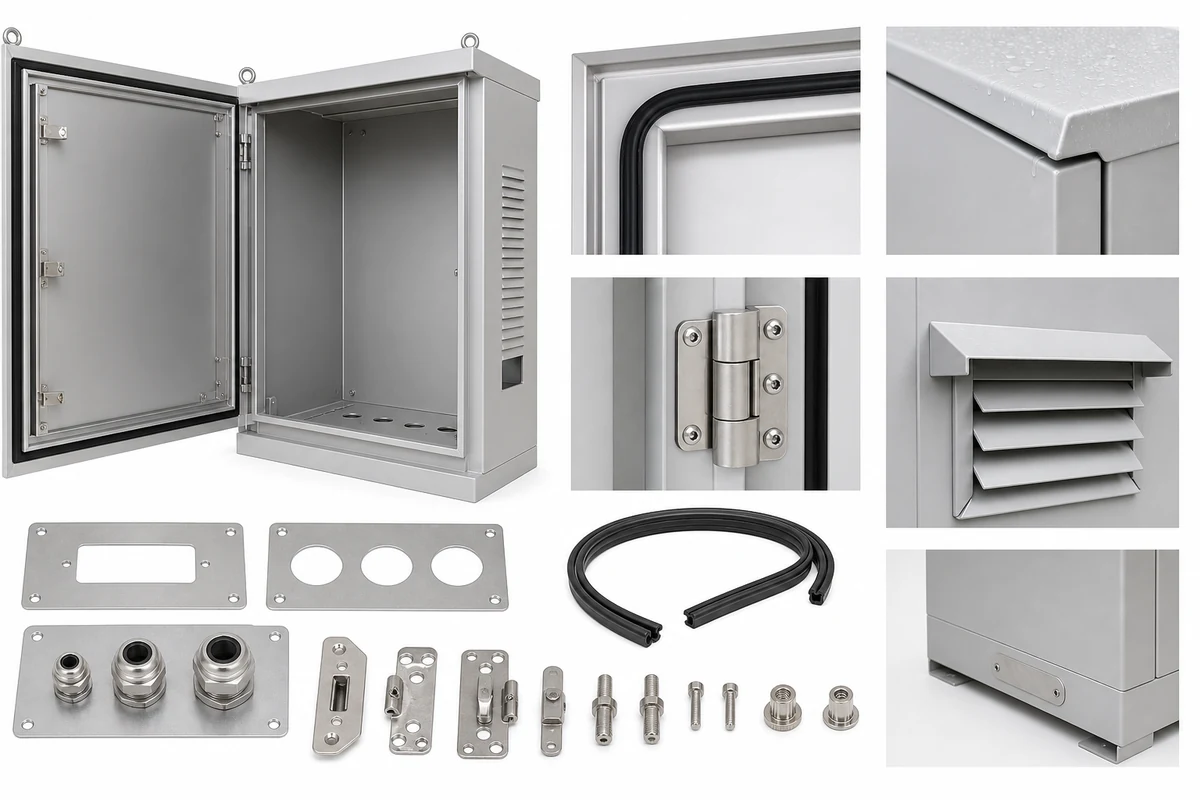
Sealing and Hardware Details
Gasket channels, hinge plates, latch areas, drip edges and cable gland plates are checked before coating.
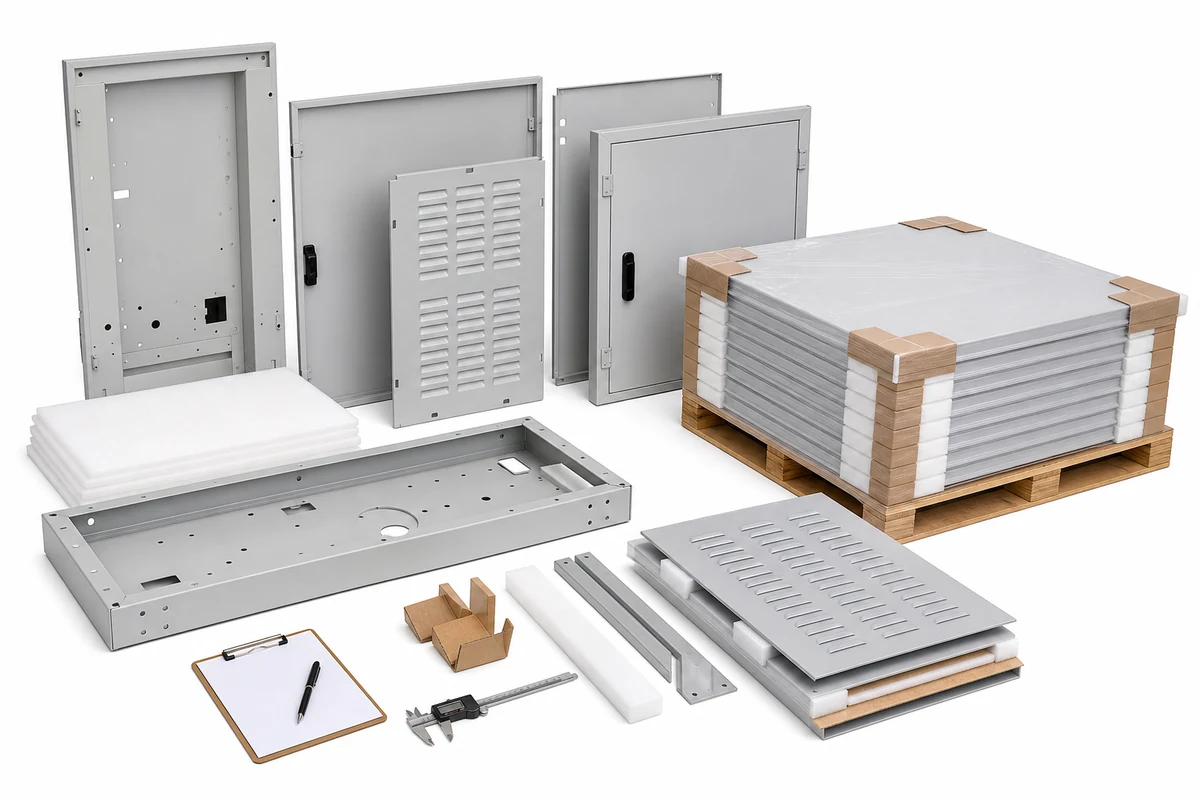
QC and Export Packing
Dimensions, surface finish, door fit, panel protection and pallet packing are reviewed before overseas shipment.
For process details, see MSTFAB’s laser cutting services, sheet metal bending services, welding services and surface treatment pages.
RFQ Checklist for Aluminum Telecom Battery Cabinet Shells
If you want a quote that is useful, do not send only a screenshot and the words “same as this.” A factory can smile at that, but the quote will be mostly guessing. Send the details below and the conversation becomes much cleaner.
| RFQ item | What to send | Why it helps |
|---|---|---|
| 3D and 2D drawings | STEP or STP model plus PDF or DWG drawings with revision number | Supports DFM review, bend sequence, tolerance checks and inspection planning |
| Material | AL5052, AL6061 or required aluminum grade, thickness and finish expectation | Controls weight, forming behavior, strength, corrosion resistance and cost |
| AC cooling interface | Opening size, screw pattern, gasket area, unit envelope, rain hood and service clearance | Prevents late rework around the most sensitive side-panel feature |
| Outdoor sealing details | Door gap, gasket path, hinge side, latch position, drainage and louver direction | Helps the cabinet shell support outdoor reliability after final integration |
| Hardware list | Hinges, locks, handles, PEM nuts, studs, rails, gland plates and lifting points | Reduces assembly surprises and keeps hole patterns under control |
| Quantity and packing | Prototype quantity, batch quantity, annual volume and packing requirements | Improves unit price accuracy, lead time planning and export protection |
Useful quoting resources: what files are needed for a sheet metal fabrication quote, online drawing upload quote review and contact MSTFAB.
Trust Signals for OEM Telecom Enclosure Buyers
| Trust signal | What it tells buyers | Evidence to request |
|---|---|---|
| DFM review before sample cutting | The factory checks bend, fit, gasket and hardware risks before metal is cut | Marked drawings, bend-risk notes and AC-interface comments |
| In-house sheet metal process | Laser cutting, bending, welding, hardware and finishing can be coordinated | Workshop photos, process capability and sample images |
| Outdoor telecom enclosure experience | The supplier understands louvers, rain hoods, gland plates, door sealing and transport risk | Similar enclosure shell examples and packing evidence |
| Dimensional inspection | Critical hole patterns and cabinet fit are checked before shipment | Inspection records, photos and agreed sampling plan |
| Export packing discipline | Painted aluminum panels are protected through international freight | Pallet, foam, carton, corner guard and pre-shipment photos |
Related MSTFAB Pages for Telecom Cabinet Projects
Need Aluminum Telecom Battery Cabinet Shells?
Send your STEP files, 2D drawings, aluminum grade, thickness, AC cooling interface drawing, louver requirements, hardware list, quantity and packing notes. MSTFAB will review the sheet metal enclosure scope and quote clearly.
FAQ
Does MSTFAB supply complete telecom battery cabinets?
No. MSTFAB fabricates custom sheet metal enclosure shells and semi-finished metal parts. Battery, telecom, power and cooling equipment integration is handled by the buyer or system integrator.
Can MSTFAB make AC cooling openings in aluminum cabinet panels?
Yes. We can fabricate side panels, doors, gasket frames, rain hoods, blank covers and mounting holes according to the buyer’s AC cooling interface drawing.
What makes aluminum useful for telecom cabinet shells?
Aluminum can reduce cabinet shell weight and improve corrosion resistance, but panel size, thickness, bend return, reinforcement and packing protection must be reviewed carefully.
 WeChat Contact
 WhatsApp Me Directly