
Aluminum Equipment Shells & Stainless Steel Panels: What OEM Buyers Should Check Before Ordering
Aluminum equipment shells and stainless steel panels are often used together in industrial devices, medical equipment, control systems, laboratory instruments, telecom devices, and OEM machine housings.
On paper, the combination makes sense.
- Aluminum gives the product a lightweight shell.
- Stainless steel gives the panel strength, durability, and a premium finish.
The final product looks clean, modern, and professional.
But in real sheet metal fabrication, mixing aluminum and stainless steel is not as simple as putting two good materials together.
Good materials can still create bad results if the design ignores:
- Galvanic corrosion between dissimilar metals
- Surface scratches on aluminum shells
- Brushing direction on stainless steel panels
- Weak threads in thin aluminum
- Coating thickness affecting assembly
- Panel flatness after bending
- Visible gaps between different materials
- Packaging damage during export shipment
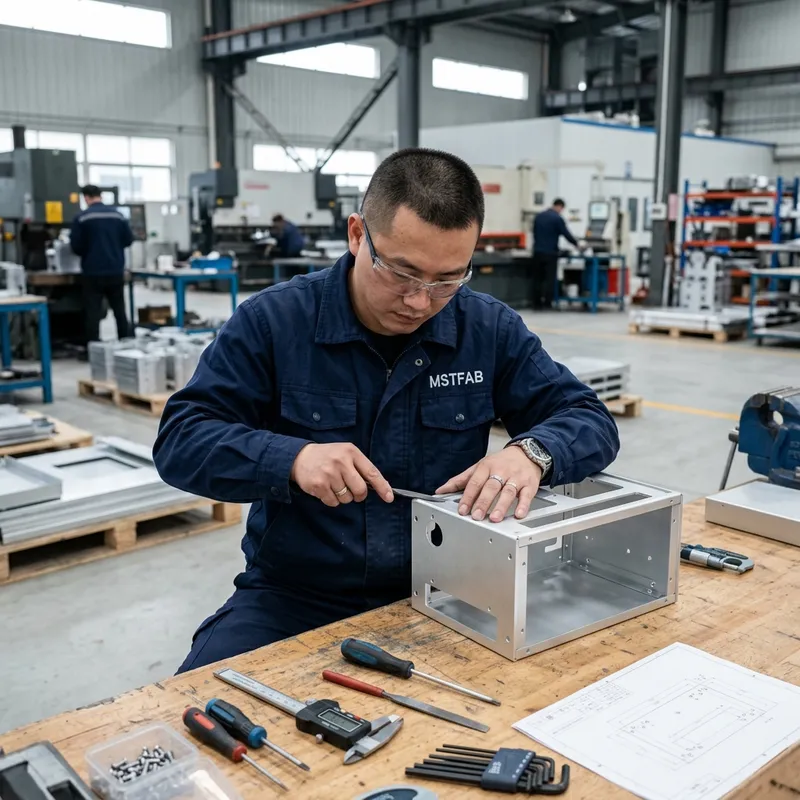
At MSTFAB, we often review OEM RFQs where buyers want a lightweight aluminum housing with stainless steel front panels, control panels, covers, access doors, or decorative plates. The idea is good. The execution needs care.
Because aluminum and stainless steel can work beautifully together — or they can become a very expensive lesson in material behavior.
Metal does not care that the product looks premium in the rendering. It cares about contact surfaces, fasteners, moisture, heat, and assembly tolerances.
1. Why Buyers Use Aluminum Shells and Stainless Steel Panels Together
This material combination is common because each metal solves a different problem.
Aluminum Equipment Shells
Aluminum is often selected for lightweight equipment housings, portable devices, wall-mounted equipment, telecom and network devices, electronic control boxes, heat-sensitive equipment, and premium industrial product shells.
Aluminum is useful because it is light, corrosion-resistant, and easier to handle during installation. It can also support better heat dissipation than steel in many electronic equipment applications.
Stainless Steel Panels
Stainless steel panels are often selected for visible front panels, control panels, access panels, medical equipment surfaces, food equipment panels, laboratory instrument panels, and high-wear contact surfaces.
Stainless steel provides better surface durability, corrosion resistance, and a more premium industrial appearance.
Together, aluminum shells and stainless steel panels can create a product that is lightweight, durable, clean-looking, and suitable for professional OEM equipment. But only if the fabrication and assembly details are controlled properly.
2. Aluminum Is Lightweight, But It Still Needs Structural Support
One common mistake is assuming aluminum can replace steel directly with the same structure.
Aluminum is lighter than steel, but it is also less stiff. Large aluminum equipment shells may flex, vibrate, or deform if the design does not include enough structure.
For aluminum shells, smart structure often matters more than simply increasing thickness. A return flange, formed rib, or internal bracket can improve rigidity without adding unnecessary weight.
A lightweight shell is good. A lightweight shell that rattles, flexes, or dents easily is not good. That is not engineering. That is dieting gone too far.
3. Stainless Steel Panels Need Surface Direction Control
Stainless steel panels are often visible. That means surface finish matters.
Common stainless steel panel finishes include brushed stainless steel, polished, bead blasted, natural, or passivated finishes.
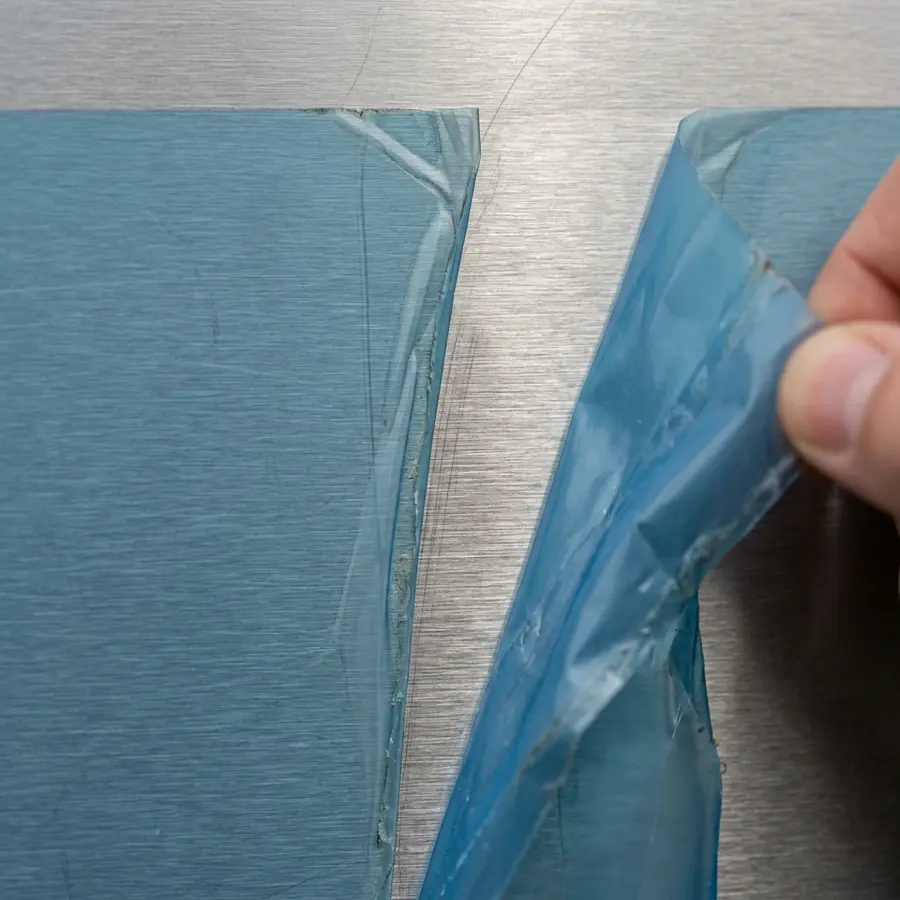
If one panel is brushed vertically and another is brushed horizontally, the part may still function, but visually it looks careless. For premium equipment, medical devices, laboratory instruments, and control panels, that matters.
A stainless steel panel is often the part the customer touches first. If it looks rough, the customer starts questioning the entire product. Fair? Maybe not. Real? Absolutely.
4. Galvanic Corrosion Must Be Considered When Aluminum Meets Stainless Steel
This is one of the most important issues when aluminum and stainless steel are used together.
When dissimilar metals contact each other in the presence of moisture, galvanic corrosion may occur. In simple terms: aluminum can corrode faster when it is directly connected to stainless steel under the wrong environmental conditions.
This risk increases in outdoor equipment, humid environments, coastal areas, washdown areas, and equipment exposed to condensation.
OEM buyers should consider insulating washers, non-conductive gaskets, surface coating, sealant between contact areas, drainage design, and compatible fastener selection.
Stainless steel and aluminum can work together. They just need a responsible introduction. If they are forced together with moisture and no isolation, corrosion may eventually join the project. And corrosion is never a helpful team member.
5. Thin Aluminum Threads Are a Common Failure Point
Thin aluminum sheet is not ideal for repeated direct threading.
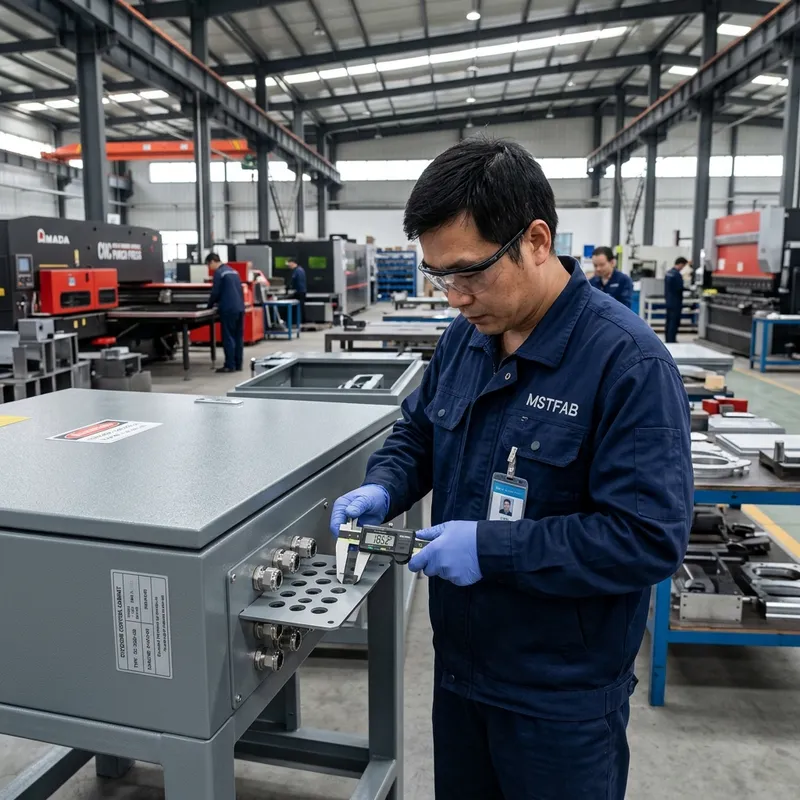
If the equipment shell requires frequent opening, service access, or removable stainless steel panels, buyers should not rely only on tapped holes in thin aluminum sheet.
Common problems include stripped threads, loose screws, weak panel fastening, and vibration loosening. Better fastening options may include PEM inserts, rivet nuts, threaded bushings, or reinforced mounting plates.
A screw that works once in a prototype may not survive repeated service in the field. That is not a small problem. That is a warranty issue with a screwdriver.
The Real Cost of Poor Aluminum/Stainless Integration
| Design / Manufacturing Flaw | The Result on Your Assembly Floor or Field |
|---|---|
| Ignoring Galvanic Corrosion | The aluminum shell starts pitting and bubbling around the stainless steel screws after three months in a humid environment. |
| Tapping Thin Aluminum Threads | Field technicians strip the threads during the first maintenance check. The cover never closes tightly again. |
| Unplanned Coating Thickness | The powder-coated aluminum shell is now too thick for the brushed stainless steel front panel to sit flush. Gaps appear. |
| Random Brushing Directions | The $20,000 lab instrument looks like it was assembled from spare parts because the grain directions clash. |
6. Coating and Finish Thickness Can Change Assembly Fit
Aluminum shells may be powder coated or anodized. Stainless steel panels may be brushed or passivated. These finishes add or change surface dimensions.
That can affect screw fit, panel gaps, gasket compression, hinge movement, display cutout fit, and panel flushness.
A bare metal prototype can confirm shape. But it does not always confirm final assembly after coating, brushing, masking, and packaging.
Surface finish is not just appearance. It can become a dimension. Ignore that, and the assembly team will discover it with a screwdriver, a file, and a very unhappy face.
7. Aluminum Scratches Easily During Fabrication and Shipping
Aluminum is useful, but it is easier to scratch than many buyers expect. Scratches may happen during laser cutting, bending, welding, grinding, handling, assembly, or export shipment.
If the aluminum shell is customer-facing, appearance control becomes much more important. “Looks good” is not a specification. It is a polite way to start a future argument.
8. Stainless Steel Panels Must Be Protected During Assembly
Stainless steel is strong, but visible stainless panels can still be scratched, dented, or stained during assembly. Common issues include handling fingerprints, grinding marks, inconsistent brushing, corner scratches, and panel rubbing during transport.
A stainless steel panel should look clean when the customer opens the package. Not like it survived a small workshop battle.
9. Panel Flatness and Gap Control Affect Product Quality
When aluminum shells and stainless steel panels are assembled together, fitment matters. Common assembly problems include uneven gaps, panel rocking, stainless panel not sitting flush, screw holes misaligned, or visible steps between materials.
A product can use premium materials and still look cheap if the panel gaps are inconsistent. Customers may not know why it feels wrong. They just know it does.
10. Heat Dissipation Should Be Reviewed for Electronic Equipment
Aluminum shells are often used for electronic equipment because aluminum supports better heat transfer than steel.
But material alone does not solve heat problems. If a stainless steel panel covers a heat-sensitive zone, the thermal design may need review.
A beautiful housing that slowly cooks the electronics is not a premium enclosure. It is an expensive lunchbox.
11. Welding Should Be Minimized or Controlled Carefully
Both aluminum and stainless steel require careful TIG welding control.
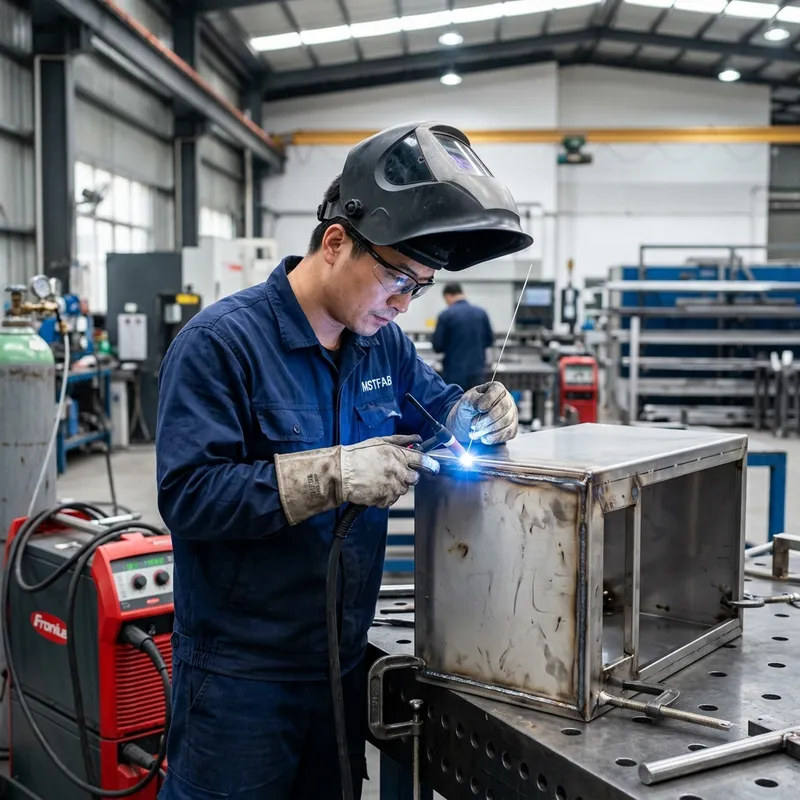
For equipment shells and panels, welding should be used where it provides real structural value. In many cases, better options may include folded structures, mechanical fastening, PEM inserts, or rivet nuts.
Sometimes the best weld is the one the design no longer needs. That is not cutting corners. That is good DFM.
12. Outdoor Use Requires Better Material Isolation and Finish Planning
Aluminum shells and stainless steel panels can be used outdoors, but outdoor use increases risk.
Buyers should review galvanic corrosion isolation, drainage path, cable entry sealing, coating durability, and gasket material.
Outdoor environments are not polite. They test every weak detail until it becomes visible. Usually after installation.
13. What Buyers Should Send for an Accurate Quote
To quote aluminum equipment shells and stainless steel panels accurately, buyers should provide:
- 3D STEP files & 2D PDF drawings
- Material grade (Aluminum alloy & Stainless steel grade)
- Material thickness
- Surface finish requirement & Brushing direction
- Fastening method & Gasket requirement
- Annual quantity & Prototype quantity
If the RFQ only says “aluminum shell with stainless steel panel, please quote fast,” the supplier has to guess. And guessing is not procurement. It is just a faster way to create revision emails.
How MSTFAB Supports Aluminum Equipment Shells and Stainless Steel Panels
MSTFAB focuses on custom sheet metal enclosure fabrication. We support OEM projects involving aluminum equipment shells, stainless steel control panels, electronic housings, medical device housings, and telecom equipment shells.
- DFM Review: We review material compatibility, galvanic corrosion risks, thread strength, and assembly gaps.
- Precise Fabrication: CNC sheet metal bending, laser cutting, and careful TIG welding.
- Surface Control: Brushing direction alignment, powder coating masking, and protective film application.
- Clear Manufacturing Scope: You bring the product intelligence. We build and finish the metal structure that protects it.
Request an OEM Enclosure Quote
If you need custom aluminum equipment shells or stainless steel panels for your OEM machinery, medical devices, or control systems, send us your STEP and PDF drawings.
FAQ
Are aluminum equipment shells good for OEM devices?
Yes. Aluminum equipment shells are suitable for lightweight, electronic, telecom, industrial control, and portable equipment applications when bend radius, surface protection, fastening strength, and thermal requirements are reviewed properly.
Why use stainless steel panels with aluminum shells?
Stainless steel panels provide better durability, wear resistance, corrosion resistance, and premium appearance for visible control areas, front panels, access panels, or high-touch surfaces.
Can aluminum and stainless steel be used together?
Yes, but dissimilar metal contact should be reviewed carefully. In humid or outdoor environments, insulation, gaskets, coatings, compatible fasteners, and drainage design may be needed to reduce galvanic corrosion risk.
What is the main risk of aluminum equipment shells?
Common risks include surface scratches, lower stiffness on large panels, weak threads in thin sheet, bend cracking with unsuitable alloy or radius, and galvanic corrosion when combined with stainless steel.
What should buyers specify for stainless steel panels?
Buyers should specify stainless steel grade, thickness, finish type, brushing direction, visible surface standard, edge treatment, protective film, and packaging requirements.
Suggested Further Reading
- Custom Sheet Metal Enclosure Fabrication
- Aluminum Sheet Metal Enclosure Fabrication
- Aluminum Electronic Enclosure Fabrication
- Stainless Steel Sheet Metal Enclosure
- Brushed Stainless Steel Enclosure Manufacturer
- 304 Stainless Steel Electrical Enclosure
- 316 Stainless Steel NEMA Enclosure Fabrication
- Stainless Steel vs Aluminum Enclosure
- DFM for Sheet Metal Enclosures
- Sheet Metal Enclosure Manufacturing Process
- CNC Sheet Metal Bending Service
- TIG Welding Service
- Powder Coating Service
- Medical Equipment Enclosure
- Network Cabinet Cable Routing Guide
- Custom Electrical Control Enclosure Fabrication
custom sheet metal enclosure fabrication
MSTFAB manufactures custom sheet metal enclosures, electrical cabinets, control boxes and industrial metal housings for OEM buyers.
 WeChat Contact
 WhatsApp Me Directly