
Quick Answer: If you’re an OEM buying electrical enclosures in volume on a budget, stop shopping for “the cheapest box” and start shopping for the total-cost box. Affordable electrical enclosures for OEMs come from shops that price transparently by size, gauge, finish, and volume; right-size the spec instead of over-specifying; and treat the safety and standards discipline as non-negotiable because an unrated enclosure is a recall waiting to happen. Score candidates on a 7-dimension buyer scorecard, hold two hard gates — a real, video-auditable factory (D1) and material cert with PMI verification (D5) — and prove the winner with a paid trial order plus a First Article Inspection. The five supplier archetypes below are where affordable OEM electrical enclosures actually live.
Why “Affordable,” “Electrical,” and “OEM Buyers” Belong in One Sentence

A decade on the buyer side has taught me one expensive lesson about electrical enclosures: the cheap one is the one that quietly dropped the UL listing, skipped the gasket, or bent the knockout so it no longer seals. Electrical enclosures are safety-rated and standards-governed — not decorative boxes from a clearance bin. “Affordable” for an OEM means cost engineered out (right gauge, standard sizes, design-for-cost) while keeping the rating the application legally needs.
This is its own buying problem, separate from the general electrical-enclosure OEM ranking. This article is the budget-and-OEM-volume slice — for the OEM buyer who needs two thousand rated enclosures a quarter with consistent revisions, not two panels for the break room. A one-off buyer cares about price-per-box; an OEM buyer cares about price-per-box across generations and volumes, plus the commercial machinery (blanket PO, consignment, revision control) that keeps a product line running.
The 7-Dimension Scorecard You Should Actually Use
Don’t rank shops by gut feel. Rank them on a scorecard. Here are the seven dimensions I weight for affordable OEM electrical enclosures, in order:
A shop that clears D1 and D5 and scores well on D2 is affordable-OEM-electrical qualified. Everything else is tie-breaking.
The Five Supplier Archetypes (Your OEM Top 5 Starting Point)
Here are the five archetypes that consistently deliver affordable electrical enclosures to OEM buyers. Build your shortlist from these.
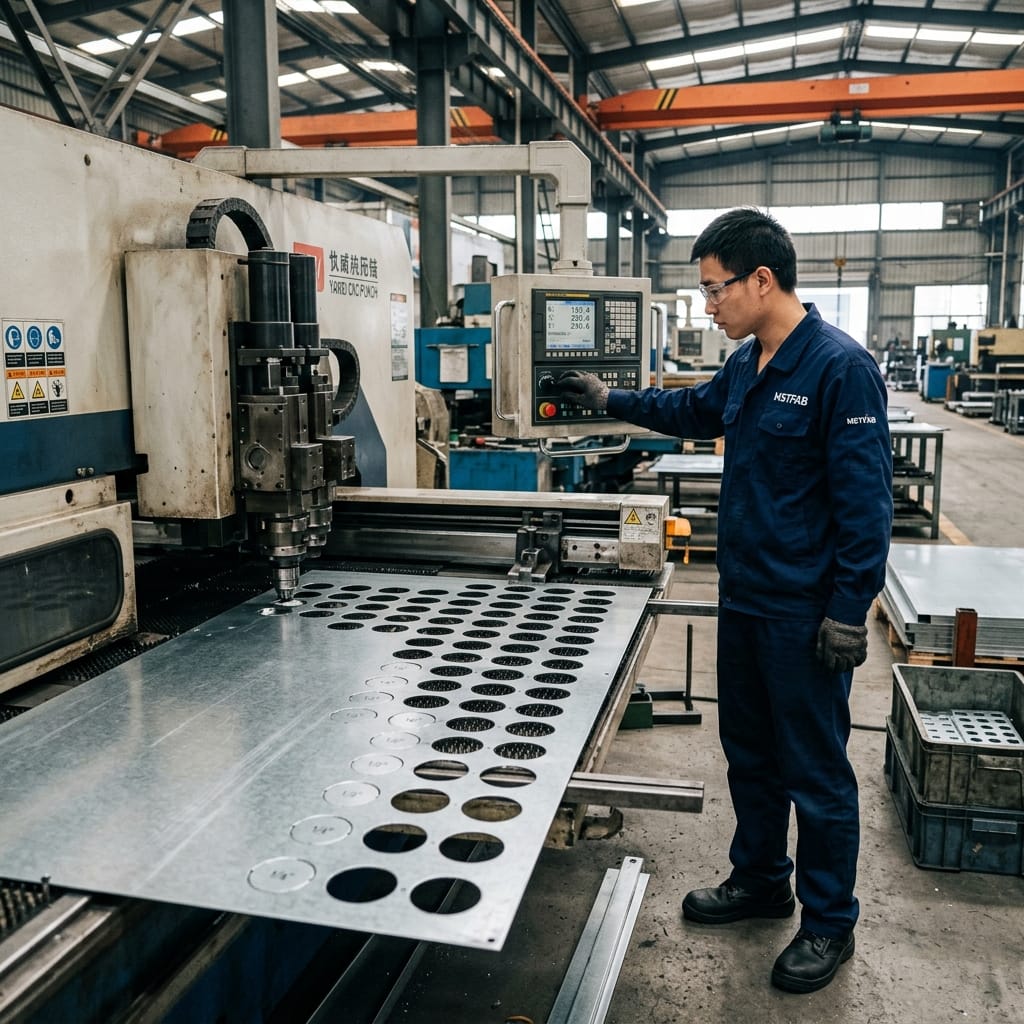
- Archetype 1 — The standards-compliant high-volume shell house. Deep catalog (NEMA 1 / 4 / 12 / 4X), UL-listed lines, and throughput to run volume cheaply. Best for: OEMs with stable, repeating enclosures.
- Archetype 2 — The UL 508A panel shop. Builds complete controls enclosures to UL 508A. Their affordability is integration: one supplier, one certification. Watch for: clarify scope if you only need the empty shell.
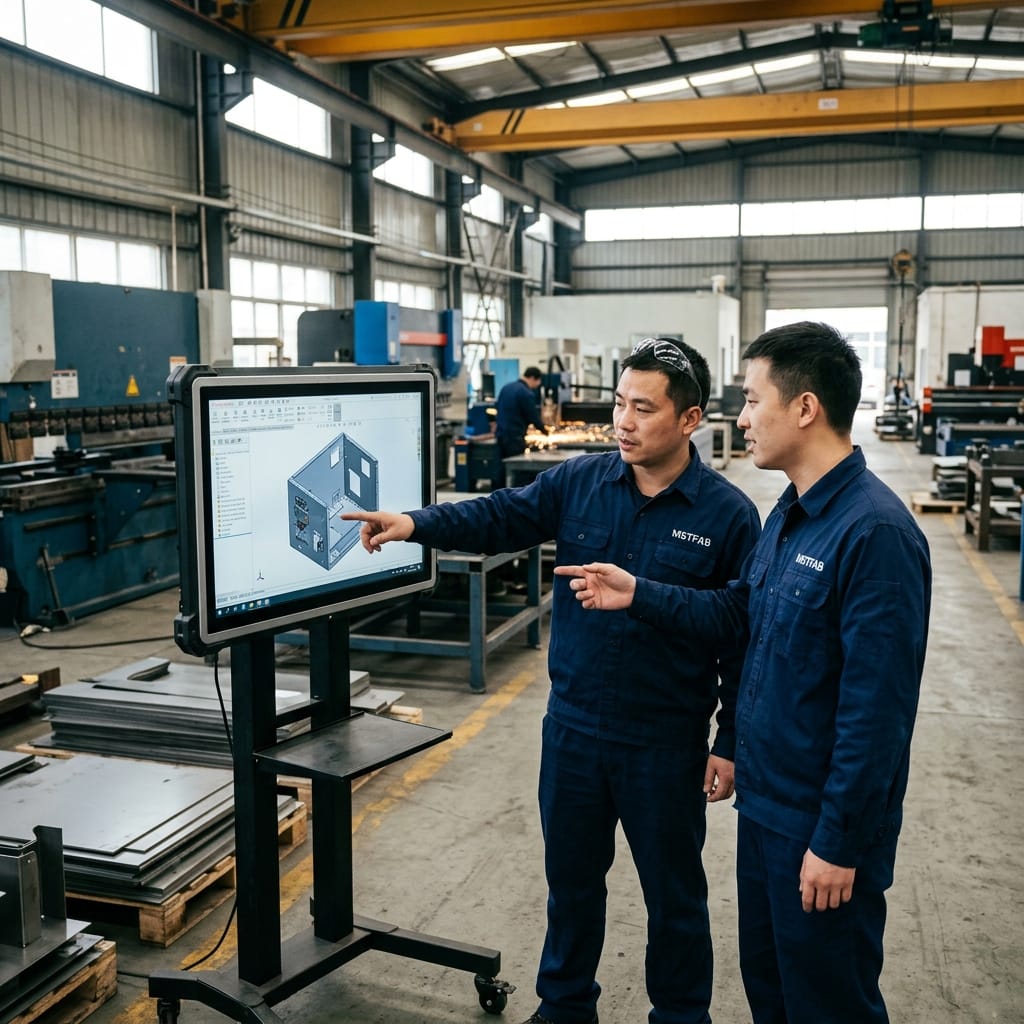
- Archetype 3 — The cost-down DFM co-engineering fabricator. The shop that reads your drawing and says, “standardize this knockout to save X per box across 2,000 units.” Savings are engineered, not discounted.
- Archetype 4 — The single-source cut-bend-weld-finish-and-list house. Laser + brake + weld + powder under one roof. You collapse the supplier margin stack and keep one rating record.
- Archetype 5 — The regional / near-shore electrical enclosure service. A shop in your own region. Not the cheapest/box, but freight, duty, and field-service risk drop to near zero.
How to Build Your Own Affordable Electrical-Enclosure OEM Top 5
- Pull 8–10 candidates, weighted toward shops that hold your required ratings.
- Run D1 (video audit) and D5 (cert + PMI) as hard gates.
- Score the rest D2–D7 on a 1–5 scale, weighting D2 and D3 highest.
- Send an identical RFQ (size, gauge, rating, annual volume) to the top four.
- Rank by total program cost plus D2 fit.
Prove It With a Trial Order + FAI
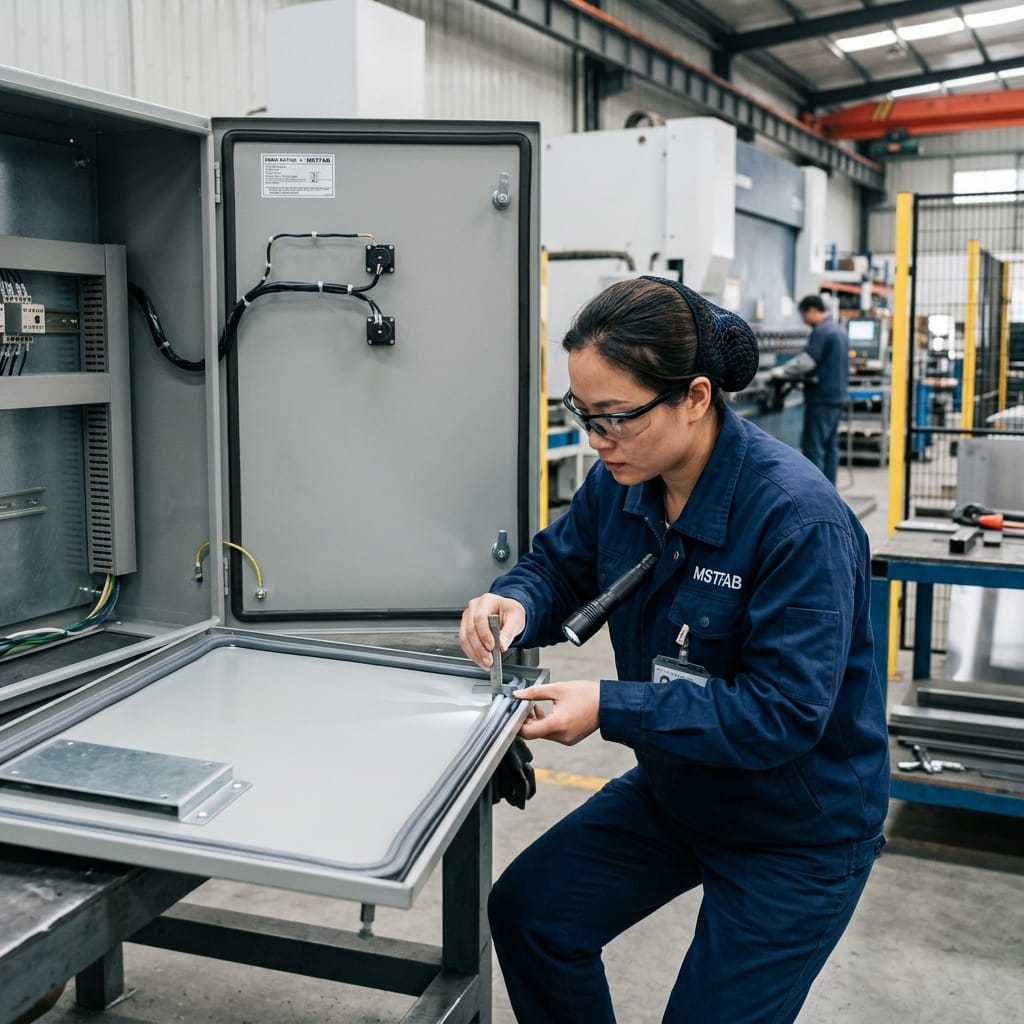
A cheap quote is a hypothesis; a trial order is the experiment. Send a representative enclosure with “trap” features that expose sloppy electrical work: a NEMA 4X gasket seam, a knockout that must seal, and a grounded stud. Require a First Article Inspection report checking gasket-compression and knockout-seal.
Cost Levers That Actually Make OEM Electrical Enclosures Affordable
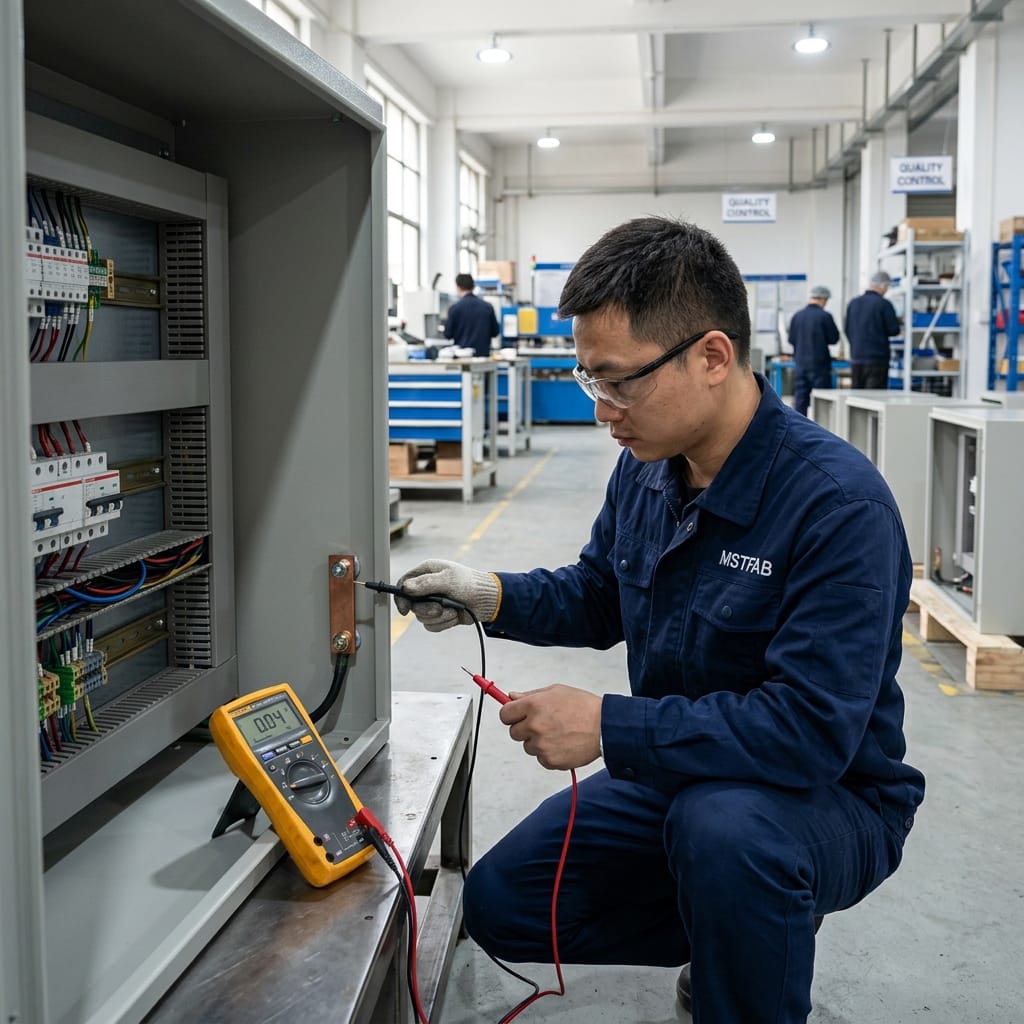
- Right-size the rating: NEMA 1 vs 12 vs 4X is a real cost cliff; only pay for the environment the enclosure actually sees.
- Right gauge: Don’t over-spec thickness “just to be safe”; a documented down-gauge is found money.
- Standard catalog sizes: A catalog size is free tooling; a custom size is a recurring tax.
- Design-for-cost DFM: Standardize knockouts, prefer formed features over welds.
- OEM commercial terms: Blanket PO, consignment, or kanban turn per-box price into program cost.
When NOT to Go Cheapest
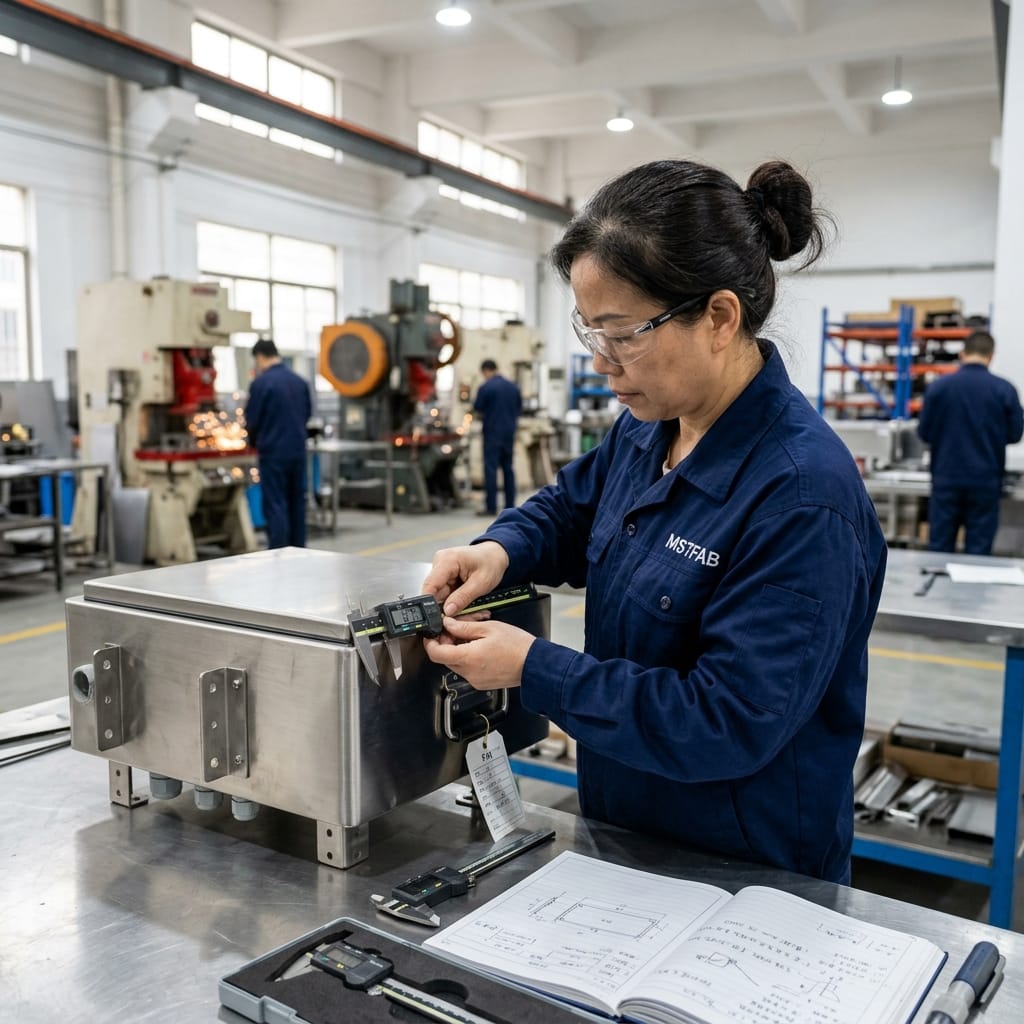
If the enclosure houses live voltage, is field-serviced, or must carry a listing (UL / CE / IEC), affordability is still achievable — but the rating (D6) and the material and process proof (D4 / D5) are mandatory. The “cheapest” shop that can’t show a listing, a gasket record, or a mill cert is not affordable; it is a recall wearing a discount sticker.
Red Flags of “Too Cheap” Electrical Enclosures
- No UL / NEMA / IEC rating where the application requires one.
- Gasket omitted or undocumented on a sealed enclosure.
- Over-spec thickness silently billed — or under-spec (you lose the rating).
- No FAI, no rating label, no grounding verification.
- No revision control for OEM generations (your Year-3 box quietly differs from Year-1).
Key Takeaways
- Affordable OEM electrical enclosures = transparent volume pricing + honest right-sizing + OEM commercial terms (blanket PO, revision control).
- Hold two hard gates: a real, video-audited factory (D1) and material cert + PMI (D5).
- The D2 fit gate keeps the rating (UL / NEMA), engineers cost out by DFM, and confirms the shop is OEM-ready.
- Use the five archetypes to build a shortlist; prove the winner with a trial order + FAI.
- Model total program cost, not unit price — a failed rated enclosure on a volume run costs more than the savings.
FAQ
How much do affordable electrical enclosures for OEM buyers actually cost?
Honest pricing is by size, gauge, finish, annual volume, and the rating — with the UL / NEMA / IEC listing fee shown as its own line. At volume, a standard NEMA 12 shell runs from a few dollars to tens per box.
Is a cheap electrical enclosure lower quality?
Not automatically — but electrical is where “cheap” most often means “unrated.” Affordable comes from right-sizing rating and gauge plus DFM; cheap comes from dropping the gasket or the listing.
Can an OEM get volume pricing without a huge MOQ?
Yes, with the right shop. High-volume shell houses work on blanket POs and release schedules rather than one giant MOQ — you commit to annual volume and pull boxes against it.
What should I specify to keep an electrical enclosure cheap?
Call the rating explicitly (NEMA 1 / 12 / 4X), tolerance only what mates, prefer standard catalog sizes, standardize knockouts, and let the shop DFM the gauge down where the analysis allows.
How do I know an affordable electrical enclosure shop won’t cut corners?
Two hard gates do most of the work: a live video walkthrough of the plant (D1) and material certification (D5). Then run a paid trial order with a First Article Inspection on an enclosure that includes a sealed knockout and a grounded stud.
 WeChat Contact
 WhatsApp Me Directly