
How do precision sheet metal fabricators prevent and eliminate free-iron contamination on 304 stainless steel?
Preventing free-iron contamination on 304 stainless steel requires an uncompromising shop-wide isolation and remediation protocol: (1) Total physical separation of stainless steel processing areas from carbon steel grinding/welding dust, (2) Dedicated non-marring press brake tooling (hardened chrome or urethane tape barriers) to prevent iron transfer during bending, (3) High-purity nitrogen assist gas (99.999% N2) on CNC fiber lasers to prevent ferrous slag pickup, (4) Use of dedicated non-ferrous abrasives (aluminum oxide or ceramic discs; carbon steel wire brushes are strictly prohibited), (5) Clean operator handling using nitrile gloves and synthetic workbench mats, and (6) Post-fabrication chemical pickling and passivation per ASTM A967 (citric or nitric acid formulations) verified via ASTM A380 ferroxyl and water-wetting tests to ensure zero embedded free iron remains on finished surfaces.
One of the most perplexing and costly field failures in hardware manufacturing is “rusting stainless steel”. A newly manufactured 304 stainless steel instrument enclosure arrives at a hospital or cleanroom, only to develop reddish-brown rust spotting within days. The culprit is almost never the stainless alloy itself, but rather **free-iron cross-contamination** introduced during manufacturing. When carbon steel grinding sparks or press brake die particles become embedded in the stainless surface, they disrupt the protective chromium-oxide film, causing rapid localized galvanic rusting.
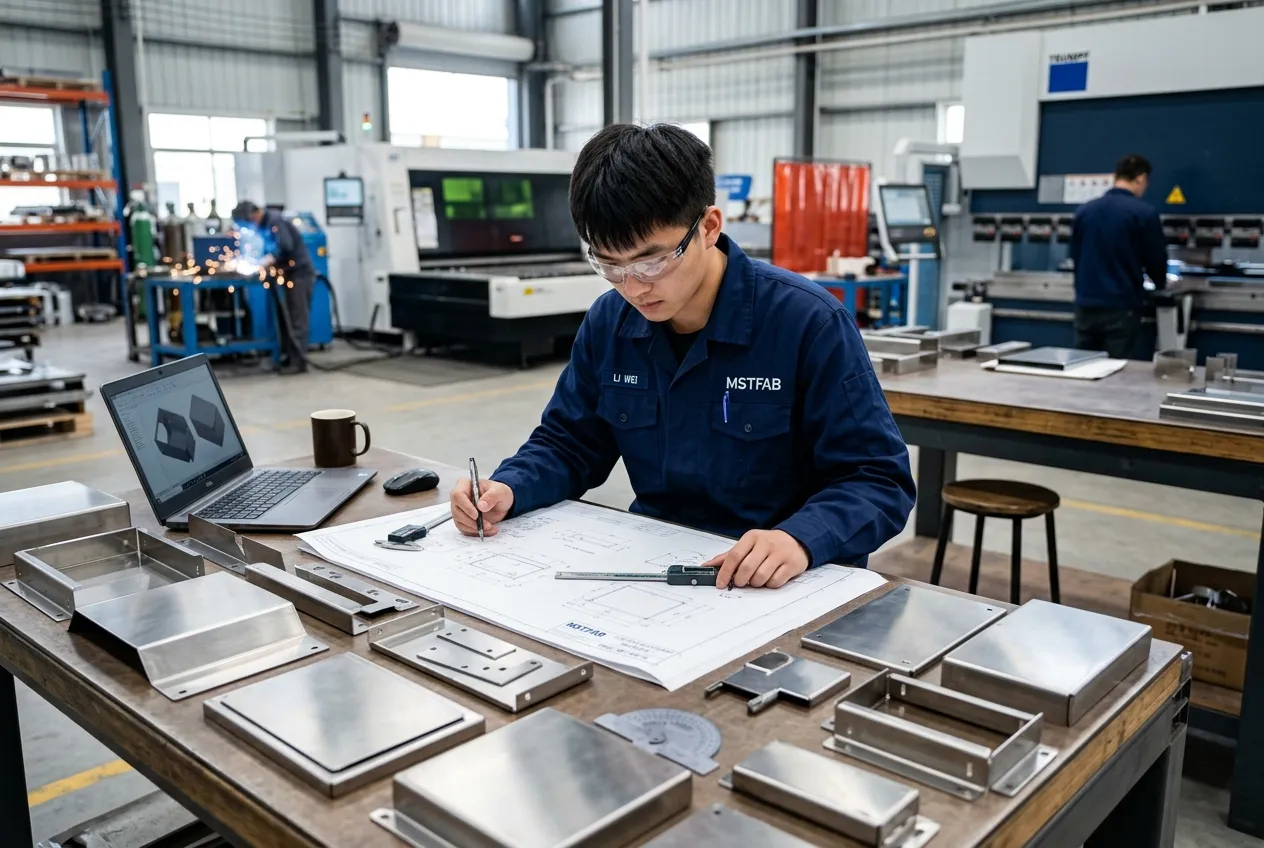
The 6 Pillars of Free-Iron Contamination Prevention
1. Laser Cutting Through Protective Surface Film
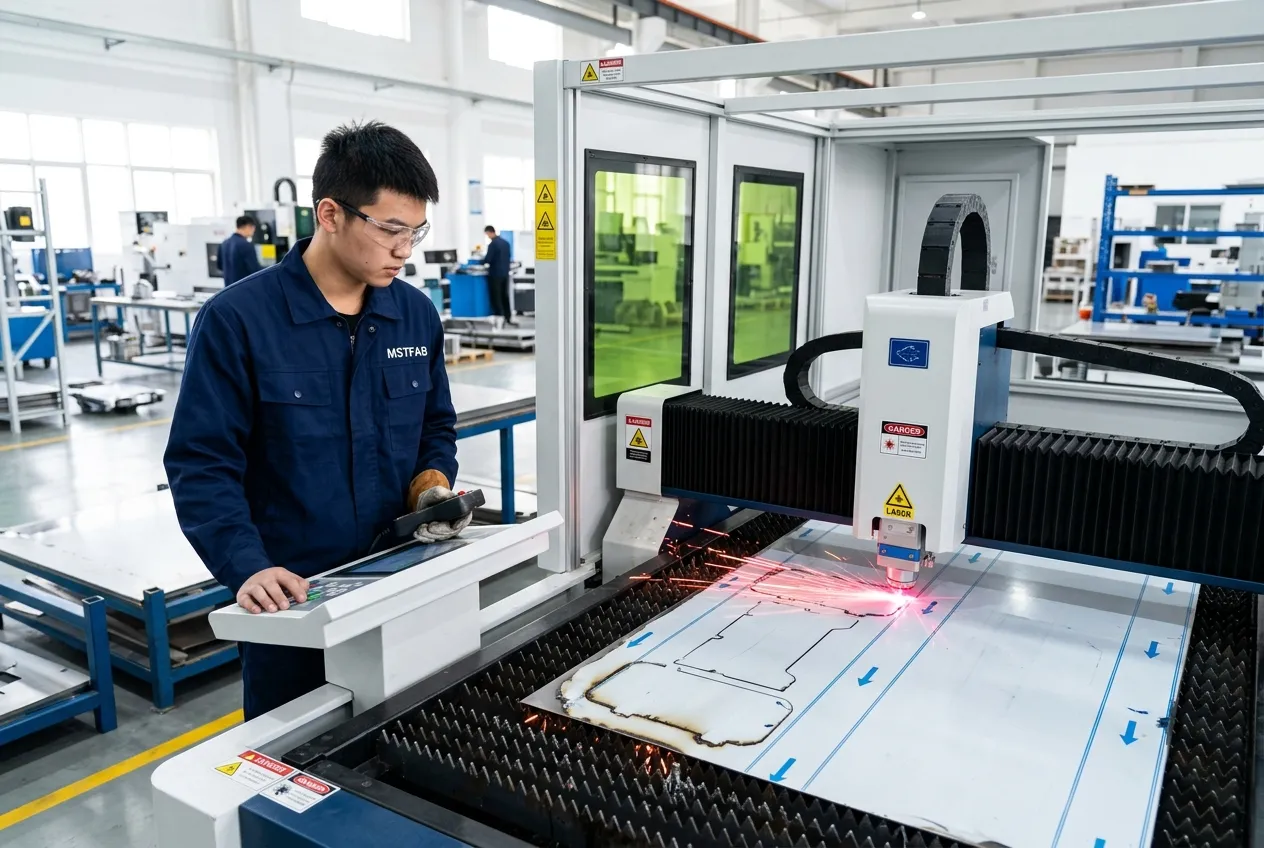
Free-iron contamination begins the moment raw sheet is handled. MSTFAB cuts 304 stainless panels with high-tack laser-grade polyethylene (PE) film intact. High-power fiber lasers pierce cleanly through the film using ultra-pure nitrogen assist gas, shielding the polished sheet surface from flying spatter and machine table slag.
2. Dedicated Non-Marring Press Brake Tooling
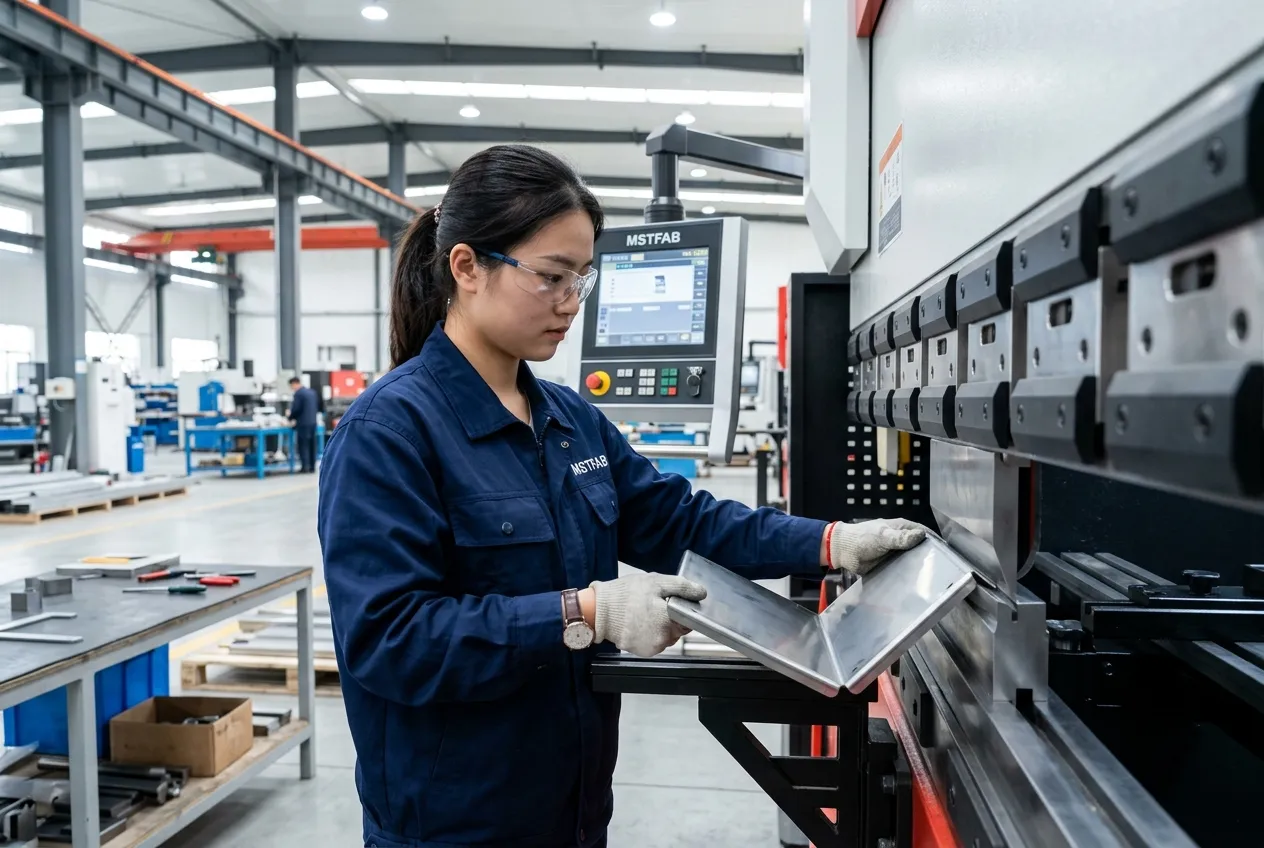
Bending pressures exceed hundreds of tons per meter. If standard carbon steel V-dies are used on stainless, carbon iron is mechanically forced into the bend radius. MSTFAB utilizes dedicated stainless-only precision-ground tooling or applies thick polyurethane die-protective film along the tooling shoulders to completely isolate the stainless sheet from ferrous contact.
3. Controlled TIG Welding and Heat Input
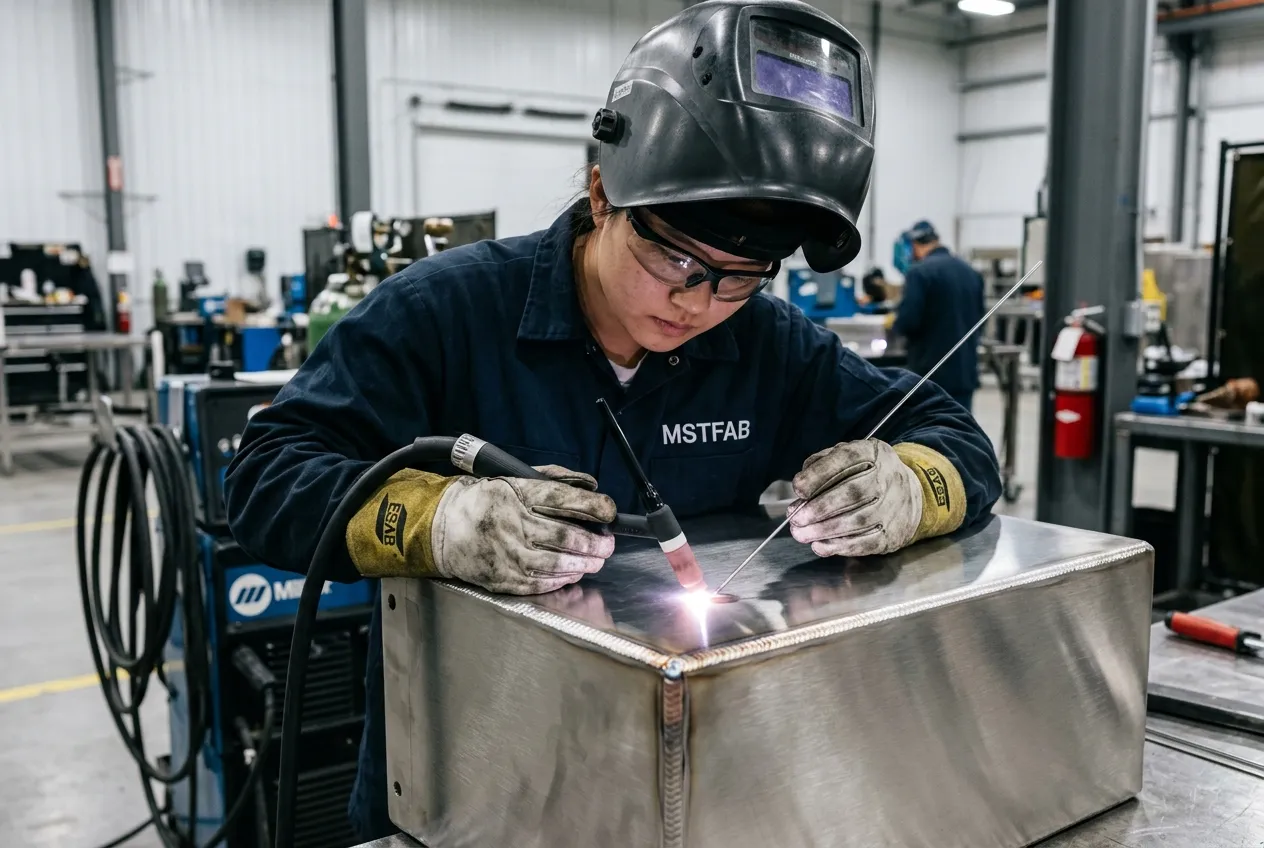
During TIG welding, excessive heat input causes chromium to precipitate out as chromium carbides along grain boundaries (sensitization), leaving surrounding zones depleted of corrosion-resistant chromium. Technicians utilize pulsed TIG arc settings, ER308L low-carbon filler rod, and copper heat sinks to maintain interpass temperatures below 150° C.
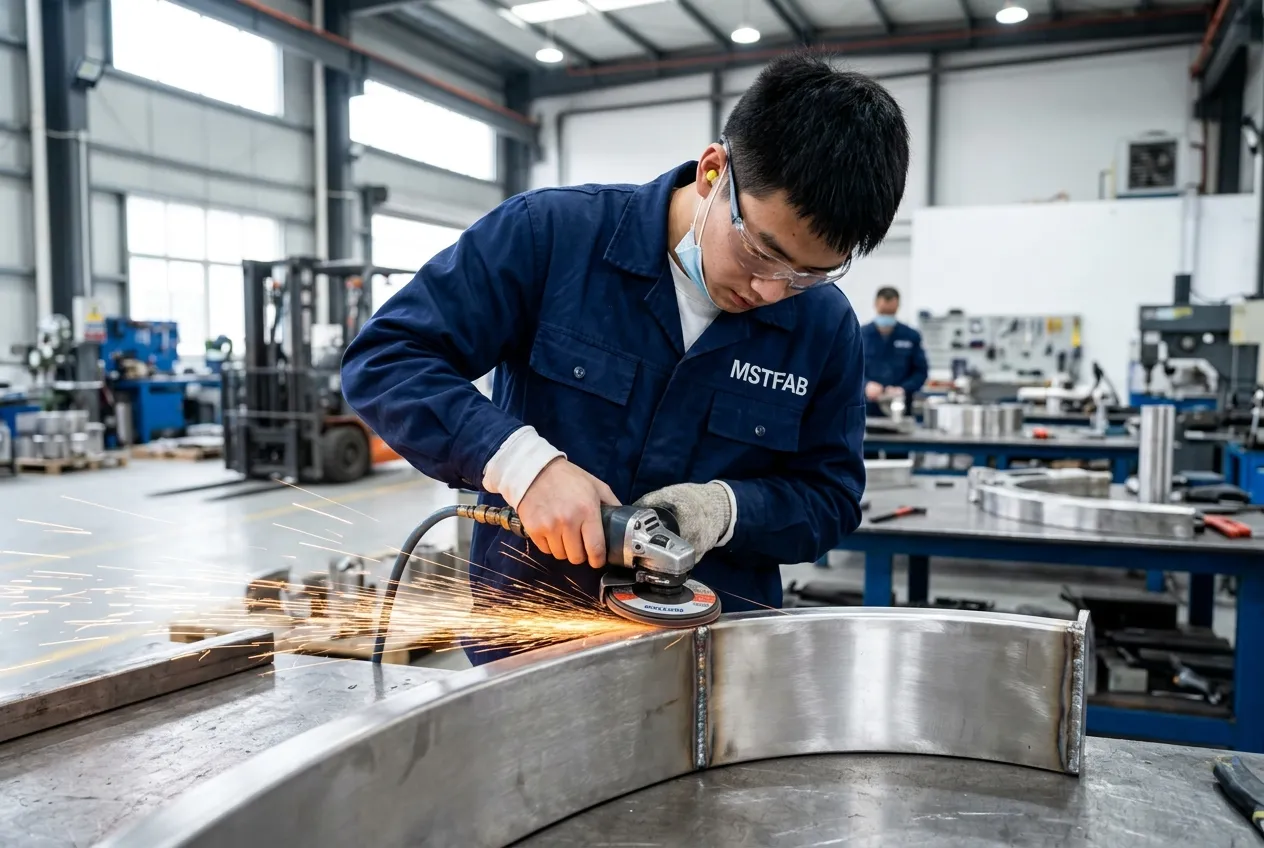
4. Dedicated Non-Ferrous Abrasives
Abrasive tools used on carbon steel must NEVER touch stainless steel. Grinding discs that have cut carbon steel will deposit thousands of ferrous particles across the stainless surface. MSTFAB maintains color-coded, dedicated ceramic and zirconia abrasive belts, flap wheels, and non-woven blending pads restricted exclusively to stainless workstations.
5. Clean Handling Protocols and Hardware Installation
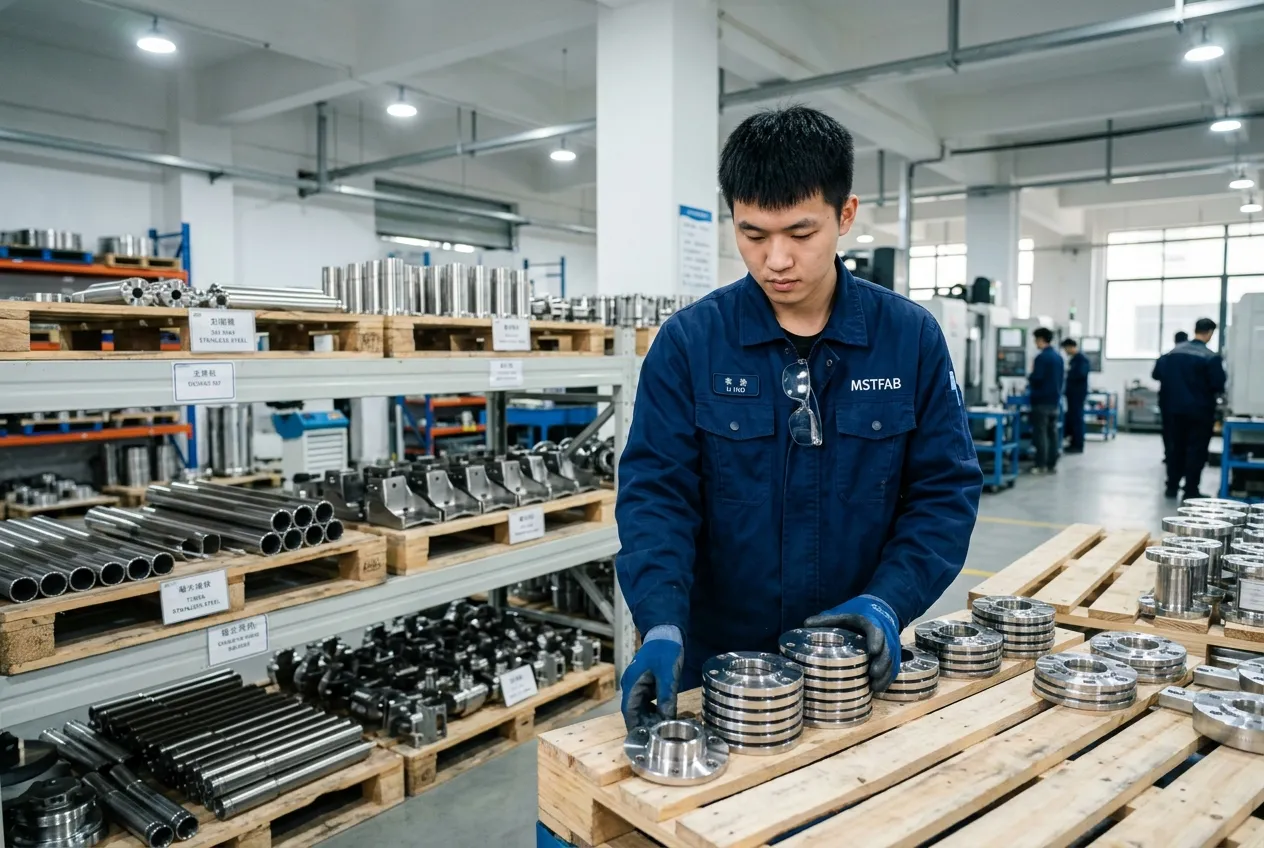
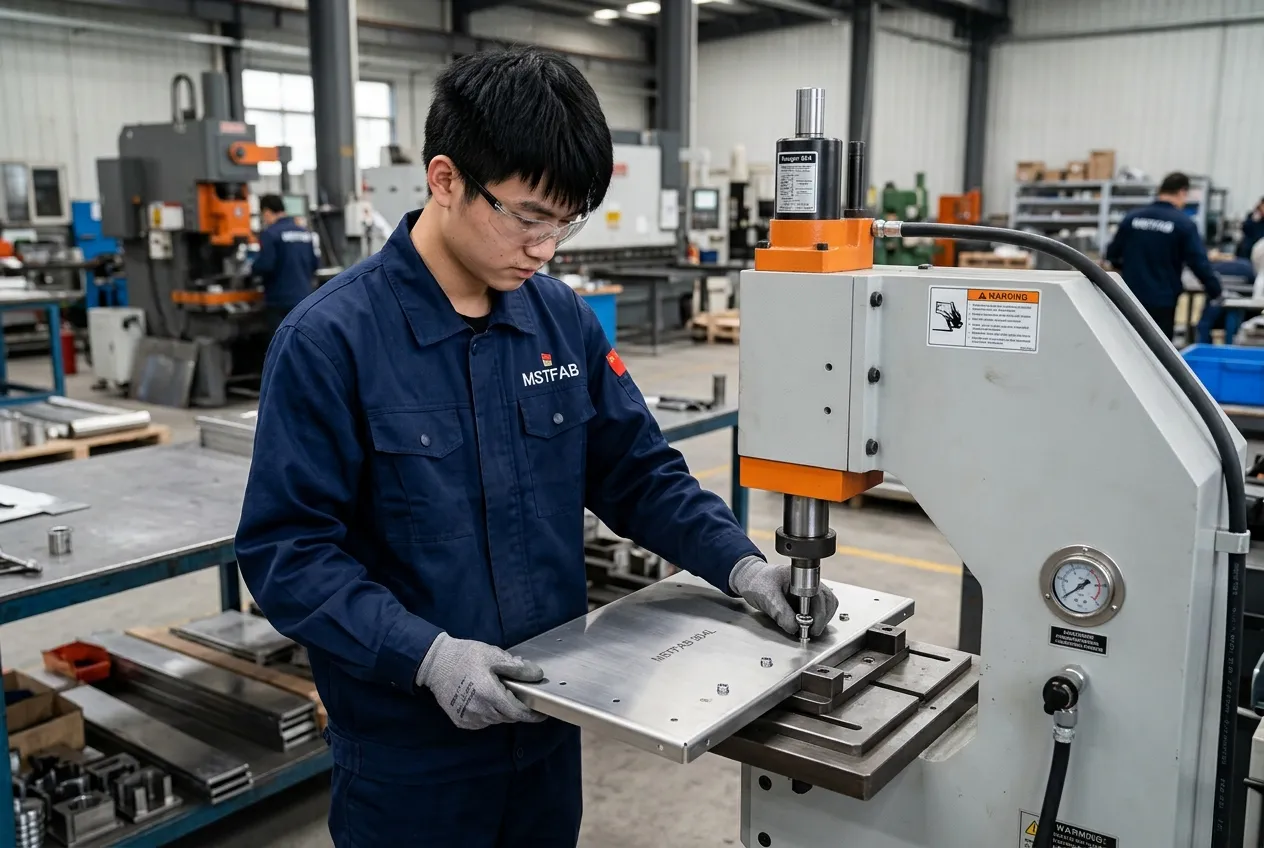
Bare human hands carry chlorides that stain fresh stainless surfaces, while dirty assembly tables scratch protective films. Operators wear clean lint-free nitrile gloves and work on high-density polyethylene or rubber-topped tables. Self-clinching PEM fasteners are specified in matching 300-series stainless steel (e.g., PEM CLS series) to eliminate galvanic potential differences.
6. Chemical Passivation & Ferroxyl Quality Testing
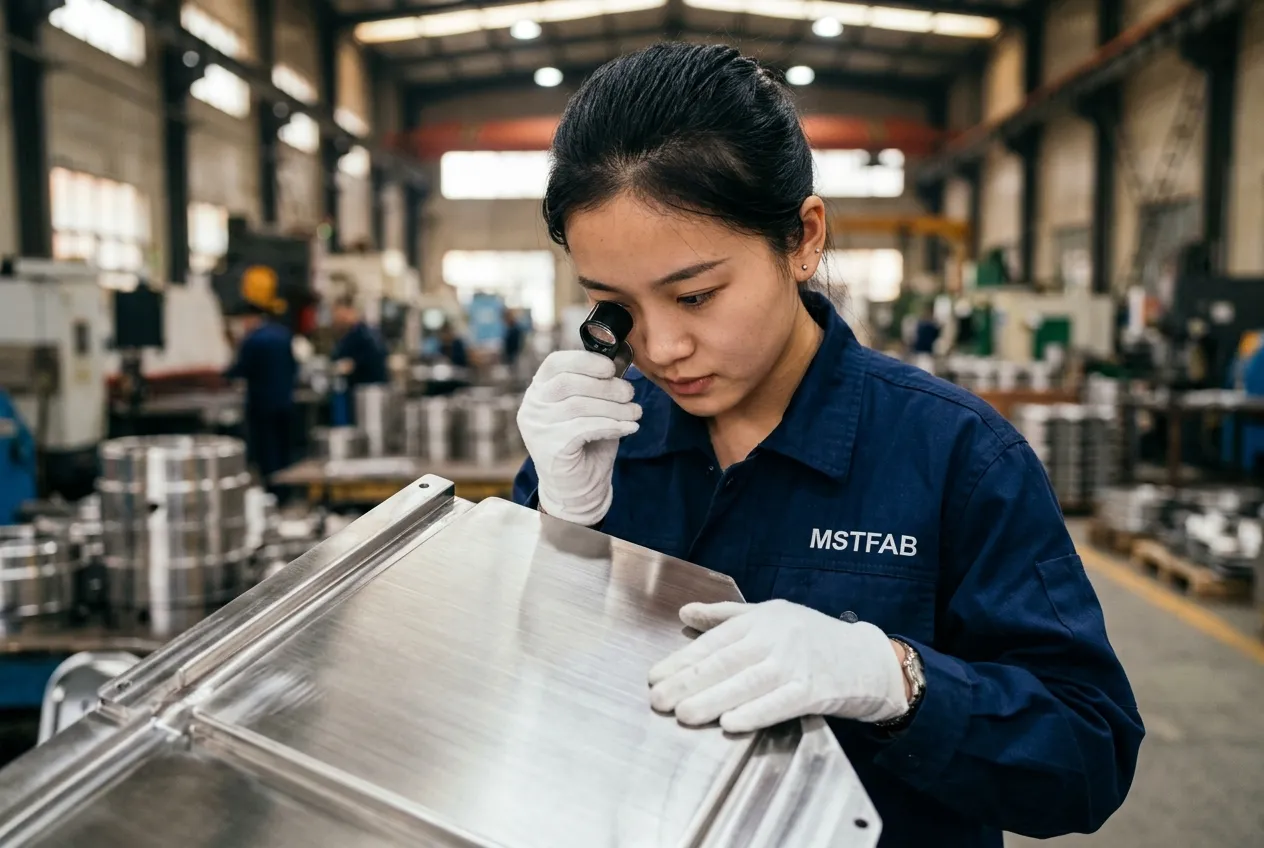
Even with rigorous handling, microscopic iron trace particles can exist. Finished parts undergo chemical passivation per ASTM A967. Immersion in heated citric acid selectively dissolves free iron without etching the parent metal, accelerating natural chrome oxide formation. Quality inspectors verify surface passivity using the ASTM A380 Ferroxyl Test (potassium ferricyanide solution): zero blue staining within 60 seconds proves 100% free-iron eradication.
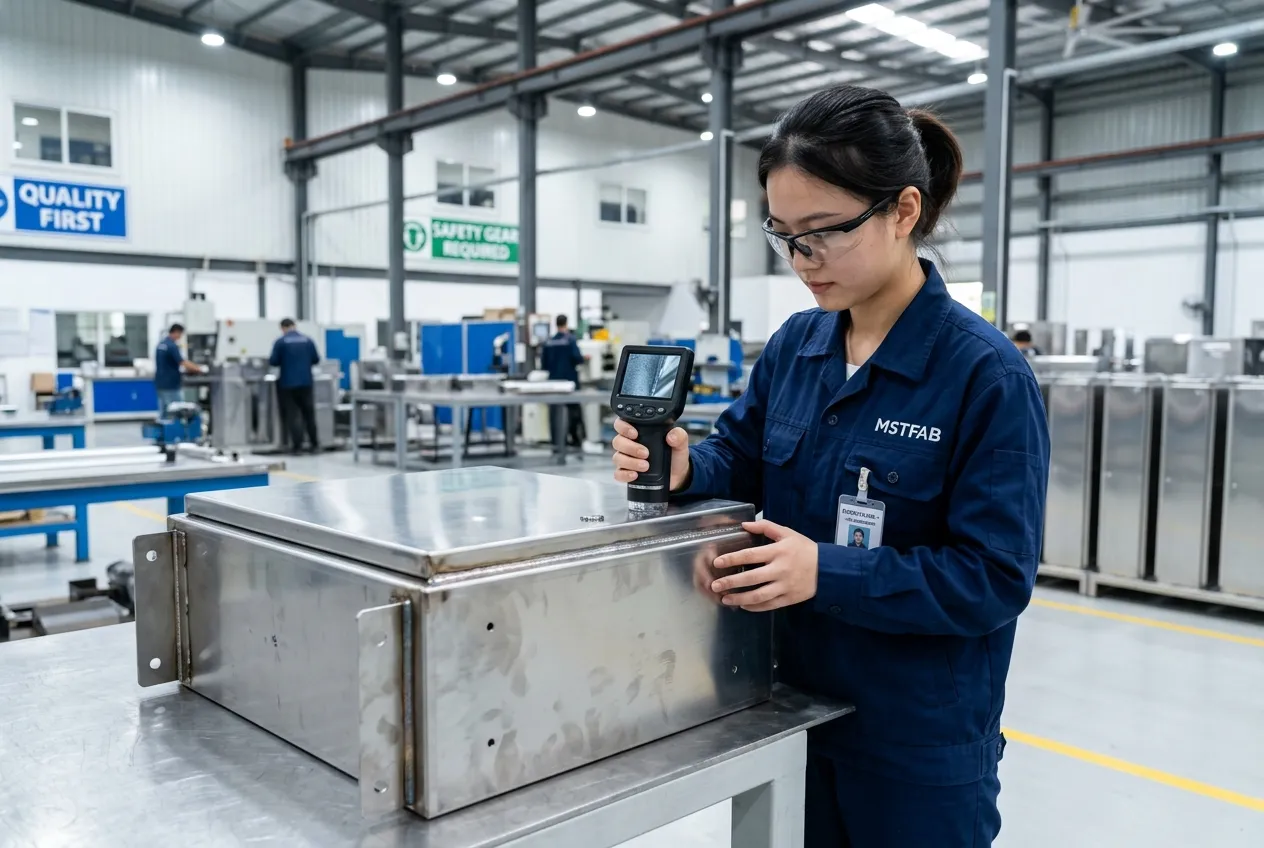
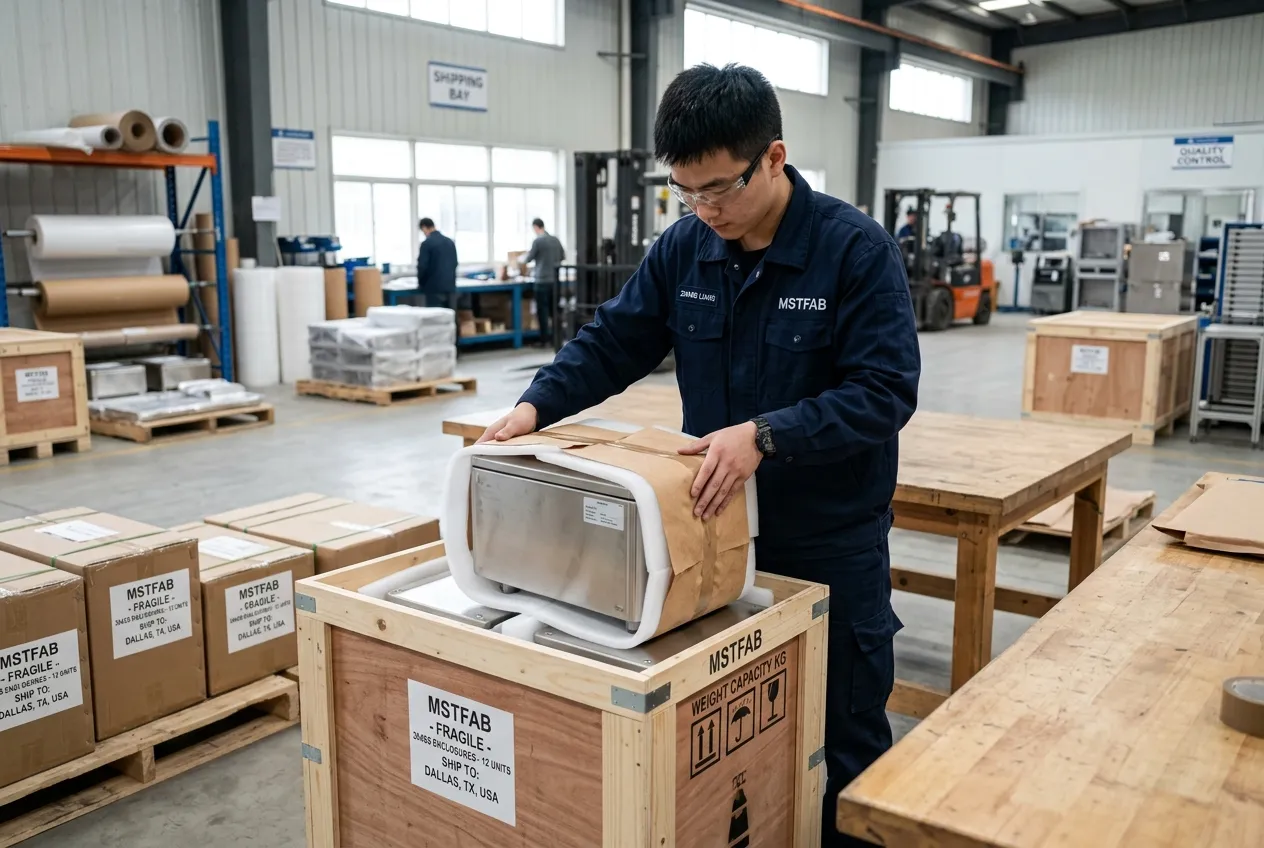
Free-Iron Contamination Prevention & Testing Matrix
The engineering reference table below defines shop-floor controls and validation testing standards for 304 stainless steel:
| Contamination Risk Factor | Uncontrolled Shop Practice | MSTFAB Clean Control Standard | Verification / Test Standard |
|---|---|---|---|
| Laser Cutting Assist Gas | Shop compressed air or oxygen (causes black oxidation) | High-purity Nitrogen (99.999% N2) at 20 bar | Visual inspection: 100% bright, oxide-free silver cut edge |
| Press Brake Tooling | Bare carbon steel dies with carbon gouge marks | Polyurethane die film or dedicated stainless tooling | Magnification 10× inspection for tool witness marks |
| Weld Grinding Abrasives | Shared discs previously used on carbon steel | Dedicated ceramic/zirconia discs marked “Stainless Only” | Color-coded tool labeling audit |
| Fastener Compatibility | Zinc-plated carbon steel PEM hardware | 300-series austenitic stainless PEM fasteners | Magnet check + fastener MTR lot tracking |
| Chemical Passivation | Solvent wipe-down only (leaves free iron intact) | ASTM A967 Citric Acid immersion passivation | ASTM A380 Ferroxyl Test (zero blue discoloration) |
| Water-Break Surface Test | Oily residues beading water | Continuous unbroken water sheet for ≥ 30 seconds | ASTM F22 water-break cleanliness standard |
Eliminate Stainless Contamination Risks with MSTFAB
MSTFAB enforces dedicated stainless-only fabrication bays, non-marking press brake tooling, pure nitrogen laser cutting, and certified ASTM A967 chemical passivation. Our quality engineers guarantee rust-free, medical-grade 304 and 316L stainless steel assemblies. Contact us to audit our contamination control protocols.
 WeChat Contact
 WhatsApp Me Directly